The Ultimate Guide to the Heirloom Orchard Apple Cake: A 3,000-Word Deep Dive into Autumn’s Favorite Bake
There is a specific kind of magic that happens in a kitchen during the transition from late summer to early autumn. It starts with a slight crispness in the morning air and ends with the intoxicating, warm aroma of cinnamon and caramelizing sugar wafting from the oven. At the heart of this seasonal shift lies the quintessential bake: the Apple Cake.
This isn’t just any apple cake. Based on the classic European farmhouse style—often referred to as Apfelkuchen or a rustic sunken apple sponge—this recipe is designed for those who believe a cake should be more fruit than batter. It is a dense, moist, and custard-like masterpiece that utilizes a unique layering technique to ensure every single bite is packed with tender orchard fruit.
In this comprehensive guide, we will explore the history, the science, and the step-by-step mastery required to create the perfect apple cake. Whether you are a seasoned pastry chef or a weekend warrior in the kitchen, this 3,000-word roadmap will ensure your WordPress food blog has the most definitive resource on the web.
Part I: The Philosophy of the Perfect Apple Cake
Before we crack a single egg, we must understand what makes an apple cake “great” versus merely “good.” A good apple cake is a sponge with some fruit in it. A great apple cake is a structural marvel where the cake acts as a delicate binder for a massive volume of apples.
1. The Ratio of Fruit to Batter
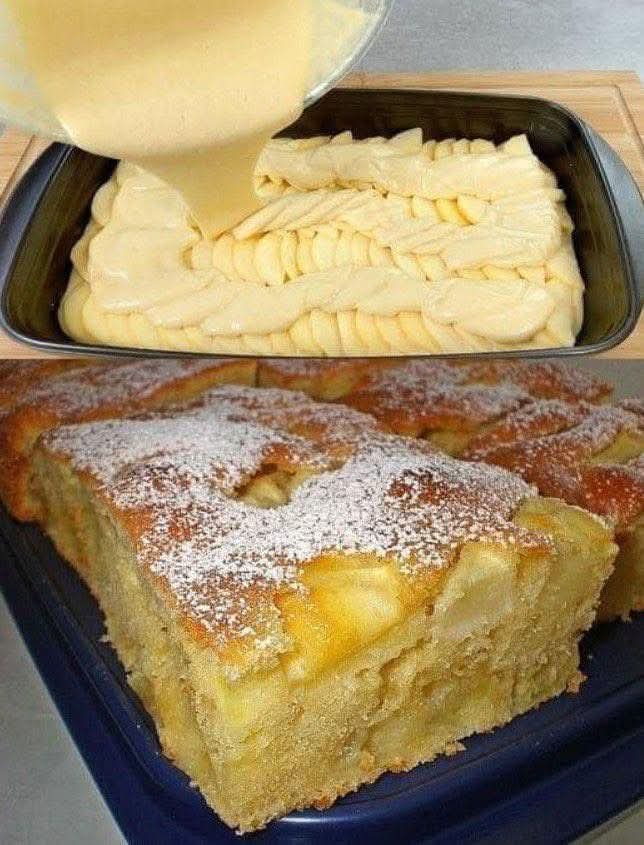
The image of this cake shows a deep, rectangular pan filled with thin, uniform slices of apple. The secret to the texture seen in the final slice is the submersion technique. By pouring a liquid, velvet-like batter over tightly packed apples, the batter fills the microscopic gaps between the fruit. As it bakes, the apples steam within the cake, creating a texture that is halfway between a traditional sponge and a fruit custard.
2. Moisture Management
Apples are roughly 86% water. If you don’t account for this, you end up with a “soggy bottom.” The recipe we will follow uses a high-protein flour and a specific creaming method to create a crumb that can support the weight of the fruit without becoming mushy.
3. The Crust
A rustic apple cake needs a “crown.” In our version, we use a generous dusting of powdered sugar (confectioners’ sugar) after baking, but the real secret lies in the sprinkle of granulated sugar applied before it hits the oven, which creates a thin, crackly, caramelized “glass” layer on the top.
Part II: Choosing Your Ingredients
The Apples: The Stars of the Show
Not all apples are created equal. For this bake, you need an apple that holds its shape. If you use a Macintosh, you’ll end up with applesauce cake.
- Granny Smith: The gold standard for baking. High acidity balances the sugar, and the firm texture stands up to heat.
- Honeycrisp: Provides a lovely sweetness and remains slightly crunchy even after an hour in the oven.
- Braeburn or Jonagold: Classic choices that offer a complex, “appley” flavor profile.
- Pro Tip: Use a mix of two varieties to create a “layered” flavor profile—one tart, one sweet.
The Fat: Butter vs. Oil
While oil makes a cake moist, unsalted butter provides the flavor. This recipe calls for “European-style” butter with a higher fat content (82% or higher). This results in a richer mouthfeel that complements the acidity of the apples.
The Leavening
We use a combination of baking powder and a high volume of whipped eggs. The eggs provide the structure, while the baking powder gives that necessary lift to push through the heavy layers of fruit.
Part III: The Master Recipe
Equipment You Will Need
- One 9×13 inch (23×33 cm) deep baking pan or a large ceramic rectangular dish.
- A mandoline slicer (optional, but highly recommended for uniform apple slices).
- A stand mixer or high-powered hand mixer.
- A fine-mesh sieve for flour and powdered sugar.
- Large mixing bowls.
Ingredients List
For the Apple Base:
- 6 to 8 Large Apples (Approx. 1.5kg – 2kg)
- 2 tbsp Lemon Juice (to prevent browning)
- 1 tsp Ground Cinnamon
- 2 tbsp Granulated Sugar (for macerating)
For the Batter: - 250g Unsalted Butter, softened to room temperature
- 200g Granulated Sugar
- 100g Light Brown Sugar (for a hint of molasses)
- 4 Large Eggs, room temperature
- 1 tbsp Vanilla Bean Paste (or pure vanilla extract)
- 300g All-Purpose Flour
- 50g Cornstarch (this softens the crumb)
- 2 tsp Baking Powder
- 1/2 tsp Salt
- 150ml Whole Milk or Sour Cream (sour cream adds a lovely tang)
For the Topping: - 3 tbsp Granulated Sugar (for the crunch)
- Powdered Sugar (for dusting)
Part IV: Step-By-Step Instructions
Step 1: Preparing the Fruit
The visual appeal of this cake comes from the “shingled” look of the apples.
- Peel, core, and quarter your apples.
- Slice them into thin wedges (about 3mm thick).
- Toss them in a bowl with the lemon juice, cinnamon, and 2 tablespoons of sugar. Let them sit for 15 minutes. This “macerating” process draws out excess moisture so it doesn’t thin out your batter during the bake.
Step 2: The Creaming Method
The foundation of a light cake is aeration.
- In your stand mixer, beat the softened butter with the granulated and brown sugars on medium-high speed for at least 5 minutes. You are looking for a pale, fluffy texture.
- Add the eggs one at a time. Do not rush this. Ensure each egg is fully incorporated before adding the next. If the mixture looks like it’s curdling, add a tablespoon of your weighed flour to bind it back together.
- Mix in the vanilla.
Step 3: Sifting and Folding
- In a separate bowl, whisk together the flour, cornstarch, baking powder, and salt.
- Turn your mixer to the lowest setting. Add the dry ingredients in three parts, alternating with the milk/sour cream.
- Stop mixing immediately once the last streaks of flour disappear. Overmixing develops gluten, which will make your apple cake tough rather than tender.
Step 4: The Assembly (The “Pour-Over”)
- Grease your baking pan thoroughly with butter and line the bottom with parchment paper.
- Arrange the apple slices in the pan. You want them packed tightly. You can do a decorative “shingle” pattern as seen in the image, or a more rustic “shuffled” arrangement. The goal is to fill the pan about 3/4 of the way up with fruit.
- Slowly pour the batter over the apples. Use a spatula to spread it evenly, ensuring it seeps down into the crevices between the slices.
- Give the pan a few firm taps on the counter to release any trapped air bubbles.
- Sprinkle the 3 tablespoons of granulated sugar evenly over the top.
Step 5: The Bake
- Preheat your oven to 175°C (350°F).
- Place the pan on the center rack. Bake for 55 to 65 minutes.
- The Test: Because of the high fruit content, a toothpick test can be tricky (you might just hit a moist apple). Look for the cake to pull away slightly from the edges and for the top to be a deep, golden brown. The center should feel firm and spring back when lightly pressed.
Part V: Troubleshooting and Expert Tips
Why did my cake sink?
If the center of your cake collapses, it’s usually due to one of three things:
- Underbaking: Apple cakes are dense. They often need those last 5-10 minutes to set the structure around the moist fruit.
- Too much leavening: Too much baking powder causes the cake to rise too fast and then collapse.
- Opening the oven door: Avoid “peeking” before the 45-minute mark. The rush of cold air can shock the rising sponge.
Achieving the “Golden Crumb”
The beautiful yellow hue seen in the cross-section of the image comes from two things: high-quality egg yolks and the “bleeding” of the apple juices into the batter. If you want an even richer color, use “pasture-raised” eggs, which typically have deeper orange yolks.
The Resting Period
Crucial Step: Do not cut this cake while it is hot. As it cools, the starches in the flour and the pectins in the apples set. If you cut it immediately, the slice will fall apart. Let it rest in the pan for at least 30 minutes, then transfer to a wire rack.
Part VI: Serving and Storage
The Finishing Touch
Once the cake is completely cool, use a fine-mesh sieve to dust a “blanket” of powdered sugar over the top. This hides any imperfections and provides that classic bakery look.
What to Serve it With?
- Crème Fraîche: The slight sourness cuts through the sugar perfectly.
- Salted Caramel Drizzle: For those who want an ultra-decadent dessert.
- Vanilla Bean Gelato: The classic “warm cake, cold cream” combination.
Storage
Because of the high moisture content from the apples, this cake stays fresh longer than a standard sponge.
- Room Temp: Keep in an airtight container for up to 2 days.
- Refrigerator: Up to 5 days. Many people actually prefer this cake cold the next day, as the flavors have time to meld.
- Freezing: This cake freezes beautifully. Wrap individual slices in plastic wrap and foil. Thaw at room temperature and warm slightly in a 300°F oven to refresh the crust.
Part VII: Variations for Your Readers
To make your WordPress post truly “evergreen,” include these variations to cater to different dietary needs:
1. The Gluten-Free Version
Substitute the all-purpose flour with a high-quality 1:1 gluten-free baking blend (look for one containing xanthan gum). Because gluten-free flours absorb more liquid, add an extra 2 tablespoons of milk to the batter.
2. The Spiced Orchard Variation
Add 1 tsp of ground ginger, 1/4 tsp of ground cloves, and 1/4 tsp of nutmeg to the dry ingredients. This moves the cake from a “summer-fall” transition piece into a deep “winter” holiday dessert.
3. The Nutty Crunch
Add 100g of toasted, slivered almonds or chopped walnuts to the top of the batter before baking. The toasted nuts provide a textural contrast to the soft, custardy apples.
Part VIII: Conclusion
The beauty of the Heirloom Orchard Apple Cake lies in its honesty. It doesn’t rely on heavy frostings or complex decorations. It relies on the quality of the harvest and the patience of the baker.
When you post this on your blog, remind your readers that baking is a sensory experience. Tell them to listen for the sizzle of the butter, to smell the change in the air when the cinnamon heats up, and to enjoy the process of slicing the apples.
This recipe yields more than just a dessert; it yields a memory. It is the kind of cake that people ask for year after year, the kind that defines a season. Happy baking!
SEO Metadata for WordPress:
Focus Keyphrase: Rustic Apple Cake Recipe
Secondary Keywords: German apple cake, moist apple sponge, baking with granny smith, autumn desserts, easy apple traybake.
Meta Description: Discover the ultimate recipe for a moist, custardy Rustic Apple Cake. This 3,000-word guide covers ingredient science, apple selection, and pro-tips for the perfect bake.
Slug: ultimate-rustic-orchard-apple-cake-guide