The Ultimate Salisbury Steak: A Deep Dive into Comfort Food Mastery
There are few dishes that evoke the same sense of nostalgia and “home” as a perfectly seared Salisbury steak smothered in a rich, velvety onion gravy. While it may have gained a reputation in the mid-20th century as a cafeteria staple or a frozen TV dinner icon, the true, homemade version is a culinary masterpiece of texture and flavor.
In this exhaustive guide, we are going to deconstruct the Salisbury steak. We’ll explore its surprising medicinal origins, the science of making a tender patty, the art of the perfect brown gravy, and the secret techniques that elevate this from a simple weeknight meal to a gourmet experience.
1. The History: More Than Just a Hamburger
To truly appreciate the Salisbury steak, we have to look back at the 19th century. Contrary to popular belief, it wasn’t named after a city in England. It was named after Dr. James Henry Salisbury, an American physician who was a pioneer in dietetics.
During the American Civil War, Dr. Salisbury noticed that soldiers suffering from digestive issues fared better when they ate shredded, cooked beef rather than fiber-heavy foods. He became a staunch advocate for a meat-centric diet. In 1888, he introduced the “Salisbury Steak” as a health food. While his medical theories on “clogged” digestion have since been debunked, his delicious creation remains a cornerstone of American comfort food.
2. Salisbury Steak vs. Hamburger Steak vs. Meatloaf
Before we dive into the recipe, let’s clear up some common confusion. What makes a Salisbury steak different from its cousins?
- Hamburger Steak: Usually just ground beef seasoned with salt and pepper. It’s essentially a burger without the bun.
- Meatloaf: Uses similar ingredients (binders, aromatics) but is baked in a large loaf and sliced.
- Salisbury Steak: The “sweet spot.” It uses binders like breadcrumbs and eggs (like meatloaf) to ensure a tender, almost “melt-in-your-mouth” texture, but it is formed into individual patties and simmered in gravy.
3. The Science of the Perfect Patty
The most common mistake people make is treating a Salisbury steak like a burger. If you pack the meat too tightly, it becomes rubbery.
The Binder (The Panade)
A traditional Salisbury steak uses a panade—a mixture of starch and liquid. When breadcrumbs soak up milk or cream, they create a gel-like structure that coats the meat fibers. This prevents the proteins from knitting together too tightly during cooking, which is the secret to that signature tender bite.
The Meat Ratio
For the best flavor, use an 80/20 ground chuck. You need the 20% fat content to keep the meat moist during the two-stage cooking process (searing then simmering). If you use 90/10 or 95/5, your steaks will likely turn out dry and tough.
4. The Star of the Show: Onion Gravy
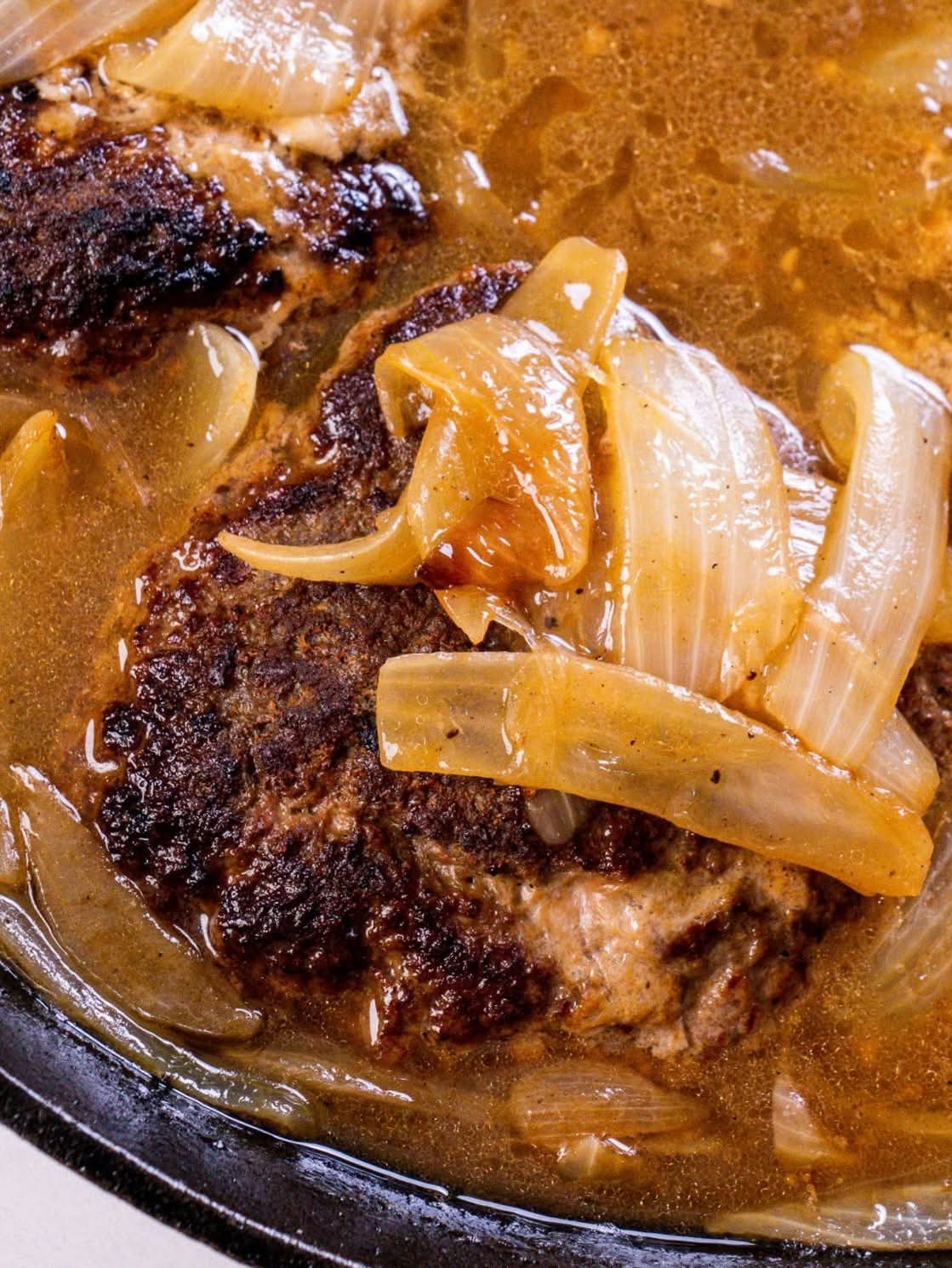
As seen in the image provided, the onions should be soft, translucent, and deeply infused with the beef drippings.
The secret to great gravy is patience. You cannot rush the onions. They need to sweat down and begin to caramelize to release their natural sugars. This provides the “umami” base for the entire dish.
5. Ingredients Deep Dive
For the Steaks:
- 2 lbs Ground Chuck (80/20): Freshly ground is always better.
- 1 cup Panko Breadcrumbs: I prefer Panko over traditional breadcrumbs for a lighter texture.
- 1 Large Egg: To bind the proteins.
- 1/4 cup Whole Milk: To hydrate the breadcrumbs.
- 2 tbsp Worcestershire Sauce: For that essential savory “funk.”
- 1 tbsp Yellow Mustard: Adds a subtle tang that cuts through the richness.
- 2 cloves Garlic, minced: Fresh is non-negotiable.
- 1 tsp Onion Powder: Layering flavors!
- Salt and Black Pepper: Be generous here.
For the Onion Gravy:
- 2 Large Yellow Onions: Thinly sliced into half-moons.
- 3 cups Beef Broth: Use a high-quality, low-sodium broth so you can control the salt.
- 2 tbsp All-Purpose Flour: This is your thickening agent.
- 4 tbsp Unsalted Butter: For sautéing the onions and creating the roux.
- 1 tbsp Tomato Paste: This adds color and a hidden depth of flavor.
- 1 tsp Thyme (dried or fresh): Earthy notes that pair perfectly with beef.
6. Step-by-Step Instructions
Step 1: Preparing the Panade
In a large mixing bowl, combine the breadcrumbs, milk, egg, Worcestershire sauce, mustard, garlic, and spices. Whisk them together until they form a paste. Let this sit for 5 minutes. This ensures the breadcrumbs are fully hydrated.
Step 2: Mixing the Meat
Add the ground beef to the bowl. Use your hands! Gently fold the meat into the panade. Do not overwork the meat; mix just until combined. Over-mixing leads to a dense, tough steak.
Step 3: Shaping
Divide the mixture into 6 or 8 oval-shaped patties. Press a slight indentation into the center of each. This prevents the “football effect,” where the center of the patty bulges up during cooking.
Step 4: The Sear
Heat a cast-iron skillet (like the one in the photo) over medium-high heat with a tablespoon of oil. Sear the patties for 3–4 minutes per side. They do not need to be cooked through at this stage; we just want a deep, brown crust (the Maillard reaction). Remove the patties and set them aside on a plate.
Step 5: Caramelizing the Onions
Lower the heat to medium. Add the butter to the same skillet. Scraping up the brown bits (the fond) left by the meat, add the sliced onions. Cook them for 10–12 minutes, stirring occasionally, until they are golden and soft.
Step 6: Creating the Roux
Sprinkle the flour over the onions and stir for 2 minutes. This “cooks out” the raw flour taste. Stir in the tomato paste.
Step 7: Building the Gravy
Slowly pour in the beef broth while whisking (or stirring vigorously). Bring the mixture to a simmer. It will begin to thicken into a silky sauce. Season with thyme, salt, and pepper.
Step 8: The Braise
Place the seared patties back into the skillet, nestled into the onions and gravy. Cover the pan and reduce heat to low. Simmer for 10–15 minutes. This allows the meat to finish cooking while absorbing the flavors of the gravy.
7. Troubleshooting Common Issues
“My patties are falling apart.”
This usually happens if the panade was too wet or if you didn’t include enough binder. Ensure you measure the milk accurately. Also, let the patties “set” in the fridge for 20 minutes before searing if you have the time.
“The gravy is lumpy.”
Lumps occur when flour is added directly to cold liquid. Always stir the flour into the fat (butter/oil) first to create a roux, then add the liquid gradually. If it’s already lumpy, you can pour the gravy through a fine-mesh sieve, though you’ll lose the onions!
“The meat is tough.”
You likely over-mixed the beef or used meat that was too lean. Next time, try a lighter hand and stick to 80/20 fat content.
8. What to Serve With Salisbury Steak
This dish is a “sauce delivery system,” so you need sides that can soak up that liquid gold.
- Garlic Mashed Potatoes: The gold standard. Use Yukon Gold potatoes for the creamiest texture.
- Egg Noodles: A classic pairing that feels very “old-school diner.”
- Roasted Green Beans: To add a bit of crunch and brightness to the plate.
- Glazed Carrots: The sweetness of the carrots complements the savory onion gravy beautifully.
9. Variations to Try
- Mushroom & Onion: Add 8 oz of sliced cremini mushrooms at the same time you add the onions. The earthy mushrooms take this dish to a whole new level.
- The Spicy Kick: Add a teaspoon of horseradish to the meat mixture for a subtle zing.
- Red Wine Gravy: Replace 1/2 cup of beef broth with a dry red wine (like Cabernet or Merlot) for a more sophisticated, “French-style” sauce.
10. Storage and Reheating
Salisbury steak is one of those rare dishes that actually tastes better the next day.
- Fridge: Store in an airtight container for up to 3 days.
- Freezer: These freeze beautifully. Place patties and gravy in a freezer-safe bag for up to 3 months.
- Reheating: Reheat gently in a skillet over low heat. Add a splash of water or broth to loosen the gravy, as it will thicken significantly when cold.
Conclusion
Salisbury steak is more than just a meal; it’s a masterclass in flavor building. From the humble panade to the slow-caramelized onions, every step serves a purpose. By following this guide, you aren’t just making dinner—you’re reviving a classic American tradition.
Grab your cast-iron skillet, find the best ground beef you can, and get ready to enjoy the ultimate comfort food experience.
SEO Keywords for WordPress: Salisbury Steak Recipe, Homemade Onion Gravy, Ground Beef Recipes, Comfort Food Classics, Easy Dinner Ideas, Cast Iron Cooking, Salisbury Steak History.