The Chayote Revolution: A Comprehensive Guide to Nature’s Hidden Superfood
In the ever-evolving landscape of health and wellness, we often find ourselves looking for the “next big thing”—the exotic berry from a remote rainforest or the high-tech supplement synthesized in a lab. However, sometimes the most profound health benefits are hiding in plain sight, tucked away in the produce aisle of your local market. Enter Chayote (Sechium edule).
Often overlooked and occasionally misunderstood due to its unique, pear-like shape and mild flavor, chayote is a powerhouse of nutrition. Known by various names across the globe—sayote in the Philippines, chow-chow in India, christophene in the Caribbean, and mirliton in Louisiana—this versatile squash is finally getting the recognition it deserves.
In this 3,000-word deep dive, we will explore everything you need to know about chayote: its nutritional profile, its impact on vital organ systems, its role in traditional medicine, and how you can incorporate it into your daily routine to transform your health.
Part I: Anatomy of a Superfood
Before we look at the systemic benefits, we must understand what makes chayote tick. Visually, it resembles a large, green pear with deep ridges. It belongs to the gourd family (Cucurbitaceae), making it a cousin to cucumbers, melons, and pumpkins.
1. The Nutritional Breakdown
Chayote is famously low in calories but exceptionally high in essential micronutrients. For every 100 grams of raw chayote, you are consuming:
- Calories: Only 19 kcal (making it an ideal weight-loss companion).
- Fiber: 1.7 grams (essential for gut health).
- Folate (Vitamin B9): Approximately 23% of the Daily Value (DV).
- Vitamin C: 13% of the DV.
- Manganese and Zinc: Key minerals for bone health and immune function.
2. The Power of Folate
One of chayote’s standout features is its folate content. Folate is critical for DNA synthesis and repair. For pregnant women or those planning to conceive, chayote is a natural, whole-food source of the nutrient required to prevent neural tube defects.
Part II: Chayote and Your Internal Systems
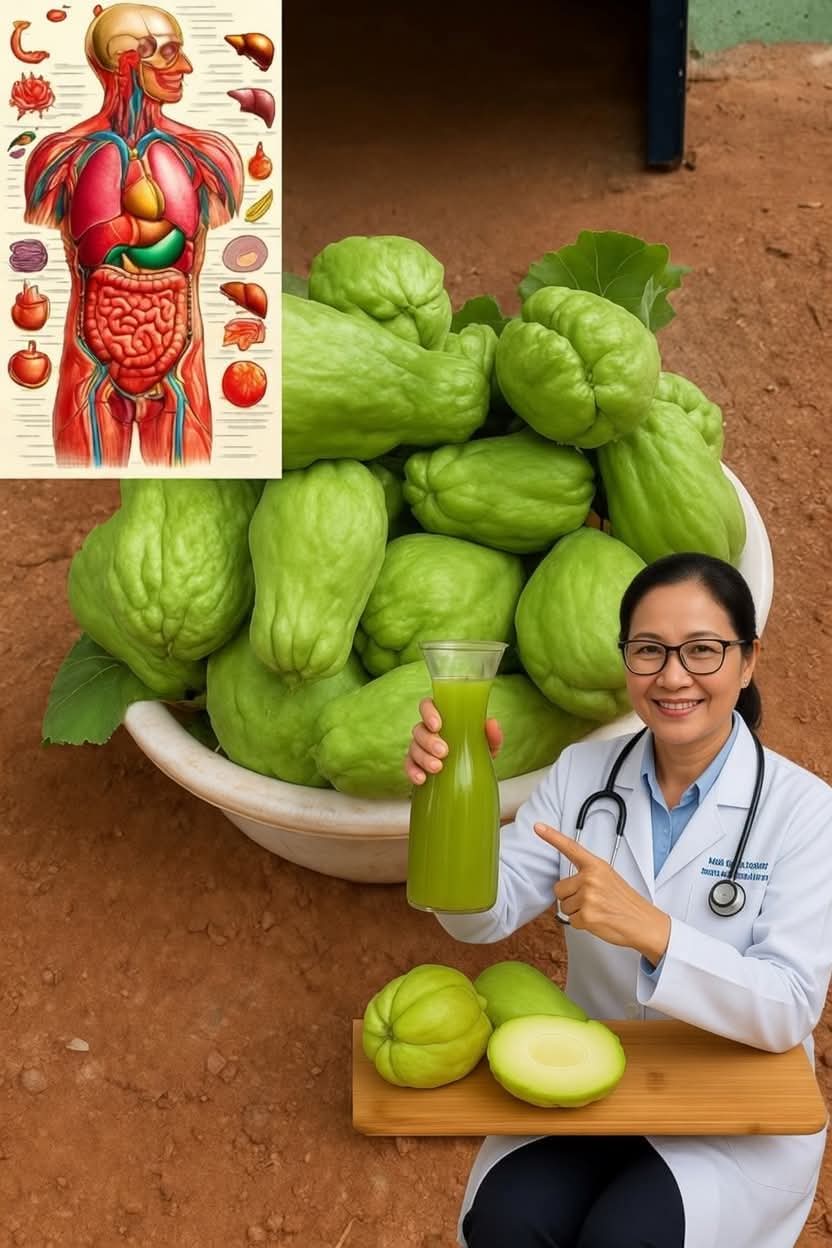
As highlighted in the medical illustrations often associated with this “green miracle,” chayote has a systemic impact on the human body. Let’s break down how it interacts with our vital organs.
1. The Cardiovascular System: Heart Health and Hypertension
High blood pressure (hypertension) is often called the “silent killer.” Chayote contains potent antioxidants, including myricetin, which has been shown in studies to lower cholesterol and reduce inflammation.
- Vasodilation: The compounds in chayote help relax the blood vessels, improving blood flow and reducing the strain on the heart.
- Potassium: Its potassium content helps balance the effects of sodium, further stabilizing blood pressure.
2. The Digestive System: A Gut-Healing Powerhouse
The fiber in chayote isn’t just about “keeping things moving.” It acts as a prebiotic, feeding the beneficial bacteria in your microbiome.
- Blood Sugar Regulation: Because it is high in fiber and low in soluble carbohydrates, chayote helps prevent the insulin spikes that lead to Type 2 diabetes.
- Digestive Comfort: Chayote is incredibly easy to digest, making it a staple for those recovering from illness or dealing with sensitive stomachs.
3. Liver and Kidney Support
Traditional medicine has long used chayote tea to treat kidney stones. Modern research suggests that chayote extracts may help reduce the accumulation of fat in the liver (Non-Alcoholic Fatty Liver Disease) and support the kidneys’ natural filtration processes through its diuretic properties.
Part III: The “Green Juice” Phenomenon
The image of a health professional holding a bottle of bright green juice isn’t just marketing—it represents a growing trend in clinical nutrition. Chayote juice is becoming a go-to tonic for rapid nutrient absorption.
Why Juice Chayote?
Juicing removes the insoluble fiber but concentrates the bioactive compounds. When you drink chayote juice on an empty stomach:
- Hydration: It has a very high water content, providing deep cellular hydration.
- Alkalization: It helps balance the body’s pH, reducing acidity that can lead to chronic inflammation.
- Bioavailability: The vitamins and minerals hit the bloodstream faster, providing an immediate energy boost without the “crash” of sugary fruit juices.
Part IV: Traditional Roots and Modern Science
Chayote originated in Mesoamerica, specifically in the regions that are now Mexico and Guatemala. The Aztecs and Mayans didn’t just eat the fruit; they utilized every part of the plant.
- The Leaves: Often brewed into a tea to treat hypertension and calcifications in the bladder.
- The Tuber (Root): Starchy and calorie-dense, used as a potato substitute.
- The Shoots: Tender greens that are packed with Vitamin A.
The Science of Antioxidants
Current research focuses on the polyphenols found in chayote. These compounds fight oxidative stress, which is the primary driver of aging and chronic disease. By neutralizing free radicals, chayote acts as a natural shield for your cells.
Part V: How to Prep and Cook Chayote
One reason people hesitate to buy chayote is that they don’t know what to do with it. Its flavor is a cross between a cucumber and a very firm zucchini, with a hint of sweetness.
1. Raw Preparations
- The Slaw: Grate raw chayote and toss it with lime juice, cilantro, and a pinch of chili powder for a refreshing summer side dish.
- Salad: Thinly slice it like a carpaccio and pair it with a light vinaigrette.
2. Cooked Preparations
- Sauteed: Cube the chayote and saute it with garlic and onions. It holds its texture much better than zucchini.
- Soups: In many Southeast Asian cultures, chayote is added to chicken ginger soups (like Tinola) to provide a cooling element.
- Stuffed: Similar to a stuffed bell pepper, chayote can be halved, scooped out, and filled with quinoa, lean meats, or herbs before being baked.
Part VI: The Chayote 30-Day Challenge
If you’re looking to reset your health, incorporating chayote daily for 30 days can yield noticeable results.
- Week 1: Focus on digestion. Notice if bloating decreases.
- Week 2: Energy levels. Watch for a steady stream of energy throughout the day.
- Week 3: Skin health. The high Vitamin C and hydration levels often result in a “glow.”
- Week 4: Vital signs. Check your blood pressure and see if there’s a stabilizing trend.
Part VII: Sustainability and Ethics
In a world worried about the environmental impact of food, chayote is a hero. The plant is incredibly hardy, resistant to many pests, and grows on a vine that can produce hundreds of fruits in a single season. It requires less water than many other commercial crops, making it a sustainable choice for the conscious consumer.
Part VIII: Conclusion
The chayote is a testament to the fact that medicine doesn’t always come in a bottle. It comes from the earth, shaped by the sun and rain. Whether you are looking to support your heart, heal your gut, or simply add more variety to your diet, this unassuming green squash is your greatest ally.
By embracing the chayote revolution, you aren’t just eating a vegetable—you are investing in a lifestyle of longevity and vitality. Next time you see those ridged, green pears in the market, remember the science behind them. Pick up a few, try the juice, and let nature do the rest.
SEO Metadata for WordPress:
Focus Keyphrase: Health benefits of Chayote
Secondary Keywords: Chayote juice recipe, chayote for high blood pressure, nutritional value of sayote, chayote for weight loss, liver health vegetables.
Meta Description: Explore the incredible health benefits of Chayote (Sayote). From heart health to digestive support, learn why this superfood belongs in your kitchen.
Slug: chayote-superfood-health-guide