Tomato and Garlic for Prostate Health: What This Popular Drink Can—and Cannot—Do
A realistic, evidence-based guide to tomatoes, garlic, prostate health, enlarged prostate symptoms, and the viral “3-day” claim
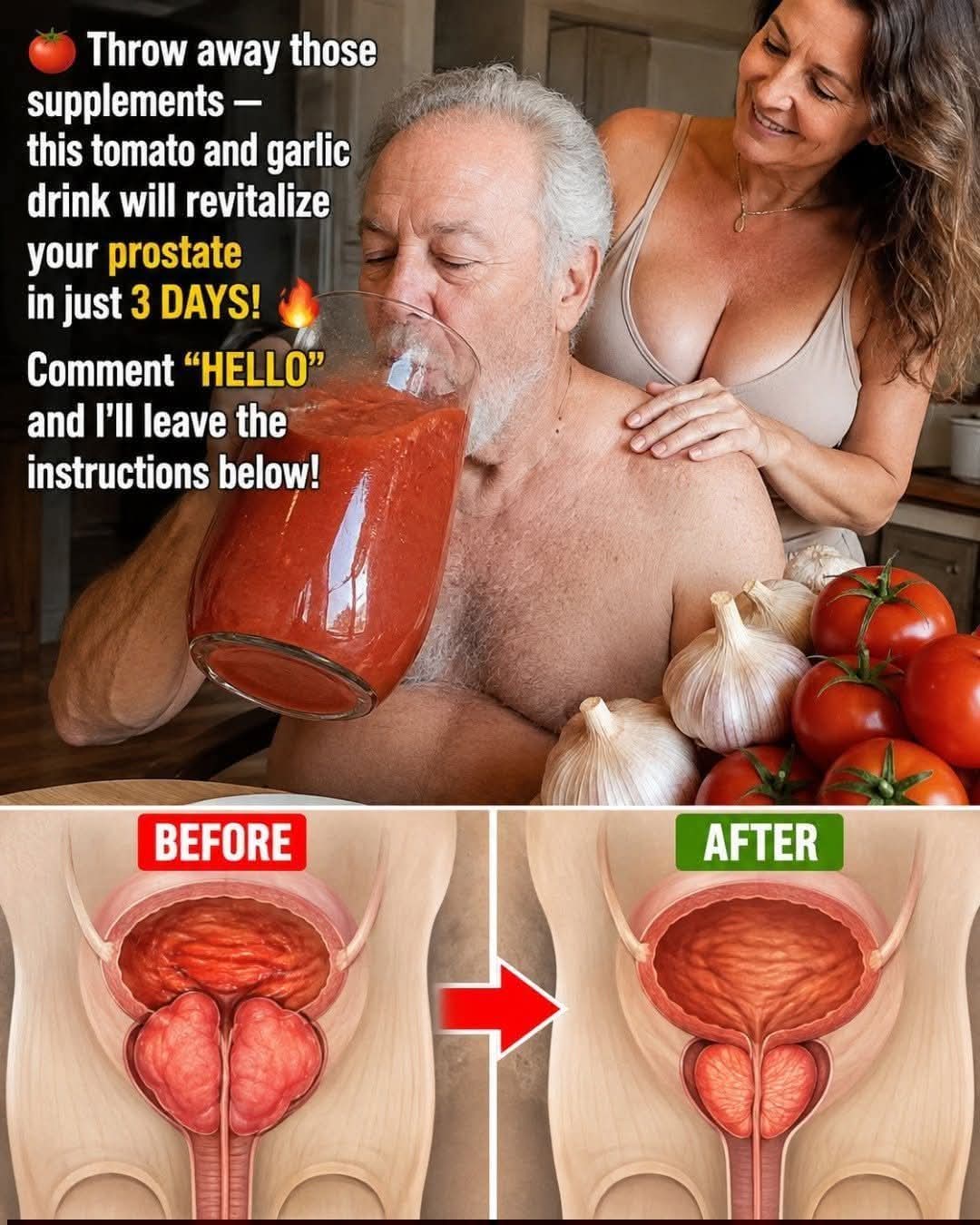
A bright red tomato-and-garlic drink has recently become popular online, accompanied by a dramatic promise: “Throw away those supplements—this tomato and garlic drink will revitalize your prostate in just 3 days!” The image also suggests that an enlarged prostate can quickly become smaller after drinking the mixture.
The idea is attractive. Tomatoes contain lycopene, garlic contains numerous sulfur-containing compounds, and both foods can certainly be part of a healthy eating pattern. But there is an important difference between saying that a food contains potentially beneficial nutrients and claiming that a homemade drink can shrink an enlarged prostate within three days.
There is currently no good clinical evidence that a tomato-and-garlic drink can shrink an enlarged prostate or “revitalize” the prostate in three days. Prostate symptoms can have several causes, and proper treatment depends on identifying the cause. The National Institute of Diabetes and Digestive and Kidney Diseases (NIDDK) explains that common prostate problems include benign prostatic hyperplasia (BPH), prostatitis, and prostate cancer, and that treatment depends on which condition is present.
That does not mean tomatoes and garlic have no place in a prostate-friendly lifestyle. Quite the opposite: vegetables, fruits, whole grains, physical activity, and a healthy weight are all important components of overall health. The American Cancer Society notes that research into tomatoes and lycopene is ongoing, while emphasizing that the overall dietary pattern is more important than relying on a single food or supplement.
This article separates the promising nutrition from the exaggerated claims and explains how men can approach prostate health safely.
What Is the Prostate?
The prostate is a small gland that forms part of the male reproductive system. It sits just below the bladder and surrounds part of the urethra—the tube through which urine leaves the body.
Because the urethra passes through the prostate, changes in the size or condition of the gland can affect urination.
As men age, the prostate commonly becomes larger. When this enlargement is noncancerous, it is called benign prostatic hyperplasia, or BPH. BPH is one of the most common prostate problems in men over 50.
An enlarged prostate can contribute to symptoms such as:
- Difficulty starting urination
- A weak or slow urine stream
- Urinating more frequently
- A sudden or urgent need to urinate
- Dribbling after urination
- Feeling that the bladder has not completely emptied
- Getting up repeatedly during the night to urinate
These symptoms can be frustrating and can interfere with sleep, work, travel, relationships, and everyday activities.
However, urinary symptoms should not automatically be blamed on an enlarged prostate. Other conditions can produce similar symptoms, which is why evaluation by a healthcare professional is important.
The Viral “3-Day Prostate Reset” Claim
The image associated with this topic makes a very specific promise: that drinking tomato and garlic can dramatically improve the prostate in only three days.
This is where caution is necessary.
The prostate is living tissue, and BPH involves actual changes in prostate tissue. While some prescription medicines can reduce prostate growth over time, there is no established evidence that a tomato-and-garlic beverage can physically shrink an enlarged prostate within 72 hours.
NIDDK lists established approaches for BPH that may include watchful waiting, lifestyle changes, medicines, and—in appropriate cases—procedures or surgery. Some medicines can help relax the prostate and bladder muscles, while other medicines can slow prostate growth or shrink the prostate in some men.
Therefore, it would be misleading to tell readers to stop prescribed medication or throw away supplements simply because they have discovered a tomato-and-garlic recipe.
A healthy drink can complement a healthy lifestyle, but it should not be presented as a replacement for diagnosis or evidence-based medical treatment.
Why Tomatoes Are Interesting for Prostate Health
Tomatoes are nutritionally valuable foods. They provide vitamin C, potassium, folate, and other nutrients, while also containing carotenoids such as lycopene.
Lycopene is a naturally occurring antioxidant pigment responsible for much of the red color in tomatoes.
Because oxidative stress and inflammation are involved in many biological processes, researchers have investigated whether lycopene and tomato-rich diets might influence prostate health.
Some early research has suggested that lycopene in tomatoes may have a relationship with prostate cancer risk. The American Cancer Society notes that researchers continue to investigate substances in tomatoes, including lycopene, for their potential role in prostate cancer prevention. However, the exact relationship between diet and prostate cancer remains unclear.
This distinction matters.
Tomatoes can be a healthy food without being a prostate cure.
Eating tomatoes regularly may be a sensible part of an overall healthy dietary pattern, but that is very different from claiming that tomato juice can rapidly reverse BPH.
Does Cooking Tomatoes Change Their Nutritional Value?
Tomatoes can be eaten raw, cooked, or incorporated into sauces, soups, and juices.
Cooking can change the availability of certain compounds. Lycopene, in particular, can become more bioavailable when tomatoes are processed or cooked, especially when consumed with some dietary fat.
This is one reason traditional Mediterranean-style dishes containing cooked tomatoes and olive oil can be nutritionally interesting.
However, there is no need to turn this observation into a “miracle recipe.”
A balanced diet can include:
- Fresh tomatoes
- Cooked tomatoes
- Tomato sauces with modest amounts of added salt
- Tomato-based soups
- Tomato and vegetable salads
- Other colorful fruits and vegetables
The goal is variety rather than dependence on one ingredient.
What About Garlic?
Garlic has been used as both a food and traditional health ingredient for centuries.
Modern research has investigated garlic for several potential effects, including cholesterol, blood pressure, blood sugar, and other health outcomes.
According to the National Center for Complementary and Integrative Health (NCCIH), some garlic preparations may modestly affect cholesterol and blood pressure, but evidence varies depending on the condition and preparation. NCCIH does not establish garlic as a treatment for an enlarged prostate.
Garlic contains sulfur-containing compounds that contribute to its characteristic smell and taste. When garlic is chopped or crushed, chemical reactions produce compounds that researchers have studied for their biological activity.
That makes garlic an excellent culinary ingredient—but again, interesting biology is not the same thing as proven treatment for BPH.
Can Garlic Shrink an Enlarged Prostate?
There is no established clinical evidence showing that ordinary garlic consumption can rapidly shrink an enlarged prostate.
This is an important point because online health posts often move from laboratory findings to dramatic human-health promises.
A compound may influence cells in a laboratory setting without producing the same effect when a person eats the food.
Likewise, an observational study showing that people who consume more of a particular food have a certain health outcome does not prove that the food caused the outcome.
For prostate health, stronger evidence comes from appropriately designed human clinical studies and established medical guidelines.
Therefore, garlic can reasonably be included in a healthy diet, but it should not be marketed as a replacement for medical treatment for BPH.
A Simple Tomato-and-Garlic Drink
If you enjoy tomatoes and garlic, there is nothing inherently wrong with preparing a simple tomato-based beverage as part of your diet, assuming these foods are appropriate for you.
Ingredients
- 2 ripe tomatoes
- 1 small garlic clove
- ½ cup water, or enough to reach your preferred consistency
- A small squeeze of lemon, optional
- A pinch of black pepper, optional
- A small amount of extra-virgin olive oil, optional
Instructions
Wash the tomatoes thoroughly and remove the stems.
Cut the tomatoes into pieces and place them in a blender. Add the garlic and water.
Blend until smooth.
If desired, add a small amount of lemon juice or black pepper.
For a more Mediterranean-style version, you can add a small amount of olive oil.
Serve immediately.
This is best viewed as a vegetable-based drink, not as a medical treatment.
There is no scientifically established requirement to drink it for exactly three days, seven days, or any other specific period to “reset” the prostate.
Why the Ingredients Can Still Be Valuable
Although the three-day claim is unsupported, the ingredients themselves can fit into a nutritious diet.
Tomatoes contribute vitamins, minerals, water, and carotenoids.
Garlic adds flavor while allowing people to make meals more interesting without relying heavily on salt or highly processed sauces.
If a tomato-and-garlic drink encourages someone to eat more vegetables and replace sugary beverages, that can be a positive dietary change.
The benefit comes from the overall eating pattern, however, rather than from a magical interaction between two ingredients.
Prostate Health Is Bigger Than One Drink
A prostate-friendly lifestyle should not revolve around a single recipe.
The American Cancer Society recommends a broader approach that includes maintaining a healthy weight, staying physically active, eating a variety of colorful fruits and vegetables and whole grains, and limiting highly processed foods, sugar-sweetened drinks, and processed and red meats.
That gives us a much more realistic strategy.
1. Eat More Vegetables
Try to include vegetables at most meals.
Tomatoes are one option, but they should be joined by leafy greens, carrots, peppers, broccoli, onions, beans, and other vegetables.
Different vegetables provide different nutrients and phytochemicals.
2. Choose Whole Fruits
Whole fruits provide fiber along with vitamins, minerals, and plant compounds.
Instead of relying heavily on fruit juice, choose whole fruit more often.
3. Stay Physically Active
Regular physical activity supports cardiovascular health, metabolic health, weight management, and general well-being.
Exercise should be appropriate for your age and fitness level.
Walking, cycling, swimming, strength training, and other activities can all contribute to an active lifestyle.
4. Maintain a Healthy Weight
Body weight is relevant to overall health, and the American Cancer Society notes that excess body weight has been associated in some studies with a greater risk of advanced or fatal prostate cancer.
Weight management should focus on sustainable habits rather than extreme diets.
5. Limit Highly Processed Foods
A diet dominated by highly processed foods can make it harder to obtain the variety of nutrients found in whole foods.
A useful approach is to build meals around vegetables, fruits, legumes, whole grains, nuts, seeds, and appropriate protein sources.
6. Be Careful With Alcohol and Caffeine
Men experiencing urinary symptoms may notice that certain beverages make symptoms worse.
NIDDK notes that reducing caffeine or alcohol and adjusting fluid intake—particularly before bedtime or activities where bathroom access is limited—may help some men with BPH symptoms.
This does not mean everyone must eliminate coffee or tea. Individual responses vary.
What About Nighttime Urination?
One of the most frustrating prostate-related symptoms is waking repeatedly during the night to urinate.
This is called nocturia.
BPH can contribute to nighttime urination, but it is not the only possible cause.
Evening fluid intake, caffeine, alcohol, certain medicines, bladder problems, sleep disorders, and other medical conditions can contribute.
If nighttime urination is frequent or newly worsening, it is worth discussing with a healthcare professional rather than assuming that the prostate is automatically responsible.
Simple lifestyle adjustments can sometimes help.
For example, some people benefit from:
- Reducing large amounts of fluid close to bedtime
- Limiting evening caffeine
- Limiting alcohol
- Emptying the bladder before going to sleep
- Reviewing medications with a healthcare professional
- Managing underlying medical conditions
When Prostate Symptoms Need Medical Attention
Natural foods are not a substitute for medical evaluation when symptoms are significant.
Seek medical advice if you experience persistent urinary symptoms, especially if they are worsening.
Important symptoms include:
- Difficulty starting urination
- Very weak urine flow
- Frequent urination that interferes with daily life
- Repeated nighttime urination
- Pain or burning during urination
- Blood in the urine
- Pain in the pelvis, lower back, penis, or scrotum
- Fever or chills associated with urinary symptoms
- A feeling that the bladder never empties
NIDDK specifically advises that inability to urinate requires immediate medical attention.
Sudden inability to pass urine can represent acute urinary retention and should not be treated with a homemade drink.
BPH Is Not Prostate Cancer
Another important misconception is that every enlarged prostate is cancer.
BPH means benign prostatic hyperplasia. The word “benign” means that the enlargement itself is not cancer.
However, a person can have BPH and prostate cancer at the same time.
Therefore, improving urinary symptoms does not automatically mean that a person has ruled out every prostate condition.
NIDDK identifies BPH, prostatitis, and prostate cancer as different prostate problems, each requiring appropriate evaluation and treatment.
This is another reason why claims that one drink can “clean,” “reset,” or “revitalize” the prostate can be misleading.
What Doctors May Do for an Enlarged Prostate
Treatment depends on symptom severity, prostate size, overall health, and other factors.
For men with mild symptoms, a healthcare professional may recommend monitoring and lifestyle adjustments.
For bothersome symptoms, medicines may be considered.
NIDDK notes that alpha-blockers can relax muscles around the prostate and bladder, helping urine flow. Other medicines, including 5-alpha-reductase inhibitors such as finasteride or dutasteride, can slow prostate growth and may shrink the prostate in some men.
Some men with significant symptoms may eventually need procedures or surgery.
The appropriate treatment should be individualized.
A food-based drink can be enjoyed alongside healthy habits, but it should not delay appropriate care.
What About Prostate Supplements?
The viral image tells people to “throw away those supplements.”
That is also too broad.
Some supplements may be unnecessary or ineffective, but others may have been recommended for a legitimate reason.
People should not discontinue prescribed medicines or medically recommended supplements without speaking with their healthcare professional.
It is also important to remember that “natural” does not automatically mean “risk-free.”
For example, NCCIH reports that garlic supplements can increase bleeding risk and may interact with certain medicines. People taking anticoagulants or aspirin should discuss garlic supplementation with their healthcare professional, particularly before surgery.
Eating normal culinary quantities of garlic is different from taking concentrated garlic supplements.
Food Versus Supplements
There is an important distinction between obtaining nutrients from foods and taking concentrated supplements.
Whole foods generally provide combinations of fiber, vitamins, minerals, and plant compounds.
The American Cancer Society emphasizes that a balanced diet containing a variety of fruits and vegetables is generally preferable to relying on specific substances in supplement form for prostate cancer prevention.
This is a useful principle for anyone interested in prostate health.
Instead of searching for a single “miracle” ingredient, build a dietary pattern that is sustainable for years.
A Practical Weekly Prostate-Friendly Eating Pattern
A simple approach might look like this:
Breakfast:
Oatmeal with berries, nuts, and plain yogurt, or eggs with vegetables and whole-grain bread.
Lunch:
A large salad containing tomatoes, leafy greens, beans or another protein source, olive oil, and whole grains.
Snack:
Fresh fruit and a small handful of unsalted nuts.
Dinner:
Fish, beans, poultry, or another protein source with cooked vegetables and whole grains.
Flavor boosters:
Garlic, onions, herbs, spices, lemon, and modest amounts of olive oil.
This kind of pattern provides much more nutritional variety than relying on one beverage.
A Better Way to Think About Tomatoes and Garlic
Instead of asking:
“Will tomato and garlic shrink my prostate in three days?”
A more useful question is:
“Can tomatoes and garlic be part of a dietary pattern that supports my overall health?”
The answer is yes for many people.
Tomatoes are nutrient-rich foods containing lycopene and other beneficial compounds. Garlic can add flavor and nutritional value to meals.
But neither ingredient should be presented as a guaranteed treatment for BPH.
Frequently Asked Questions
Can tomato juice cure an enlarged prostate?
No. There is no established evidence that tomato juice cures BPH or rapidly shrinks an enlarged prostate.
Can garlic cure prostate problems?
Garlic is a nutritious food, but it has not been established as a treatment that cures BPH, prostatitis, or prostate cancer.
How long does it take to improve prostate symptoms?
It depends on the cause. Lifestyle changes may help some urinary symptoms, while medicines or procedures may be necessary for others. There is no universal three-day timeline.
Is lycopene good for the prostate?
Lycopene is a carotenoid found in tomatoes, and researchers have investigated its possible relationship with prostate cancer. However, evidence is not strong enough to claim that lycopene-containing foods or supplements prevent or treat prostate disease by themselves.
Should I stop my prostate medication and drink tomato and garlic instead?
No. Do not stop prescribed medication because of a social-media claim. Discuss any changes with your healthcare professional.
Can I eat garlic if I take medication?
Food amounts of garlic are generally well tolerated by many people, but concentrated garlic supplements can increase bleeding risk and interact with medicines. If you take blood thinners or have surgery planned, discuss garlic supplements with your healthcare professional.
Can lifestyle changes help BPH symptoms?
They can help some men, particularly when symptoms are mild. NIDDK describes measures such as adjusting fluid intake, reducing caffeine and alcohol, and reviewing medicines that may affect bladder symptoms.
The Bottom Line
The tomato-and-garlic drink shown in the viral image can be a simple way to consume vegetables, but the dramatic promise attached to it should be treated with skepticism.
There is no reliable evidence that this drink can shrink an enlarged prostate or “revitalize” the prostate in three days.
Tomatoes provide lycopene and other nutrients. Garlic provides flavor and bioactive compounds and can be part of a healthy diet. Research continues to explore how foods such as tomatoes may relate to prostate cancer risk, but nutrition research does not support turning these foods into a guaranteed cure.
For prostate health, think beyond one recipe.
Eat a varied diet rich in vegetables and fruits. Stay physically active. Maintain a healthy weight. Limit highly processed foods. Pay attention to beverages that worsen urinary symptoms. And most importantly, seek medical evaluation when urinary or prostate symptoms persist, worsen, or become severe.
A tomato-and-garlic drink can be food.
It should not be presented as a three-day medical treatment.
Your prostate deserves something more valuable than a viral promise: accurate information, healthy habits, appropriate screening when recommended, and proper medical care when symptoms occur.
This article is for educational purposes and does not diagnose or treat prostate disease. Anyone with persistent urinary symptoms, blood in the urine, fever, significant pain, or inability to urinate should seek appropriate medical care.