Worked for 17s
Onion and Milk: What This Viral Home Remedy Really Does, How to Prepare It, and What the Science Says
Introduction
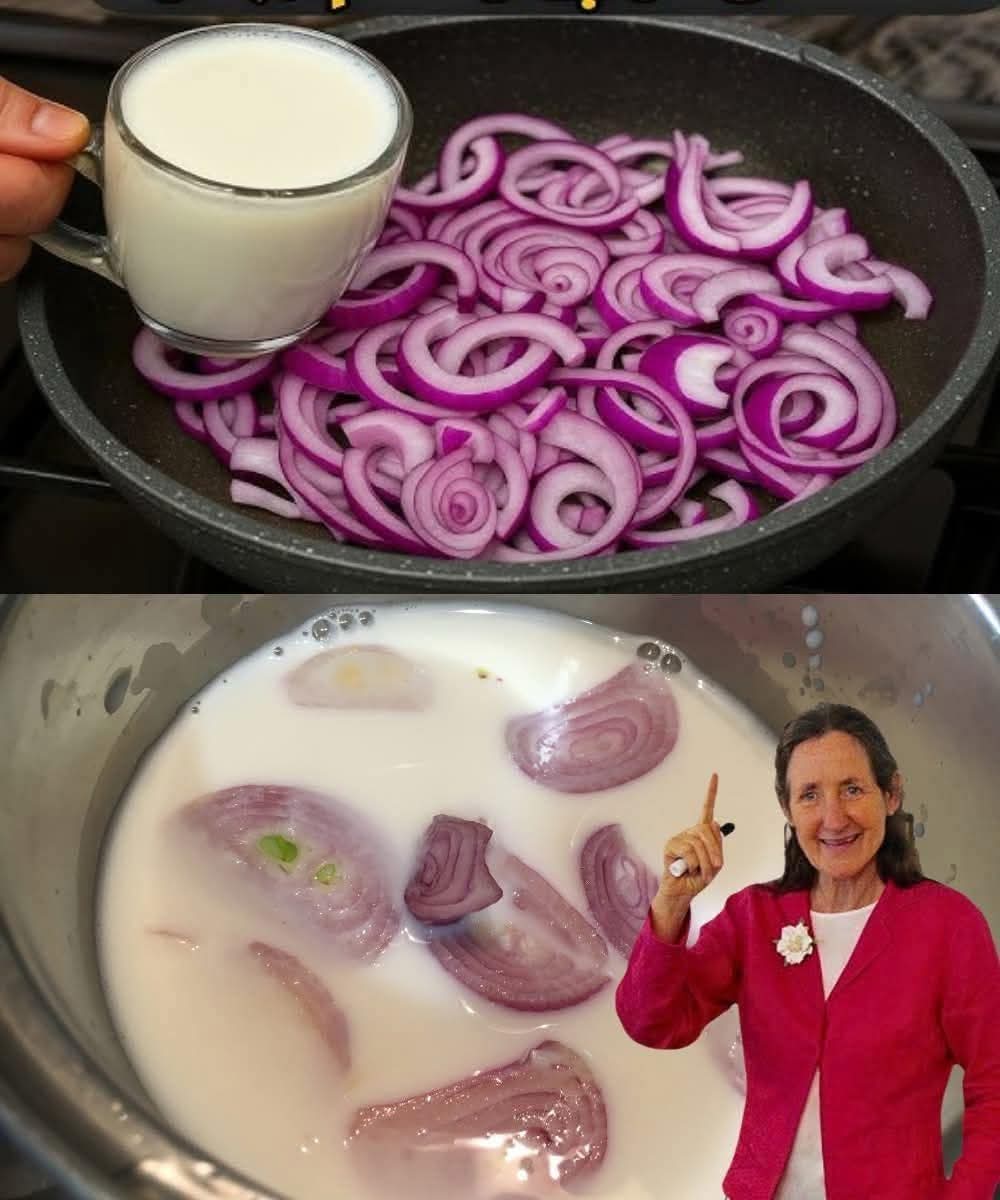
A simple combination of onion and milk has recently attracted attention as a traditional home remedy. The image accompanying this article shows sliced red onions alongside a cup of milk and onions soaking or simmering in a milky liquid. It is the kind of old-fashioned preparation that often appears in family kitchens and social-media health posts, usually accompanied by claims that it can soothe coughs, loosen mucus, support the immune system, improve sleep, or help the body fight illness.
But where does tradition end and evidence begin?
Onions and milk are both ordinary foods with useful nutritional qualities. Onions contain fiber and plant compounds, while milk provides protein, calcium and other nutrients. Combining them creates a warm, savory drink or preparation that some people may find comforting. However, it is important not to confuse a traditional remedy with a proven medical treatment.
There is no strong clinical evidence that onion cooked in milk can cure infections, eliminate mucus from the lungs, treat asthma, or replace medical treatment. A cough, for example, can have many different causes, including viral infections, allergies, acid reflux, smoking, postnasal drip and other respiratory conditions. The appropriate treatment depends on the cause.
That does not mean the preparation has no place in the kitchen. A warm onion-and-milk preparation can be viewed as a comforting food rather than a miracle cure. Staying hydrated and choosing nourishing foods can be helpful when you are recovering from an ordinary illness. Health authorities also recommend rest and adequate fluids for many uncomplicated coughs and respiratory infections.
This article explores the tradition behind onion and milk, its nutritional characteristics, a practical preparation method, possible benefits, limitations, safety considerations, common myths, and better ways to think about home remedies.
What Is Onion and Milk?
Onion and milk is exactly what its name suggests: onion pieces are gently cooked or simmered with milk until the onion becomes soft and the liquid takes on some of its flavor.
The preparation can be made with yellow, white or red onions. The image shows red onion, which gives the mixture a distinctive purple-pink appearance before cooking. Once heated, the onion gradually softens and releases its flavor into the milk.
Some traditional versions contain only two ingredients:
- Onion
- Milk
Others may add ingredients such as honey, cinnamon, garlic, ginger or a small amount of butter. These additions change the taste and nutritional profile, but they do not automatically make the mixture medically effective.
If the purpose is simply to prepare a comforting warm drink, keeping the recipe simple is often best.
Why Have People Used Onion as a Home Remedy?
Onions have been part of traditional cooking and folk medicine for centuries. Before modern medicines became widely available, households frequently relied on foods, herbs, spices and warm preparations to provide comfort during minor illnesses.
Onions were especially attractive because they were inexpensive, widely available and easy to store.
They also contain a variety of naturally occurring plant compounds. One of the compounds commonly discussed in onions is quercetin, a flavonoid found in many fruits and vegetables.
Laboratory research into compounds found in onions has produced interesting findings, but laboratory activity should not automatically be interpreted as proof that eating a particular home remedy will prevent or cure a disease.
This distinction is extremely important.
A food can contain a biologically interesting compound without functioning like a medicine. The amount consumed, digestion, absorption, metabolism and the actual condition being treated all matter.
So, while onions can absolutely be part of a healthy diet, it would be an exaggeration to describe onion milk as a proven treatment for serious disease.
Why Add Milk?
Milk brings a completely different nutritional profile to the preparation.
Milk naturally provides:
- Protein
- Calcium
- Phosphorus
- Vitamin B12
- Riboflavin
- Carbohydrates in the form of lactose
- Fat, depending on the type of milk
Dairy foods are recognized as a source of important nutrients, and one cup of dairy milk counts as a serving within the dairy food group.
Warm milk is also a familiar comfort food in many cultures. Some people enjoy it before bedtime because of its warmth and soothing texture.
However, milk should not be considered a medicine simply because it is nutritious.
It can contribute nutrients to the diet, but drinking milk does not directly eliminate a respiratory infection or destroy mucus in the lungs.
Possible Benefits of Onion and Milk
- It Can Be a Warm, Comforting Food
Perhaps the most realistic benefit is also the simplest.
A warm drink or soft food can be comforting when you are tired or have a mildly irritated throat. Fluids can help prevent dehydration, and maintaining hydration is an important part of caring for yourself during many minor respiratory illnesses.
The warmth itself may be pleasant, particularly during cold weather.
This is different from saying that onion milk cures the underlying illness.
- Onions Provide Plant Nutrients
Onions are vegetables and can contribute to a varied diet.
They contain fiber and naturally occurring plant compounds. Red onions are particularly attractive in cooking because of their color and distinctive flavor.
Including different vegetables in the diet is generally more useful than focusing on one supposed “superfood.”
A bowl of vegetables, legumes, fruits, whole grains and other nutritious foods will provide a much broader range of nutrients than any single home remedy.
- Milk Provides Protein and Calcium
If ordinary dairy milk is used, the preparation can provide protein and calcium.
Protein contributes to the maintenance of muscles and other tissues, while calcium is important for bones and teeth.
This makes onion milk more nutritionally meaningful than a preparation containing only flavored water.
However, the nutritional value depends on the amount of milk actually consumed and the type of milk selected.
- It May Help You Take in Fluids
When people feel unwell, they sometimes lose interest in eating and drinking.
A warm preparation that is easy to consume may help some people maintain fluid intake.
Still, plain water, soups, broths and other beverages can also contribute to hydration. There is no need to rely specifically on onion milk.
For a typical cough, health guidance emphasizes drinking plenty of fluids and resting.
- It Can Be Part of a Balanced Diet
Instead of thinking of onion milk as a cure, it is more sensible to view it as a traditional food preparation.
Onions can be incorporated into:
- Soups
- Stews
- Omelets
- Rice dishes
- Salads
- Sauces
- Vegetable dishes
Milk can be consumed as a beverage or used in:
- Oatmeal
- Soups
- Smoothies
- Yogurt-based dishes
- Sauces
Combining foods in different ways can make a healthy diet more enjoyable.
Does Onion Milk Really Treat Coughs?
This is one of the most important questions surrounding the remedy.
The answer is: there is not enough reliable clinical evidence to say that onion milk treats or cures a cough.
Coughing is a symptom, not a single disease.
A short-term cough may result from a common cold or flu. Other possible causes include allergies, smoking, acid reflux, postnasal drip, bronchitis and respiratory infections.
Because the causes are so different, one homemade preparation cannot reasonably be expected to treat every type of cough.
A warm drink may feel soothing, but soothing a symptom is not the same as treating its cause.
For example, someone coughing because of acid reflux may need reflux management. Someone with asthma may require appropriate asthma treatment. Someone with pneumonia may need medical evaluation and treatment.
This is why persistent or severe symptoms should never be ignored simply because a home remedy seems to help temporarily.
Can Onion Milk Remove Mucus?
Another popular claim is that onion milk can “clean the lungs” or remove mucus.
This is misleading.
Mucus is part of the body’s normal defense system. It can trap particles and microorganisms, helping the respiratory tract protect itself.
When someone has a cold or another respiratory infection, increased mucus can occur as part of the body’s response.
There are practical ways to make mucus and throat secretions more manageable, including adequate hydration. NHS guidance for catarrh recommends drinking plenty of water and other measures that can help ease symptoms.
But there is no good evidence that drinking cooked onion in milk physically cleans the lungs.
Your lungs already have sophisticated mechanisms for clearing secretions.
If you are coughing up large amounts of mucus, experiencing shortness of breath or developing chest pain, the underlying cause should be considered rather than simply treating the mucus itself.
Does Onion Milk Strengthen the Immune System?
Social-media posts sometimes describe onion milk as an “immune booster.”
This phrase is often used too loosely.
The immune system depends on many interacting processes. Nutrition matters, but no single food can magically strengthen the immune system in the way that these claims often suggest.
A nutritious diet that supplies enough protein, vitamins, minerals, fiber and energy supports normal body functions.
Onions can contribute useful plant compounds, and milk can provide important nutrients, but that does not make the combination a guaranteed immune treatment.
A better strategy is to focus on overall dietary quality rather than searching for one special recipe.
How to Make Traditional Onion Milk
If you would like to try the preparation as a food, here is a simple method.
Ingredients
- 1 medium onion, preferably red, yellow or white
- 2 cups milk
- 1 teaspoon honey, optional
- A small pinch of cinnamon, optional
- A tiny piece of fresh ginger, optional
If you are using honey, remember that honey should never be given to babies younger than 1 year.
Method
Step 1: Prepare the Onion
Peel the onion and wash it.
Slice it into thin rings or small pieces.
The image accompanying this article shows onions sliced into rings, which is a convenient traditional presentation.
Step 2: Add the Milk
Pour the milk into a saucepan.
Add the sliced onion.
Step 3: Heat Gently
Place the saucepan over low to medium heat.
Bring the milk slowly toward a gentle simmer.
Avoid aggressive boiling because milk can easily scorch or boil over.
Step 4: Cook the Onion
Allow the onion to cook gently for approximately 10–15 minutes, stirring occasionally.
The onion should become soft.
Step 5: Optional Flavoring
If desired, add a small amount of cinnamon or ginger.
If you want honey, allow the mixture to cool somewhat before stirring it in.
Step 6: Serve
You can strain the onion pieces out and drink the warm milk, or eat the softened onion together with the milk.
The choice is mainly about texture and personal preference.
What Does Onion Milk Taste Like?
The flavor can be surprising.
Onions are naturally pungent when raw, but cooking changes their flavor considerably. Heat softens their sharpness and can bring out sweetness.
Milk adds creaminess and reduces some of the onion’s intensity.
Red onion can provide a slightly stronger flavor than some mild yellow or white onions.
If the taste is too strong, you can adjust the recipe by:
- Using a smaller onion
- Choosing a mild onion
- Increasing the amount of milk
- Adding cinnamon
- Adding a small amount of ginger
- Using a little honey for sweetness
However, adding large amounts of sugar or honey turns a simple preparation into a much sweeter drink.
Should You Strain the Onion?
There is no medical requirement to strain it.
If you prefer a smooth drink, strain the onions after cooking.
If you want more fiber and the texture does not bother you, you can eat the cooked onion.
From a culinary perspective, both approaches are reasonable.
The important point is not to believe that leaving the onion pieces in the drink suddenly makes the remedy dramatically more powerful.
What About Adding Honey?
Honey is frequently combined with warm drinks for cough relief.
There is some evidence and clinical guidance supporting warm honey-and-lemon drinks as a way of soothing cough symptoms, although the evidence is limited. The NHS lists hot lemon and honey among self-care options for coughs.
That does not mean onion plus milk plus honey is a medically proven combination.
If you enjoy the taste, however, a small amount of honey can make the preparation more pleasant.
Again, honey must not be given to children under one year of age.
Who Should Be Careful With Onion Milk?
Although the ingredients are ordinary foods, the combination is not suitable for everyone.
People With Lactose Intolerance
Milk contains lactose.
People who are lactose intolerant may develop:
- Bloating
- Gas
- Abdominal discomfort
- Diarrhea
The severity varies between individuals.
A lactose-free milk can be used if it is better tolerated.
People With Milk Allergy
Milk allergy is different from lactose intolerance.
A person with a milk allergy may experience an immune reaction to milk proteins.
Anyone with a known milk allergy should avoid ordinary dairy milk unless their healthcare professional has advised otherwise.
People Who Experience Reflux
Some people find certain foods or large meals worsen acid reflux.
If a warm milk preparation causes heartburn or discomfort, it may not be a good choice for you.
A persistent cough can sometimes be associated with reflux, so repeatedly treating the cough with home remedies without addressing the underlying cause may delay appropriate care.
People Watching Their Calorie Intake
Whole milk contains more fat and calories than skimmed or low-fat milk.
The choice of milk can therefore change the nutritional profile of the recipe.
There is nothing inherently wrong with whole milk for people who tolerate it, but individual dietary needs matter.
Common Myths About Onion Milk
Myth 1: “It Cleans the Lungs”
There is no good evidence that onion milk literally cleans the lungs.
The respiratory system has its own mucus-clearing mechanisms.
A healthy lifestyle, avoiding smoking and managing respiratory conditions are much more important for lung health.
Myth 2: “It Cures Every Cough”
No single food can treat every cause of coughing.
A cough caused by a common cold is different from a cough caused by asthma, reflux, allergies or pneumonia.
Myth 3: “It Replaces Antibiotics”
Absolutely not.
Antibiotics are used for certain bacterial infections and do not treat viral illnesses.
If someone has a serious bacterial infection, replacing prescribed treatment with onion milk could be dangerous.
Myth 4: “The More Onion You Use, the Stronger the Remedy”
There is no established medical rule that more onion produces a stronger therapeutic effect.
Increasing the amount may simply make the preparation more difficult to tolerate.
Myth 5: “Natural Means Completely Safe”
Natural foods can still cause problems.
Milk can cause allergic reactions in people with milk allergy. Onions can cause digestive discomfort in some individuals. Certain added ingredients can also have their own risks.
“Natural” does not automatically mean “risk-free.”
Onion Milk and Traditional Wisdom
Traditional remedies deserve respect because they often reflect generations of culinary and cultural experience.
But traditional use and scientific proof are two different things.
A remedy can be meaningful culturally and comforting personally without having been proven to treat a disease.
The healthiest approach is not to dismiss traditional foods automatically, but also not to exaggerate their medical properties.
Onion milk fits nicely into this middle ground.
It can be prepared as a warm traditional food.
It may be comforting.
It can contribute nutrients.
But it should not be promoted as a cure for serious illness.
Why Warm Drinks May Feel Soothing
When the throat feels irritated, temperature and texture can affect comfort.
Warm liquids can be pleasant, and drinking enough fluids may help prevent the throat from becoming excessively dry.
Some people prefer warm drinks while others prefer cool liquids.
There is no universal rule that everyone with a cough must drink something hot.
The best choice is usually whatever is comfortable and tolerated.
NHS guidance similarly emphasizes fluids and rest as part of self-care for ordinary coughs.
A Better Way to Use Home Remedies
Instead of asking, “Which home remedy will cure this illness?” consider asking:
“What can I safely do to make myself more comfortable while my body recovers, and when should I seek medical help?”
This mindset is much safer.
For a mild cough, practical measures can include:
- Drinking enough fluids
- Getting adequate rest
- Avoiding cigarette smoke
- Using a humidifier if dry air irritates your throat
- Choosing soothing warm drinks
- Using honey when appropriate
- Speaking with a pharmacist about suitable symptom relief
These measures focus on comfort rather than promising a miracle cure.
When a Cough Needs Medical Attention
A mild cough often resolves on its own. The NHS notes that many coughs clear within approximately three to four weeks.
However, some symptoms require medical evaluation.
Seek medical advice if:
- The cough lasts longer than three weeks
- The cough becomes severe or rapidly worsens
- You experience chest pain
- You have difficulty breathing
- You cough up blood
- You feel seriously unwell
- You have unexplained weight loss
- You have a weakened immune system
- You have significant underlying health conditions
These warning signs are more important than whether a home remedy seems effective.
If someone is struggling to breathe, gasping or unable to speak normally because of breathing difficulty, urgent emergency medical assistance is appropriate.
Onion Milk for Children
Parents should be particularly cautious about viral home-remedy claims involving children.
Children are not simply small adults.
A remedy that seems harmless to an adult may not be appropriate for a young child.
Honey, for example, should not be given to children younger than one year because of the risk of infant botulism.
Children with persistent coughs, breathing difficulties, high fever or other concerning symptoms should be evaluated by an appropriate healthcare professional rather than relying solely on homemade drinks.
Can You Drink Onion Milk Every Day?
There is no established medical reason to drink onion milk every day.
If you enjoy it as food and tolerate the ingredients, an occasional serving is generally a culinary choice.
But there is no evidence that consuming it daily provides special protection against infections or respiratory disease.
A varied diet is a much better long-term strategy.
Rather than repeatedly consuming one preparation, rotate through many nutritious foods:
- Vegetables
- Fruits
- Beans
- Lentils
- Whole grains
- Nuts and seeds
- Fish or other protein sources
- Eggs
- Dairy or suitable alternatives
The overall dietary pattern matters far more than a single recipe.
A Simple Wellness Version
For people who enjoy the tradition but want a gentle preparation, try:
Ingredients
- 1 small onion
- 2 cups milk or lactose-free milk
- ½ teaspoon cinnamon
- A small piece of fresh ginger
- 1 teaspoon honey, optional
Preparation
Slice the onion.
Place it in a saucepan with the milk.
Add ginger and cinnamon.
Heat gently for 10–15 minutes.
Strain if desired.
Allow it to cool slightly.
Add honey if wanted.
Serve warm.
This is best considered a comforting beverage rather than a medicinal treatment.
Nutritional Perspective
The exact nutrition depends on the ingredients and serving size.
Milk contributes protein and minerals such as calcium.
Onions contribute carbohydrate, fiber and plant compounds.
Honey, if added, contributes additional sugar and calories.
Cinnamon and ginger are used primarily for flavor in this preparation.
Because the ingredients are relatively simple, the recipe can fit into many diets, provided individual allergies, intolerances and dietary restrictions are considered.
Why Viral Remedies Become So Popular
A recipe like onion milk has everything that makes a home-remedy post attractive online.
It is:
- Cheap
- Simple
- Made with familiar ingredients
- Easy to demonstrate
- Connected to traditional wisdom
- Visually distinctive
- Associated with health claims
The image of purple onion rings surrounded by creamy white milk is especially attention-grabbing.
But attractive presentation can make a remedy appear more scientifically established than it actually is.
Whenever you see a post claiming that a simple food “cures” several unrelated diseases, ask three questions:
- What exactly is the claim?
- Is there good human research supporting it?
- Could relying on it delay appropriate medical treatment?
These questions can help separate useful traditional practices from dangerous misinformation.
The Bottom Line
Onion and milk can certainly be combined into a traditional warm preparation.
Onions provide plant nutrients and milk supplies protein and minerals. A warm drink may also feel comforting, and maintaining hydration is useful during many minor illnesses.
However, there is not enough evidence to claim that onion milk cures coughs, removes lung mucus, treats infections, or replaces medical treatment.
Its most reasonable role is as a nourishing, comforting food.
If you have a mild cough, focus on rest, fluids and appropriate symptom relief. If the cough persists, becomes severe, or is accompanied by chest pain, difficulty breathing or blood, seek medical advice rather than relying on a home remedy.
Traditional recipes can be enjoyed without turning them into miracle cures.
That may actually be the healthiest way to appreciate onion milk: keep the tradition, enjoy the food, understand the limits of the evidence, and never let a viral remedy replace proper medical care when it is needed.
Frequently Asked Questions
Can onion milk stop a cough?
There is not enough reliable evidence to say that onion milk stops or cures coughs. It may be comforting as a warm drink, but the underlying cause of the cough still matters.
Is onion milk good for mucus?
There is no good evidence that it removes mucus from the lungs. Staying hydrated can help keep the throat comfortable, while persistent respiratory symptoms should be evaluated according to their cause.
Can I add honey?
Yes, honey can be added for flavor and may soothe cough symptoms in some situations. However, honey must not be given to babies younger than one year.
Can I use red onions?
Yes. Red onions can be used just like yellow or white onions. The main difference is flavor and color.
Can lactose-intolerant people drink onion milk?
They may tolerate a lactose-free milk alternative better. Anyone with significant symptoms should choose an option appropriate for their dietary needs.
Is onion milk a medicine?
No. It is better regarded as a traditional food or home preparation rather than a medically proven treatment.
How often should I drink it?
There is no scientifically established schedule or daily requirement. If you enjoy it and tolerate the ingredients, it can be consumed occasionally as part of a varied diet.
What is more important than a home remedy?
For minor illnesses, adequate fluids, rest and appropriate symptom management are important. Persistent or severe symptoms require professional medical evaluation.
Final Thoughts
The combination of onion and milk is a fascinating example of how traditional kitchen practices can become modern internet health trends.
There is nothing wrong with preparing a warm cup and enjoying it for comfort. Onions and milk are real foods with real nutritional value, and warm fluids can be pleasant when you are not feeling your best.
The mistake is turning a simple food into a guaranteed cure.
Health is rarely about one magical ingredient. It is built through consistent habits: nutritious food, adequate hydration, sleep, physical activity, avoidance of tobacco smoke, preventive healthcare and timely medical attention when symptoms become concerning.
So, if you have been curious about the onion-and-milk preparation shown in the image, you can try it as a traditional recipe—provided you tolerate the ingredients.
Just keep expectations realistic.
Enjoy the tradition, appreciate the ingredients, and let evidence—not viral claims—guide your health decisions.