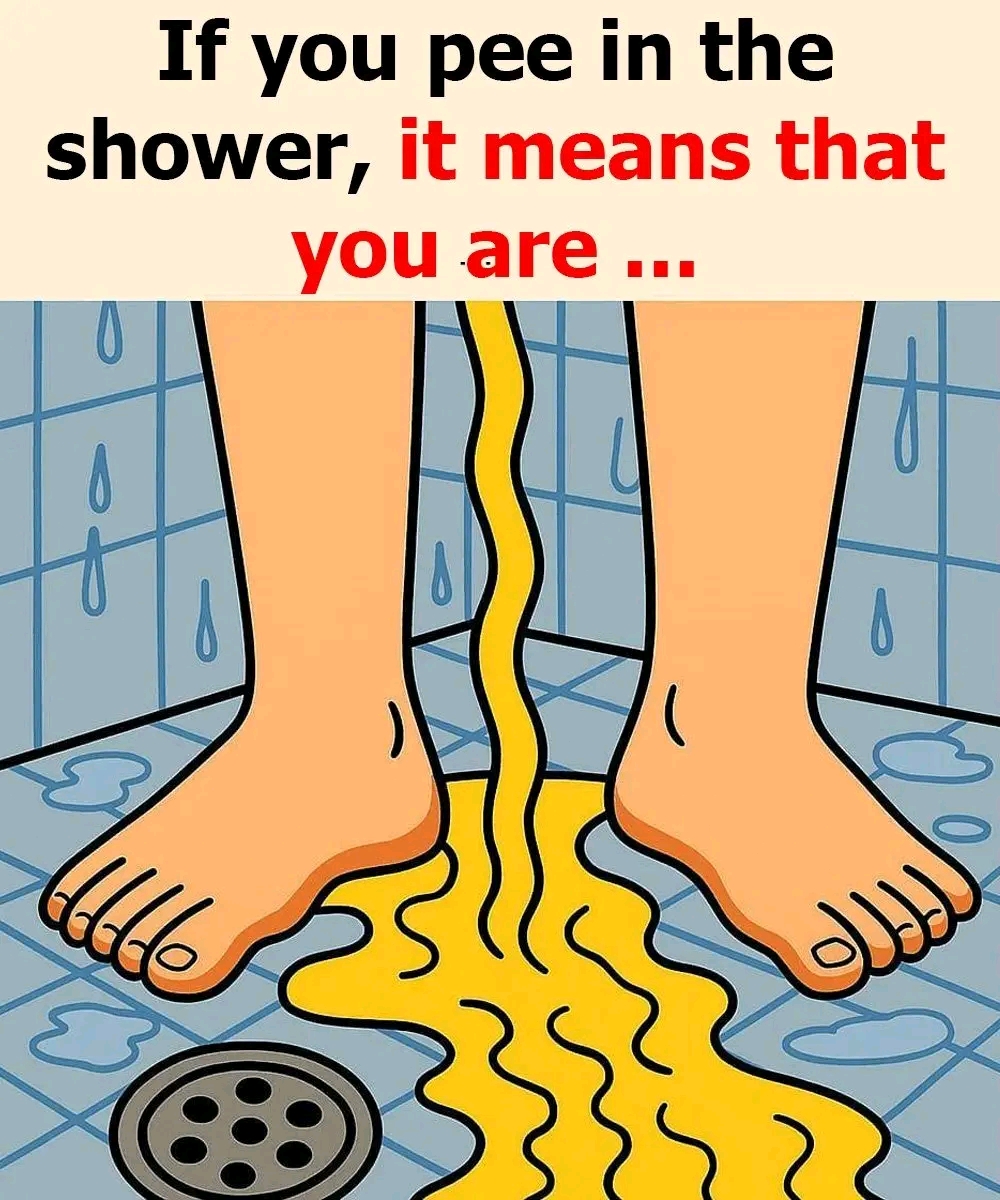
Peeing in the shower is extremely common, generally medically fine for healthy people in their own bathroom, and a minor win for water conservation — but it comes with a few real caveats and a strong “ick” factor for many.
The meme you shared captures a near-universal private debate. The incomplete punchline (“it means that you are…”) invites everything from “efficient,” “environmentally conscious,” and “a multitasker” to “gross,” “lazy,” or “someone who will never admit it.” Reality sits somewhere in the middle of the practical and the mildly taboo.
How common is it?
Surveys and informal polls consistently show that a large share of people have done it at least occasionally. Figures often land in the 45–80% range depending on the sample, with higher rates among men and younger adults. Many who claim they never do it are widely suspected of lying. It’s one of those habits people practice privately and rarely discuss without humor or embarrassment.
The medical take
Most urologists and medical sources say that for a healthy person in their own shower with the water running, it is low-risk.
- Urine is mostly water. Healthy urine has relatively low bacterial counts (it is not sterile, contrary to the old myth). The bacteria present are typically your own.
- Running water dilutes and rinses it away almost immediately. It does not meaningfully corrode or clog household plumbing.
- The main practical benefits cited are convenience and water savings. A toilet flush can use 1.6–3+ gallons (sometimes more in older fixtures). Skipping even one flush a day by timing a pee with a shower adds up over a year — estimates commonly range from several hundred to over a thousand gallons per person, depending on flush volume and frequency.
Cleveland Clinic, CNN, and multiple urologists have stated it is “generally OK” or “fine” from a pure health standpoint when done under ordinary conditions.
Legitimate downsides and when to avoid it
There are real reasons some doctors and pelvic-floor specialists advise against making it a daily habit:
- Infections: If you have a UTI, certain STIs, or other contagious conditions, urine can carry higher bacterial loads. Public or shared showers raise the (still modest) risk of transmitting something. Open wounds or recent shaving micro-cuts create a theoretical pathway for irritation or infection, though the constant water flow reduces this risk substantially.
- Pelvic floor and bladder training concerns: Standing to pee (especially for people with female anatomy) does not allow the pelvic floor to relax as fully as sitting. Some physical therapists and urogynaecologists argue this can contribute to incomplete emptying over time or strain. More commonly discussed is classical conditioning: repeatedly peeing while water runs can train the brain to associate the sound of running water with the urge to urinate. This may later cause urgency or minor leaks when washing hands, doing dishes, or hearing water elsewhere — particularly if pelvic-floor dysfunction already exists.
- Hygiene and shared spaces: In a private shower that you clean regularly, the issue is minor. In gyms, hotels, or shared bathrooms the etiquette and hygiene calculus changes.
Some experts are more emphatic and recommend never doing it (especially standing), citing the pelvic-floor and conditioning issues as outweighing the water savings. Others view the risks as overstated for most healthy adults and note that the warm water can actually help people who have trouble initiating a stream by promoting relaxation.
Practical and social reality
- Clean your shower regularly regardless. Soap, shampoo residue, and skin cells already require it; a little diluted urine doesn’t fundamentally change the cleaning schedule.
- If you live with others, the “don’t ask, don’t tell” approach is common. Many people who do it simply never announce it.
- Athlete’s foot or other foot treatments via urine are not supported by good evidence.
- Forcing urine out while standing is generally discouraged; the ideal is relaxed, natural flow.
Bottom line
If you pee in the shower, you are statistically ordinary, mildly eco-conscious (in a small way), and almost certainly not endangering your health in any dramatic fashion — provided you are otherwise healthy, it’s your own shower, and you clean it. You are also participating in one of the more widely practiced and least-discussed household efficiencies.
If the idea repulses you, or if you have bladder issues, pelvic-floor problems, or an infection, stick to the toilet. Both positions are defensible. The strongest consensus from mainstream medical sources is that the practice is safe enough for most people that the decision is ultimately personal preference rather than a strict health mandate.
So, completing the meme in the spirit of the evidence: If you pee in the shower, it means that you are… pragmatic, statistically normal, and (usually) fine.