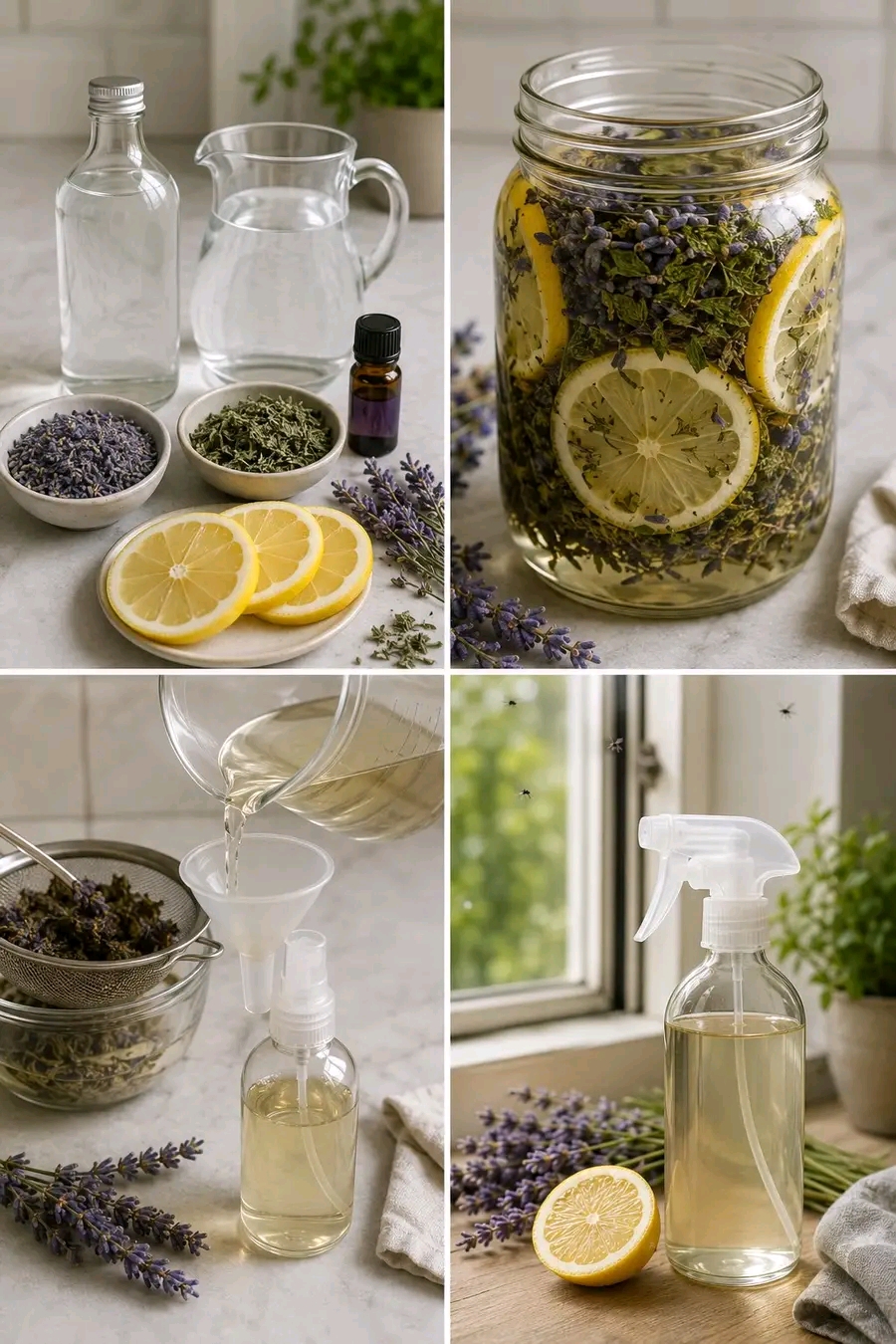
The Most Effective Natural Remedy Against Flies and Mosquitoes: A Homemade Herbal Repellent for a Fresher Home
Introduction
Flies and mosquitoes are among the most common household pests around the world. They can quickly turn a relaxing evening into an uncomfortable experience with constant buzzing, itchy bites, and the risk of spreading germs. While many commercial insect sprays are effective, they often contain synthetic chemicals that some people prefer to avoid, especially around children, pets, or food preparation areas.
For generations, people have relied on aromatic herbs, citrus fruits, and essential oils as natural ways to discourage insects. Although these remedies cannot completely eliminate flies and mosquitoes, they may help reduce their presence while leaving your home smelling fresh and pleasant.
This article explores a simple homemade herbal repellent made from natural ingredients that have traditionally been used to deter insects. You’ll learn about its history, ingredients, preparation, benefits, methods of use, safety tips, nutrition of the plant ingredients, and much more.
History of Natural Insect Repellents
Long before chemical insecticides existed, civilizations around the world discovered that certain plants naturally discouraged insects.
The ancient Egyptians burned fragrant herbs during warm evenings. Mediterranean cultures placed pots of basil near windows and doors. In India, neem leaves and citronella grass were widely used around homes. Native American communities burned aromatic plants such as sage to reduce insects during outdoor gatherings.
These traditional practices inspired many of today’s natural household remedies.
Why Flies and Mosquitoes Are Attracted to Homes
Understanding why insects enter homes helps improve prevention.
Flies are attracted by:
- Food scraps
- Sweet drinks
- Garbage
- Pet food
- Organic waste
Mosquitoes are attracted by:
- Standing water
- Human body heat
- Carbon dioxide from breathing
- Sweat
- Dark, humid areas
Natural repellents work best when combined with good household hygiene.
Ingredients
For one homemade herbal repellent jar you will need:
- 1 lemon
- 1 lime
- Several fresh rosemary sprigs
- A handful of fresh mint leaves
- A few lavender sprigs (optional)
- 2 cups water
- 15 drops citronella essential oil
- 10 drops eucalyptus essential oil
- 10 drops peppermint essential oil
- 1 floating candle (optional for outdoor use)
- A clean glass jar
Equipment
- Knife
- Cutting board
- Glass jar
- Measuring cup
- Spoon
Instructions
Step 1
Wash all herbs and citrus fruits thoroughly.
Step 2
Slice the lemon and lime into thin rounds.
Step 3
Place the citrus slices into the glass jar.
Step 4
Add rosemary, mint, and lavender.
Step 5
Pour in the water.
Step 6
Add the essential oils.
Step 7
If using outdoors, carefully place a floating candle on top of the water and light it only while supervised.
Step 8
Place the jar near open windows, patios, balconies, or outdoor tables.
Preparation Methods
Method 1: Decorative Jar Repellent
This is the most popular option for kitchens and patios.
Method 2: Spray Version
Mix the same ingredients without the candle in a spray bottle and lightly mist window frames, doorways, and outdoor seating areas. Avoid spraying directly on people or pets unless the essential oils are known to be safe for that use.
Method 3: Simmer Pot
Simmer citrus slices, rosemary, and mint in water on the stove to release their aroma throughout the home.
How the Ingredients May Help
Lemon
The fresh citrus aroma may help make an area less attractive to some insects.
Lime
Provides additional citrus fragrance and complements lemon.
Rosemary
Traditionally used as a natural insect deterrent because of its aromatic oils.
Mint
Its strong scent has long been used to discourage insects.
Lavender
Adds a pleasant floral fragrance and has traditionally been associated with repelling some insects.
Citronella Essential Oil
One of the most widely studied plant-based mosquito repellents. It can help reduce mosquito landings for a limited period, though it is generally less long-lasting than some synthetic repellents.
Eucalyptus Oil
Known for its refreshing scent and commonly included in natural insect-repellent blends.
Peppermint Oil
Its strong aroma is commonly used in homemade insect deterrents.
Benefits
- Made from simple household ingredients
- Pleasant natural fragrance
- Easy to prepare
- Affordable
- Decorative centerpiece
- No synthetic aerosol propellants
- Can be customized with different herbs
- Suitable for outdoor gatherings when used safely
Tips for Better Results
- Empty standing water around your home.
- Keep garbage bins covered.
- Clean kitchen surfaces regularly.
- Install window screens.
- Replace the jar every 2–3 days for a fresh scent.
- Refresh essential oils as needed.
Safety Information
- Essential oils are concentrated and should be used with care.
- Keep out of reach of children.
- Some essential oils can be harmful to pets, especially cats.
- Do not ingest essential oils.
- Never leave a burning candle unattended.
- If using a spray, avoid contact with eyes and broken skin.
Variations
Citrus Blend
Use orange, lemon, and lime together.
Garden Blend
Rosemary, basil, thyme, and mint.
Floral Blend
Lavender with lemon slices.
Woodland Blend
Pine needles, rosemary, and eucalyptus.
Nutrition of the Plant Ingredients
Although this recipe is intended as a household repellent rather than a food, the fresh ingredients contain valuable nutrients when consumed as part of a normal diet.
Lemon provides vitamin C and antioxidants.
Lime contains vitamin C and beneficial plant compounds.
Rosemary contains antioxidants and aromatic compounds.
Mint provides small amounts of vitamin A and antioxidants.
Lavender contains aromatic plant compounds but is generally used in small culinary amounts or for fragrance.
Because this remedy is not intended for eating, these nutrients are not consumed through its use.
Frequently Asked Questions
Does this kill mosquitoes?
No. It is intended to help repel them rather than kill them.
Will it completely eliminate flies?
No natural remedy can guarantee complete elimination. Combining repellents with sanitation and removing breeding sites is the most effective approach.
How long does it last?
The fresh ingredients are best replaced every 2–3 days.
Can I use dried herbs?
Yes, but fresh herbs usually release a stronger aroma.
Conclusion
Homemade herbal repellents are a pleasant, affordable way to help reduce flies and mosquitoes around your home. While they are not a complete solution and cannot guarantee that insects will disappear entirely, they can be a useful part of an integrated approach that includes keeping your home clean, removing standing water, and using screens on windows and doors.
The combination of citrus fruits, rosemary, mint, lavender, and carefully used essential oils creates a fresh-smelling display that many people enjoy, especially during warm weather and outdoor gatherings.
With regular maintenance and realistic expectations, this natural remedy can become a practical addition to your home during insect season.
Why People Love This Remedy
People appreciate this recipe because it is simple, inexpensive, attractive, and made with ingredients commonly found in kitchens and gardens. It freshens the air, adds decorative appeal, and may help discourage flies and mosquitoes without relying solely on conventional chemical sprays. While it is not a miracle cure, many enjoy using it as part of a balanced, natural approach to pest management.