Rosemary Preservation Guide: How to Keep Fresh Rosemary Flavorful for Months
Introduction
Rosemary (Rosmarinus officinalis, now classified as Salvia rosmarinus) is one of the world’s most treasured culinary herbs. Recognized by its fragrant needle-like leaves and woody stems, rosemary has been used for thousands of years in cooking, medicine, and traditional rituals. Whether you’re harvesting rosemary from your own garden or bringing home a large bundle from the market, knowing how to preserve it properly ensures you can enjoy its incredible aroma and flavor throughout the year.
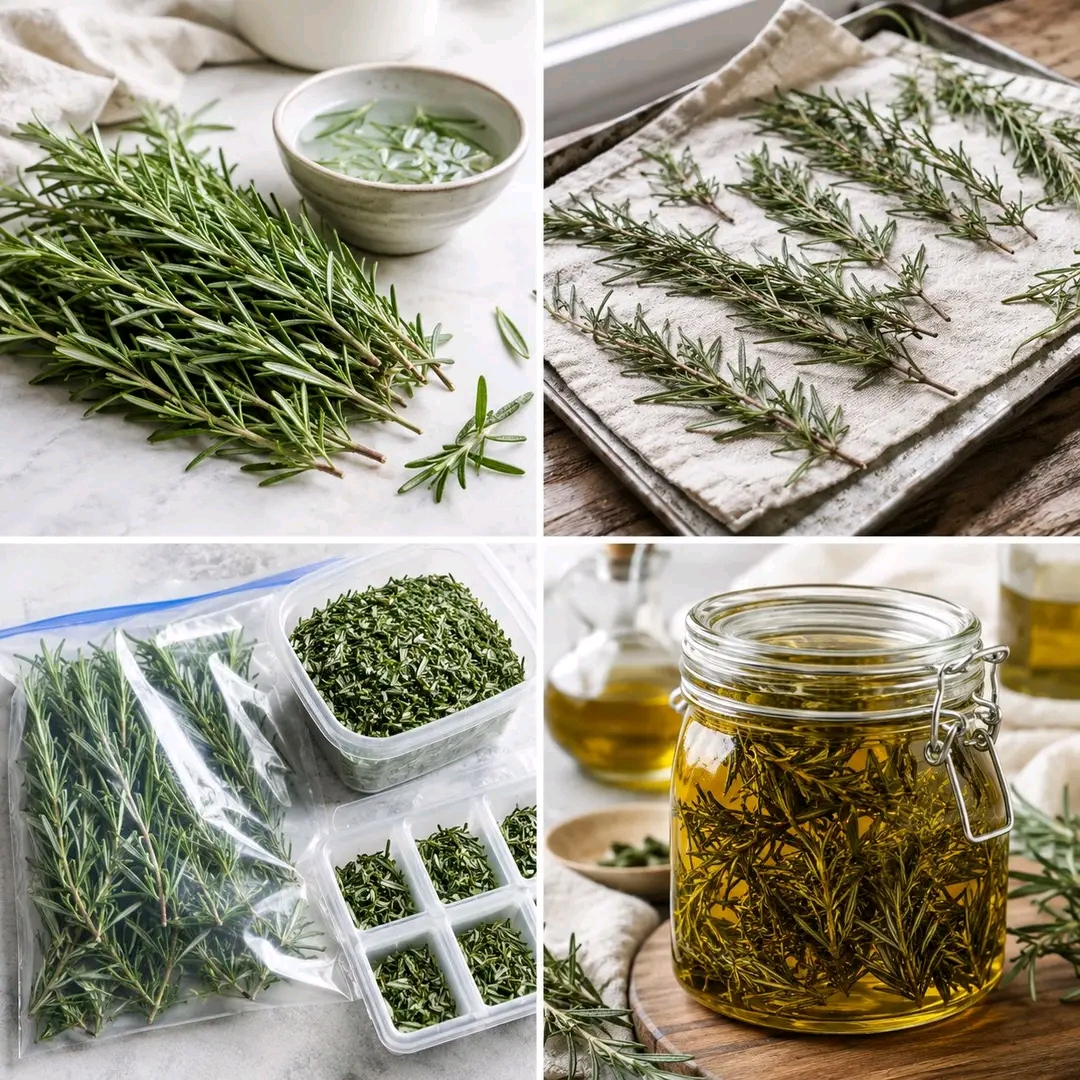
The image above showcases four of the most popular rosemary preservation methods:
- Fresh rosemary stored in water
- Air-drying rosemary sprigs
- Freezing whole and chopped rosemary
- Preserving rosemary in olive oil
Each technique has unique advantages depending on how you plan to use the herb. This complete guide explains every method in detail, along with rosemary’s history, health benefits, nutritional value, and practical culinary uses.
History of Rosemary
Rosemary originated along the Mediterranean coast, where it has flourished for thousands of years. Ancient Egyptians placed rosemary in tombs as a symbol of eternal remembrance. Greeks wore rosemary wreaths while studying because they believed the herb improved memory and concentration.
Romans burned rosemary during ceremonies and used it to perfume homes. Throughout medieval Europe, rosemary became associated with loyalty, love, and protection. Brides often carried rosemary bouquets, while families planted rosemary near their homes for good fortune.
Today, rosemary remains one of the world’s most popular herbs and is grown across Europe, North America, Asia, Africa, and Australia.
Why Preserve Rosemary?
Fresh rosemary eventually loses moisture and flavor. Proper preservation allows you to:
- Reduce food waste
- Save money
- Enjoy homegrown herbs all year
- Maintain delicious aroma
- Prepare herbs for quick cooking
- Create infused oils
- Enhance soups, sauces, breads, and roasted dishes
Different preservation methods maintain different qualities of the herb.
Ingredients
For Air Drying
- 1 large bunch fresh rosemary
- Kitchen twine or rubber bands
- Clean towel
For Freezing
- Fresh rosemary
- Zip-top freezer bags
- Ice cube tray
- Olive oil (optional)
For Rosemary Oil
- 2 cups fresh rosemary sprigs
- 2 cups extra virgin olive oil
- Sterilized glass jar
For Fresh Refrigerator Storage
- Fresh rosemary
- Cold water
- Glass jar
- Plastic storage bag
Equipment Needed
- Sharp scissors
- Colander
- Baking tray
- Paper towels
- Airtight containers
- Glass jars
- Freezer bags
- Ice cube tray
Method 1: Refrigerating Fresh Rosemary
Step 1
Trim the stem ends.
Step 2
Fill a glass with 2 inches of water.
Step 3
Place rosemary upright like flowers.
Step 4
Loosely cover with a plastic bag.
Step 5
Store in the refrigerator.
Shelf Life
- Up to 2 weeks
Method 2: Air Drying Rosemary
Drying is the oldest preservation technique.
Step 1
Wash rosemary gently.
Step 2
Dry thoroughly.
Step 3
Tie into small bundles.
Step 4
Hang upside down in a cool, dark place.
Step 5
Allow to dry for 2–3 weeks.
Step 6
Remove leaves from stems.
Step 7
Store in airtight jars.
Shelf life:
- 12 months
Method 3: Oven Drying
Ingredients
- Fresh rosemary
Instructions
- Preheat oven to the lowest temperature (around 170°F/75°C).
- Spread rosemary on a baking tray.
- Bake for 20–40 minutes.
- Cool completely.
- Store in airtight containers.
Method 4: Freezing Whole Sprigs
Instructions
Wash rosemary.
Dry completely.
Place sprigs inside freezer bags.
Remove excess air.
Freeze immediately.
Shelf life:
- Up to one year.
Method 5: Freezing Chopped Rosemary
Instructions
Finely chop rosemary.
Fill ice cube trays halfway.
Cover with olive oil or water.
Freeze overnight.
Transfer cubes to freezer bags.
Perfect for soups, stews, sauces, pasta, and roasted vegetables.
Method 6: Rosemary-Infused Olive Oil
Ingredients
- 2 cups olive oil
- 2 cups rosemary sprigs
Instructions
- Wash rosemary.
- Dry completely.
- Sterilize a glass jar.
- Add rosemary.
- Pour olive oil over the herb.
- Seal tightly.
- Refrigerate and use within a week unless the rosemary has been fully dried first.
Cooking Uses
Rosemary pairs wonderfully with:
- Roast chicken
- Lamb
- Beef
- Pork
- Potatoes
- Bread
- Pizza
- Focaccia
- Pasta
- Olive oil
- Garlic
- Lemon
- Tomatoes
- Mushrooms
- Grilled vegetables
Health Benefits
Rosemary contains many beneficial plant compounds.
Potential benefits include:
- Rich in antioxidants
- Supports healthy digestion
- Contains anti-inflammatory compounds
- Provides vitamin A
- Contains vitamin C
- Source of iron
- Contains calcium
- Supplies manganese
- Naturally aromatic
- May help preserve foods because of its antioxidant properties
While rosemary is nutritious, it should not be considered a treatment for medical conditions.
Nutritional Information
Approximate nutrition for 1 tablespoon fresh rosemary:
- Calories: 2
- Carbohydrates: 0.4 g
- Protein: 0.1 g
- Fat: 0.1 g
- Fiber: 0.2 g
- Vitamin A: Small amount
- Vitamin C: Small amount
- Calcium: Small amount
- Iron: Small amount
- Manganese: Small amount
Because rosemary is typically used in small quantities, it contributes flavor more than significant calories.
Tips for Best Results
- Harvest rosemary in the morning after dew has dried.
- Avoid preserving damaged or yellow leaves.
- Dry herbs completely before freezing or storing.
- Label containers with the date.
- Keep dried rosemary away from heat, light, and moisture.
- Crush dried rosemary just before adding it to recipes for maximum aroma.
- Use clean, dry utensils when handling preserved herbs.
Common Mistakes to Avoid
- Storing wet rosemary in sealed containers
- Using bruised or moldy sprigs
- Drying in direct sunlight
- Keeping dried herbs near the stove
- Forgetting to label storage containers
- Infusing fresh herbs in oil and storing them at room temperature, which can increase food safety risks
Frequently Asked Questions
Can you freeze rosemary without blanching?
Yes. Rosemary freezes very well without blanching.
How long does dried rosemary last?
For the best flavor, use within 12 months, though it may remain safe longer if stored properly.
Can you eat rosemary stems?
The woody stems are usually removed before serving, though they are excellent for flavoring stocks and marinades.
Which preservation method keeps the strongest flavor?
Freezing generally retains the freshest flavor, while drying creates a more concentrated, earthy taste.
Conclusion
Rosemary is one of the easiest herbs to preserve and one of the most rewarding to keep on hand. Whether you prefer drying, freezing, refrigerating, or infusing it in olive oil, each method helps extend the life of this fragrant herb while making everyday cooking more convenient. By choosing the right preservation technique and storing rosemary properly, you can enjoy its distinctive aroma and flavor in everything from roasted meats and vegetables to breads, soups, and sauces all year long.
Why Gardeners and Home Cooks Love Rosemary
Rosemary has earned a loyal following because it is versatile, hardy, and incredibly flavorful. Gardeners appreciate that it grows well with minimal care, while home cooks value its ability to transform simple ingredients into memorable meals. From rustic Mediterranean dishes to modern gourmet recipes, rosemary continues to be a beloved herb that brings warmth, fragrance, and timeless flavor to kitchens around the world.