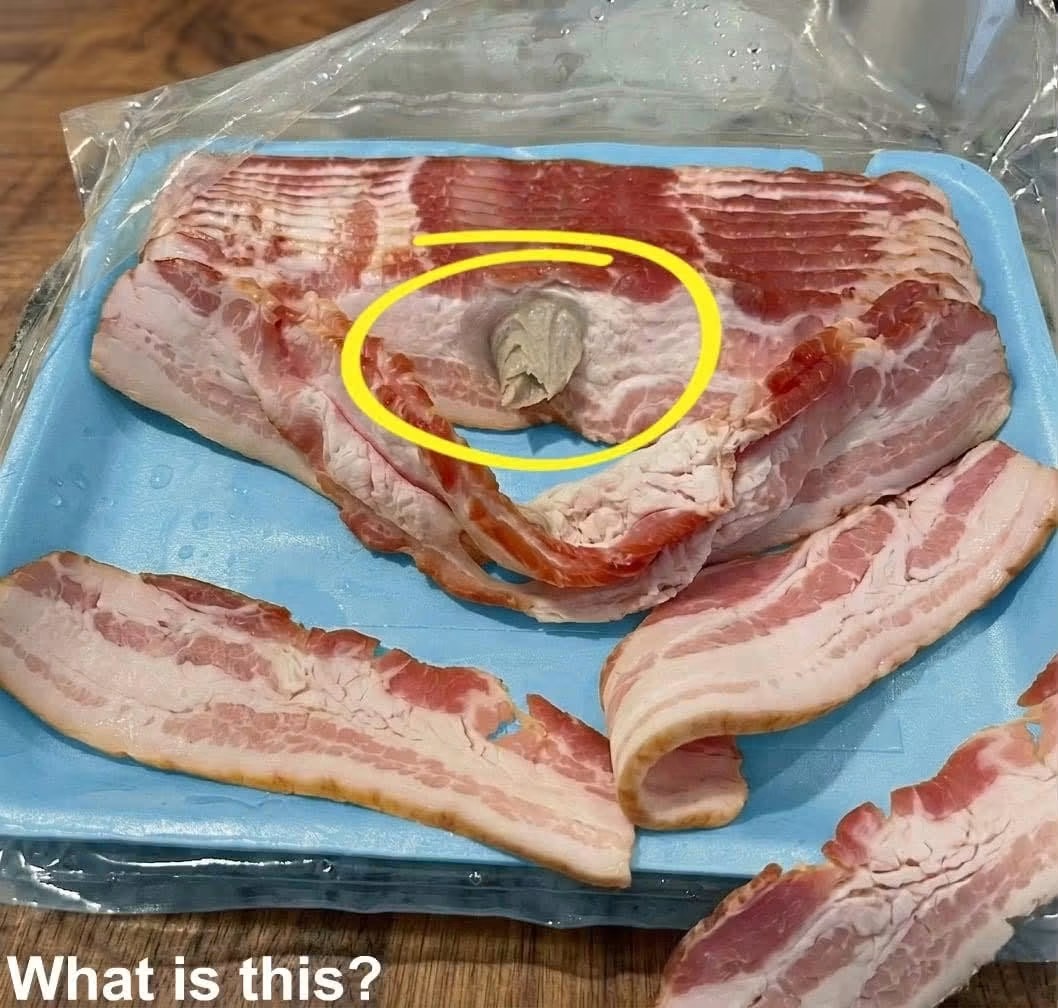
I had picked up a standard package of bacon, anticipating the familiar sizzle, the rich, savory aroma that would soon fill the kitchen, a quick protein boost to fuel the hours ahead, or simply a little crispy comfort to ease into the day. But as I lifted the first strip, my hand froze. Nestled between two perfectly pink, evenly marbled slices was a pale, rubbery lump. Smooth. Oddly shaped. Utterly out of place. It didn’t look like the usual pockets of fat. It didn’t resemble lean muscle or connective tissue. It just looked… wrong.
My stomach dropped. Was it a fragment of packaging? A processing oversight? Something that simply shouldn’t be there? In that instant, every commitment I’d made to clean eating, whole foods, and mindful cooking felt quietly undermined. I thought about all the time spent reading labels, avoiding unnecessary additives, and trying to understand where my food comes from. If something like this could slip into a staple as basic as bacon, what else might I be missing? The doubt crept in quickly, fueled by the modern anxiety that surrounds packaged foods, industrial production, and the fear that we’re somehow losing control over what ends up on our plates.
But instead of tossing the package in frustration or spiraling into worry, I took a step back. After a deep breath and a quick consultation with a food safety specialist, I learned the truth. It wasn’t a hazard. It wasn’t a sign of contamination or poor quality control. It was simply a natural variation that occurs during the curing, tumbling, and slicing process—a harmless fold of tissue or a concentrated pocket of fat and collagen that sometimes forms when the meat is pressed, chilled, and cut. Understanding what I was actually looking at didn’t just ease my mind; it completely shifted my perspective. I didn’t throw the bacon away. I cooked it. And more importantly, I walked away from the experience calmer, more informed, and far more confident in my own kitchen.
That small, seemingly insignificant moment taught me …
That small, seemingly insignificant moment taught me a much larger lesson about how we approach food today. We live in an era of unprecedented transparency, yet we’re also bombarded with viral clips, alarmist headlines, and well-meaning but often misleading food critiques. When something looks unfamiliar, our instinct is often to assume the worst. But the reality of food production—especially with traditional, minimally processed staples—is far more nuanced. Knowledge doesn’t replace caution; it replaces fear. When we take the time to understand how our food is made, preserved, and packaged, we can move past suspicion and cook with clarity.
Unpacking these everyday food surprises isn’t about ignoring quality standards or accepting subpar products. It’s about building informed confidence. Here’s why that matters:
✅ It demystifies common food quirks. What looks like a defect is often just a natural result of traditional curing, pressing, or slicing methods. No jargon, no guesswork—just straightforward facts that put your mind at ease and keep you from unnecessary waste.
✅ It supports mindful eating habits. True awareness means focusing on transparency rather than paranoia. When you know what’s normal, you can redirect your energy toward what actually matters: nutrition, balance, and sustainable choices that align with your values.
✅ It cuts through the noise around packaged foods. The internet is full of extreme takes, but reality is usually much simpler. Learning to distinguish between genuine safety concerns and harmless cosmetic variations helps you make choices based on evidence, not emotion.
✅ It empowers home cooks and meal preppers. Whether you’re batch-cooking for the week or preparing a special breakfast for family, understanding your ingredients builds trust in your process. You stop second-guessing every package and start enjoying the act of cooking itself.
Clean eating was never about chasing perfection or demanding that every ingredient look flawless. It’s about awareness, trust, and knowing exactly what’s on your plate. Once you understand the “why” behind the food you buy, you stop worrying about what might be hiding in it—and start appreciating what’s actually there. The next time something in your pantry or produce drawer looks a little unfamiliar, pause. Ask a question. Seek a reliable source. And then, if all is well, fire up the pan.
Because the kitchen should be a place of nourishment and peace, not suspicion. And sometimes, the most reassuring thing you can learn is that the ordinary is exactly what it appears to be.