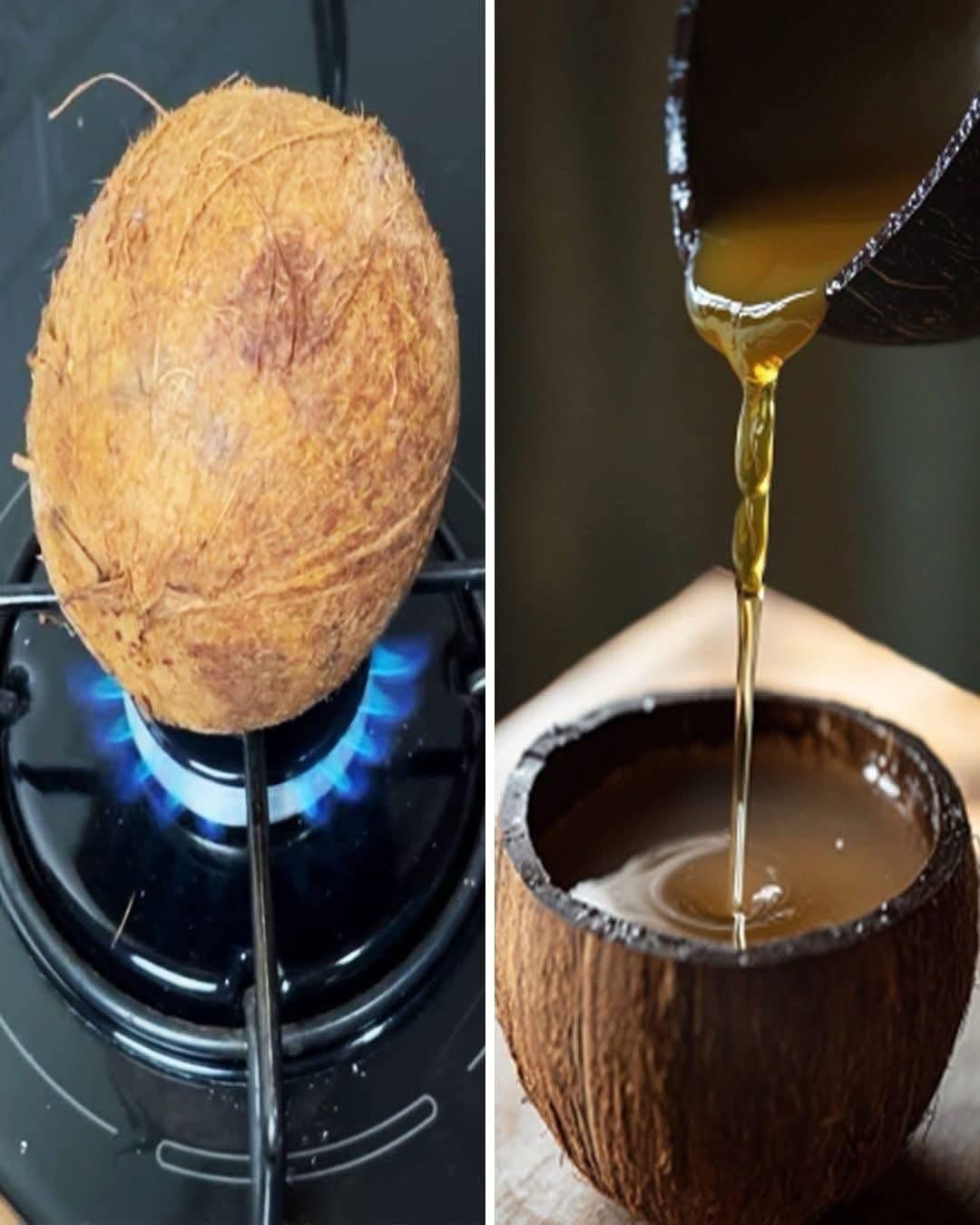
The image appears to show homemade coconut oil being extracted from a fresh coconut. For a safer kitchen method, it’s better to remove the coconut meat first rather than heating the whole coconut directly over a gas flame.
Ingredients
- 2 fresh mature coconuts
- 4–5 cups warm water
- A clean cheesecloth or fine-mesh strainer
Instructions
- Open the coconuts and remove the white coconut flesh.
- Peel away any brown outer skin if desired, then cut the coconut into small pieces.
- Blend the coconut with the warm water until you have a thick coconut mixture.
- Pour the mixture through cheesecloth or a fine strainer and squeeze well to collect the coconut milk.
- Place the coconut milk in a clean saucepan.
- Heat it gently over low heat, stirring occasionally. As the water evaporates, the coconut cream will separate and the oil will begin to appear.
- Continue cooking gently until the oil separates clearly from the coconut solids. Avoid high heat or burning.
- Allow it to cool completely.
- Strain the oil through a clean fine-mesh strainer or cheesecloth into a clean, dry glass jar.
- Store the finished coconut oil in a cool, dry place.
Tips
- Use mature coconuts for better oil yield.
- Keep the heat low to prevent scorching.
- Make sure the storage jar is completely clean and dry.
- Homemade coconut oil may have a shorter shelf life than commercially refined oil, so discard it if it develops an unpleasant smell, mold, or unusual appearance.
- Do not place a whole coconut directly over an open gas flame; it can crack or heat unevenly.
Yield
Approximately ½–1 cup of coconut oil, depending on the size and freshness of the coconuts.
Conclusion
Homemade coconut oil is a traditional way to make use of fresh coconut. The process takes some time, but the result is fragrant coconut oil that can be used in cooking and other household applications.