The Ultimate Masterclass in Comfort: The Art of the Creamy Chicken and Spinach Pot Pie
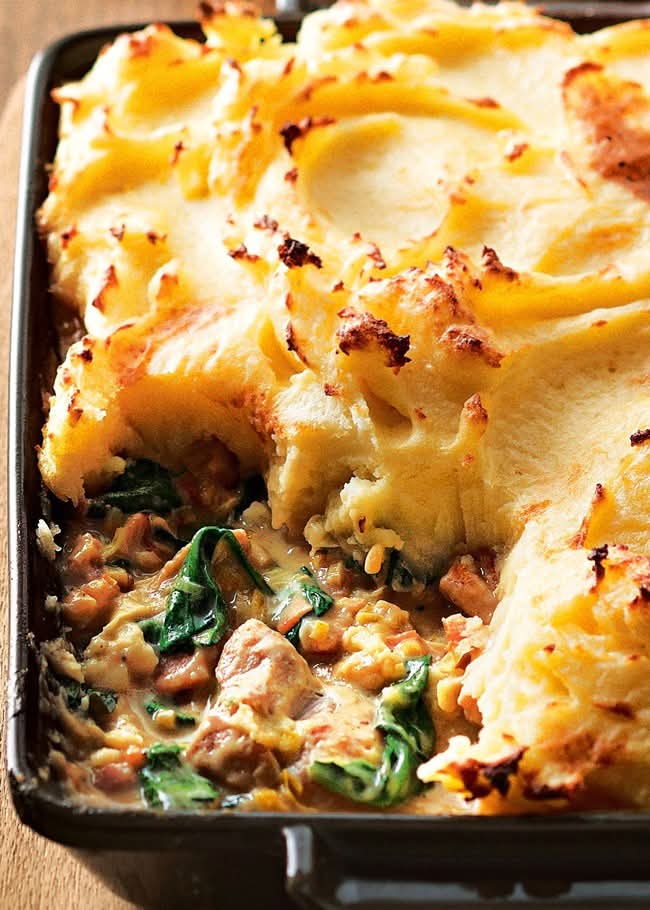
There is a specific kind of culinary magic that happens when high-heat browning meets slow-simmered creaminess. It’s a sensory experience that defines “home.” When you look at an image like 55962.jpg, you aren’t just looking at a casserole; you are looking at a masterclass in texture—the jagged, golden peaks of toasted mashed potatoes giving way to a lush, vibrant green and ivory center.
While the world often reaches for a standard crust, the version captured in 55962.jpg represents the “Cottage Pie” style of chicken pot pie. It’s rustic, it’s forgiving, and it’s arguably the most satisfying meal you can pull out of an oven on a Tuesday night. In this deep dive, we’re going to deconstruct how to achieve that exact look and flavor profile, from the science of the potato crust to the secret of keeping spinach vibrant in a heavy cream sauce.
Phase 1: The Foundation – Building the “Internal” Flavor
The filling of a pot pie is where most home cooks fall short. If it’s too runny, it’s a soup; if it’s too thick, it’s a paste. The goal, as seen in the cross-section of 55962.jpg, is a velvety sauce that coats the ingredients without drowning them.
1. The Protein: Searing for Success
For a pie that tastes like the one in 55962.jpg, you want chicken thighs. While breasts are popular, thighs contain more fat and connective tissue, which allows them to stay juicy even after being baked under a heavy potato lid.
- The Technique: Brown the chicken pieces in a skillet first. You want that deep golden-brown crust. This “fond” (the brown bits stuck to the pan) is the secret ingredient for your sauce.
2. The Greens: Mastering the Spinach
The vibrant green leaves in 55962.jpg aren’t there by accident. If you overcook spinach, it turns grey and slimy.
- The Secret: Do not sauté the spinach with the chicken. Instead, fold fresh baby spinach into the hot cream sauce at the very last second before the filling goes into the baking dish. The residual heat will wilt it perfectly during the baking process, preserving its color and structure.
Phase 2: The Architecture – That Iconic Potato Topping
What makes 55962.jpg so visually arresting is the topography of the mashed potatoes. Those browned ridges are the result of “roughing up” the surface.
1. Choosing the Right Spud
For a topping that holds its shape but remains creamy, use Yukon Gold potatoes. They have a naturally buttery flavor and a medium starch content that prevents the topping from becoming “gluey.”
2. The “Peaks and Valleys” Method
To replicate the look of 55962.jpg, don’t just smooth the potatoes over with a spatula.
- Step 1: Spread the mash loosely over the filling.
- Step 2: Use the back of a large spoon or a fork to create deep swirls and ridges.
- Step 3: Brush the top with melted butter or a light egg wash.
The ridges will catch the heat of the oven, browning faster than the “valleys,” creating that beautiful contrast of gold and pale yellow.
Phase 3: The Science of the Sauce (The Velouté)
The liquid visible in the bottom-left corner of 55962.jpg is a Velouté-style sauce. It’s achieved by creating a roux (equal parts butter and flour) and slowly whisking in chicken stock and heavy cream.
- The Umami Boost: To get that savory depth, add a teaspoon of Dijon mustard and a pinch of nutmeg. The mustard cuts through the richness of the cream, while the nutmeg enhances the earthy notes of the spinach.
- The Consistency Test: Your sauce should be thick enough to coat the back of a spoon. If it’s too thin, it will soak into the potatoes and make the whole dish soggy.
Tips for WordPress Food Bloggers: Mastering the “Scoop” Shot
If you are trying to recreate the photography style of 55962.jpg, the “missing scoop” is your best friend.
- The Reveal: Taking a scoop out of the corner allows the reader to see the layers. It proves the dish isn’t just a pile of potatoes—it has a heart.
- The Lighting: Notice how the light in 55962.jpg hits the side of the casserole dish. This creates “rim lighting,” which makes the steam (if caught at the right moment) and the gloss of the sauce pop.
- Color Balance: The pop of green from the spinach is vital. Without it, the dish is entirely brown and yellow. The green signals “freshness” and “balance” to the viewer.
Final Thoughts: Making It Your Own
The beauty of the dish represented in 55962.jpg is its adaptability. While this version features chicken and spinach, the technique remains the same whether you use leftover turkey, smoked ham, or even a medley of wild mushrooms for a vegetarian twist.
The key to a 5-star result is patience. Let the filling cool slightly before topping it with potatoes to prevent the layers from mixing prematurely. When you finally pull that bubbling, golden tray out of the oven, you won’t just have a meal—you’ll have a centerpiece that looks every bit as appetizing as the professional shot in
Key Takeaways for Your Recipe Post: