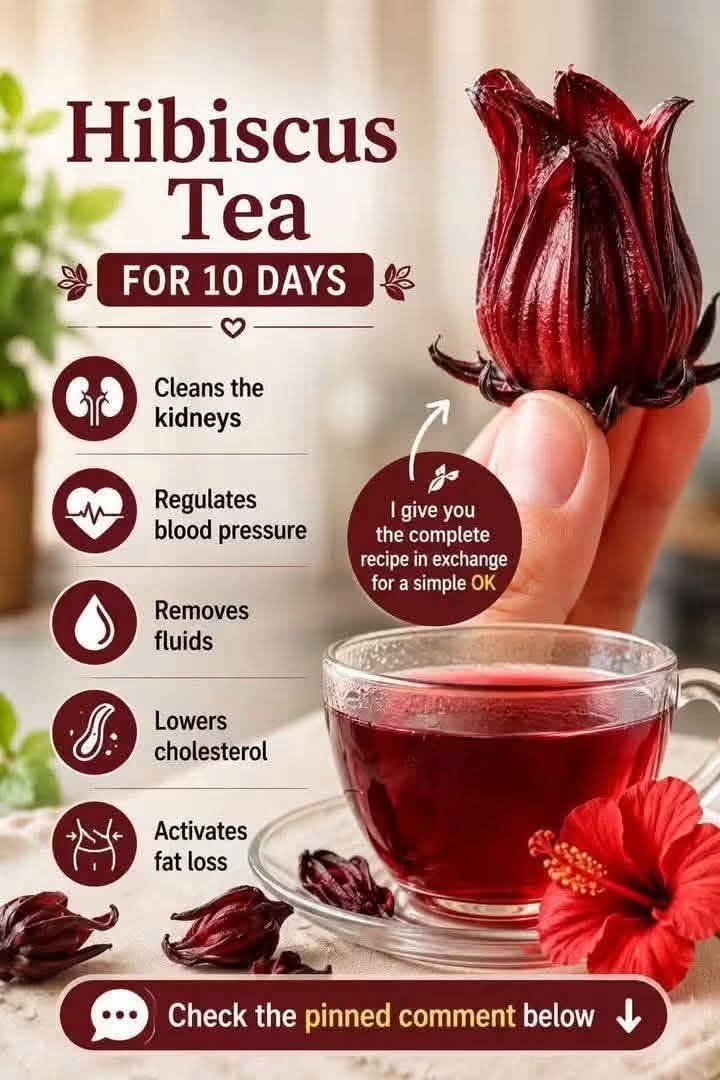
Hibiscus Tea for 10 Days: What This Bright Red Herbal Drink Can—and Cannot—Do for Your Health
Meta Description: Discover the potential benefits, preparation methods, nutritional qualities, and safety considerations of drinking hibiscus tea for 10 days. Learn the truth about claims involving kidney cleansing, blood pressure, cholesterol, fluid balance, and weight management.
Introduction
Hibiscus tea is one of the world’s most visually striking herbal drinks. With its deep ruby-red color, refreshing tartness, and naturally fruity flavor, it has been enjoyed in different cultures for generations. Made primarily from the dried calyces of Hibiscus sabdariffa, the drink is served hot or cold and is known by different names around the world, including roselle, sour tea, karkade, sorrel, and agua de Jamaica.
In recent years, hibiscus tea has become extremely popular online. Many posts claim that drinking hibiscus tea for 10 days can “cleanse the kidneys,” regulate blood pressure, remove excess fluids, lower cholesterol, and activate fat loss. These claims sound appealing, especially when presented beside a bright red cup of tea.
But what does the evidence actually show?
The truth is more interesting—and more useful—than the viral slogans. Hibiscus tea is not a magical detox and cannot replace medical treatment. However, it contains natural plant compounds and may have a modest effect on blood pressure in some people. It may also be a healthy replacement for sugary drinks when consumed without large amounts of added sugar.
This article explores what may happen when you drink hibiscus tea regularly for 10 days, how to prepare it, what the science says, and what you should know before adding it to your routine.
What Is Hibiscus Tea?
Hibiscus tea is typically made from the fleshy red calyces of Hibiscus sabdariffa. The calyx is the part of the plant surrounding the base of the flower.
When the dried plant material is steeped in hot water, it releases:
- Natural acids
- Anthocyanins
- Polyphenols
- Flavonoids
- Small amounts of minerals and other plant compounds
These compounds create the tea’s characteristic deep red color and sharp, cranberry-like taste.
The drink can be enjoyed:
- Hot
- Cold
- With ice
- With lemon
- With mint
- With a small amount of honey
- Unsweetened
- As part of a mixed herbal beverage
Because hibiscus tea is naturally caffeine-free, it can be enjoyed at various times of the day without the stimulating effect associated with coffee or traditional tea.
What Happens If You Drink Hibiscus Tea for 10 Days?
The answer depends on the person.
A 10-day period is relatively short. You should not expect dramatic changes in body weight, cholesterol levels, kidney function, or overall health after only 10 days.
However, regular consumption may create some positive changes depending on your usual diet and health.
For example, drinking unsweetened hibiscus tea instead of sweet soda or sugary juice may reduce added sugar and calorie intake. Drinking enough fluid can also support normal hydration. Some research suggests hibiscus may have modest blood-pressure-lowering effects, although it should never be treated as a replacement for prescribed medication.
The most realistic benefits of a 10-day hibiscus tea routine may include:
- Better hydration when it replaces less healthy drinks
- Reduced intake of added sugar if consumed unsweetened
- Enjoyment of a caffeine-free beverage
- A possible small effect on blood pressure in some individuals
- Increased awareness of daily beverage choices
The biggest benefit may not come from the tea acting as a “detox.” Instead, it may come from replacing beverages that contain large amounts of added sugar.
Does Hibiscus Tea Cleanse the Kidneys?
This is one of the most common claims, but the phrase “kidney cleanse” is misleading.
Your kidneys already perform an extraordinary natural filtration role. They help remove waste products from the blood, balance fluids and electrolytes, and contribute to blood pressure regulation.
You do not need a special tea to “wash” or “detox” your kidneys.
The National Kidney Foundation specifically advises caution regarding products marketed as “kidney detox” or “kidney cleanse” products because evidence for these claims is limited and some ingredients may interact with medications or harm the kidneys.
That does not mean hibiscus tea is automatically harmful. It means that the popular claim that the drink will cleanse or repair the kidneys is not scientifically established.
What actually supports kidney health?
Healthy kidney function is supported by:
- Appropriate hydration
- Blood pressure control
- Blood sugar management
- Avoiding unnecessary excessive use of certain medications
- Not smoking
- Regular physical activity
- A balanced diet
- Medical care for kidney disease
Water is generally the best beverage for healthy hydration, although individual fluid needs vary significantly.
Hibiscus tea may be included as part of a healthy fluid routine for many people, but it should not be advertised as a kidney-cleaning treatment.
Hibiscus Tea and Blood Pressure
Among the health claims associated with hibiscus, blood pressure is one of the most researched areas.
Some clinical studies have found that regular hibiscus consumption may lower blood pressure in people with prehypertension or mild hypertension. One randomized trial found that participants drinking hibiscus tea experienced a greater reduction in systolic blood pressure than those drinking a placebo beverage.
A meta-analysis of randomized controlled trials also reported reductions in both systolic and diastolic blood pressure. However, research quality, study designs, doses, and results vary, and further well-designed studies are needed.
The most important point is this:
Hibiscus tea may have a modest supportive role for some people, but it is not a substitute for prescribed blood-pressure medication.
The U.S. National Center for Complementary and Integrative Health notes that some foods and supplements, including roselle (Hibiscus sabdariffa), may have small blood-pressure effects, but no dietary supplement has been shown to work like established blood-pressure medicines.
Important caution
If you already take medication for:
- High blood pressure
- Heart disease
- Fluid retention
- Kidney disease
you should discuss regular hibiscus tea use with a healthcare professional.
Does Hibiscus Tea Remove Excess Fluid?
The image claim that hibiscus “removes fluids” probably comes from the traditional understanding that hibiscus may have a mild diuretic effect.
A diuretic effect means increased urine production.
Some research has investigated this possibility, but increased urination should not automatically be considered “detoxification.” Your body carefully regulates water and electrolytes, and excessive fluid loss can become a problem.
The goal is healthy fluid balance, not maximum water loss.
People sometimes mistake losing water for losing fat. After drinking a diuretic beverage, the scale may temporarily change because of water balance, but this does not necessarily represent a reduction in body fat.
People with:
- Kidney disease
- Heart failure
- Liver disease
- Certain electrolyte problems
- Fluid restrictions
should not deliberately increase fluid or herbal tea intake without professional guidance.
Can Hibiscus Tea Lower Cholesterol?
Hibiscus has been studied for possible effects on cholesterol and other cardiometabolic markers.
The results are not strong enough to describe hibiscus tea as a cholesterol treatment.
Some studies have suggested potential improvements in certain blood-fat measurements, while other findings have been inconsistent. More research is needed before making strong conclusions.
If your cholesterol is high, the most evidence-based approaches usually involve:
- A diet rich in vegetables and fruits
- More fiber
- Healthy sources of unsaturated fats
- Regular exercise
- Maintaining a healthy body weight
- Limiting trans fats
- Managing other health conditions
- Taking prescribed medication when recommended
Hibiscus tea can be a pleasant addition to a healthy lifestyle, but it should not be considered a replacement for medical cholesterol management.
Does Hibiscus Tea Activate Fat Loss?
This claim should also be viewed carefully.
No tea can directly “switch on” fat loss in a way that overrides overall energy balance, food intake, activity, sleep, and individual health.
Drinking hibiscus tea for 10 days will not magically melt abdominal fat.
However, the beverage may indirectly support weight-management efforts if it replaces high-calorie drinks.
Consider the difference between:
- Several glasses of sugary soda
- Sweetened energy drinks
- Large amounts of sweetened juice
- Unsweetened hibiscus tea
If unsweetened hibiscus tea replaces calorie-rich beverages, total calorie intake may decrease.
That could support weight management over time.
But the tea itself should not be marketed as a miracle fat-burning formula.
The difference between water loss and fat loss
This distinction is extremely important.
Water loss can occur quickly and may temporarily change body weight.
Fat loss usually develops gradually over time and involves sustained changes in energy balance.
Therefore, if someone notices rapid weight changes during a 10-day herbal tea challenge, that does not prove that large amounts of body fat have been burned.
The Antioxidant Appeal of Hibiscus
The rich red color of hibiscus is partly associated with anthocyanins, a group of plant pigments also found in many red, purple, and blue foods.
Hibiscus also contains other polyphenolic compounds.
These compounds are of scientific interest because they can participate in antioxidant activity in laboratory research. However, it is important not to translate every laboratory finding into a guaranteed human health benefit.
A food or drink containing antioxidants does not automatically:
- Reverse disease
- Eliminate toxins
- Repair organs
- Prevent all inflammation
- Guarantee longer life
The best way to think about hibiscus tea is as one plant-based beverage within a varied dietary pattern.
Hibiscus Tea Nutrition
Plain hibiscus tea is usually very low in calories.
When prepared simply with dried hibiscus and water, it may be suitable for people looking for a flavorful beverage without caffeine or significant added sugar.
However, nutrition changes dramatically when large quantities of:
- Sugar
- Syrup
- Sweetened condensed milk
- Honey
- Flavored creamers
are added.
A large glass of heavily sweetened hibiscus drink is very different from a cup of plain herbal tea.
The simplest version
Dried hibiscus + water = a naturally tart herbal drink
If you find the flavor too sour, you can try:
- A small amount of honey
- Fresh lemon
- Orange slices
- Mint
- Cinnamon
- A naturally sweet fruit infusion
Remember that “natural” sweeteners still contribute calories and sugars.
A Simple Hibiscus Tea Recipe
Ingredients
- 1 to 2 tablespoons dried hibiscus flowers or calyces
- 2 cups of water
- Optional: fresh lemon
- Optional: mint
- Optional: a small amount of honey
Method
- Bring the water to a boil.
- Add the dried hibiscus.
- Remove from the heat or reduce to a gentle simmer.
- Allow the hibiscus to steep for approximately 5 to 10 minutes.
- Strain the liquid.
- Taste carefully before adding sweetener.
- Serve warm or allow the tea to cool and refrigerate for an iced drink.
For a stronger tea, increase the steeping time slightly or add more dried hibiscus rather than automatically adding large amounts of sweetener.
A 10-Day Hibiscus Tea Routine
A reasonable approach is to use the tea as part of an overall healthy routine rather than as a strict detox challenge.
Day 1: Start Simply
Prepare a modest serving of unsweetened hibiscus tea and pay attention to how your body responds.
Day 2: Focus on Hydration
Drink hibiscus tea as one beverage among your daily fluids rather than forcing excessive quantities.
Day 3: Reduce Added Sugar
Try replacing one sugary beverage with unsweetened hibiscus tea.
Day 4: Add Healthy Food
Pair the drink with a meal containing vegetables, protein, and fiber.
Day 5: Take a Walk
Combine your healthy drink routine with physical activity.
Day 6: Avoid the Detox Mindset
Remember that your kidneys and liver already perform important natural functions. Focus on healthy habits rather than “flushing toxins.”
Day 7: Check Your Sugar Intake
If you usually sweeten your hibiscus heavily, gradually reduce the amount.
Day 8: Monitor Your Blood Pressure if Appropriate
People with hypertension should follow their healthcare provider’s recommendations for proper blood-pressure monitoring.
Day 9: Review Your Beverage Choices
Ask yourself what hibiscus tea is replacing. Replacing water with hibiscus may not change much. Replacing sugary drinks may make a more meaningful difference.
Day 10: Decide Whether You Enjoy It
If hibiscus tea suits your lifestyle, continue enjoying it in reasonable amounts as part of a varied diet.
Who Should Be Careful With Hibiscus Tea?
Natural does not always mean risk-free.
You should be particularly cautious if you:
- Take blood-pressure medication
- Take diuretic medication
- Have kidney disease
- Have a fluid restriction
- Are pregnant or breastfeeding
- Take multiple medications
- Experience unusually low blood pressure
- Have a history of reactions to herbal products
Research also indicates that herb-drug interactions require further investigation, particularly with medicines that affect blood pressure and fluid balance.
If you have a medical condition or take prescription medicine, discuss frequent use of herbal beverages with your doctor or pharmacist.
Common Mistakes When Drinking Hibiscus Tea
1. Adding too much sugar
This can turn a low-calorie drink into a high-sugar beverage.
2. Replacing medication with tea
This is potentially dangerous, particularly for people with hypertension.
3. Drinking excessive quantities
More is not always better.
4. Believing “detox” claims
The kidneys and liver do not require a special tea to perform their normal functions.
5. Confusing fluid loss with fat loss
Rapid changes on the scale may reflect water changes rather than body-fat reduction.
6. Ignoring medication interactions
Herbal products can influence the effects of medicines.
7. Forgetting the whole lifestyle
A single beverage cannot compensate for an unhealthy diet, smoking, inactivity, or untreated medical conditions.
Hibiscus Tea in Traditional Food Culture
Hibiscus drinks are enjoyed in many parts of the world.
In North Africa and the Middle East, a version known as karkade is commonly served hot or cold. In Mexico, hibiscus is used to prepare agua de Jamaica. In the Caribbean, sorrel drinks are traditional, often prepared with spices and other ingredients.
These cultural traditions are important reminders that hibiscus is more than a modern “wellness trend.”
For generations, people have appreciated the beverage because of:
- Its striking color
- Its refreshing taste
- Its cultural importance
- Its versatility
- Its naturally caffeine-free character
You do not need to believe that a drink performs a miracle in order to appreciate it.
The Best Way to Enjoy Hibiscus Tea
The healthiest approach is often the simplest.
Try to think of hibiscus tea as:
- A flavorful drink
- A caffeine-free alternative
- A possible substitute for sugary beverages
- A plant-based addition to your diet
- A traditional beverage with interesting scientific research
Do not think of it as:
- A guaranteed kidney treatment
- A replacement for blood-pressure medication
- A cure for high cholesterol
- A rapid fat-burning solution
- A miracle detox
This balanced perspective allows you to enjoy the tea without unrealistic expectations.
Frequently Asked Questions
How much hibiscus tea should I drink?
There is no universal amount that is right for everyone. Factors such as body size, diet, medications, climate, activity, and medical conditions can affect appropriate fluid intake. If you have a health condition, seek individualized advice.
Can I drink hibiscus tea every day?
Many people enjoy it regularly, but daily use may not be appropriate for everyone, especially those taking medications or managing certain medical conditions.
Does hibiscus tea detox the kidneys?
There is no good evidence that ordinary hibiscus tea “detoxes” or cleanses the kidneys. Your kidneys naturally remove waste from the blood.
Can hibiscus tea lower blood pressure?
Research suggests it may modestly lower blood pressure in some people. It should not replace prescribed treatment.
Can hibiscus tea make you lose belly fat?
It is not a proven belly-fat-burning drink. It may support weight management if it replaces sugary, high-calorie beverages.
Is hibiscus tea good for cholesterol?
The evidence is not strong enough to consider hibiscus tea a treatment for high cholesterol. Healthy dietary habits and medical care remain more important.
A More Realistic “Hibiscus Tea for 10 Days” Challenge
Instead of making exaggerated promises, try this approach:
Drink hibiscus tea for enjoyment.
Drink it with little or no added sugar.
Use it to replace one sugary drink when practical.
Continue drinking enough fluids for your individual needs.
Eat more vegetables, fruits, legumes, and high-fiber foods.
Stay physically active.
Get adequate sleep.
Monitor blood pressure if you have been advised to do so.
Take prescribed medications exactly as directed.
Speak with a healthcare professional about herbs if you have medical conditions.
This approach may not sound as dramatic as “cleanse your kidneys in 10 days,” but it is more realistic and potentially more helpful.
Final Thoughts
Hibiscus tea is a beautiful, refreshing, caffeine-free beverage with a long history of traditional use. Scientific research suggests that it may modestly support blood-pressure management in some people, and replacing sugary drinks with unsweetened hibiscus tea may support healthier beverage habits.
However, the viral claims in many social-media images need to be interpreted carefully.
Hibiscus tea does not:
- Magically cleanse the kidneys
- Guaranteedly remove excess fluid
- Cure high blood pressure
- Replace medication
- Eliminate cholesterol problems
- Activate automatic fat loss
Your body does not need an extreme 10-day detox to begin benefiting from healthier habits.
A better strategy is to enjoy hibiscus tea as part of a sustainable lifestyle that includes balanced eating, appropriate hydration, physical activity, healthy sleep, and proper medical care. The National Kidney Foundation emphasizes that healthy hydration and overall lifestyle choices are more reliable ways to support kidney health than commercial “kidney cleanse” products.
**The best benefit of hibiscus tea may be the simplest one: it is a delicious, naturally caffeine-free drink that can fit into a healthy lifestyle without needing exaggerated promises.**