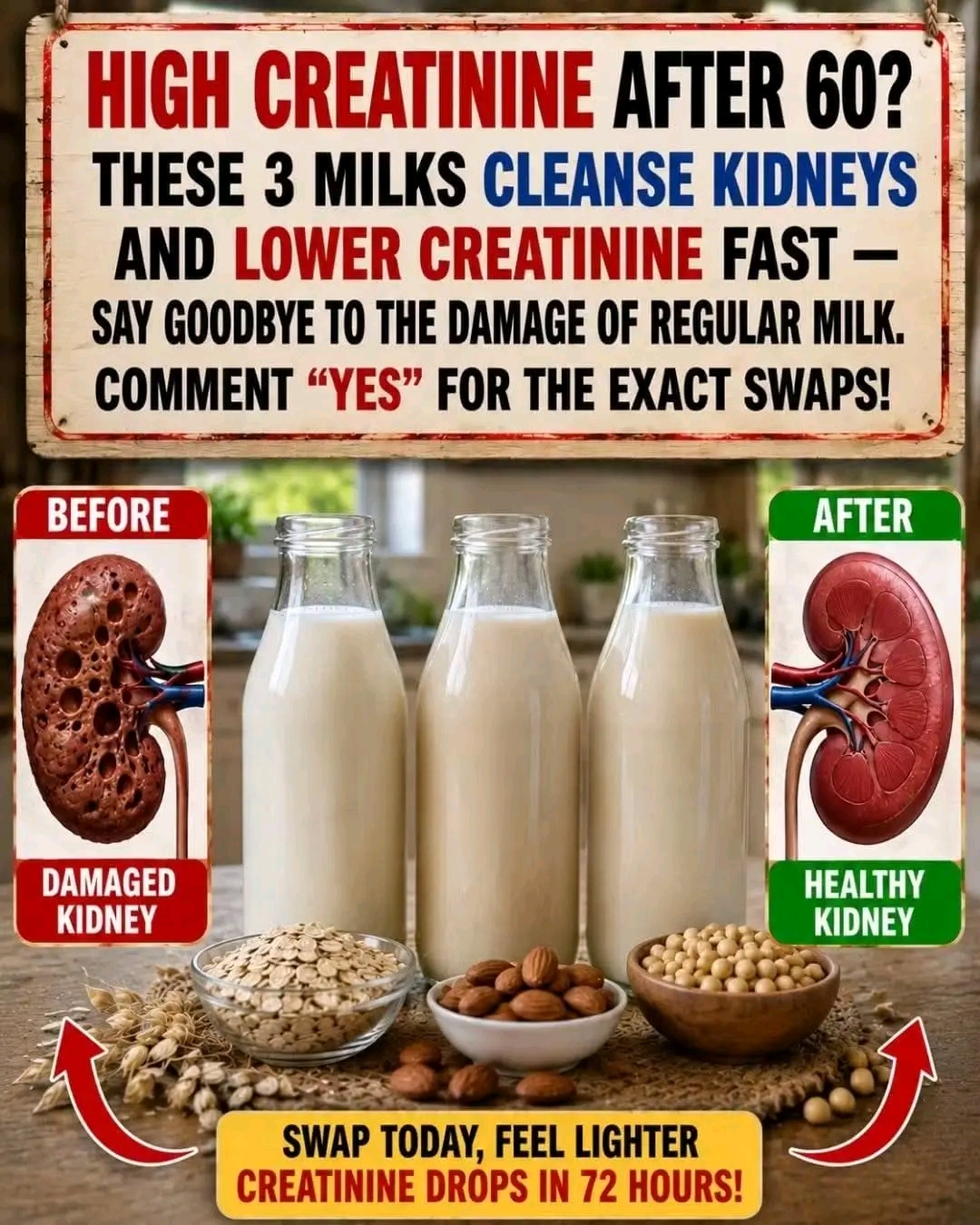
High Creatinine After 60? The Truth About Oat, Almond, and Soy Drinks—and How to Support Kidney Health Safely
Meta Description: Can oat milk, almond milk, and soy milk lower creatinine and “cleanse” the kidneys in just 72 hours? Learn the truth about kidney health, creatinine, hydration, plant-based foods, and what really matters for healthy kidneys after age 60.
Introduction: A Viral Claim That Needs a Careful Look
Social media posts often make dramatic promises about kidney health. One popular claim says that after age 60, three plant-based milks—often represented as oat milk, almond milk, and soy milk—can “cleanse the kidneys,” lower creatinine rapidly, and transform damaged kidneys into healthy ones within 72 hours.
It sounds simple and appealing. But kidney health is rarely that simple.
The kidneys are complex organs that continuously filter blood, regulate fluid and mineral balance, help control blood pressure, and remove certain waste products. A person with an elevated creatinine level may have dehydration, kidney disease, a urinary obstruction, medication effects, intense exercise, or another medical issue. The cause matters.
So, can three plant-based milks repair damaged kidneys in three days?
There is no reliable evidence that drinking oat, almond, and soy milk will cleanse the kidneys, reverse kidney damage, or lower creatinine to a healthy level within 72 hours.
However, that does not mean these beverages are automatically unhealthy. For some people, unsweetened plant-based milks can fit into an overall balanced eating pattern. The key is understanding how kidney function works, why creatinine rises, and why nutrition must be personalized when kidney disease is present.
This article explains the facts behind the viral claim and offers a practical, realistic guide to supporting kidney health after age 60.
Understanding Creatinine: What Does a High Level Actually Mean?
Creatinine is a normal waste product produced through normal muscle metabolism. The kidneys filter creatinine from the blood and remove it from the body through urine.
When kidney filtration is reduced, creatinine may rise. However, an elevated creatinine result does not automatically mean permanent kidney damage. Dehydration, intense exercise, muscle injury, a high meat intake, urinary obstruction, and some medical conditions can also affect creatinine levels.
This is why a single number should not be interpreted in isolation.
Healthcare professionals may also examine:
- Estimated glomerular filtration rate (eGFR)
- Urine albumin-to-creatinine ratio
- Blood pressure
- Blood sugar levels
- Medication use
- Medical history
- Symptoms and physical findings
Creatinine alone is not a perfect measure of kidney health because muscle mass, diet, age, and other factors can influence the result.
Important point
A high creatinine result is a signal to investigate, not a reason to immediately start an internet “kidney cleanse.”
Can Kidneys Be “Cleansed”?
The idea of a kidney cleanse is popular, but it can be misleading.
Your kidneys are already natural filtering organs. In a healthy person, they continuously remove waste products and help maintain fluid and mineral balance. You generally do not need a special drink to make normal kidneys “flush toxins.”
If kidney function is impaired, drinking a particular beverage does not simply wash the problem away.
In fact, people with significant kidney disease may need to carefully manage:
- Fluid intake
- Sodium
- Potassium
- Phosphorus
- Protein
The correct dietary plan depends on the person’s stage of kidney disease and other medical conditions.
That is why a one-size-fits-all “detox” can be inappropriate.
The Three Plant-Based Milks in the Viral Claim
Let us look at the three beverages commonly shown in these posts.
1. Oat Milk
Oat milk is made from oats and water and may contain added vitamins, minerals, sweeteners, oils, salt, or other ingredients depending on the brand.
Possible benefits
For some people, oat milk may be:
- Dairy-free
- Suitable for certain people with lactose intolerance
- Convenient and easy to use
- Available in fortified forms containing nutrients such as calcium and vitamin D
However, not every oat milk is the same. Some products contain:
- Added sugar
- Added salt
- Oils
- Flavorings
- Added phosphorus-containing ingredients
For someone with kidney disease, the ingredient list may matter as much as the product name.
Does oat milk lower creatinine?
There is no evidence that simply drinking oat milk will reliably lower elevated creatinine within 72 hours or repair damaged kidneys.
A balanced dietary pattern may support overall health, but no single beverage should be presented as a rapid kidney treatment.
2. Almond Milk
Almond milk is a dairy-free beverage made from almonds and water. Commercial products can vary greatly.
Some are unsweetened, while others contain substantial amounts of sugar or additional ingredients.
Potential advantages
An unsweetened product may fit into a balanced diet for people who:
- Prefer a dairy-free alternative
- Have lactose intolerance
- Enjoy the taste of almonds
- Want variety in their diet
But almond milk is not a medicine.
The phrase “almonds are healthy” does not mean every almond-based beverage is appropriate for every person with kidney disease. People with kidney problems may need individualized advice regarding potassium, phosphorus, protein, fluids, and other nutrients.
3. Soy Milk
Soy milk is made from soybeans and is often higher in protein than some other plant-based milks.
It can be a useful plant-based protein source for some people. However, protein needs can be particularly important in kidney disease.
Protein is essential for muscles, healing, and overall health. But when the body uses protein, waste products are created, and the kidneys help remove them. Some people with chronic kidney disease who are not on dialysis may need to moderate protein intake, while people receiving dialysis may require more protein.
This is why a person with chronic kidney disease should not simply increase soy milk intake because of a viral claim.
The correct amount of protein depends on the individual’s health status.
Why the “72-Hour Creatinine Drop” Claim Is Misleading
The most concerning part of the viral message is the promise of a dramatic change within three days.
Creatinine levels can sometimes change over a short period. For example, if dehydration is contributing to an abnormal test result, correcting the underlying issue may affect laboratory values. But this is very different from saying that a specific drink has repaired the kidneys.
Kidney damage caused by chronic disease, diabetes, uncontrolled high blood pressure, autoimmune conditions, obstruction, or other causes does not usually disappear because someone drinks three bottles of plant milk.
In addition, some changes in creatinine are temporary and do not necessarily reflect improved kidney structure or long-term kidney health.
A lower number on one test is not the same as a cure.
What Actually Causes High Creatinine?
High creatinine can have many possible causes.
Dehydration
When the body lacks adequate fluid, blood flow to the kidneys can be affected and creatinine may rise.
However, this does not mean everyone with high creatinine should drink enormous quantities of water.
Some people with kidney disease or heart failure may be told to limit fluid intake. The amount of fluid that is appropriate depends on the individual.
Chronic Kidney Disease
Chronic kidney disease occurs when kidney damage or reduced kidney function persists over time.
Common risk factors include:
- Diabetes
- High blood pressure
- Heart disease
- Older age
- Smoking
- Obesity
- Family history of kidney disease
Chronic kidney disease may have few or no symptoms during its early stages.
This is one reason regular medical monitoring can be important, particularly for adults over 60.
Urinary Obstruction
A blockage affecting the flow of urine can damage the kidneys.
Possible causes can include stones, prostate enlargement, or other conditions affecting the urinary tract.
A beverage cannot necessarily solve a mechanical obstruction.
Medication Effects
Certain medications can affect kidney function or kidney blood flow.
Examples may include some:
- Pain medicines
- Blood pressure medicines
- Antibiotics
- Supplements
- Other prescription or over-the-counter drugs
Never stop a prescribed medicine without medical advice. But it is important to tell your healthcare professional about everything you take, including supplements and herbal products.
Muscle Injury or Intense Exercise
Because creatinine is related to muscle metabolism, muscle injury and strenuous exercise may influence the level.
Diet and muscle mass can also affect creatinine. This is another reason why creatinine should be interpreted in clinical context rather than viewed as a single independent number.
Kidney Health After Age 60: Why Prevention Matters
As people get older, the risk of several kidney-related conditions can increase.
The most powerful strategies are usually not exotic drinks or expensive cleanses. They involve managing the conditions that place long-term stress on the kidneys.
Control Blood Pressure
High blood pressure can damage blood vessels throughout the body, including the small blood vessels involved in kidney function.
Controlling blood pressure can help protect both heart and kidney health. Dietary approaches often include reducing excessive sodium intake, along with taking prescribed medicines and following individualized medical advice.
Manage Blood Sugar
Diabetes is a major risk factor for kidney disease.
Consistently elevated blood sugar can damage the kidneys over time. For people with diabetes, following a treatment plan, monitoring blood sugar as advised, eating appropriately, and attending regular medical appointments are important.
Avoid Excess Sodium
Many processed and packaged foods contain large amounts of sodium.
Excess sodium may contribute to fluid retention and high blood pressure, which can place additional stress on the kidneys and heart.
The NIDDK notes that sodium reduction is often an important part of nutrition planning for people with kidney disease, although individual needs vary.
Common high-sodium foods may include:
- Processed meats
- Instant soups
- Packaged snacks
- Some frozen meals
- Fast food
- Certain sauces
- Heavily salted foods
Preparing more meals at home can make it easier to control sodium.
Should You Drink More Water to Lower Creatinine?
Water is essential for health, but more is not always better.
If you are mildly dehydrated, drinking an appropriate amount of fluid may be helpful. But forcing excessive water intake does not “supercharge” healthy kidneys and may be dangerous in some circumstances.
People with advanced kidney disease may need specific fluid limits.
A sensible approach is:
- Drink regularly according to thirst and individual needs.
- Consider weather, activity level, and medical conditions.
- Follow medical advice if you have kidney disease, heart failure, swelling, or another condition requiring fluid management.
The Role of Protein in Kidney Health
Protein is one of the most misunderstood topics in kidney nutrition.
Protein is essential. Your body needs it for:
- Muscles
- Tissue repair
- Immune function
- Hormones and enzymes
- General health
But protein metabolism also produces waste products that the kidneys must help remove.
For some people with chronic kidney disease who are not on dialysis, a healthcare professional may recommend moderating protein intake. But consuming too little protein can lead to malnutrition and muscle loss. People receiving dialysis often have different protein requirements and may need more protein.
There is no universal “kidney diet” that works for everyone.
This is especially important for older adults, who may already be at risk of losing muscle mass.
Plant-Based Foods and Kidney Health
A balanced diet containing more plant foods may offer health benefits for many people.
Depending on the individual, useful foods may include:
- Vegetables
- Fruits
- Whole grains
- Beans
- Lentils
- Seeds
- Nuts
- Other plant proteins
However, people with significant kidney disease cannot assume that all plant foods are unrestricted.
Some foods can be high in potassium or phosphorus. Restrictions may become necessary depending on laboratory values and the stage of kidney disease.
This is why the best approach is often personalization rather than fear or universal restriction.
A Practical Kidney-Friendly Eating Pattern
For many adults without advanced kidney disease, a balanced pattern may include:
Breakfast
- Oatmeal or another whole grain
- Fruit appropriate to individual dietary needs
- Eggs or another protein source
- Unsweetened milk or plant-based milk if desired
Lunch
- Vegetables
- A moderate portion of protein
- Whole grains or another carbohydrate source
- Water or an unsweetened beverage
Dinner
- Lean protein or an appropriate plant protein
- A variety of vegetables
- A moderate serving of whole grains, rice, or another starch
- Herbs and spices instead of excessive salt
This is only a general example.
Someone with chronic kidney disease may need adjustments involving:
- Protein
- Potassium
- Phosphorus
- Sodium
- Fluids
The NIDDK emphasizes individualized nutrition care for people with chronic kidney disease because dietary requirements can differ substantially between patients.
How to Choose Plant-Based Milk More Carefully
If you enjoy plant-based milk, compare products instead of assuming one is universally superior.
Check for added sugar
Choose unsweetened products when possible if you are trying to reduce added sugar.
Check the sodium content
Some commercial beverages contain more sodium than expected.
Check added ingredients
People with kidney disease may need to pay attention to ingredients and mineral additives.
Consider protein
Soy milk may contain more protein than many almond or oat products, but the “best” choice depends on individual dietary needs.
Check serving size
A large glass is different from a small splash in coffee.
Can Oat Milk, Almond Milk, and Soy Milk Be Combined?
Yes, these beverages can generally be used as food ingredients by many people.
For example, you might use:
- Oat milk in oatmeal
- Almond milk in a smoothie
- Soy milk in cooking
But there is no scientific reason to believe that mixing the three together creates a special kidney-cleansing formula.
Nutrition does not work like a magic potion.
The overall diet and the person’s medical condition are far more important.
A Simple Plant-Based Milk Recipe for General Wellness
Here is a simple recipe that can be enjoyed as a general beverage.
Creamy Oat, Almond, and Soy Drink
Ingredients
- ½ cup unsweetened oat milk
- ½ cup unsweetened almond milk
- ½ cup unsweetened soy milk
- ¼ teaspoon cinnamon
- Ice, optional
Instructions
- Add the three milks to a clean glass or blender.
- Add cinnamon if desired.
- Stir or blend briefly.
- Serve chilled.
Important note
This is a beverage recipe, not a treatment for high creatinine, kidney failure, or chronic kidney disease.
People with diagnosed kidney disease should check with their healthcare professional or kidney dietitian before regularly increasing intake of any specific food or beverage.
Warning Signs You Should Not Ignore
Seek medical advice promptly if you have symptoms such as:
- Significant swelling
- Foamy or bloody urine
- A major decrease in urination
- Persistent nausea or vomiting
- Severe weakness
- Shortness of breath
- New confusion
- Severe flank or back pain
- Symptoms of dehydration
- Rapid unexplained weight changes
Kidney disease can sometimes progress without obvious symptoms, so laboratory testing may be important even when a person feels relatively well.
What Tests Give a Better Picture of Kidney Health?
A healthcare professional may consider several tests rather than relying on one creatinine number.
Serum Creatinine
Measures creatinine in the blood.
eGFR
Estimated glomerular filtration rate helps estimate how effectively the kidneys are filtering.
Urine Albumin-to-Creatinine Ratio
This can help identify albumin in the urine, which may be a sign of kidney damage.
Blood Pressure
High blood pressure is both a cause and consequence of kidney problems.
Additional Testing
Depending on the situation, a healthcare professional may order:
- Blood tests
- Urine tests
- Ultrasound or other imaging
- Medication review
- Repeat testing
A single high creatinine result usually requires context and may need repeat testing or additional evaluation.
Common Myths About High Creatinine
Myth 1: “A high creatinine level always means kidney failure.”
Reality: No. Dehydration, diet, muscle-related factors, obstruction, and other conditions can influence creatinine.
Myth 2: “Drinking more water will always fix it.”
Reality: Hydration can matter, but excessive fluid may be inappropriate for some people with kidney or heart conditions.
Myth 3: “One food can cleanse the kidneys.”
Reality: There is no evidence that one food or beverage can universally cleanse the kidneys or reverse chronic kidney damage.
Myth 4: “All people with kidney disease need the same diet.”
Reality: Dietary needs depend on kidney function, treatment, laboratory values, medications, nutritional status, and other medical conditions.
Myth 5: “Lower creatinine always means cured kidneys.”
Reality: Creatinine is only one measurement and can change for several reasons. It must be interpreted with other clinical information.
The Real “Kidney Health Formula”
Although there is no magic formula, long-term kidney health is often supported by consistent habits.
1. Manage blood pressure.
2. Manage diabetes and blood sugar if applicable.
3. Avoid smoking.
4. Be physically active as appropriate.
5. Limit excessive sodium.
6. Avoid unnecessary high-dose supplements.
7. Use medications responsibly.
8. Stay appropriately hydrated.
9. Get regular health checkups.
10. Follow personalized advice if you have kidney disease.
These habits may not sound as dramatic as a 72-hour miracle, but they are far more realistic.
Frequently Asked Questions
Can oat milk lower creatinine?
There is no reliable evidence that oat milk alone lowers elevated creatinine or repairs kidney damage. A person’s creatinine level depends on the underlying cause and should be evaluated in context.
Is almond milk good for the kidneys?
Almond milk may fit into a healthy diet for some people, but it is not a kidney treatment. People with kidney disease may need individualized guidance.
Is soy milk safe for kidney disease?
It depends on the person’s condition and dietary requirements. Soy milk contains protein and other nutrients that may need to be considered as part of the total diet.
Can I reduce creatinine naturally?
The best approach depends on why creatinine is elevated. Treating dehydration, managing blood pressure or diabetes, addressing obstruction, reviewing medications, and following medical advice may be more important than any specific beverage.
Can kidney damage be reversed?
Some forms of acute kidney injury can improve when the underlying cause is treated. Chronic kidney disease may not be fully reversible, but treatment can sometimes help slow progression and reduce complications.
How quickly can creatinine improve?
It depends entirely on the cause. Temporary changes from dehydration may differ greatly from changes associated with chronic kidney disease.
Conclusion: Choose Evidence Over Viral Promises
The message that three plant-based milks can “cleanse the kidneys” and dramatically lower creatinine within 72 hours is not supported as a universal medical treatment.
Oat milk, almond milk, and soy milk can all be part of a balanced diet for some people. They may offer variety and useful nutrients depending on the product and the individual. But none should be advertised as a guaranteed cure for high creatinine or kidney damage.
The most important question is not:
“Which drink cleanses my kidneys?”
The more useful question is:
“Why is my creatinine elevated, and what is the right treatment for my individual health?”
Kidney health is influenced by blood pressure, blood sugar, hydration, medication use, nutrition, smoking, heart health, age, and underlying medical conditions. A personalized approach is far more valuable than a three-day detox promise.
If you have an abnormal kidney test, speak with a qualified healthcare professional about your creatinine, eGFR, urine testing, medications, and overall health. For people with chronic kidney disease, individualized nutrition guidance is especially important because needs for protein, potassium, phosphorus, sodium, and fluids can vary.
The best kidney-supporting habits are usually the ones that are sustainable: balanced eating, blood pressure control, appropriate hydration, medical monitoring, and treatment of the real underlying cause.
WordPress SEO Keywords
Primary Keyword: High Creatinine After 60
Secondary Keywords: high creatinine, kidney health, kidney cleanse myth, oat milk and kidneys, almond milk and kidneys, soy milk and kidneys, how to lower creatinine, kidney-friendly diet, chronic kidney disease diet, natural kidney health
Suggested URL Slug:high-creatinine-after-60-kidney-health-plant-milk
Suggested Categories:
Health, Nutrition, Kidney Health, Healthy Aging
Suggested Tags:
Creatinine, Kidneys, Oat Milk, Almond Milk, Soy Milk, Healthy Aging, CKD, Nutrition
Disclaimer: This article is for general educational purposes and is not a substitute for medical diagnosis or treatment. Elevated creatinine can have many causes. Do not rely on viral drinks or “detoxes” to treat suspected kidney disease.