Cloves and Leg Pain: Is Vitamin D the Missing Nutrient? What the Viral Claim Really Means
Introduction
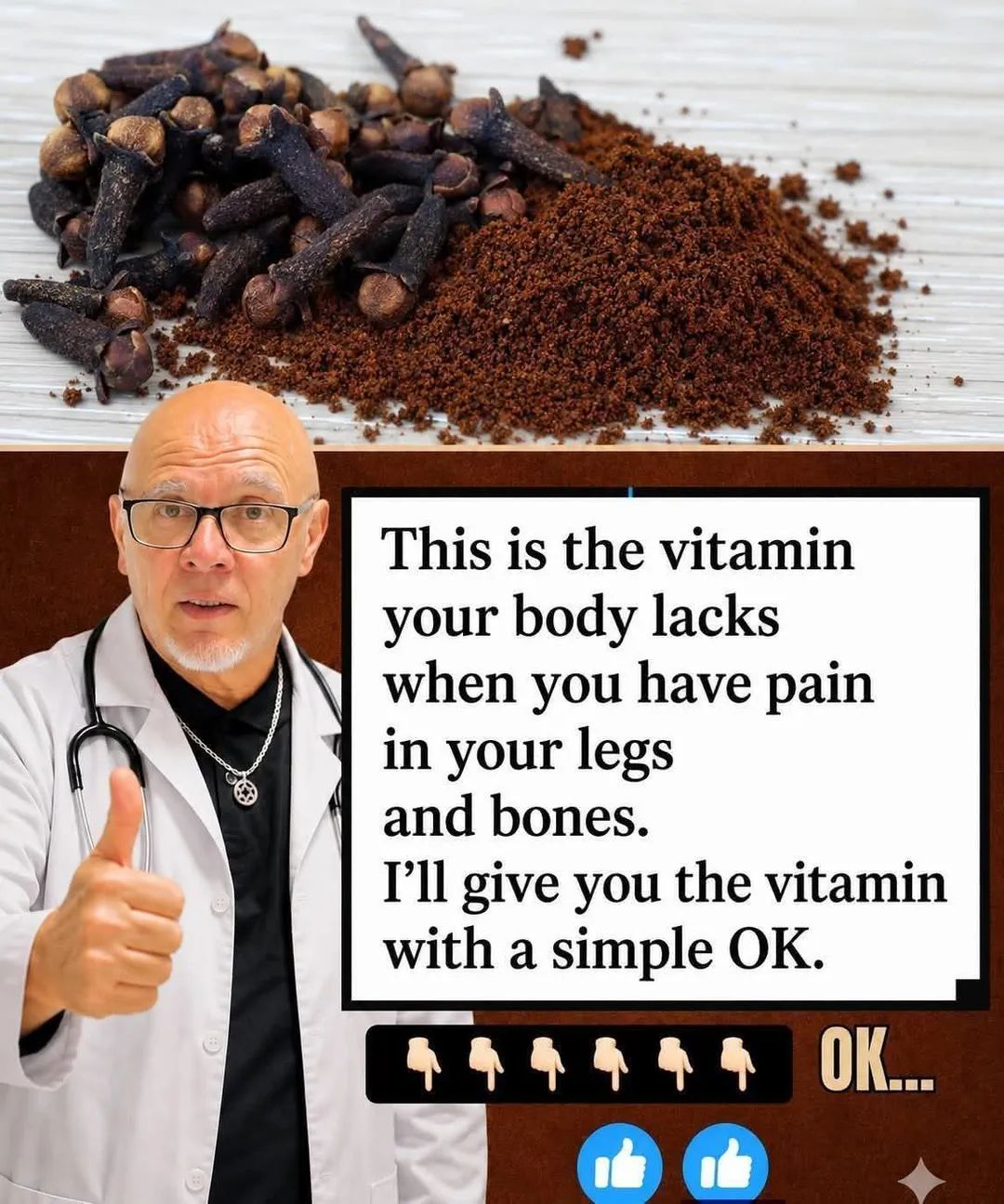
A striking health image circulating on social media shows whole cloves and ground clove powder beside a picture of a doctor. The message makes a dramatic claim: “This is the vitamin your body lacks when you have pain in your legs and bones.” It then suggests that the answer can be provided with a simple “OK.”
The image is designed to make a complicated health question sound extremely simple.
But leg pain and bone pain can have many different causes, and there is no single vitamin that explains every case. One nutrient that is genuinely important for bones and muscles is vitamin D. A significant deficiency can contribute to osteomalacia, bone pain, and muscle weakness. However, that does not mean every person with painful legs has a vitamin D deficiency.
And there is another important point: cloves are not a treatment for vitamin D deficiency.
Cloves are an aromatic spice with interesting nutritional and plant compounds, but simply eating cloves cannot be considered a substitute for diagnosing and treating a vitamin D deficiency.
This article examines the viral claim carefully. We will look at what vitamin D actually does, why leg and bone pain can occur, what cloves can realistically contribute to the diet, how older adults can protect their bone health, when testing may be appropriate, and which warning signs should never be ignored.
What Is the Vitamin Mentioned in the Viral Claim?
The image does not clearly name a vitamin. However, because it connects a nutritional deficiency with pain in the legs and bones, vitamin D is an important possibility.
Vitamin D has a well-established role in bone health.
The body needs vitamin D to absorb calcium from the digestive tract. Calcium and vitamin D work together to maintain normal bone mineralization and skeletal health.
Vitamin D is also involved in muscle function.
When vitamin D levels are severely inadequate, adults can develop osteomalacia, a condition in which bones become poorly mineralized. Symptoms can include bone pain and muscle weakness.
That is very different from saying:
«“Anyone with leg pain is lacking vitamin D.”»
That statement would be inaccurate.
Leg pain has many possible causes.
Vitamin D and Bone Health
Think of vitamin D as part of a larger bone-health system.
Healthy bones depend on several factors, including:
- vitamin D;
- calcium;
- protein;
- physical activity;
- hormones;
- muscle strength;
- adequate nutrition;
- and overall health.
Vitamin D helps the intestine absorb calcium.
Without adequate vitamin D, the body has more difficulty maintaining the mineral balance required for normal bone health.
The National Institutes of Health explains that vitamin D promotes calcium absorption and helps maintain adequate calcium and phosphate concentrations for normal bone mineralization.
This is why vitamin D deficiency can become particularly important when discussing unexplained bone or muscle discomfort.
However, correcting a deficiency is different from taking large amounts of vitamin D “just in case.”
What Happens When Vitamin D Is Too Low?
Severe vitamin D deficiency can have significant effects.
In children, deficiency can cause rickets.
In adults, prolonged deficiency can cause osteomalacia.
Osteomalacia can make bones weak and painful and can also contribute to muscle weakness.
Some people may experience:
- diffuse bone discomfort;
- muscle weakness;
- difficulty climbing stairs;
- difficulty getting up from a chair;
- fatigue;
- or increased difficulty walking.
But these symptoms are not unique to vitamin D deficiency.
That is why symptoms alone cannot establish the diagnosis.
A person with painful legs should not automatically assume that vitamin D is the problem.
Why Older Adults Should Pay Attention to Vitamin D
Vitamin D becomes especially relevant as people age.
The skin becomes less efficient at producing vitamin D from sunlight as we get older. Older adults may also spend less time outdoors, and some may have dietary or medical factors that affect vitamin D status.
According to NIH guidance, the recommended intake for adults aged 19–70 is 600 IU (15 micrograms) per day, while adults over 70 are recommended to get 800 IU (20 micrograms) per day.
These are general recommended intakes—not instructions for treating a diagnosed deficiency.
Someone with a confirmed deficiency may require a specific treatment plan determined by a healthcare professional.
Does Leg Pain Automatically Mean Vitamin D Deficiency?
No.
This is perhaps the most important point to take away from the viral image.
Leg pain can originate from:
- muscles;
- bones;
- joints;
- nerves;
- arteries;
- veins;
- tendons;
- ligaments;
- injuries;
- infections;
- medications;
- nutritional deficiencies;
- or systemic diseases.
For example, peripheral arterial disease can cause an aching pain in the legs during walking that improves after several minutes of rest. It results from reduced blood flow to the leg muscles and is not something that should be dismissed as a vitamin deficiency.
A blood clot is another possibility.
Deep vein thrombosis can cause pain, usually in one leg, along with swelling and skin changes. DVT can be dangerous and requires prompt medical assessment.
This is why diagnosing the cause of pain matters.
Vitamin B12 Can Also Affect the Legs
Vitamin D is not the only nutrient relevant to leg symptoms.
Vitamin B12 is essential for healthy blood cells and normal nervous-system function.
B12 deficiency can cause neurological symptoms including numbness, tingling, weakness, balance problems, and difficulty walking.
This creates another reason not to assume that every unusual sensation in the legs is caused by vitamin D.
A person experiencing:
- burning feet;
- tingling;
- numbness;
- loss of balance;
- weakness;
- or unusual nerve sensations
may need a medical evaluation rather than simply taking a vitamin supplement.
What About Magnesium?
Magnesium is another nutrient frequently discussed online in relation to muscle cramps.
Magnesium participates in numerous biochemical processes and is important for normal muscle and nerve function.
However, muscle cramps do not automatically mean magnesium deficiency either.
People often see social-media posts claiming that a particular symptom proves they lack a particular nutrient.
Human biology is much more complicated.
The same symptom can have many causes.
What Are Cloves?
Cloves are the dried flower buds of the clove tree, Syzygium aromaticum.
They have been used for centuries as a culinary spice and in traditional practices.
Their distinctive aroma and flavor come from volatile compounds, particularly eugenol.
Cloves are commonly used in:
- teas;
- spice blends;
- baked goods;
- curries;
- meat dishes;
- rice dishes;
- desserts;
- marinades;
- and traditional preparations.
Whole cloves and ground cloves are both common forms.
Because cloves contain concentrated plant compounds, they are best thought of as a spice, not as a replacement for a balanced diet or medical treatment.
Do Cloves Contain Vitamin D?
This is where the viral claim becomes particularly misleading.
Cloves should not be presented as a reliable source of vitamin D.
Vitamin D is naturally present in relatively few foods. Examples include certain fatty fish, while many people obtain vitamin D from fortified foods such as certain milks, cereals, and other products depending on the country.
Therefore, eating cloves is not an established way to correct vitamin D deficiency.
A teaspoon of a spice cannot be treated as equivalent to a medically appropriate vitamin D supplement.
The fact that a food contains other nutrients or interesting plant compounds does not mean it supplies every nutrient the body needs.
Why Are Cloves So Popular in Home Remedies?
Cloves have a long history in traditional medicine.
Their strong aroma and warming sensation have contributed to their popularity in traditional preparations.
Modern scientific research has also investigated compounds found in cloves, especially eugenol.
However, laboratory research is not the same thing as clinical proof.
A plant compound may show biological activity in laboratory experiments without being proven to treat a disease in humans.
This distinction is extremely important when reading health information online.
Could Cloves Help With General Nutrition?
As part of a balanced diet, spices can contribute flavor and small amounts of nutrients.
They can also help people make meals more enjoyable without relying entirely on excessive salt or sugar.
Cloves may be used in nutritious foods such as:
- oatmeal;
- fruit dishes;
- yogurt;
- soups;
- stews;
- roasted vegetables;
- tea;
- and whole-grain recipes.
But the amount normally consumed as a spice is relatively small.
That means cloves should not be treated as a major nutritional source of vitamin D, calcium, or other nutrients required for bone health.
Can Cloves Relieve Bone Pain?
There is not sufficient clinical evidence to claim that eating cloves or applying clove preparations can cure unexplained bone pain.
A person might experience temporary comfort from a warm beverage or aromatic preparation, but subjective comfort is not the same as treating the underlying cause.
If someone has persistent bone pain, the correct response is to investigate why it is happening.
Potential causes may include:
- osteoarthritis;
- osteoporosis-related fractures;
- vitamin D deficiency;
- muscle problems;
- nerve disorders;
- infections;
- inflammatory diseases;
- or other medical conditions.
A spice should not replace medical evaluation when symptoms persist.
What Is Osteoporosis?
Osteoporosis is a condition in which bones become less dense and more fragile.
People with osteoporosis can sometimes suffer fractures after relatively minor falls or injuries.
Importantly, osteoporosis itself may remain silent until a fracture occurs.
This means that someone should not assume their bones are healthy simply because they do not have pain.
Bone health is influenced by age, genetics, physical activity, nutrition, hormones, medications, and other health factors.
Vitamin D and calcium are important parts of the picture, but they are not the entire story.
Osteomalacia Is Different From Osteoporosis
These two conditions are sometimes confused.
Osteoporosis involves reduced bone mass and deterioration of bone tissue, making fractures more likely.
Osteomalacia involves inadequate mineralization of existing bone.
Vitamin D deficiency can contribute to osteomalacia, which may produce bone pain and muscle weakness.
This distinction matters because treatment depends on the underlying condition.
Why Testing Can Be Better Than Guessing
If someone genuinely suspects vitamin D deficiency, guessing based on symptoms is not the best approach.
A healthcare professional can decide whether testing is appropriate based on the person’s symptoms, medical history, risk factors, medications, and overall health.
A blood test measuring 25-hydroxyvitamin D [25(OH)D] is commonly used to assess vitamin D status.
The important lesson is simple:
Test when appropriate rather than assuming.
Taking large amounts of a vitamin without knowing whether you need it is not necessarily harmless.
Can Too Much Vitamin D Be Dangerous?
Yes.
Vitamin D is essential, but more is not always better.
Excessive vitamin D intake—usually from high-dose supplements—can lead to abnormally high calcium levels in the blood.
Severe toxicity can cause:
- nausea;
- vomiting;
- weakness;
- confusion;
- excessive thirst;
- frequent urination;
- dehydration;
- kidney stones;
- kidney damage;
- abnormal heart rhythms;
- and, in extreme cases, life-threatening complications.
The NIH lists 4,000 IU (100 micrograms) per day as the tolerable upper intake level for adults, although a healthcare professional may prescribe higher doses for a limited period when treating a diagnosed deficiency.
This is another reason not to follow aggressive supplement advice from social media.
Vitamin D From Food
Food can be an important source of vitamin D, although relatively few foods naturally contain large amounts.
Fatty fish such as:
- salmon;
- trout;
- tuna;
- and mackerel
can provide vitamin D.
Depending on the country and product, fortified foods may include:
- milk;
- some yogurts;
- breakfast cereals;
- and certain plant-based beverages.
Food labels can help identify fortified products.
A balanced diet is generally a better foundation than relying on a single “miracle” food.
What About Sunlight?
The human body can produce vitamin D when ultraviolet B radiation reaches the skin.
However, the amount produced depends on numerous factors, including:
- age;
- skin pigmentation;
- season;
- geographic location;
- time of day;
- clothing;
- and sun exposure.
Older adults generally produce vitamin D less efficiently through the skin than younger adults.
That does not mean people should deliberately seek excessive sun exposure or abandon sun-safety practices.
Vitamin D status should be considered as part of an overall health strategy.
Why “One Vitamin” Claims Are So Attractive
Social media rewards simplicity.
A headline saying:
“This is the vitamin your body lacks when your legs hurt!”
is far more likely to attract attention than:
“Leg pain has numerous possible causes and may require clinical assessment.”
The first statement is emotionally powerful.
The second is medically responsible.
Unfortunately, health is rarely as simple as viral images suggest.
The Problem With “Doctors Don’t Want You to Know”
Health posts sometimes imply that doctors are hiding simple cures.
This is a common marketing technique.
It encourages people to distrust conventional medical care and creates the impression that a secret ingredient has been deliberately suppressed.
But medical knowledge changes through research, clinical trials, systematic reviews, and professional guidelines.
If a cheap spice genuinely cured a major disease, researchers would have enormous reason to study it.
Healthy skepticism is valuable—but it should apply to dramatic alternative-health claims too.
What Should You Do If Your Legs Hurt?
The first step is to think about the pattern.
Ask:
- When did the pain begin?
- Is it in one leg or both?
- Does it occur during walking?
- Does it improve with rest?
- Is there swelling?
- Is there redness or warmth?
- Is there numbness?
- Is there weakness?
- Is the pain in the muscle, joint, or bone?
- Was there an injury?
- Are you taking new medications?
- Have you experienced unexplained weight loss or fever?
These details can help a healthcare professional identify possible causes.
Leg Pain That Happens While Walking
Pain that consistently appears when walking and improves after resting can be a sign of peripheral arterial disease.
PAD occurs when arteries supplying the legs become narrowed, reducing blood flow to the muscles.
This is especially important because PAD is associated with cardiovascular disease.
Risk factors include:
- smoking;
- diabetes;
- high blood pressure;
- high cholesterol;
- and increasing age.
Someone experiencing recurring exercise-related leg pain should not simply assume they need a vitamin.
They should be assessed.
Sudden Pain and Swelling in One Leg
This situation deserves particular attention.
DVT can cause:
- pain in one leg;
- swelling;
- changes in skin color;
- warmth;
- or swollen veins.
A DVT can become life-threatening if part of the clot travels to the lungs.
If leg pain and swelling are accompanied by sudden shortness of breath or chest pain, emergency medical care is required.
No clove tea, vitamin, massage, or home remedy should be used as a substitute for urgent evaluation in that situation.
What If the Pain Is More Like Tingling or Burning?
Burning, tingling, numbness, or pins-and-needles sensations may point toward a nerve problem.
Possible causes include:
- diabetes;
- vitamin B12 deficiency;
- nerve compression;
- certain medications;
- alcohol-related nerve damage;
- and other neurological conditions.
Vitamin B12 deficiency can produce neurological symptoms involving the hands and feet and may cause problems with balance and walking.
Again, this demonstrates why identifying the exact symptom matters.
Healthy Habits for Stronger Bones
Rather than searching for one miracle ingredient, focus on several proven foundations.
- Eat a balanced diet
Include a variety of:
- vegetables;
- fruits;
- whole grains;
- legumes;
- protein foods;
- dairy or suitable alternatives;
- nuts and seeds;
- and healthy fats.
- Get adequate calcium
Calcium is a major structural component of bone.
Food sources can include dairy products, calcium-set tofu, certain fish eaten with bones, and some fortified foods.
- Maintain adequate vitamin D
Vitamin D helps the body absorb calcium and supports bone and muscle function.
- Stay physically active
Weight-bearing and resistance exercises can help maintain bone and muscle strength.
- Avoid smoking
Smoking is harmful to cardiovascular and overall health and can negatively affect bone health.
- Limit excessive alcohol
Heavy alcohol use can contribute to multiple health problems, including problems related to bone health and falls.
- Prevent falls
For older adults, preventing falls is a major part of protecting bones.
Improving balance, strength, lighting, footwear, and home safety can make a meaningful difference.
Can Cloves Be Part of a Healthy Diet?
Absolutely.
There is nothing wrong with enjoying cloves as a culinary spice if you tolerate them well.
Try adding a small amount of ground cloves to:
- oatmeal with apples;
- warm milk or a fortified alternative;
- unsweetened tea;
- baked apples;
- pumpkin dishes;
- lentil stews;
- vegetable soups;
- or homemade spice blends.
The key is to use cloves as food, rather than expecting them to act like a medication.
A Simple Clove Tea for Enjoyment
If you enjoy the flavor of cloves, a simple tea can be prepared as a beverage.
Ingredients
- 2–3 whole cloves
- 1 cup hot water
- Optional: a small piece of cinnamon
- Optional: lemon for flavor
Method
Place the cloves in a cup.
Pour over hot water.
Allow the drink to steep for several minutes.
Remove the cloves before drinking.
This can be a pleasant, warming beverage.
However, it should be described honestly: it is a spiced drink, not a proven treatment for vitamin D deficiency or bone disease.
Should You Take Clove Supplements?
Concentrated supplements are different from using a small quantity of cloves in food.
Supplements can provide much higher amounts of active compounds than ordinary culinary use.
People who take medications or have chronic conditions should be especially careful with concentrated herbal products.
Before taking a clove extract or high-dose herbal supplement, discuss it with a qualified healthcare professional or pharmacist.
What Seniors Should Know About Supplements
Older adults are often targeted by online advertisements promising quick relief from:
- joint pain;
- memory problems;
- weakness;
- fatigue;
- poor circulation;
- and aging-related symptoms.
Some supplements may be useful in specific situations.
But supplements should not automatically be considered safer than medicines.
They can have:
- side effects;
- interactions;
- inconsistent formulations;
- and inappropriate doses.
The NIH advises consumers to consider both effectiveness and safety when evaluating dietary supplements.
The Best Lesson From the Viral Image
There actually is a useful message hidden beneath the misleading headline.
If you experience persistent bone or muscle pain, nutrition deserves attention.
Vitamin D matters.
Calcium matters.
Protein matters.
Physical activity matters.
But none of these facts mean that one spice is a universal cure.
Instead of asking:
“Which secret vitamin will stop my leg pain?”
ask:
“What is causing my leg pain, and do I have the nutrients and lifestyle habits needed to support healthy bones and muscles?”
That is a much more productive question.
Frequently Asked Questions
Is vitamin D deficiency associated with bone pain?
Yes. Severe or prolonged vitamin D deficiency can cause osteomalacia in adults, which can result in bone pain and muscle weakness.
Does every person with leg pain have low vitamin D?
No. Leg pain has many possible causes, including circulation problems, nerve disorders, injuries, arthritis, muscle problems, and blood clots.
Do cloves provide vitamin D?
Cloves should not be considered a meaningful treatment or reliable source of vitamin D.
Can cloves cure bone pain?
There is not sufficient evidence to claim that cloves cure unexplained bone pain.
How much vitamin D do adults need?
NIH guidance lists 600 IU (15 mcg) daily for adults 19–70 and 800 IU (20 mcg) daily for adults over 70.
Can I take very high doses of vitamin D?
Do not take high doses without appropriate medical advice. Excess vitamin D can cause toxicity and dangerously high calcium levels.
Can vitamin B12 deficiency cause leg symptoms?
Yes. B12 deficiency can cause neurological symptoms such as numbness, tingling, weakness, balance problems, and difficulty walking.
Is one-sided leg swelling serious?
It can be. DVT can cause pain and swelling in one leg and requires prompt medical evaluation.
What if leg pain happens every time I walk?
Recurring pain brought on by walking and relieved by rest can be a symptom of peripheral arterial disease and should be medically evaluated.
Final Thoughts
The viral image featuring cloves and a supposed “missing vitamin” contains a small piece of truth surrounded by an overly simple message.
Vitamin D really is important.
It plays a central role in calcium absorption, bone mineralization, muscle function, and overall health. Severe deficiency can cause osteomalacia, which may lead to bone pain and muscle weakness.
But leg pain does not automatically mean vitamin D deficiency.
Pain can come from the joints, muscles, nerves, arteries, veins, injuries, inflammation, medications, and many other conditions. PAD can cause pain during walking, while DVT can cause pain and swelling in one leg and requires urgent assessment.
Cloves can certainly be part of a flavorful and varied diet. Their traditional use and interesting plant compounds make them worthy of continued scientific interest. But they should not be promoted as a replacement for vitamin D treatment or as a cure for unexplained leg and bone pain.
The safest approach is to avoid miracle claims and focus on evidence.
If you have persistent pain, weakness, numbness, swelling, difficulty walking, or other unexplained symptoms, talk with a healthcare professional. If vitamin D deficiency is suspected, your clinician can determine whether testing is appropriate and whether supplementation is necessary.
And remember:
A spice can be healthy without being a medicine.
A vitamin can be important without being the answer to every symptom.
And a viral health post can be popular without being scientifically proven.
The goal should not be to find the most exciting remedy. The goal should be to find the correct cause, use evidence-based treatment when necessary, and support your body with good nutrition, regular movement, adequate rest, and appropriate medical care.
Medical Disclaimer
This article is intended for general educational purposes and does not diagnose, treat, or prevent any disease. It should not be used as a substitute for professional medical advice. Anyone with persistent or severe leg or bone pain should seek appropriate medical evaluation. Sudden one-sided leg swelling or pain, especially when accompanied by chest pain or shortness of breath, requires urgent medical attention. Do not begin high-dose vitamin D or other supplements solely because of a social-media claim.