A Decayed Tooth Can Make Your Whole Body Sick: The Science Behind the Mouth-Body Connection
A single neglected cavity might seem like a minor inconvenience—something that causes occasional pain or sensitivity and can be put off until “next month.” The dramatic claim that a decayed tooth can “make your whole body sick” sounds like scare tactics from social media. Yet modern research shows it is not pure hyperbole. Untreated dental decay and the infections that follow can seed bacteria into the bloodstream, fuel chronic low-grade inflammation, and raise the risk of serious systemic conditions ranging from cardiovascular disease and stroke to diabetes complications, respiratory infections, and even adverse pregnancy outcomes.
This article examines the biology, the history, the evidence, and the practical steps that protect both your teeth and the rest of your body. The mouth is not an isolated compartment. It is the gateway to the rest of the organism.
How a Cavity Becomes a Systemic Threat
Tooth decay (dental caries) begins when bacteria in plaque metabolize sugars and produce acid that demineralizes enamel. If the process continues, the decay reaches the dentin and eventually the pulp—the living tissue containing nerves and blood vessels. Once the pulp is infected, bacteria and their toxins can travel through the root tip into the surrounding bone, creating apical periodontitis (an infection around the root apex).
From there, several pathways open:
- Bacteremia – Everyday activities such as chewing, toothbrushing, or flossing can force bacteria from inflamed gum tissues or an infected root canal into the bloodstream. Dental procedures (extractions, scaling, endodontic treatment) produce even higher rates of transient bacteremia—sometimes approaching 100% after extractions.
- Metastatic infection – Circulating oral bacteria can lodge in distant sites. Classic examples include infective endocarditis (infection of the heart valves) and metastatic abscesses in the brain, lungs, or joints. Deep neck infections originating from lower molars can become life-threatening if they spread along fascial planes.
- Systemic inflammation – Even without frank sepsis, chronic oral infections release inflammatory cytokines (IL-6, TNF-α, CRP) into the circulation. This low-grade systemic inflammation contributes to endothelial dysfunction, insulin resistance, and atherosclerotic plaque formation.
- Immune cross-reactivity and toxin dissemination – Bacterial components such as lipopolysaccharides (LPS) and outer-membrane vesicles can travel far from the original site and provoke immune responses elsewhere.
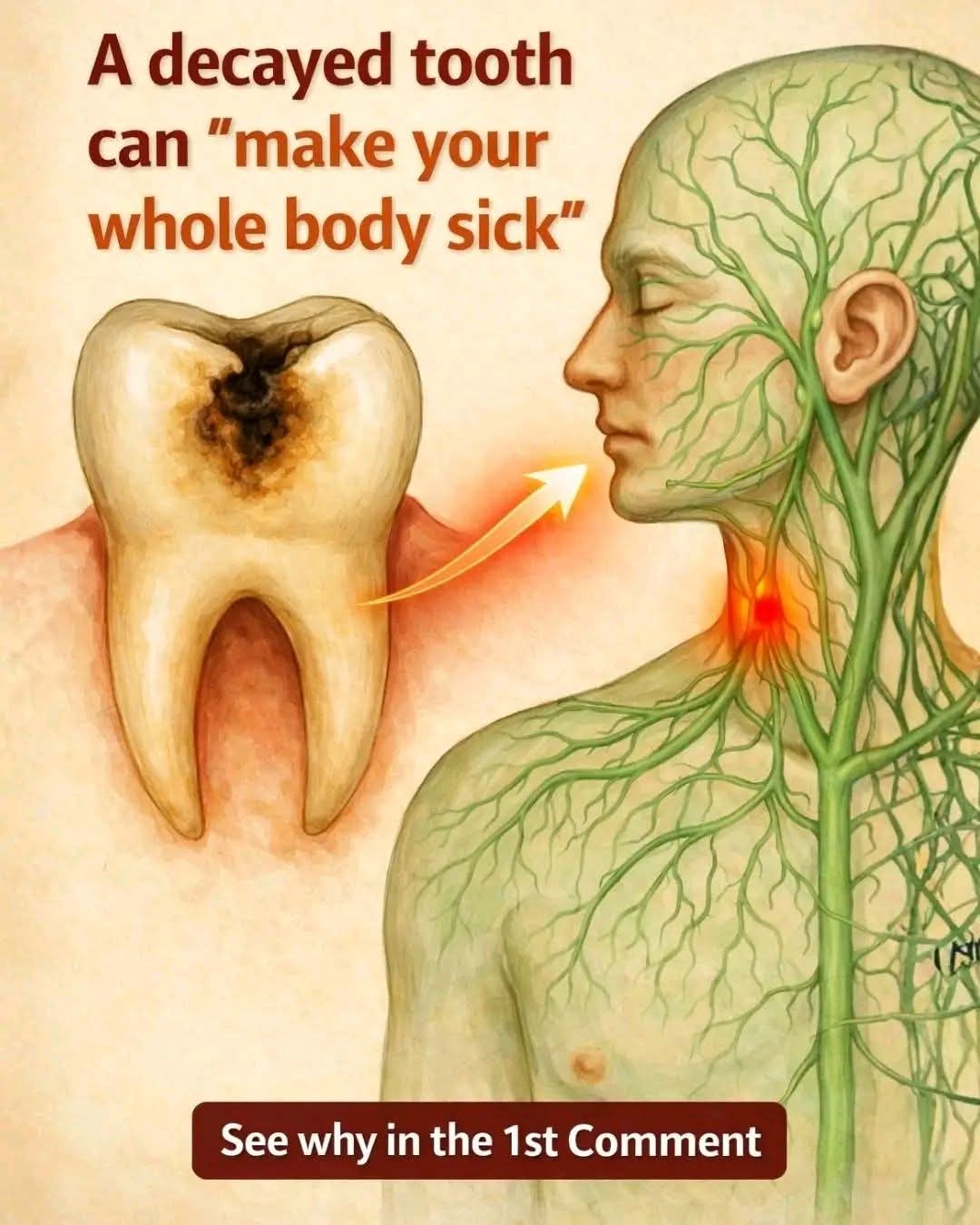
The image accompanying many popular posts shows a decayed tooth linked by an arrow to a glowing red spot on the neck of a figure whose vascular or lymphatic system is highlighted. That visual is a simplified representation of these real pathways: infection and inflammation do not stay confined to the tooth.
A Brief History: From Focal Infection Theory to Periodontal Medicine
The idea that oral infections cause distant disease is ancient. Hippocrates reportedly cured arthritis by extracting a tooth. In the early 20th century the “focal infection theory” became mainstream medical doctrine. Physicians and dentists blamed infected teeth and tonsils for everything from rheumatoid arthritis to mental illness and routinely extracted teeth prophylactically.
The theory collapsed in the 1930s–1940s under scientific scrutiny. Controlled studies showed that massive, unrealistic bacterial inocula were required to produce the claimed effects, and wholesale extractions often failed to cure the systemic conditions. Endodontic treatment and restorative dentistry regained favor.
Beginning in the late 1980s and accelerating through the 1990s, a more nuanced understanding emerged under the banner of “periodontal medicine.” Large epidemiological studies, animal models, and intervention trials demonstrated consistent associations between periodontitis (and, to a lesser extent, untreated endodontic infections) and cardiovascular disease, diabetes, adverse pregnancy outcomes, and other conditions. The old focal-infection concept had been oversimplified and over-applied; the new science is more measured, mechanism-driven, and evidence-based.
The Strongest Evidence: What Systemic Conditions Are Linked?
Cardiovascular disease and stroke
Multiple meta-analyses and long-term cohort studies show that people with periodontitis or significant tooth loss have elevated risk of coronary heart disease, myocardial infarction, and ischemic stroke. A 2023 analysis found that cavities themselves were associated with a 40% increase in stroke risk and a 13% increase in all-cause mortality over 21 years of follow-up. Proposed mechanisms include bacteremia-driven endothelial injury, systemic inflammation accelerating atherosclerosis, and shared risk factors (smoking, diabetes, socioeconomic status). Treating periodontitis has been shown to improve endothelial function and reduce inflammatory markers, though large-scale outcome trials on hard cardiovascular endpoints are still ongoing.
Diabetes
The relationship is bidirectional. Poor glycemic control worsens periodontal disease; severe periodontitis makes blood-sugar control more difficult. Periodontal treatment can produce modest but clinically meaningful reductions in HbA1c (typically 0.4–0.6%). Chronic oral inflammation appears to contribute to insulin resistance through cytokine signaling.
Respiratory disease
Oral bacteria can be aspirated into the lungs, especially in older or institutionalized patients. Improved oral hygiene has been shown to reduce the incidence of pneumonia in nursing-home and ventilated-hospital settings.
Adverse pregnancy outcomes
Periodontal infection is associated with higher rates of preterm birth and low birth weight. The proposed pathway involves circulating inflammatory mediators and bacteria that reach the placenta. Intervention studies have produced mixed results, but the association is robust enough that many obstetric guidelines now recommend periodontal evaluation during pregnancy.
Cognitive decline and Alzheimer’s disease
Emerging data link periodontitis and certain oral pathogens (Porphyromonas gingivalis in particular) to neuroinflammation and amyloid pathology. Bacteria or their toxins have been detected in brain tissue of Alzheimer’s patients. Causality remains under investigation, but the biological plausibility is high.
Other associations
Links of varying strength exist with rheumatoid arthritis, chronic kidney disease, certain cancers (especially pancreatic and colorectal), and metabolic syndrome. A 2024 comprehensive review of 252 studies concluded that individuals with oral diseases are on average 3.3 times more likely to develop or suffer complications from a range of systemic conditions.
Importantly, not every cavity leads to systemic disaster. The risk is highest when decay progresses to chronic apical periodontitis or when concurrent periodontitis creates a large inflammatory burden and frequent bacteremia. Host factors—immune competence, existing cardiovascular disease, diabetes, smoking—determine how dangerous the oral infection becomes.
Why a Single Decayed Tooth Matters
Even one untreated necrotic tooth can act as a continuous source of bacteria and inflammatory mediators. Case reports document fatal outcomes from odontogenic sepsis, brain abscesses, and mediastinal infections that began as a neglected molar. In immunocompromised patients or those with prosthetic heart valves or joint replacements, the stakes are higher still; antibiotic prophylaxis before certain dental procedures remains recommended for specific high-risk cardiac conditions.
The image’s glowing red spot on the neck is not purely artistic license. Submandibular and deep-neck spaces communicate with the fascial planes of the neck and mediastinum. Infections from lower third molars or other posterior teeth can track into these spaces and become surgical emergencies.
Prevention and Treatment: Protecting the Whole Body Starts in the Mouth
The good news is that most of this risk is modifiable.
- Daily hygiene – Brush twice daily with fluoride toothpaste, clean between teeth (floss, interdental brushes, or water flossers), and limit frequent sugar exposure. These steps reduce both caries and the periodontal inflammation that drives bacteremia.
- Regular professional care – Dental check-ups and cleanings allow early detection of decay and periodontal pockets before they become chronic sources of infection. Root-canal treatment or extraction of non-restorable teeth eliminates the focus.
- Risk-factor control – Smoking cessation, good diabetes management, and a diet low in free sugars benefit both oral and systemic health.
- Integrated medical-dental care – Patients with heart disease, diabetes, or pregnancy should inform both their physician and dentist. Medical colleagues are increasingly aware of the oral-systemic links and may recommend dental clearance before certain surgeries or during high-risk periods.
Successful endodontic treatment or periodontal therapy has been shown to lower circulating inflammatory markers and, in some studies, improve metabolic and endothelial parameters. The mouth is not merely a cosmetic or comfort concern; it is a modifiable risk factor for systemic disease.
Practical Takeaways for Everyday Life
If you have a toothache, visible decay, swelling, or a chronically sensitive tooth, do not wait for the pain to become unbearable. Early intervention is simpler, less expensive, and far safer for the rest of the body. Children and older adults deserve particular attention: the former because early decay can set lifelong patterns, the latter because immune changes and comorbidities amplify risk.
Public-health data reinforce the point. Untreated dental caries remains one of the most prevalent chronic conditions worldwide. The economic and human cost of the downstream systemic effects—hospitalizations for odontogenic infections, excess cardiovascular events, complicated pregnancies—dwarfs the cost of timely dental care.
Conclusion: The Mouth Belongs to the Body
The dramatic social-media claim that a decayed tooth can make your whole body sick contains a core of scientific truth. While the old focal-infection theory went too far, contemporary research has restored the mouth to its rightful place as an integral part of systemic health. Bacteria and inflammatory signals originating from untreated dental infections travel through the bloodstream and lymphatic system, contributing to cardiovascular disease, diabetes complications, respiratory infections, pregnancy risks, and possibly neurodegenerative processes.
The solution is neither panic nor denial. It is consistent oral hygiene, prompt professional treatment of decay and periodontal disease, and recognition by both patients and healthcare providers that oral health is whole-body health. A healthy mouth does not guarantee freedom from every systemic disease, but an unhealthy mouth measurably raises the odds. Taking care of your teeth is one of the most accessible and cost-effective ways to protect the rest of your body.
See your dentist. Brush and clean between your teeth. Limit sugar. The payoff extends far beyond a brighter smile.