Diabetes at Night: Nighttime Signs You Should Know, What They May Mean, and When to Seek Medical Advice
Introduction
Diabetes can develop gradually, and some people may have elevated blood glucose for months or even years before realizing that something is wrong. While diabetes does not always produce obvious symptoms, certain changes may become more noticeable at night. Waking up repeatedly to urinate, feeling unusually thirsty, experiencing dry mouth, sweating or shaking during sleep, developing uncomfortable sensations in the legs or feet, or feeling extremely tired in the morning can sometimes be associated with blood-glucose problems.
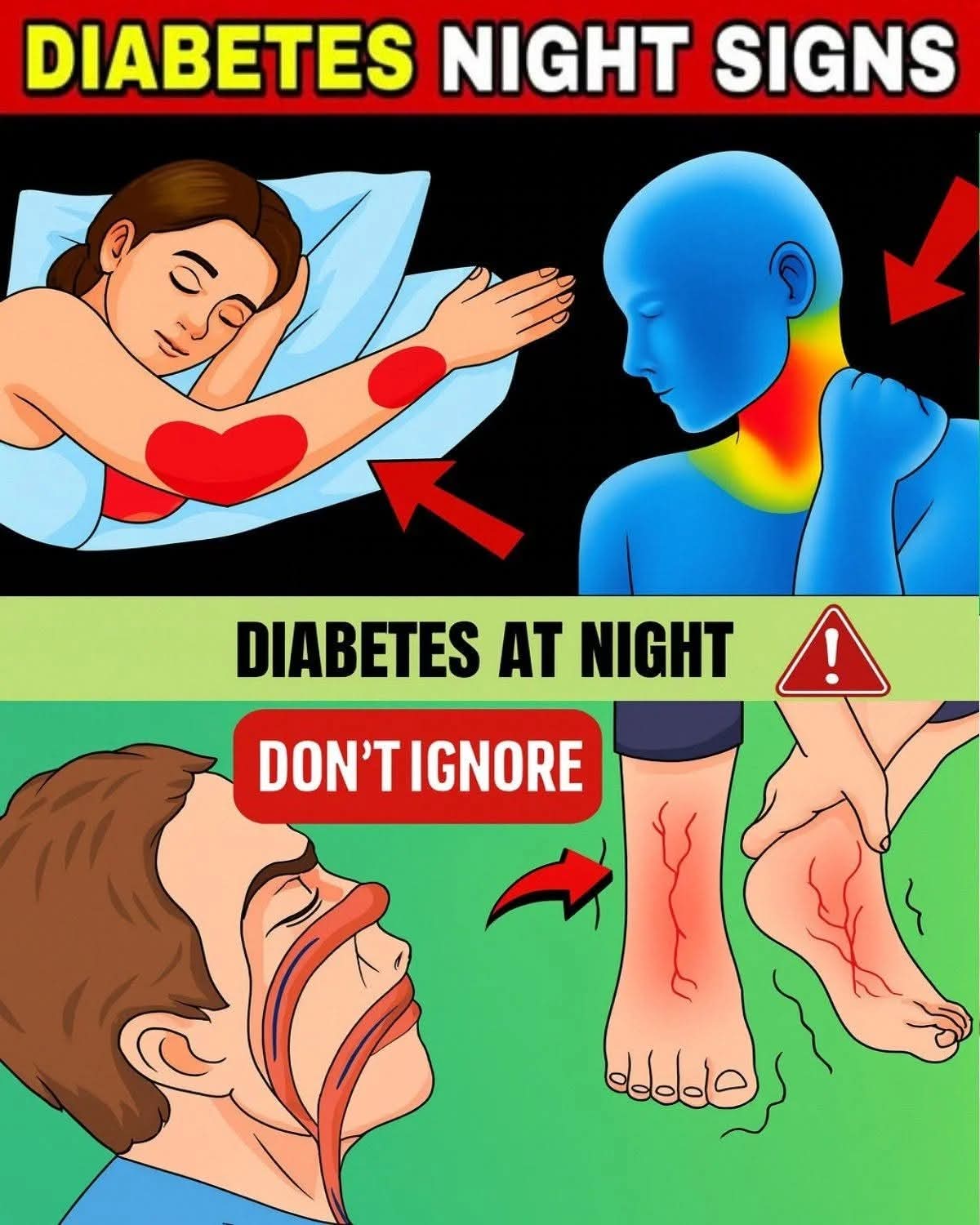
The image accompanying this article highlights several nighttime concerns, including discomfort in the arms or legs, thirst or mouth dryness, and nighttime symptoms that should not simply be ignored. However, it is important to understand that these symptoms do not automatically mean a person has diabetes. Many other conditions, medications, lifestyle factors, and sleep problems can cause similar complaints.
Diabetes is a medical condition in which blood glucose remains too high because the body does not produce enough insulin, does not use insulin effectively, or both. Over time, persistently high blood glucose can affect blood vessels, nerves, kidneys, eyes, heart, and other organs. The good news is that diabetes can often be detected through simple blood tests, and appropriate treatment can substantially reduce the risk of complications.
This comprehensive guide explains common nighttime signs associated with diabetes, why they may occur, how high and low blood sugar can affect sleep, which symptoms require urgent attention, and what practical steps can help.
What Is Diabetes?
Glucose, commonly called blood sugar, is one of the body’s major sources of energy. When we eat carbohydrates, the digestive system breaks them down into glucose, which enters the bloodstream.
The pancreas produces a hormone called insulin. Insulin helps glucose move from the bloodstream into cells, where it can be used for energy.
In diabetes, this system does not work properly.
In type 1 diabetes, the immune system destroys the insulin-producing cells of the pancreas, resulting in little or no insulin production. People with type 1 diabetes require insulin treatment.
In type 2 diabetes, which is the most common form, the body becomes resistant to insulin and may eventually fail to produce enough insulin to keep blood glucose within a healthy range.
Gestational diabetes can develop during pregnancy and generally requires monitoring and appropriate medical care.
Regardless of the type, untreated or poorly controlled diabetes can lead to persistently elevated blood glucose.
Why Can Diabetes Cause Problems at Night?
Nighttime may make certain diabetes symptoms more noticeable for several reasons.
When blood glucose becomes elevated, the kidneys work to remove excess glucose from the bloodstream. Glucose draws additional water into the urine, which can increase urination. As a result, a person may wake repeatedly during the night to use the bathroom.
Frequent urination can contribute to dehydration, which may cause thirst, dry mouth, or a feeling of needing water beside the bed.
Blood glucose can also fluctuate overnight. People who take insulin or certain glucose-lowering medications may experience low blood sugar while sleeping. Depending on the severity, this can cause sweating, trembling, a racing heartbeat, nightmares, confusion, or waking suddenly.
Long-term diabetes can also affect nerves. Nerve damage, known as diabetic neuropathy, may cause burning, tingling, numbness, or pain in the feet and legs. Some people notice these sensations more strongly when they are resting in bed because there are fewer daytime distractions.
These symptoms are important, but they are not diagnostic by themselves.
- Frequent Urination During the Night
One of the classic symptoms associated with elevated blood glucose is increased urination.
If blood glucose becomes sufficiently high, the kidneys may begin excreting glucose into the urine. Water follows the glucose, increasing urine production.
This can lead to nocturia, meaning waking during the night to urinate.
Occasionally waking once during the night may not be unusual, especially as people get older. Drinking large amounts of fluid before bed can also cause nighttime urination.
However, repeatedly waking several times every night to urinate—particularly when accompanied by excessive thirst, unexplained weight loss, fatigue, or blurred vision—may deserve medical evaluation.
Other possible causes include:
- Enlarged prostate
- Urinary tract problems
- Certain medications
- Pregnancy
- Excessive evening fluid intake
- Sleep apnea
- Heart or kidney conditions
- Overactive bladder
Therefore, frequent nighttime urination should not automatically be labeled as diabetes.
- Unusual Thirst and Dry Mouth
Excessive thirst can accompany frequent urination.
When the body loses more water through urine, the brain can signal that additional fluids are needed. A person may wake during the night with a very dry mouth or an intense desire to drink.
Some people keep a bottle of water beside their bed and repeatedly wake to drink.
Again, thirst has many possible explanations. Hot weather, physical activity, salty foods, dehydration, certain medications, and mouth breathing can all cause dry mouth or increased thirst.
Persistent excessive thirst combined with frequent urination is more concerning, particularly if other symptoms of diabetes are present.
- Night Sweats or Waking Up Soaked in Sweat
Sweating during sleep is not a specific sign of diabetes, but it can occur in people experiencing hypoglycemia, or low blood glucose.
This is especially relevant for people who use insulin or certain diabetes medications that can lower blood glucose.
When blood glucose falls too low, the body releases hormones such as adrenaline to raise glucose levels. This “fight-or-flight” response can cause:
- Sweating
- Shaking
- Rapid heartbeat
- Hunger
- Anxiety
- Restlessness
- Nightmares
- Sudden awakening
A person may wake up with damp pajamas or wet bedding and not immediately understand why.
Night sweats can also have many unrelated causes, including infections, hormonal changes, certain medications, alcohol, anxiety, sleep disorders, and a warm bedroom.
If nighttime sweating repeatedly occurs in someone with diabetes, glucose monitoring and discussion with a healthcare professional may help determine whether low blood glucose is involved.
- Shaking, Trembling, or a Racing Heart During Sleep
Low blood glucose can sometimes cause a person to wake suddenly with trembling, a pounding heart, sweating, or intense hunger.
This can happen when glucose falls below the person’s safe range.
The risk can depend on diabetes medications, meal timing, physical activity, alcohol consumption, kidney function, and individual circumstances.
People who repeatedly experience these symptoms should not simply assume that they are caused by stress or nightmares.
For someone with diabetes, checking blood glucose when symptoms occur—if they have an appropriate glucose meter or continuous glucose monitor—can provide useful information.
Medication doses should not be changed independently without professional advice.
- Tingling, Burning, or Pain in the Feet at Night
The image also draws attention to discomfort in the legs and feet.
Long-term high blood glucose can damage nerves. This condition is called diabetic peripheral neuropathy.
Symptoms may include:
- Tingling
- Pins-and-needles sensations
- Burning
- Numbness
- Sharp or shooting pain
- Increased sensitivity
- Reduced ability to feel temperature or injury
These sensations may become particularly noticeable at night when a person is lying quietly.
Someone may describe the feeling as “burning feet” or as though tiny electric shocks are traveling through the toes.
Not every case of tingling feet is caused by diabetes. Vitamin deficiencies, nerve compression, alcohol use, certain medications, thyroid disorders, circulation problems, and other neurological conditions can produce similar symptoms.
Persistent numbness or burning deserves medical attention because identifying the underlying cause early can be important.
- Restless or Uncomfortable Legs
Some people with diabetes report uncomfortable sensations in their legs at night.
Restless legs syndrome is a separate medical condition characterized by an urge to move the legs, often accompanied by unpleasant sensations that become worse during rest and improve temporarily with movement.
Diabetes does not automatically cause restless legs syndrome, although some underlying factors and coexisting conditions can overlap.
If leg discomfort repeatedly interferes with sleep, it is worth discussing with a healthcare professional rather than assuming diabetes is responsible.
- Excessive Hunger During the Night
Unexpected nighttime hunger can have several causes.
When glucose cannot enter cells efficiently, the body may behave as though it needs more energy even when enough food has been consumed. This can contribute to increased hunger.
However, waking hungry can also occur because of:
- Eating too little during the day
- High levels of physical activity
- Irregular meals
- Stress
- Certain medications
- Sleep deprivation
- Low blood glucose
- High-calorie foods that do not provide lasting satiety
In a person with diabetes, repeated nighttime hunger accompanied by sweating, shaking, confusion, or a rapid heartbeat may be particularly important because it can signal hypoglycemia.
- Blurred Vision
High blood glucose can temporarily affect the shape of the lens in the eye, causing changes in vision.
Some people notice intermittent blurry vision when blood glucose changes significantly.
Although this can happen at any time, a person may become more aware of visual changes in the evening or when waking during the night.
Persistent blurred vision should never be dismissed.
Diabetes can also contribute to serious long-term eye complications, including diabetic retinopathy. Regular eye examinations are therefore important for people who have diabetes.
Sudden severe vision loss, a sudden shower of floaters, flashes of light, or a curtain-like shadow over vision requires urgent medical assessment.
- Dry, Itchy, or Uncomfortable Skin
High blood glucose can contribute indirectly to dehydration, which may make the skin feel dry.
People with diabetes may also be more vulnerable to certain skin infections and may experience itching.
Nighttime itching can interfere with sleep and may be noticed more strongly when the person is lying quietly.
However, dry skin is extremely common and is frequently caused by weather, hot showers, harsh soaps, eczema, allergies, or other dermatological conditions.
Persistent itching should be evaluated if it is severe, widespread, or accompanied by other unexplained symptoms.
- Extreme Tiredness the Next Morning
Poor sleep is a common consequence of nighttime symptoms.
If someone repeatedly wakes to urinate, experiences pain in their feet, becomes thirsty, sweats, or has unstable blood glucose, their sleep can become fragmented.
The result may be:
- Morning fatigue
- Difficulty concentrating
- Irritability
- Headaches
- Reduced energy
- Daytime sleepiness
Fatigue itself is also a recognized symptom that can occur with diabetes.
When glucose cannot be used effectively by cells, a person may feel unusually tired even after sleeping for an apparently adequate number of hours.
Nevertheless, fatigue has a huge number of possible causes, including anemia, thyroid problems, sleep apnea, stress, depression, infections, nutritional deficiencies, medications, and insufficient sleep.
- Unexplained Weight Loss
Unexpected weight loss is an important symptom that should not be ignored.
When the body cannot effectively use glucose for energy, it may begin using stored fat and muscle for fuel.
This can result in weight loss despite normal or increased appetite.
Unexplained weight loss can occur with both type 1 and type 2 diabetes, although the presentation varies.
If someone loses a noticeable amount of weight without deliberately changing diet or exercise, they should speak with a healthcare professional.
- Increased Hunger and Thirst Together
The combination of increased hunger, increased thirst, and increased urination is sometimes called the classic “three polys” of diabetes:
- Polyuria — excessive urination
- Polydipsia — excessive thirst
- Polyphagia — excessive hunger
These symptoms can be especially noticeable overnight.
For example, a person might wake to urinate, drink a large glass of water, and then feel hungry before returning to bed.
This pattern does not prove diabetes, but it is a reason to consider blood-glucose testing.
- Slow-Healing Cuts and Recurrent Infections
Diabetes can affect blood vessels, immune function, and nerves, all of which can influence the body’s ability to respond to injury and infection.
A person may notice that small cuts take longer to heal.
Repeated infections can also occur, including certain skin, urinary, or genital infections.
Foot injuries deserve particular attention in people with diabetes because nerve damage can reduce the ability to feel pain.
A small blister or cut can therefore become more serious before it is noticed.
Daily foot awareness is an important part of diabetes care.
- Numbness Can Be More Dangerous Than Pain
Pain usually gets our attention.
Numbness can be more deceptive.
If nerve damage reduces sensation in the feet, someone may not notice a blister caused by shoes, a small cut, a burn, or another injury.
For this reason, people living with diabetes should inspect their feet regularly and seek medical advice about wounds that do not heal normally.
Avoid walking barefoot if reduced sensation is present, especially in situations where the feet could be injured.
High Blood Sugar vs. Low Blood Sugar at Night
One of the most important distinctions is that nighttime symptoms can result from either high or low blood glucose.
Possible signs of high blood glucose
These can include:
- Increased thirst
- Frequent urination
- Dry mouth
- Fatigue
- Blurred vision
- Headache
- Increased hunger
- Unexplained weight loss in some cases
Possible signs of low blood glucose
These can include:
- Sweating
- Shaking
- Rapid heartbeat
- Hunger
- Anxiety
- Irritability
- Nightmares
- Confusion
- Weakness
- Difficulty waking
The symptoms can overlap, and not everyone experiences them in the same way.
For people already diagnosed with diabetes, glucose monitoring can be especially useful for understanding nighttime patterns.
When Is Nighttime Blood Sugar an Emergency?
Very high or very low blood glucose can become dangerous.
Severe hypoglycemia may cause confusion, seizures, loss of consciousness, or inability to safely swallow.
Severe hyperglycemia can also become an emergency, particularly when accompanied by symptoms such as vomiting, abdominal pain, deep or rapid breathing, severe weakness, dehydration, or confusion.
Diabetic ketoacidosis, or DKA, is a serious complication that occurs most commonly in type 1 diabetes but can sometimes occur in people with type 2 diabetes.
Another serious condition is hyperosmolar hyperglycemic state, which involves extremely high blood glucose and severe dehydration.
Seek urgent medical care when symptoms are severe, rapidly worsening, or involve confusion, unconsciousness, difficulty breathing, seizures, or inability to keep fluids down.
People with diabetes should follow their individualized sick-day and emergency plan from their healthcare team.
How Is Diabetes Diagnosed?
Symptoms alone cannot diagnose diabetes.
Healthcare professionals use blood tests to determine whether glucose levels are within the normal range or meet criteria for diabetes or prediabetes.
Common tests include:
A1C Test
The A1C test estimates average blood glucose over approximately the previous two to three months.
It is convenient because it generally does not require fasting.
Fasting Blood Glucose
This test measures blood glucose after fasting for a specified period.
Oral Glucose Tolerance Test
During this test, blood glucose is measured before and after consuming a standardized glucose-containing drink.
Random Blood Glucose
A random glucose measurement may be used when someone has symptoms suggestive of diabetes.
A healthcare professional may repeat testing or use another test to confirm a diagnosis depending on the circumstances.
Who Is More Likely to Develop Type 2 Diabetes?
Risk increases with several factors, including:
- Family history of type 2 diabetes
- Increasing age
- Overweight or obesity
- Physical inactivity
- History of gestational diabetes
- High blood pressure
- Abnormal cholesterol or triglyceride levels
- Certain ethnic backgrounds
- History of prediabetes
- Some medical conditions and medications
Having risk factors does not guarantee that someone will develop diabetes.
Likewise, a person without obvious risk factors can still develop the disease.
What Can You Do If You Notice These Nighttime Symptoms?
The first step is not to panic.
Instead, look for patterns.
Keep track of how often you wake during the night, whether you are unusually thirsty, whether you experience sweating or shaking, and whether you notice numbness or pain in your feet.
If you have a glucose meter and have already been advised to monitor your blood sugar, record measurements according to your healthcare professional’s instructions.
Make an appointment with a healthcare professional if symptoms persist or occur together.
A simple blood test can provide much more useful information than trying to diagnose diabetes from symptoms alone.
Lifestyle Habits That Support Healthy Blood Glucose
Lifestyle changes can play an important role in preventing or managing type 2 diabetes.
Choose Balanced Meals
Build meals around vegetables, whole grains or other high-fiber carbohydrate sources, lean proteins, and healthy fats.
Fiber can help slow digestion and may support better blood-glucose control.
Limit Highly Sugary Drinks
Soft drinks, sweetened juices, energy drinks, and other sugary beverages can provide large amounts of rapidly absorbed sugar.
Water is usually a better everyday beverage.
Stay Physically Active
Regular physical activity helps the body use glucose more efficiently.
Walking, cycling, swimming, strength training, and other activities can contribute to better metabolic health.
People who have health conditions should choose an activity level appropriate for their circumstances.
Maintain a Healthy Sleep Routine
Sleep and metabolic health are closely connected.
Aim for a consistent sleep schedule and create a bedroom environment that supports restful sleep.
If loud snoring, gasping, or repeated breathing pauses occur during sleep, speak with a healthcare professional because sleep apnea can affect health and may coexist with diabetes.
Avoid Smoking
Smoking increases cardiovascular risk and can worsen many health problems associated with diabetes.
Manage Stress
Long-term stress can influence hormones and behavior, including eating patterns and sleep.
Relaxation techniques, regular physical activity, social connection, and professional support can all be useful.
A Simple Nighttime Checklist
If you are concerned about possible diabetes-related nighttime symptoms, consider these questions:
- Do you wake several times each night to urinate?
- Do you feel unusually thirsty even after drinking?
- Do you regularly wake with a very dry mouth?
- Do you experience unexplained sweating during sleep?
- Do you wake shaking or with a racing heartbeat?
- Do you experience burning, tingling, or numbness in your feet?
- Have you developed unexplained fatigue?
- Have you experienced unexplained weight loss?
- Do you have blurred vision?
- Do cuts or infections seem to take longer to resolve?
- Do you have risk factors for type 2 diabetes?
- Have you ever been told that your blood glucose or A1C is elevated?
One symptom alone does not establish diabetes. Several symptoms occurring together deserve greater attention.
Common Myths About Diabetes at Night
Myth 1: Waking up once to urinate means you have diabetes.
Not necessarily.
Nighttime urination becomes more concerning when it is frequent, persistent, and accompanied by other symptoms.
Myth 2: Sweating at night proves blood sugar is low.
No.
Night sweats have many possible causes. In someone taking insulin or glucose-lowering medications, however, low blood glucose should be considered and appropriately investigated.
Myth 3: Tingling feet always mean diabetic neuropathy.
No.
Neuropathy is only one possible cause of tingling or numbness.
Myth 4: You can diagnose diabetes from symptoms alone.
You cannot.
Blood testing is required for diagnosis.
Myth 5: If you feel fine, you cannot have diabetes.
Unfortunately, this is false.
Type 2 diabetes can develop with few or no obvious symptoms. Screening can identify abnormal glucose before complications occur.
Why Regular Checkups Matter
One of the most important messages about diabetes is that prevention and early detection are valuable.
People can have elevated blood glucose without feeling sick.
During routine medical care, healthcare professionals may assess blood pressure, cholesterol, glucose, weight, family history, and other risk factors.
If testing reveals prediabetes, lifestyle changes and appropriate medical guidance may reduce the likelihood of progressing to type 2 diabetes.
If diabetes is diagnosed, early treatment can help protect the eyes, kidneys, nerves, heart, and blood vessels.
Protecting Your Feet at Night and During the Day
Foot care becomes particularly important when diabetes has affected sensation.
Inspect the tops, bottoms, and spaces between the toes regularly.
Look for:
- Cuts
- Blisters
- Redness
- Swelling
- Cracked skin
- Sores
- Changes in color
- Areas of warmth
Wear comfortable, properly fitting footwear.
Do not use extremely hot water to warm numb feet because reduced sensation may prevent you from recognizing a burn.
If you discover a wound that is worsening or failing to heal, contact a healthcare professional.
What Family Members Should Know
Nighttime diabetes symptoms can sometimes be noticed by another person before the individual recognizes them.
A partner might notice:
- Excessive sweating
- Restlessness
- Confusion
- Unusual movements
- Nightmares
- Repeated trips to the bathroom
- Changes in breathing
People who take insulin or medications capable of causing hypoglycemia should make sure household members understand their emergency plan.
A healthcare professional can explain what to do if severe low blood glucose occurs.
The Importance of Individualized Treatment
There is no single diabetes treatment that is appropriate for everyone.
Treatment depends on the type of diabetes, age, overall health, medications, glucose patterns, kidney function, cardiovascular risk, pregnancy status, lifestyle, and many other factors.
Some people manage type 2 diabetes with lifestyle changes alone, while others need oral medications, injectable medications, insulin, or combinations of treatments.
People with type 1 diabetes require insulin.
Never stop insulin or change prescribed diabetes medication simply because nighttime symptoms improve or worsen. Medication adjustments should be made with professional guidance.
A Balanced Approach to “Natural” Diabetes Remedies
The internet contains countless claims about herbs, teas, spices, special waters, supplements, and homemade remedies that supposedly “cure” diabetes.
People should be cautious with these claims.
Some foods can certainly be part of a healthy diet, but there is no magic ingredient that replaces evidence-based diabetes treatment.
Supplements can also interact with medications or affect blood glucose.
Anyone considering an herbal product or supplement should discuss it with a qualified healthcare professional, particularly when taking diabetes medication.
Frequently Asked Questions
Can diabetes symptoms happen mainly at night?
Some symptoms can become more noticeable at night, particularly frequent urination, thirst, sweating, hypoglycemia symptoms, and nerve discomfort. However, diabetes itself is not exclusively a nighttime condition.
Is waking up thirsty every night a sign of diabetes?
It can be associated with elevated blood glucose, especially when accompanied by frequent urination, but it can also result from dehydration, mouth breathing, medications, dry air, or other conditions.
Why do my feet burn at night?
Burning feet can have many causes. Diabetes-related nerve damage is one possibility, but vitamin deficiencies, nerve disorders, circulation problems, medications, and other conditions should also be considered.
Can low blood sugar happen while sleeping?
Yes. People who use insulin or certain glucose-lowering medications can experience hypoglycemia during sleep.
Can someone have diabetes without symptoms?
Yes. Type 2 diabetes can develop gradually and may produce few noticeable symptoms.
What is the best way to know whether I have diabetes?
Appropriate blood-glucose testing through a healthcare professional is the reliable way to determine whether you have diabetes or prediabetes.
Final Thoughts
Nighttime symptoms can sometimes provide clues that something is happening with blood glucose, but they should never be used as a substitute for medical testing.
Frequent nighttime urination, unusual thirst, dry mouth, sweating, shaking, nighttime hunger, unexplained fatigue, blurred vision, or burning and numbness in the feet can occur in people with diabetes. Yet every one of these symptoms can have other explanations.
The most important lesson is simple: do not ignore persistent or unexplained changes in your health.
If several symptoms appear together, especially if you have risk factors for diabetes, arrange a medical evaluation. A blood test can provide a much clearer answer than guessing based on symptoms.
For people already diagnosed with diabetes, nighttime symptoms may also provide useful clues about glucose patterns. Keeping appropriate records and discussing recurring symptoms with a healthcare team can help determine whether blood glucose is too high, too low, or fluctuating.
Diabetes is manageable, and early detection can make a meaningful difference. Paying attention to your body, attending recommended checkups, following an individualized treatment plan, eating a balanced diet, staying physically active, sleeping well, and seeking medical advice when something changes are all important parts of protecting long-term health.
Most importantly, remember that a dramatic headline or social-media image should not be used to diagnose a medical condition. Symptoms are signals, not proof. Testing and professional evaluation are what establish a diagnosis.
If nighttime symptoms are severe—particularly confusion, loss of consciousness, seizures, severe breathing difficulty, persistent vomiting, or extreme weakness—seek urgent medical care rather than waiting until the next morning.
Your body may give you clues, but the right diagnosis comes from understanding those clues in context and confirming them with appropriate medical testing.