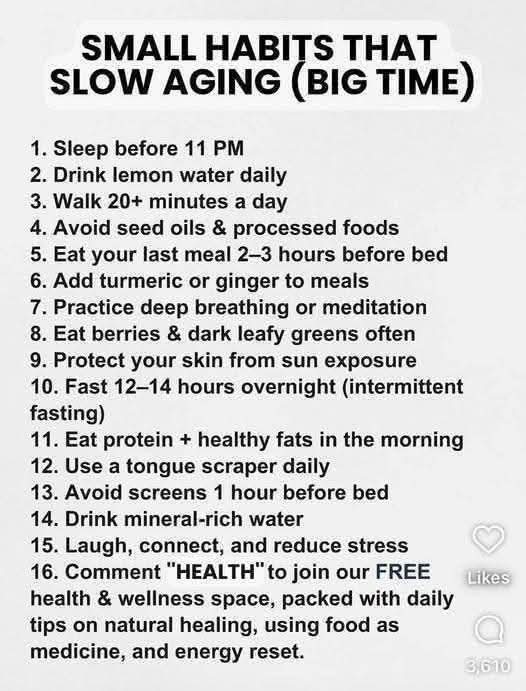
The Longevity Blueprint: 15 Small Habits That Slow Aging (Big Time)
We often think of aging as an inevitable slide—a biological clock that ticks at the same rate for everyone. However, modern science is beginning to show us that while chronological age is fixed, our biological age is remarkably flexible.
The secret to longevity isn’t found in a “fountain of youth” or a high-priced miracle supplement. Instead, it’s hidden in the mundane: the small, repetitive habits we perform every single day. These habits signal to our cells whether to repair and regenerate or to succumb to inflammation and decay.
In this comprehensive guide, we will break down 15 powerful, science-backed habits that can help you slow down the aging process and reclaim your vitality.
1. The Circadian Reset: Sleep Before 11 PM
The timing of your sleep is just as important as the duration. Human biology is governed by the circadian rhythm, a 24-hour internal clock that regulates everything from hormone production to cellular repair.
Why 11 PM?
Between 10 PM and 2 AM, the body undergoes its most intense physical repair. This is when growth hormone peaks. If you are awake during this window, you miss out on the “glymphatic drainage”—a process where the brain flushes out metabolic waste (including proteins linked to Alzheimer’s).
How to implement:
- Set a “wind-down” alarm for 10 PM.
- Dim the lights in your home to signal to your brain that it’s time to produce melatonin.
2. Metabolic Kickstart: Drink Lemon Water Daily
Starting your day with warm lemon water is a staple in Ayurvedic medicine, and for good reason. It provides an immediate dose of Vitamin C, a powerful antioxidant that protects cells from oxidative stress.
The Real Benefit
While lemon water doesn’t “detox” your liver (your liver does that on its own), it does promote hydration and can improve digestion by stimulating bile production. Better digestion means better nutrient absorption, which is critical for skin health and energy as we age.
3. Movement as Medicine: Walk 20+ Minutes a Day
You don’t need to run marathons to stay young. In fact, consistent, low-impact movement is often better for longevity. Walking improves cardiovascular health, regulates blood sugar, and—perhaps most importantly—lowers levels of cortisol (the stress hormone).
The Lymphatic Connection
Unlike the circulatory system, the lymphatic system doesn’t have a pump. It relies on muscle movement to circulate fluid and remove toxins. A 20-minute walk acts as a manual “pump” for your immune system.
4. The Inflammatory Filter: Avoid Seed Oils & Processed Foods
Inflammation is the primary driver of nearly every age-related disease, from heart disease to arthritis. Highly processed “seed oils” (like canola, soybean, and sunflower oil) are high in Omega-6 fatty acids. When consumed in excess, these can lead to chronic systemic inflammation.
What to swap:
- Use Extra Virgin Olive Oil for cold uses.
- Use Avocado Oil or Ghee for high-heat cooking.
- Focus on “whole” foods—if it comes in a box with more than five ingredients, it’s likely speeding up your biological clock.
5. Digestion and Rest: Eat Your Last Meal 2–3 Hours Before Bed
When you eat a heavy meal right before sleep, your body has to divert energy toward digestion instead of cellular repair. Furthermore, lying down with a full stomach can lead to acid reflux and disrupted sleep cycles.
The Longevity Angle:
Stopping food intake early allows your blood sugar and insulin levels to drop before you sleep. Lower insulin levels at night are associated with increased longevity and better weight management.
6. The Golden Spices: Add Turmeric or Ginger to Meals
Turmeric contains curcumin, a bioactive compound that has been studied extensively for its ability to match the effectiveness of some anti-inflammatory drugs without the side effects. Ginger, its botanical cousin, is excellent for gut health and reducing joint pain.
Pro-Tip: Always consume turmeric with a pinch of black pepper. The piperine in pepper increases curcumin absorption by up to 2,000%.
7. Stress Modulation: Practice Deep Breathing or Meditation
Stress is a “gerontogen”—it literally accelerates the aging of your cells. Chronic stress shortens telomeres, the protective caps on the ends of our chromosomes. When telomeres get too short, cells can no longer divide and they die.
The 4-7-8 Technique
Try breathing in for 4 seconds, holding for 7, and exhaling for 8. This simple practice flips the switch from the “fight or flight” (sympathetic) nervous system to the “rest and digest” (parasympathetic) system.
8. Eat the Rainbow: Berries & Dark Leafy Greens
Dark berries (blueberries, blackberries, raspberries) are packed with anthocyanins, which protect the brain from cognitive decline. Dark leafy greens (kale, spinach, arugula) provide folate and vitamin K, essential for bone density and heart health.
The Goal: Aim for at least two cups of greens and half a cup of berries daily.
9. The External Shield: Protect Your Skin from Sun Exposure
Up to 80% of visible skin aging (wrinkles, dark spots, loss of elasticity) is caused by UV radiation. While vitamin D is essential, “photoaging” is real.
The Strategy:
- Wear a mineral-based SPF daily, even when it’s cloudy.
- Seek shade during peak hours (10 AM – 4 PM).
- Wear hats and sunglasses to protect the delicate skin around the eyes.
10. Autophagy: Fast 12–14 Hours Overnight
Intermittent fasting isn’t just for weight loss; it triggers a process called autophagy. Derived from the Greek for “self-eating,” autophagy is the body’s way of cleaning out damaged cells to make room for new, healthy ones.
A 12–14 hour window (e.g., finishing dinner at 7 PM and eating breakfast at 9 AM) is manageable for most people and provides a significant “cellular cleanup” window.
11. Stabilize Your Energy: Protein + Healthy Fats in the Morning
Starting your day with a high-carb, sugary breakfast (like cereal or toast) leads to an insulin spike and a subsequent “crash.” This rollercoaster causes brain fog and increased hunger.
The Longevity Breakfast:
Focus on eggs, avocado, smoked salmon, or a protein smoothie with almond butter. This stabilizes your blood sugar for the entire day, reducing oxidative stress.
12. Oral Systemic Health: Use a Tongue Scraper Daily
Your mouth is the gateway to your gut and your heart. Bacteria that build up on the tongue can contribute to systemic inflammation. Using a copper or stainless steel tongue scraper every morning removes “ama” (toxins) and improves your sense of taste, which can lead to better food choices.
13. Digital Detox: Avoid Screens 1 Hour Before Bed
The blue light emitted by phones and TVs suppresses melatonin production. Even more importantly, the “scrolling” habit keeps your brain in a state of high alert (dopamine seeking).
Try this instead: Read a physical book, journal, or have a conversation with a loved one. Your sleep quality—and your skin—will thank you.
14. Essential Elements: Drink Mineral-Rich Water
We are more than just “water”; we are an electrical system that requires minerals to function. Modern tap water and even some bottled waters are stripped of essential minerals like magnesium, potassium, and calcium.
How to optimize:
- Use a high-quality filter to remove chlorine and fluoride.
- Add a pinch of Celtic sea salt or trace mineral drops to your water to ensure your cells are actually absorbing the hydration.
15. The Social Factor: Laugh, Connect, and Reduce Stress
In “Blue Zones” (areas where people live the longest), the common thread isn’t just diet—it’s community. Loneliness is as damaging to health as smoking 15 cigarettes a day.
Laughter releases endorphins and strengthens the immune system. Make it a priority to connect with people who lift you up.
Summary: It’s About Consistency, Not Perfection
You don’t have to implement all 15 habits tomorrow. Aging is a long-term process, and slowing it down requires a long-term approach.
Where to start? Pick three habits from this list—perhaps sleeping earlier, walking more, and eating more greens. Once those become second nature, add another. Your future self is waiting to thank you for the choices you make today.
Key Takeaway Table
| Habit | Primary Benefit | Ease of Implementation |
|---|---|---|
| Early Sleep | Brain Detox & Repair | Moderate |
| Walking | Heart Health & Mood | Easy |
| No Seed Oils | Reduced Inflammation | Hard (requires label reading) |
| Sun Protection | Prevents Skin Aging | Easy |
| Social Connection | Immune Support & Longevity | Essential |
Final Note: Always consult with a healthcare professional before making significant changes to your diet or fasting routine, especially if you have underlying health conditions.
Do you have a daily habit that keeps you feeling young? Let us know in the comments below!