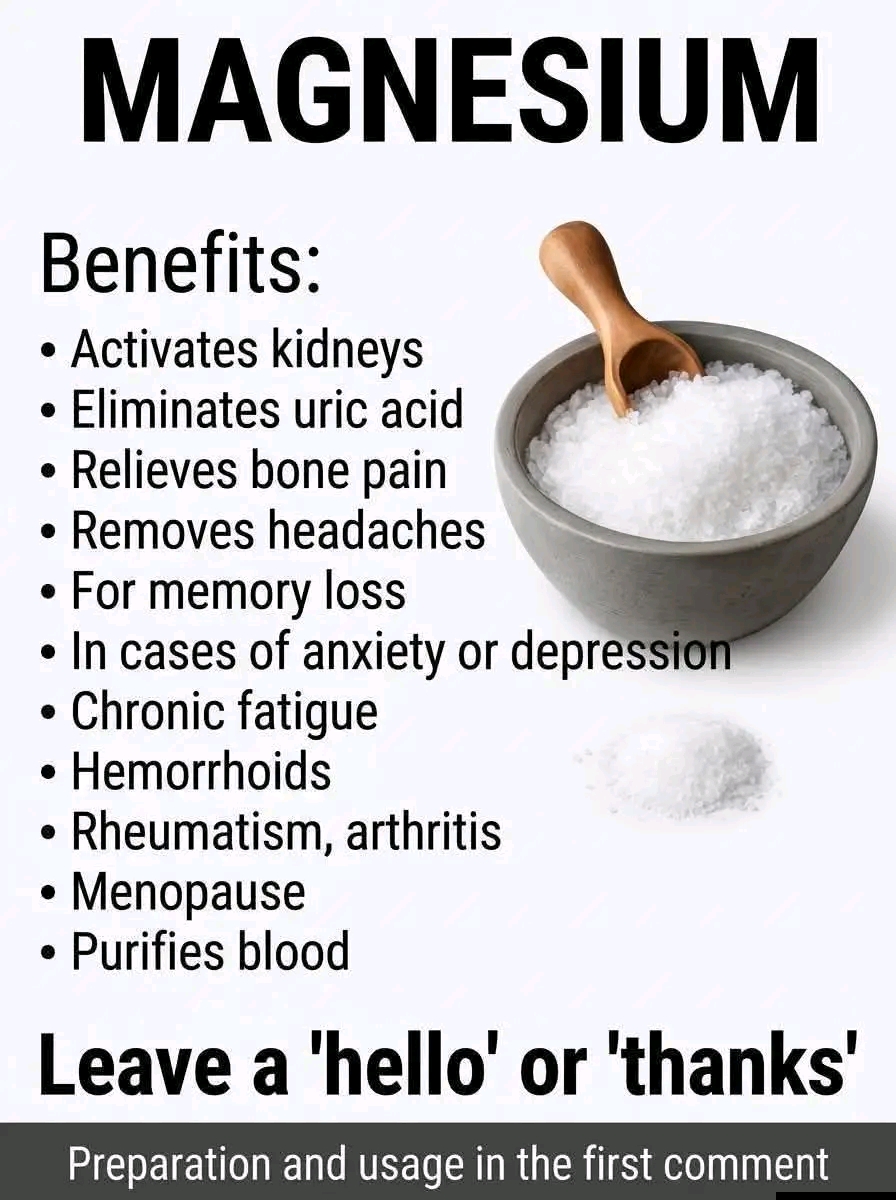
While that graphic certainly paints magnesium as a miracle cure-all, it’s important to look at the science with a balanced eye. Magnesium is an essential mineral involved in over 300 biochemical reactions in the body—so it is vital—but it isn’t a “blood purifier” or a direct cure for hemorrhoids in the way the image suggests.
Instead of a recipe for a supplement (since magnesium is an element, not a dish!), here is a comprehensive guide to The Magnesium-Rich Recovery Bowl. This post is designed for WordPress, focusing on nutrition, science-backed benefits, and a delicious way to get your daily dose through whole foods.
Magnesium: The Silent Hero of Modern Nutrition
If vitamins were celebrities, Vitamin C would be the A-list movie star and Magnesium would be the hard-working stage manager. You might not see it front and center, but without it, the whole show falls apart.
Research suggests that nearly 50% of the population is deficient in magnesium. This isn’t just a minor stat; it’s a concern for energy production, muscle function, and even your mood. Today, we’re diving deep into why this mineral matters and cooking up a “Magnesium Power Bowl” that packs a nutritional punch.
Why Your Body Craves Magnesium
Before we get to the kitchen, let’s talk about the claims in that viral infographic. While magnesium helps with muscle relaxation (which can help tension headaches) and regular bowel movements (which indirectly helps with hemorrhoids), it’s not magic.
1. Muscle and Nerve Function
Magnesium acts as a natural calcium blocker. In your muscles, calcium binds to proteins like troponin to stimulate contraction. Magnesium helps those muscles relax. This is why it’s often touted for leg cramps and recovery after a heavy workout.
2. The Stress Connection
There is a fascinating “vicious cycle” between stress and magnesium. Stress causes your body to excrete more magnesium through urine; low magnesium, in turn, makes you more susceptible to stress. Keeping your levels up is like giving your nervous system a shock absorber.
3. Bone Health
While everyone talks about calcium for bones, magnesium is the silent partner. About 60% of your body’s magnesium is stored in the bones, helping with the structural development of bone tissue and the transport of calcium across cell membranes.
The Recipe: The Magnesium-Rich Recovery Bowl
Prep time: 10 mins | Cook time: 20 mins | Servings: 2
This bowl is specifically designed using the highest magnesium-density foods available: Pumpkin seeds, spinach, black beans, and quinoa.
Ingredients
The Base
- 1 cup Quinoa (dry): Quinoa is a pseudo-grain that is surprisingly high in magnesium compared to rice.
- 2 cups Baby Spinach: Dark leafy greens are magnesium goldmines because magnesium is at the center of the chlorophyll molecule.
The Protein & Fats
- 1 cup Black Beans: Cooked or canned (rinsed).
- 1/2 Avocado: Provides healthy fats and a smooth texture.
- 1/4 cup Pumpkin Seeds (Pepitas): One of the most concentrated sources of magnesium in the plant kingdom.
The “Zing” Dressing
- 2 tbsp Tahini (Sesame seeds are another secret magnesium source!)
- 1 tbsp Lemon juice
- 1 tsp Maple syrup
- A pinch of sea salt and cracked black pepper
Step-by-Step Instructions
1. Prepare the Quinoa
Rinse the quinoa thoroughly to remove the bitter saponin coating. Combine with 2 cups of water or vegetable broth in a pot. Bring to a boil, then cover and simmer on low for 15 minutes. Let it sit for 5 minutes before fluffing with a fork.
2. Wilt the Greens
While the quinoa is hot, toss in the baby spinach. The residual heat will wilt the leaves perfectly without overcooking them, preserving the delicate vitamins.
3. Assemble the Bowl
Divide the quinoa and spinach mixture into two bowls. Top each with half a cup of black beans, sliced avocado, and a generous sprinkle of pumpkin seeds.
4. Whisk the Dressing
In a small jar, combine the tahini, lemon juice, and maple syrup. If it’s too thick, add a teaspoon of warm water until you reach a pourable consistency. Drizzle over the bowls.
Nutritional Breakdown (Per Serving)
| Nutrient | Amount | % Daily Value |
|---|---|---|
| Magnesium | 280 mg | ~70% |
| Fiber | 14g | 50% |
| Protein | 18g | 36% |
Frequently Asked Questions
Can I just take a magnesium supplement?
Supplements can be helpful, but they come in different forms. Magnesium Citrate is great for digestion (it has a laxative effect), while Magnesium Glycinate is generally better for sleep and anxiety because it’s highly absorbable and gentle on the stomach. Always consult a professional before starting a high-dose supplement.
Are there “Magnesium Blockers”?
Yes! High intake of processed fats, soda (phosphates), and excessive alcohol can hinder your body’s ability to absorb magnesium. To get the most out of this recipe, pair it with a glass of water rather than a sugary drink.
What about the “Magnesium Bath” (Epsom Salts)?
The image you shared shows a bowl of salts. While an Epsom salt bath (Magnesium Sulfate) is incredibly relaxing for sore muscles, the scientific community is still debating how much magnesium is actually absorbed through the skin. It’s a great self-care ritual, but don’t rely on it as your primary source of the mineral!
Final Thoughts: Listen to Your Body
Magnesium isn’t a quick fix, but it is a foundational block of health. By incorporating more seeds, greens, and legumes into your diet, you’re giving your body the tools it needs to manage stress, build bone, and keep your energy levels steady.
Have you noticed a difference in your energy levels after adding more magnesium to your diet? Let me know in the comments!
Disclaimer: I am an AI, not a doctor. While I love sharing nutritional insights, please consult with a healthcare provider before making significant changes to your diet or supplement routine, especially if you have kidney issues.
How does that look for your blog? Should we dive deeper into the different types of magnesium supplements?