Beyond the Viral Feed: The Real Science of Cooking & Avoiding Dangerous Kitchen Myths
In the era of social media, we are constantly bombarded by “life hacks”—short, flashy videos that promise miraculous results with ingredients found in your kitchen. From DIY teeth-whitening scrubs for your skin to “miracle” juices that claim to cure chronic illnesses, the allure of a cheap, natural fix is powerful. However, it is vital to distinguish between creative cooking and dangerous misinformation.
Before we dive into the delicious world of professional-level cooking, we must address the hazards found in the viral images you provided. Your health and safety are the most important ingredients in any kitchen.
Part I: The Safety Briefing (Why Some “Hacks” Are Hazardous)
You may have encountered images circulating online suggesting the use of toothpaste and lemon for skin, the application of garlic-infused oil for inflammatory pain, or “miracle” juices for chronic eye and memory conditions. These are not just ineffective; they can be harmful.
1. The Toothpaste and Lemon Myth
The practice of mixing toothpaste and lemon to create a “peeling” mask or to treat skin issues is highly dangerous.
- Chemical Burns: Lemon juice is highly acidic (pH 2-3) and contains compounds called furocoumarins. When these contact your skin and are exposed to sunlight, they trigger a reaction called phytophotodermatitis, leading to blistering, severe chemical burns, and permanent hyperpigmentation.
- Skin Barrier Destruction: Toothpaste is formulated for tooth enamel—the hardest substance in the body—not human skin. It contains surfactants (like SLS), detergents, and menthol, all of which strip the skin’s natural lipid barrier, leading to contact dermatitis, extreme dryness, and bacterial infection. Never apply household toothpaste to your skin.
2. The Garlic Infusion Risk
While making herb-infused oils is a culinary tradition, doing it improperly is a significant health risk.
- Botulism: Raw garlic is a low-acid vegetable that grows in the soil. When submerged in oil, it creates an anaerobic (oxygen-free) environment. If stored at room temperature, this is the ideal breeding ground for Clostridium botulinum, the bacteria responsible for botulism, a potentially fatal neurotoxin.
- Safe Practice: If you must make garlic oil, it should be kept in the refrigerator and consumed within a few days, or better yet, made fresh. Never apply oil that has been sitting for weeks to inflamed or broken skin.
3. The “Miracle” Juice Misconception
Carrots, oranges, and bananas are nutritious, healthy foods. However, claims that any specific juice can cure cataracts, glaucoma, or memory problems are medically unfounded.
- The Reality: While Vitamin A (beta-carotene) is essential for eye health, and Vitamin C is crucial for immunity, they cannot reverse chronic degeneration like glaucoma or cataracts. Relying on “miracle juices” instead of seeking professional medical care for vision or neurological issues is dangerous.
Part II: The Culinary Masterclass: Garlic Butter Shrimp Pasta
Now that we have established safety, let’s focus on where kitchen ingredients truly belong: in a meal that nourishes you. The Garlic Butter Shrimp Pasta is a testament to the idea that great food doesn’t require complex ingredients—it requires respect for the technique.
The Philosophy of the Dish
Why do restaurant pasta dishes taste so much better than home-cooked ones? It isn’t a secret ingredient. It is emulsification. When you emulsify fat (butter/oil) with starch (pasta water), you create a creamy, cohesive sauce that clings to every strand of pasta.
Ingredient Sourcing (The Professional Standard)
- The Shrimp: Use “large” or “jumbo” shrimp (26/30 count). Frozen is often superior to “fresh” if you aren’t living on the coast, as it is flash-frozen at the source. Thaw them in the refrigerator, not on the counter.
- The Garlic: Use fresh cloves. Do not use pre-minced jarred garlic, which is preserved in citric acid and lacks the pungent aromatics of fresh garlic.
- The Pasta: Use high-quality bronze-die extruded pasta if possible. The surface of this pasta is rougher, which allows the sauce to cling to it better than smooth, Teflon-die pasta.
The Recipe: Garlic Butter Shrimp Linguine
Servings: 4
Prep Time: 15 minutes
Cook Time: 15 minutes
Ingredients
- 1 lb (450g) Large Shrimp, peeled and deveined.
- 12 oz (340g) Linguine or Spaghetti.
- 4 tbsp Unsalted High-Quality Butter.
- 2 tbsp Extra Virgin Olive Oil.
- 6 Cloves Garlic, finely minced (not pressed).
- 1/2 cup Dry White Wine (Sauvignon Blanc works well).
- 1/4 tsp Red Pepper Flakes (for gentle heat).
- 1 tbsp Fresh Lemon Juice (plus zest for brightness).
- 1/2 cup Fresh Italian Parsley, chopped.
- Kosher Salt and Freshly Cracked Black Pepper.
- 1/2 cup Reserved Starchy Pasta Water.
Step-by-Step Instructions
1. The Prep (Mise en Place)
Before turning on the heat, have everything ready. Mince your garlic, chop the parsley, juice the lemon, and have your wine measured. This dish moves in minutes.
2. The Sear (Building Flavor)
Pat the shrimp dry with a paper towel. Moisture is the enemy of a sear. Season them lightly with salt and pepper. Heat 1 tbsp of olive oil in a large skillet (cast iron or stainless steel) over medium-high heat. Add the shrimp in a single layer. Sear for 2 minutes per side until just opaque. Do not overcook. Remove the shrimp to a plate. They will finish cooking in the sauce later.
3. The Aromatics
Reduce heat to medium. Add the remaining oil and 1 tbsp of butter to the same skillet. Add the garlic and red pepper flakes. Sauté for 60 seconds until the garlic is pale gold. If it turns brown, it will be bitter; adjust your heat.
4. The Deglaze
Pour in the white wine. Use a wooden spoon to scrape up all the browned bits (the fond) from the bottom of the pan. This is where the depth of flavor lives. Simmer until the wine has reduced by half.
5. The Emulsion
Add the remaining butter and lemon juice. Whisk vigorously. The butter should melt into the wine reduction to create a thick, glossy, emulsified sauce.
6. The Marriage
Add your cooked pasta directly to the skillet. Pour in 1/2 cup of the reserved, starchy pasta water. The starch in the water is the “secret” to the sauce. Toss the pasta vigorously with tongs for 60 seconds. The sauce will thicken and coat the strands.
7. Final Integration
Return the shrimp and their juices to the pan. Toss for another 30 seconds to heat through. Stir in the fresh parsley and lemon zest. Serve immediately.
Part III: Troubleshooting and Advanced Techniques
Why is my sauce oily?
You didn’t use enough pasta water, or you didn’t toss the pasta long enough. The sauce separates because the fat and water haven’t bonded. Next time, reserve more pasta water and toss the pasta in the sauce for a full 60-90 seconds. The agitation is what creates the creaminess.
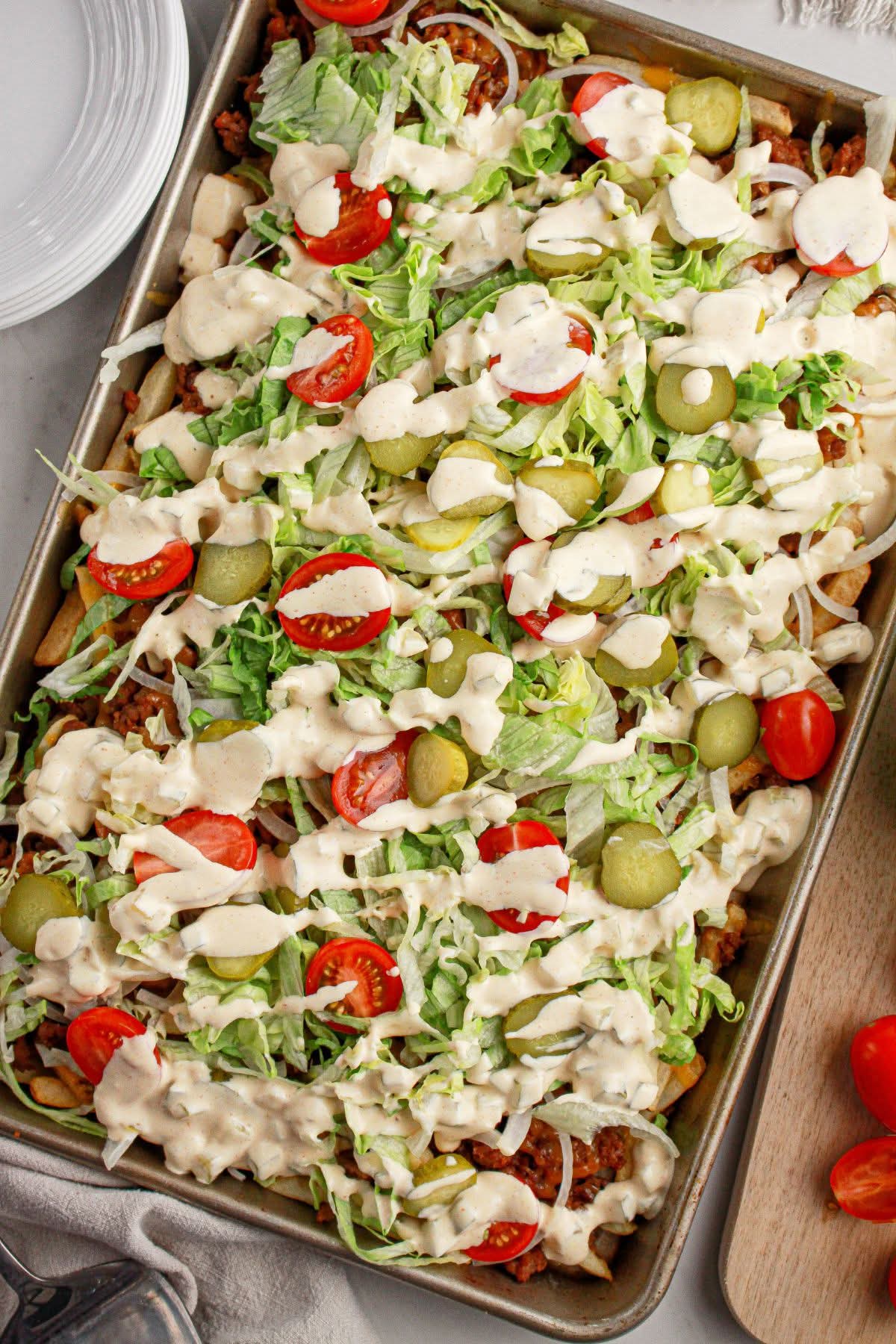
How do I make the “Loaded Burger Fries” (Variation)?
You also shared an image of loaded fries. If you want to elevate that style of comfort food, the secret is the “Smashed” technique.
- The Foundation: Use double-fried, skin-on potatoes.
- The Protein: Use 80/20 ground beef. Brown it hard—you want dark, crispy edges for texture contrast.
- The Layering: The mistake most people make is adding the lettuce too early. Add the lettuce, tomatoes, and pickles after the fries come out of the oven. If you bake the lettuce, you get wilted, soggy greens.
- The Sauce: A “special sauce” should be based on mayo, not ketchup. Mix mayo, a touch of Dijon mustard, finely minced pickles (relish), and a splash of pickle brine to balance the fat.
Can I scale this for a party?
Both the shrimp pasta and the loaded fries are “cook-to-order” dishes. Pasta that sits in a chafing dish becomes rubbery, and loaded fries lose their crunch in minutes. For parties, prep your ingredients ahead of time, but do the final assembly in small batches just before serving.
Part IV: The Philosophy of the Home Kitchen
Cooking is an act of care. When we make pasta, we are not just assembling starch and protein; we are practicing patience, temperature control, and the appreciation of ingredients.
When you choose to cook at home, you have total control over the quality of the fats, the freshness of the herbs, and the salt levels. You avoid the hidden preservatives and the excessive sodium found in restaurant foods.
Furthermore, you protect yourself from the dangerous misinformation online. By understanding how to properly sear shrimp, emulsify a sauce, or roast a potato, you gain skills that last a lifetime—skills that no “30-second viral hack” can ever provide.
Cooking is a science. It is a craft. And when done with focus and attention to detail, it is the highest form of self-care.
A Note on Long-Term Success
Keep your workspace clean: Sanitation is the first rule of professional cooking.
Master your knife skills: Efficient chopping makes cooking feel less like a chore.
Trust your palate: Taste your sauce before serving. Does it need more acid (lemon)? More salt? A pinch of sugar? Adjusting as you go is the hallmark of a great chef.
We hope this guide has inspired you to step back from the dangerous DIY trends and step into the rewarding world of authentic cooking. Your health is your wealth—treat it accordingly.
Disclaimer: The information provided in this article regarding health claims is for educational purposes and is not a substitute for professional medical advice. Always consult a healthcare provider for any health-related concerns. The culinary recipes provided are for personal use.