The Complete Guide to Pecan Pie Muffins
Introduction
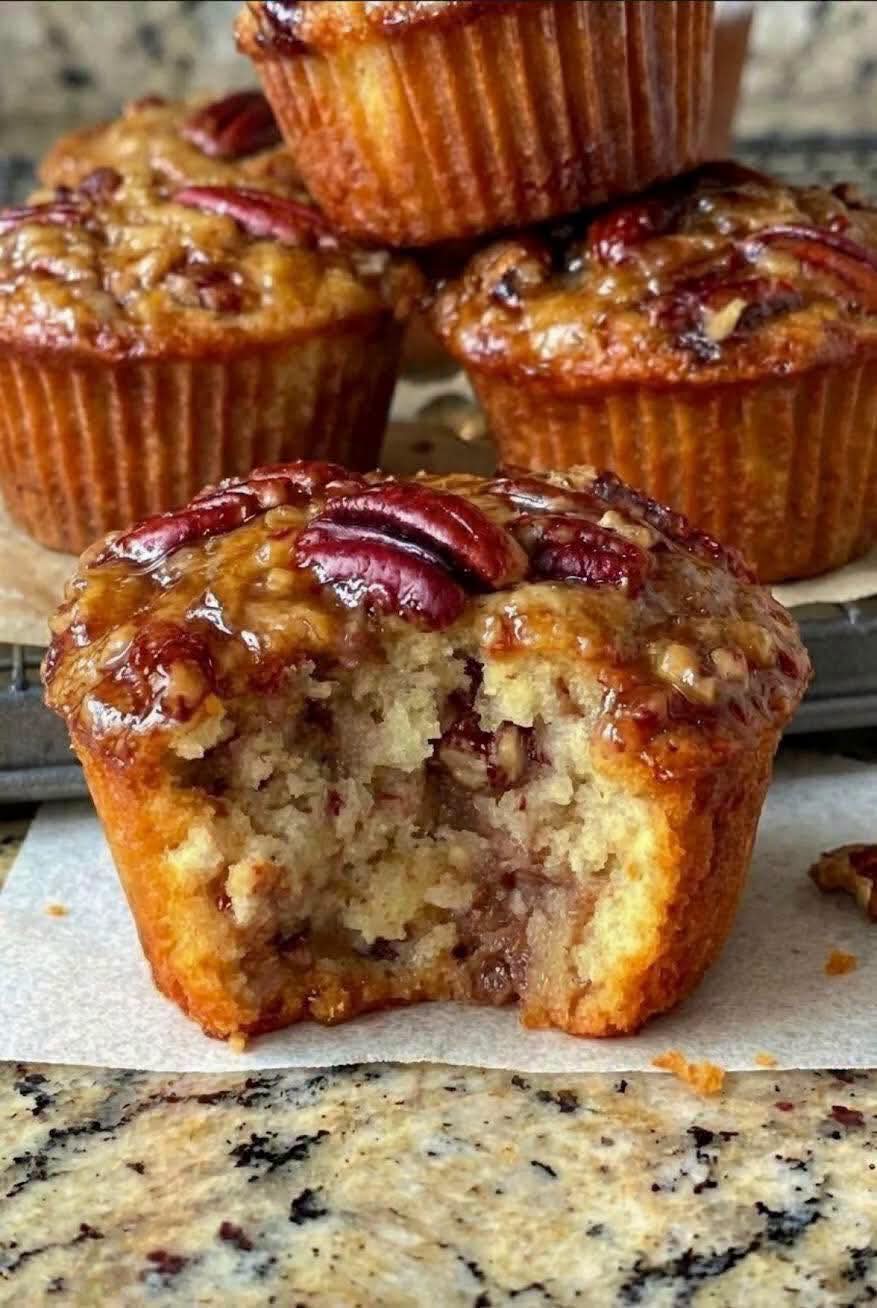
Pecan pie muffins capture everything people love about a Southern pecan pie, with a buttery, tender crumb in place of a pastry shell. The top is the star. A sticky, caramelized layer of brown sugar, butter, and syrup bubbles over toasted pecan halves in the oven, then sets into a glossy, almost candy-like crust. Under that crust is a soft, moist muffin studded with chopped pecans, scented with cinnamon and vanilla.
The muffin in your photo shows what to aim for: a deep amber, shiny top, whole pecan halves nestled into the glaze, a golden fluted edge, and a crumb that is tender but not dry. The bitten side shows the interior, light and moist, with small pockets of pecan and caramel.
This guide covers the story behind the flavor, the science of how a muffin forms, a full recipe with two methods, troubleshooting, variations, nutrition, storage, and the kind of people who tend to fall in love with these. It should be enough for a first-time baker or a seasoned one.
A Brief History
The pecan itself
The pecan (Carya illinoinensis) is one of the few major nut crops native to North America. Wild pecan trees grew along river valleys from present-day Texas and Oklahoma through the Mississippi basin. Indigenous peoples gathered the nuts for centuries, eating them fresh, pounding them into meal, and pressing them for oil. The word “pecan” comes from an Algonquian word used for nuts that need a stone to crack.
European settlers adopted the nut quickly. Pecans were abundant, calorie-dense, and stored well through winter. By the 1800s, cultivation and grafting techniques had improved, and pecans became a commercial crop in the American South.
The pie
Pecan pie as we know it appears in printed cookbooks and community recipe collections in the late 1800s and early 1900s, especially in Texas and the Deep South. Its exact origin is debated. Some stories credit French settlers in New Orleans, though the evidence is thin. What is clear is that the pie belongs to a tradition of sugar-based custard pies, similar to chess pie and sugar pie, that relied on pantry staples: eggs, butter, sugar, and a local nut.
The pie’s popularity rose in the 1920s and 1930s when corn syrup makers promoted it in recipes on their labels. It became a Thanksgiving and Christmas fixture across the United States and a symbol of Southern hospitality.
From pie to muffin
The muffin version is a modern adaptation. Home bakers wanted pecan pie flavor without rolling pastry, blind baking, or waiting hours for a filling to set. Muffins offered a faster, portable alternative: the same caramel-pecan flavor, baked in about 20 minutes and eaten out of hand. The pecan pie muffin belongs to a wider trend of turning classic desserts into handheld breakfast-style treats, alongside apple pie muffins, cheesecake muffins, and cinnamon roll muffins.
Why Make These? The Benefits
Flavor without the fuss. You get the taste of pecan pie without making a crust or managing a wobbly custard.
Built-in portion control. Each muffin is one serving, which is easier than slicing a pie and cutting “just a sliver.”
Make-ahead and freezer friendly. They keep for days and freeze well, so you can bake a batch ahead for brunch, holidays, or busy mornings.
Fast. About 15 minutes of prep and 20 minutes of baking.
Nutritional upsides of pecans. Pecans are rich in monounsaturated fats, fiber, manganese, copper, and antioxidants such as polyphenols and vitamin E. They contribute real nutritional value even in a treat.
Easy to share. They pack neatly into boxes and bags, making them ideal for gifts, bake sales, potlucks, and school events.
Flexible. The base accepts swaps: whole wheat flour, different nuts, spices, or a dairy-free version.
The Formation: How a Muffin Comes Together
Understanding what happens in the bowl and the oven will make you a more confident baker.
The structure
Flour contains two proteins, glutenin and gliadin. When they meet liquid and are stirred, they link into gluten, a stretchy network. In bread you want a lot of gluten. In muffins you want very little, because too much makes them tough and rubbery. That is why muffin recipes say to mix until just combined. Visible lumps are fine and even desirable.
The leavening
This recipe uses two leaveners:
- Baking powder contains both an acid and a base. It reacts when wet and again when heated, releasing carbon dioxide.
- Baking soda needs an acid to work. The buttermilk and brown sugar (which is slightly acidic because of its molasses) supply it.
The gas bubbles expand in the heat and push the batter upward. The proteins in the eggs and flour then set around the bubbles and lock in the shape, giving the crumb its structure.
The high-heat start
The recipe begins at 400°F (200°C) for five minutes and then drops the temperature. This creates “oven spring”: the initial blast of heat makes the batter rise fast before the crust sets, giving a domed, bakery-style top. Lowering the heat then lets the center cook through without burning the sugary topping.
The caramel topping
The topping is a quick caramel-style glaze. Butter, brown sugar, syrup, and cream are simmered briefly so the sugar dissolves and the mixture thickens slightly. Spooned over the batter, it melts further in the oven, bubbles around the pecans, and then, as it cools, sets into a glossy, slightly chewy layer. This is the same chemistry that gives pecan pie its signature filling.
The role of fat and sugar
- Melted butter coats flour particles, limiting gluten and adding rich flavor and tenderness.
- Brown sugar adds moisture, a caramel note, and a softer crumb than white sugar.
- Eggs add structure, richness, and binding.
- Buttermilk adds acidity for lift and a tender, slightly tangy crumb.
Ingredients (Makes 12 Muffins)
For the batter
- 1¾ cups (210 g) all-purpose flour
- 1 teaspoon baking powder
- ½ teaspoon baking soda
- ½ teaspoon fine salt
- ½ teaspoon ground cinnamon
- ¼ teaspoon ground nutmeg (optional)
- ½ cup (115 g) unsalted butter, melted and slightly cooled
- ¾ cup (150 g) packed light or dark brown sugar
- 2 large eggs, at room temperature
- ¾ cup (180 ml) buttermilk, at room temperature
- 1 teaspoon pure vanilla extract
- 1 cup (110 g) pecans, roughly chopped
For the pecan pie topping
- ¼ cup (55 g) unsalted butter
- ⅓ cup (65 g) packed brown sugar
- 2 tablespoons maple syrup, corn syrup, or golden syrup
- 1 tablespoon heavy cream or whole milk
- Pinch of salt
- ½ teaspoon vanilla extract
- ½ cup (55 g) pecan halves
Equipment
- 12-cup muffin tin
- Paper or foil liners (or butter and flour the tin)
- Two mixing bowls
- Whisk and spatula
- Small saucepan
- Measuring cups and spoons (a kitchen scale is best)
- Toothpick or skewer
- Wire cooling rack
Ingredient notes
Room temperature matters. Cold eggs and buttermilk can make the melted butter clump. Take them out of the fridge 30 minutes ahead.
Buttermilk substitute. Stir 2 teaspoons of lemon juice or white vinegar into ¾ cup of milk and rest it for 5 to 10 minutes. Plain yogurt thinned with milk also works.
Measuring flour. Spoon it into the cup and level it off. Scooping straight from the bag packs in too much and leads to dry muffins.
Pecans. Fresh pecans taste sweet and buttery. Old ones taste bitter or stale. Taste one before using, and store extras in the freezer.
Instructions
Step 1: Prepare the oven and pan
Place a rack in the center of the oven and preheat to 400°F (200°C). Line the muffin tin with paper liners. For extra-tall tops, you can fill every other cup of a second tin with a little water to keep the oven humid, but this is optional.
Step 2: Toast the pecans (optional but recommended)
Spread the chopped pecans and the pecan halves on a baking sheet and toast for 5 to 6 minutes, until fragrant. Cool completely. Toasting deepens the flavor and keeps the nuts crisp inside the soft muffin.
Step 3: Make the topping
In a small saucepan over medium heat, melt the butter. Add the brown sugar, syrup, cream, and salt. Stir until the sugar dissolves and the mixture bubbles gently, then simmer for 1 minute. Remove from the heat, stir in the vanilla and the pecan halves, and set aside. It will thicken as it cools slightly, which makes it easier to spoon.
Step 4: Combine the dry ingredients
In a large bowl, whisk together the flour, baking powder, baking soda, salt, cinnamon, and nutmeg. Whisking distributes the leaveners evenly so every muffin rises the same way.
Step 5: Combine the wet ingredients
In a second bowl, whisk the melted butter and brown sugar until smooth. Whisk in the eggs one at a time, then the buttermilk and vanilla. The mixture should be glossy and uniform.
Step 6: Bring it together
Pour the wet ingredients into the dry. Using a spatula, fold gently until you see no more dry flour. Stop as soon as that happens. Add the chopped pecans and fold two or three times. The batter will be thick and slightly lumpy.
Step 7: Fill the cups
Divide the batter evenly among the 12 liners, filling each about ¾ full. An ice cream scoop makes this fast and tidy.
Step 8: Add the topping
Spoon about a tablespoon of the pecan topping over each muffin, making sure each one gets a few pecan halves. Let the glaze run slightly over the edges, since that creates the shiny, caramelized look.
Step 9: Bake
Bake at 400°F for 5 minutes. Without opening the door, reduce the temperature to 350°F (175°C) and bake for 15 to 18 minutes more. The muffins are done when the tops are deep golden, the topping is bubbling, and a toothpick in the center comes out clean or with a few moist crumbs.
Step 10: Cool
Let the muffins rest in the pan for 5 minutes, then transfer them to a wire rack. The topping will be very hot, so be careful. As it cools, it firms into a glossy, sticky crust.
Two Methods: Classic and Shortcut
Method one: the classic two-bowl method (above)
This is the traditional approach and gives the best texture. Dry and wet ingredients are mixed separately, then combined briefly. The separation protects the gluten from overworking and ensures even leavening.
Method two: the one-bowl shortcut
If you are short on time or dishes:
- Whisk the melted butter, sugar, eggs, buttermilk, and vanilla in a large bowl.
- Sprinkle the flour, baking powder, baking soda, salt, and spices directly on top of the wet mixture.
- Fold gently until just combined, then add the pecans.
- Spoon the topping on as usual. For an even quicker topping, mix the sugar, softened butter, syrup, and pecan halves in a bowl without cooking. The result is slightly less glossy but still delicious.
Method three: the bakery-style tall dome
For high, bakery-style tops, chill the batter for 20 to 30 minutes before baking, fill the liners to the brim, and use the high-heat start described above. The resting time lets the flour hydrate, and the cold batter holds its shape longer before the oven spring takes over.
Troubleshooting
Muffins are dry. Likely overbaked or too much flour. Check at the low end of the time range, and measure flour carefully.
Muffins are tough or rubbery. The batter was overmixed. Stop folding as soon as the flour disappears.
Flat tops. Old baking powder or soda, or skipping the high-heat start. Test baking powder by dropping a spoonful in hot water: it should fizz vigorously.
Topping slides off or pools. The glaze was too thin or too hot. Let it cool for a few minutes so it thickens before spooning it on.
Pecans burn. Tent the muffins loosely with foil for the last 8 minutes of baking.
Muffins stick to the liners. Cool them fully, or use foil or greased liners. Some paper liners cling to a sugary crumb when warm.
Topping is sticky days later. That is normal for a caramel topping. Store with parchment between layers, and keep them out of humid spots.
Variations
- Bourbon pecan: Add 1 tablespoon bourbon to the topping.
- Chocolate pecan pie: Fold ½ cup chocolate chips into the batter.
- Brown butter: Brown the butter for the batter and topping for a nutty, toffee-like depth.
- Whole wheat: Replace up to half the flour with whole wheat flour.
- Dairy-free: Use plant-based butter and a plant milk soured with lemon juice.
- Gluten-free: Use a 1:1 gluten-free flour blend and let the batter rest 15 minutes.
- Spiced: Add ½ teaspoon of cardamom or ginger for a different warmth.
- Salted caramel: Finish with a pinch of flaky sea salt right after baking.
- Mini muffins: Bake in a mini tin for 10 to 12 minutes.
- Different nuts: Walnuts and hazelnuts work well in place of pecans.
Serving Ideas
Serve warm with a pat of butter melting into the crumb. They pair beautifully with coffee, chai, or hot cocoa. For dessert, serve one slightly warmed with vanilla ice cream or whipped cream and a drizzle of maple syrup. For a holiday brunch, arrange them on a platter with fresh fruit, yogurt, and a cheese board.
Storage and Freezing
Room temperature: Keep in an airtight container for up to 3 days. Place a paper towel at the bottom to absorb moisture.
Refrigerator: Up to 5 days, though the crumb is best at room temperature. Warm briefly before eating.
Freezer: Wrap each cooled muffin individually and freeze for up to 2 months. Thaw at room temperature, then warm in a 300°F (150°C) oven for 8 to 10 minutes to refresh the topping.
Nutrition (Approximate, Per Muffin)
| Nutrient | Amount |
|---|---|
| Calories | ~340 kcal |
| Total fat | 20 g |
| Saturated fat | 7 g |
| Carbohydrates | 38 g |
| Sugar | 22 g |
| Fiber | 2 g |
| Protein | 4 g |
| Sodium | ~230 mg |
These are estimates and will vary with brand, size, and substitutions.
Nutritional notes
These are a treat, not a health food, but they have redeeming qualities. Pecans contribute heart-friendly unsaturated fats, fiber, and minerals such as manganese and zinc. The eggs and buttermilk add some protein and calcium. If you want to lighten them, reduce the topping sugar slightly, swap half the flour for whole wheat, or bake in mini tins for smaller portions. Pairing a muffin with protein, like Greek yogurt or eggs, makes a more balanced breakfast.
Who Will Love These
Pecan pie purists who want the flavor without the work.
Holiday bakers. They are perfect for Thanksgiving mornings, Christmas gift boxes, and cookie-swap-style exchanges.
Coffee shop regulars who love a sweet pastry with their morning cup.
Busy parents who want a make-ahead treat for lunchboxes or after-school snacks.
Nut lovers who enjoy the crunch and richness of toasted pecans.
Brunch hosts who want an impressive but low-stress addition to the table.
Beginner bakers. The recipe is forgiving and the results look professional.
Southern food fans who appreciate a nod to regional tradition.
Conclusion
Pecan pie muffins are a small piece of tradition in an easy, shareable form. They combine a tender, buttery crumb with a glossy caramel-pecan crown, and the effort is modest: one bowl for wet ingredients, one for dry, a quick saucepan topping, and about 20 minutes in the oven. The high-heat start, the gentle folding, and the toasted nuts are the small details that separate a good muffin from a great one.
Whether you bake them for a holiday table, a weekday breakfast, or just because the photo made you hungry, they reward you with warm spice, deep caramel, and that satisfying crunch. Make a batch, keep a few for yourself, and share the rest.