Patchy Hair Loss: Causes, Warning Signs, Diagnosis, Treatment, and What You Should Know
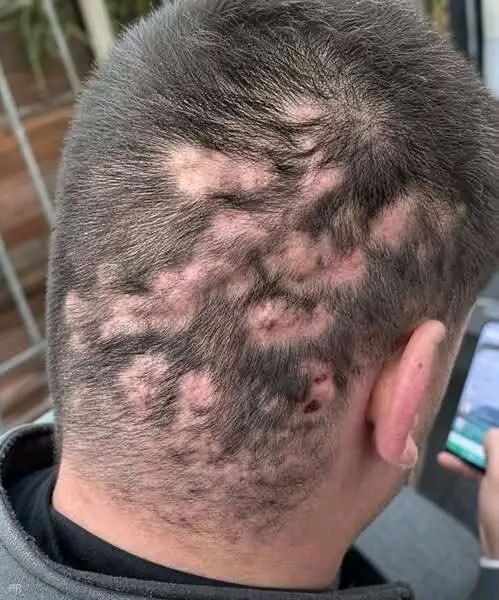
Patchy hair loss can be alarming, especially when several round or irregular areas of the scalp suddenly become visible. The photograph accompanying this article shows numerous areas where the hair appears noticeably thinner or absent, creating distinct patches across the scalp. Although photographs can be useful for showing what patchy hair loss may look like, a photograph alone cannot establish the cause or provide a medical diagnosis.
Patchy hair loss is not a single condition. It can happen for several different reasons, including autoimmune disorders, fungal infections, inflammatory scalp diseases, physical or chemical damage, and certain forms of hair-pulling or trauma. One well-known cause is alopecia areata, an autoimmune condition that can produce smooth, clearly defined patches of hair loss. However, other conditions can look similar and require completely different treatment.
This comprehensive guide explains the common causes of patchy hair loss, what symptoms to watch for, how doctors investigate the problem, available treatments, scalp-care strategies, and when professional medical evaluation is especially important.
Understanding Patchy Hair Loss
Hair normally grows from follicles embedded in the skin of the scalp. Each follicle goes through a growth cycle consisting of growth, transition, resting, and shedding phases. Losing some hair every day is normal. Problems arise when follicles stop producing hair normally, become inflamed, or are damaged.
Patchy hair loss occurs when hair disappears from specific areas rather than thinning evenly across the entire scalp.
The patches may be:
- Small and round
- Large and irregular
- Smooth and completely hairless
- Scaly or inflamed
- Associated with broken hairs
- Associated with itching or burning
- Associated with redness, swelling, crusting, or tenderness
The appearance of the scalp can provide clues, but it is not enough to determine the exact diagnosis.
What Could Cause Hair Loss Like This?
Several conditions can cause patchy areas of missing hair. Some are temporary and treatable, while others may require long-term management.
- Alopecia Areata
Alopecia areata is one of the most recognizable causes of sudden patchy hair loss. It occurs when the immune system mistakenly attacks structures associated with hair follicles.
It often produces smooth, round or oval patches of hair loss. The scalp may look relatively normal, without significant scaling or crusting.
Hair loss can range from one small patch to numerous larger areas. In some people, the condition remains limited to the scalp. In others, it can affect eyebrows, eyelashes, facial hair, or other body hair.
Some people notice short broken hairs around the edges of a patch. Others may experience changes in the fingernails.
Importantly, alopecia areata is not contagious.
The course can be unpredictable. Some people experience spontaneous regrowth, while others have recurrent or extensive hair loss.
- Fungal Scalp Infection
A fungal infection of the scalp, commonly called tinea capitis, can also cause patchy hair loss.
Unlike typical alopecia areata, fungal infections frequently produce additional scalp changes. These can include:
- Scaling
- Itching
- Redness
- Broken hairs
- Black dots where hairs have broken near the scalp
- Crusting
- Tenderness
- Swelling
Some severe inflammatory forms can cause a painful swollen area known as a kerion.
Tinea capitis is particularly important to recognize because it can spread to other people and usually requires antifungal treatment rather than simply applying oils or hair products.
Children are especially commonly affected, although adults can develop scalp fungal infections as well.
- Traction Alopecia
Repeated pulling on the hair can damage follicles. This condition is called traction alopecia.
It may occur with:
- Tight braids
- Tight ponytails
- Extensions
- Weaves
- Certain hairstyles
- Repeated use of tightly secured hair accessories
Early traction alopecia can improve when the pulling stops. Continued tension, however, can eventually damage follicles permanently.
People who regularly wear hairstyles that cause scalp pain or headaches should pay attention to these warning signs. A hairstyle should not consistently cause discomfort.
- Trichotillomania
Trichotillomania is a condition in which a person repeatedly pulls out their own hair.
The resulting hair loss can appear irregular rather than perfectly round. Hair may be broken at different lengths, creating an uneven appearance.
A person may pull hair consciously or sometimes without fully realizing it, particularly during periods of stress, boredom, concentration, or emotional tension.
This condition is not simply a matter of having a “bad habit.” Professional support can be helpful, particularly when hair pulling feels difficult to control.
- Inflammatory or Scarring Alopecia
Some inflammatory diseases can damage hair follicles and cause permanent hair loss. These are sometimes called scarring alopecias.
Possible symptoms include:
- Redness
- Burning
- Pain
- Itching
- Scaling
- Crusting
- Pustules
- Changes in scalp texture
- Permanent areas of reduced hair growth
Scarring forms of hair loss deserve prompt medical assessment because once a follicle is permanently destroyed, it may no longer be able to produce hair.
- Hair Shaft Damage
Sometimes the problem is not that the follicle has stopped growing hair, but that the hair shaft itself is breaking.
Frequent chemical treatments, excessive heat, harsh products, bleaching, or mechanical manipulation can weaken hair.
Broken hairs can create areas that look thinner or patchy.
In these situations, reducing damaging practices and improving hair care may help prevent further breakage.
Could Stress Cause Patchy Hair Loss?
Stress and hair loss are often discussed together, but the relationship is more complicated than social media claims suggest.
Significant physical or emotional stress can contribute to certain types of hair shedding, including telogen effluvium. This usually causes more diffuse shedding rather than clearly defined bald patches.
Stress may also aggravate some existing scalp and hair conditions.
However, it is inaccurate to say that every patch of hair loss is simply caused by stress.
If someone develops multiple bald patches, the underlying cause should be investigated rather than automatically blaming stress.
Why a Photograph Is Not Enough to Diagnose the Problem
A scalp photograph can show important features, but several different disorders can look similar.
For example, smooth patches may suggest alopecia areata, while patches with scaling and broken hairs may suggest fungal infection. Inflammatory conditions can sometimes overlap in appearance.
A healthcare professional may need to examine:
- The scalp
- Individual hairs
- Hair follicles
- Skin around the affected area
- Fingernails
- Eyebrows and eyelashes
- Other areas of body hair
The history is also important.
A doctor may ask:
- When did the hair loss begin?
- Did it happen suddenly or gradually?
- How many areas are affected?
- Is the scalp itchy?
- Is there pain or burning?
- Is there scaling?
- Are hairs breaking?
- Has anyone else in the household developed similar symptoms?
- Are there new hairstyles or hair treatments?
- Is there a history of hair pulling?
- Has hair loss happened previously?
- Are the eyebrows or eyelashes affected?
- Have there been recent illnesses or major physical stressors?
- Are there other symptoms?
These questions can help narrow down the possibilities.
What Tests Might Be Needed?
Not everyone with hair loss requires extensive testing.
A clinician may be able to make a diagnosis through examination and dermoscopy, a magnified examination of the skin and hair follicles.
If a fungal infection is suspected, samples of hair or scalp skin may be examined for fungi.
Blood tests may sometimes be considered when the medical history or examination suggests an underlying nutritional, hormonal, autoimmune, or systemic problem.
In unusual or uncertain cases, a scalp biopsy may be necessary.
The goal is not simply to identify “hair loss.” The goal is to identify why the hair is being lost.
Treatment Depends on the Cause
There is no single treatment that works for every form of patchy hair loss.
Treatment for Alopecia Areata
Treatment for alopecia areata depends on factors such as the person’s age, the extent of hair loss, how long it has been present, and whether it is recurring.
A dermatologist may consider:
- Observation in mild cases
- Prescription corticosteroids
- Other topical treatments
- Injections of corticosteroids into selected patches
- Systemic medications for more extensive disease
- Janus kinase (JAK) inhibitors for certain patients
Treatment should be selected by a qualified healthcare professional because these medicines can have side effects and are not appropriate for everyone.
Some cases of alopecia areata regrow without medical treatment, but recurrence is possible.
Treatment for Fungal Infections
Scalp fungal infections generally require appropriate antifungal therapy.
Because the infection involves hair follicles and the scalp, topical creams alone may not be sufficient for tinea capitis. Oral antifungal medication is commonly used under medical supervision.
Sharing combs, brushes, hats, towels, pillows, or other personal items can contribute to transmission in some circumstances.
Household contacts may need evaluation if a contagious fungal infection is confirmed.
Treatment for Traction Alopecia
The most important step is removing the source of repeated tension.
That can mean:
- Loosening hairstyles
- Avoiding tightly pulled hair
- Taking breaks from extensions
- Reducing heavy hair accessories
- Avoiding hairstyles that cause scalp pain
Early traction alopecia may improve after the pulling stops. Long-standing traction can cause permanent follicle damage.
Treatment for Hair-Pulling Disorders
When hair pulling is responsible for hair loss, behavioral therapy can be an important part of treatment.
Approaches may focus on identifying triggers, developing alternative behaviors, and reducing automatic pulling.
Psychological support is not a sign of weakness. Hair-pulling disorders can be difficult to control without appropriate assistance.
Be Careful With “Miracle” Hair Remedies
Patchy hair loss can make people vulnerable to exaggerated claims online.
You may encounter recommendations involving:
- Onion juice
- Garlic
- Essential oils
- Apple cider vinegar
- Herbal mixtures
- Strong alcohol-based products
- Undiluted essential oils
- Homemade chemical preparations
- Aggressive scalp scrubbing
Some of these substances may irritate the scalp, cause allergic reactions, or worsen inflammation.
Natural does not automatically mean safe.
There is also an important difference between a product that makes the hair feel healthier and a treatment that addresses the underlying cause of hair loss.
For example, an oil may moisturize dry hair but cannot be assumed to treat an autoimmune disorder or eradicate a fungal infection.
Nutrition and Hair Health
Good nutrition supports normal hair growth, but eating one particular food is not a guaranteed treatment for patchy hair loss.
Hair follicles require adequate nutrients, including protein and various vitamins and minerals.
A balanced diet can include:
- Eggs
- Fish
- Beans
- Lentils
- Nuts and seeds
- Whole grains
- Fruits
- Vegetables
- Dairy products or suitable alternatives
- Lean meats or other protein sources
Iron, zinc, vitamin D, vitamin B12, folate, and other nutrients can be relevant to hair health in particular circumstances.
However, taking high-dose supplements without a demonstrated deficiency is not necessarily beneficial and can sometimes be harmful.
If nutritional deficiency is suspected, medical evaluation and appropriate testing are preferable to taking large amounts of supplements blindly.
Scalp Care While Seeking Treatment
Gentle scalp care is generally preferable when hair loss is present.
Consider:
- Washing the scalp according to your normal needs.
- Using a gentle shampoo if the scalp is sensitive.
- Avoiding aggressive scratching.
- Avoiding harsh chemical treatments while the cause is unknown.
- Avoiding hairstyles that pull on the affected areas.
- Avoiding sharing combs, brushes, and towels if infection is suspected.
- Protecting exposed scalp skin from excessive sun exposure.
If the scalp is painful, inflamed, crusted, or infected-looking, it is better to seek professional evaluation than to repeatedly experiment with home treatments.
When Should You See a Doctor?
Sudden or unexplained patchy hair loss deserves medical attention, especially when it is progressing.
Arrange an evaluation if:
- Several bald patches appear suddenly.
- The patches continue expanding.
- Hair loss keeps returning.
- The scalp is painful.
- There is significant itching or burning.
- The scalp is red or swollen.
- There is scaling or crusting.
- Pus or drainage develops.
- Broken hairs are prominent.
- Eyebrows or eyelashes are affected.
- The scalp becomes shiny or scar-like.
- A child develops patchy scalp hair loss.
- Other symptoms occur at the same time.
Prompt evaluation is particularly important when infection or scarring is suspected.
Can Hair Grow Back?
Whether hair returns depends on the underlying cause.
In conditions where the follicle remains healthy, regrowth may be possible.
Alopecia areata can sometimes produce spontaneous regrowth, although the condition may recur.
Early traction alopecia can improve after the source of tension is removed.
Fungal infections can generally be treated, allowing hair to regrow over time.
Scarring alopecia is different because permanent follicular destruction can prevent regrowth in affected areas.
This is why identifying the cause early can be valuable.
The Emotional Side of Hair Loss
Hair is closely connected to identity, appearance, confidence, and social interaction. Losing hair unexpectedly can therefore be emotionally difficult.
People experiencing hair loss may feel:
- Embarrassed
- Anxious
- Frustrated
- Self-conscious
- Angry
- Depressed
- Worried about how others perceive them
These reactions are understandable.
It can help to remember that hair loss is a medical issue, not a measure of someone’s attractiveness, worth, cleanliness, or character.
Support from family, friends, healthcare professionals, or appropriate support groups can make the experience easier.
Common Myths About Patchy Hair Loss
Myth 1: Every bald patch is caused by stress.
Not necessarily. Autoimmune disease, infection, traction, hair pulling, inflammation, and other conditions can produce patchy hair loss.
Myth 2: Hair loss always means a vitamin deficiency.
No. Nutritional deficiencies can contribute to some forms of hair loss, but they are only one possible explanation.
Myth 3: Natural oils can cure every type of baldness.
There is no universal oil treatment for patchy hair loss. The appropriate treatment depends on the diagnosis.
Myth 4: A fungal infection will disappear if you simply wash your hair more often.
Fungal scalp infections may require specific antifungal medication. Excessive washing may also irritate the scalp.
Myth 5: Cutting the hair makes the follicles stronger.
Cutting hair changes the visible hair shaft, not the underlying follicle. It does not cure a disease causing hair loss.
Myth 6: Hair loss means the follicles are permanently dead.
Not always. Some conditions cause temporary disruption while leaving follicles capable of producing new hair.
How to Protect Your Hair Going Forward
Even when the cause of hair loss is unrelated to hair care, gentle habits can reduce additional damage.
Avoid hairstyles that continuously pull on the scalp. Limit excessive heat and harsh chemical processing. Use appropriate hair products and avoid aggressive brushing.
If you frequently use extensions, braids, or tightly secured hairstyles, vary your styles and give the scalp periods without tension.
Do not ignore scalp pain caused by a hairstyle. Pain can be an important warning sign that the hair follicles are experiencing excessive mechanical stress.
A Practical Checklist for Anyone With New Bald Patches
If you suddenly notice patchy hair loss, consider documenting the changes.
Take a clear photograph of the affected area in good lighting. Record when you first noticed the patch and whether it has expanded.
Also note:
- Itching
- Pain
- Scaling
- Redness
- Broken hairs
- New patches
- Eyebrow or eyelash changes
- Recent illness
- New medications
- New hair products
- Tight hairstyles
- Similar symptoms in household members
This information can be extremely useful during a medical appointment.
What Not to Do
Until the cause is known, avoid aggressive experimentation.
Do not repeatedly apply irritating substances to the scalp. Do not scrape, scratch, or pick affected areas. Do not use prescription medicines belonging to someone else.
Do not assume that a viral social-media remedy is safe simply because many people claim it worked for them.
Most importantly, do not delay professional evaluation if the hair loss is rapidly progressing or accompanied by inflammation, pain, swelling, or other concerning symptoms.
Frequently Asked Questions
Is patchy hair loss always alopecia areata?
No. Alopecia areata is one possibility, but fungal infections, traction, hair pulling, inflammatory disorders, and other causes can produce similar patterns.
Is alopecia areata contagious?
No. Alopecia areata is an autoimmune condition and is not a contagious infection.
Can stress cause bald patches?
Stress can influence several types of hair loss, but clearly defined bald patches should not automatically be attributed to stress.
Can hair grow back after patchy hair loss?
It can, depending on the cause and whether the follicles remain healthy.
Should I use oils on a bald patch?
Oils may moisturize the scalp or hair, but they should not be considered a proven treatment for an unexplained bald patch. Some products can irritate sensitive skin.
When is hair loss an emergency?
Hair loss itself is rarely an emergency. However, a rapidly painful, swollen, infected-looking scalp, significant pus, fever, or rapidly worsening inflammation should receive prompt medical attention.
Final Thoughts
Patchy hair loss can have many different causes, and the appearance shown in a photograph should not be used to make a definite diagnosis. Conditions such as alopecia areata, fungal infections, traction alopecia, hair-pulling disorders, and inflammatory scalp diseases can sometimes produce overlapping appearances while requiring very different approaches.
The most important step is to identify the underlying cause rather than treating the visible bald patch alone.
If you notice new, unexplained, or spreading areas of hair loss, especially when accompanied by itching, scaling, pain, redness, broken hairs, swelling, or crusting, arrange an evaluation with a doctor or dermatologist.
Avoid harsh home remedies and exaggerated “miracle cure” claims. Gentle scalp care, good nutrition, reduced mechanical damage, and appropriate medical treatment can all play a role depending on the diagnosis.
Most importantly, remember that hair loss is a health issue—not a personal failure. With the right diagnosis and treatment plan, many causes of patchy hair loss can be managed effectively, and in some cases hair can grow back.
Medical disclaimer: This article is for general educational purposes and is not a diagnosis or substitute for an examination by a qualified healthcare professional. The photograph alone cannot determine the cause of the hair loss. Anyone experiencing new or unexplained patchy hair loss should seek individualized medical advice, particularly when the scalp is painful, inflamed, scaly, swollen, or rapidly changing.