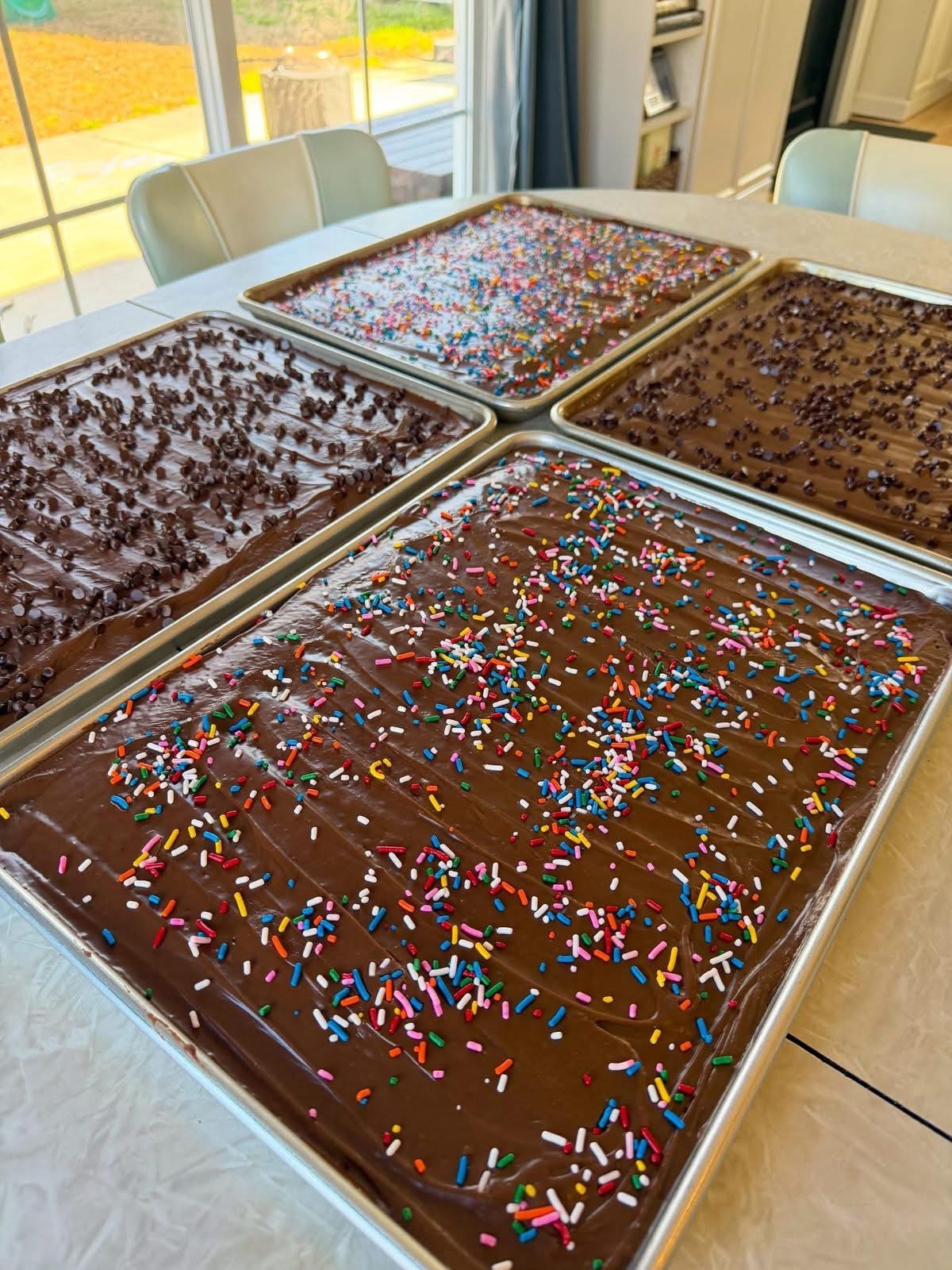
Ingredients
For the Cake
- 2 cups all-purpose flour
- 1 cup granulated sugar
- ½ cup unsweetened cocoa powder
- 1 teaspoon baking soda
- ½ teaspoon salt
- 1 cup buttermilk
- ½ cup unsalted butter, melted
- 2 large eggs
- 1 teaspoon vanilla extract
- ½ cup hot water
For the Chocolate Frosting
- ½ cup unsalted butter
- ¼ cup unsweetened cocoa powder
- 3 tablespoons milk
- 2 cups powdered sugar
- 1 teaspoon vanilla extract
- Rainbow sprinkles, for decorating
This combination follows the classic chocolate sheet-cake style, which commonly uses cocoa, flour, eggs, butter or oil, and a chocolate frosting finished with sprinkles.
Method
- Preheat the oven to 350°F (175°C).
- Grease a large rimmed sheet pan and line it with parchment paper if desired.
- In a large bowl, whisk together the flour, sugar, cocoa powder, baking soda, and salt.
- Add the buttermilk, melted butter, eggs, and vanilla. Mix until just combined.
- Slowly add the hot water and stir until you have a smooth, fairly thin batter.
- Pour the batter evenly into the prepared sheet pan.
- Bake for approximately 20–25 minutes, or until a toothpick inserted into the center comes out clean.
- While the cake is baking, prepare the frosting. Melt the butter in a saucepan over medium-low heat.
- Whisk in the cocoa powder and milk. Remove from the heat.
- Gradually whisk in the powdered sugar and vanilla until smooth and glossy.
- Pour the warm frosting over the cake and spread it evenly.
- Immediately cover the surface generously with rainbow sprinkles.
- Allow the cake to cool and the frosting to set before slicing into squares.
Sheet cakes are particularly convenient for serving groups because they bake as one large, shallow cake and are easy to cut into multiple portions.
History
Chocolate sheet cake is closely associated with American baking traditions and is often prepared in a shallow rectangular pan. Versions of the cake are also known as Texas sheet cake, chocolate brownie cake, or buttermilk brownies. Food-history accounts connect the modern style with early-20th-century American home baking and the increasing availability of affordable cocoa.
Sprinkles have an even longer history as a dessert decoration. Nonpareils were being used in European confectionery by at least the late 18th century, while Dutch chocolate sprinkles known as hagelslag appeared in the early 20th century.
Benefits
- Cocoa provides a rich chocolate flavor and contributes small amounts of minerals and naturally occurring plant compounds.
- Eggs provide protein and help give the cake structure.
- Milk or buttermilk contributes protein and calcium.
- The sheet-pan format makes this recipe practical for birthdays, bake sales, family gatherings, and parties.
- Rainbow sprinkles make the cake especially appealing for celebrations and children’s parties.
Because this is a dessert containing sugar, butter, flour, and frosting, it is best enjoyed as an occasional treat rather than as a major source of daily nutrition.
Nutrition
Nutrition varies considerably depending on the exact ingredients and portion size. For comparison, published chocolate sheet-cake recipes range around 256–390 calories per serving, with approximately 34–60 g carbohydrates, 2–3 g protein, and 11–16 g fat per serving.
For this recipe, cutting the sheet into smaller squares will reduce the calories and sugar per serving.
Conclusion
This chocolate fudge sheet cake is soft, rich, easy to prepare, and perfect for feeding a crowd. The smooth chocolate frosting and colorful rainbow sprinkles give it a festive appearance while keeping the preparation simple. Serve it for birthdays, family gatherings, potlucks, or whenever you want an easy homemade chocolate dessert.