Dates and Date Syrup: Nutrition, Benefits, Uses, History, and How to Enjoy This Naturally Sweet Food
Introduction
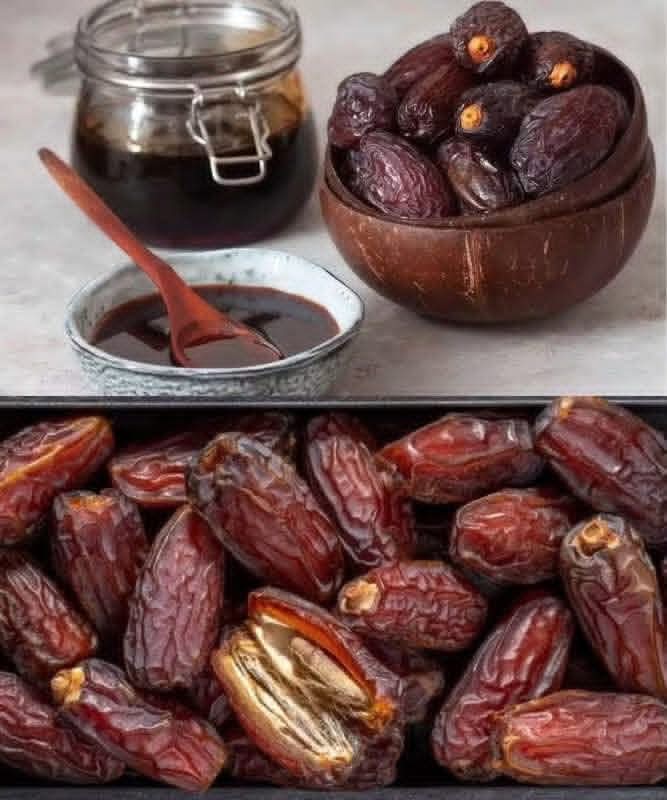
Dates are one of the world’s oldest cultivated fruits and have been enjoyed for thousands of years for their naturally sweet flavor, satisfying texture, and nutritional value. The image above shows whole dates alongside a dark, rich-looking syrup, commonly known as date syrup or date molasses. Together, these foods represent one of the simplest ways to enjoy the natural sweetness of the date palm.
Dates may look like an ordinary dried fruit, but they have a fascinating history and an impressive nutritional profile. They contain carbohydrates that provide energy, dietary fiber, and several important minerals. They are also versatile enough to be enjoyed on their own, blended into drinks, added to desserts, mixed into breakfast foods, or used as a natural sweetening ingredient.
Date syrup takes this traditional fruit in another direction. It has a thick consistency, deep brown color, caramel-like flavor, and concentrated sweetness. Depending on how it is produced, date syrup may be made by extracting the soluble components of dates and concentrating the resulting liquid. It is commonly used in Middle Eastern and North African cuisines and is increasingly popular around the world.
However, it is important to understand that “natural” does not automatically mean unlimited or calorie-free. Dates and date syrup are both sources of sugars and carbohydrates. Whole dates provide fiber and a more substantial food structure, while syrup generally provides concentrated sweetness with less of the original fruit’s structure and fiber.
In this comprehensive guide, we will explore the history of dates, their nutritional characteristics, potential benefits, how date syrup is made, practical ways to use both products, storage advice, recipe ideas, and important considerations for enjoying them as part of a balanced diet.
What Are Dates?
Dates are the fruit of the date palm, a tree belonging to the genus Phoenix. The fruit has a long oval shape and a naturally sweet flavor. Depending on the variety and stage of ripeness, dates can range from golden brown to deep reddish-brown or almost black.
Fresh dates contain considerably more moisture than dried dates. As dates ripen and lose water, their natural sugars become increasingly concentrated, giving dried dates their characteristic sweetness and chewy texture.
There are many varieties of dates around the world. Some are soft and moist, while others are firmer and drier. One particularly well-known variety is Medjool, which is large, soft, and caramel-like in flavor. Deglet Noor is another widely consumed variety and is generally smaller and firmer.
Dates can be eaten whole after removing the pit, although many commercially sold dates are already pitted. They can also be chopped, stuffed, blended, cooked, or processed into products such as date paste and date syrup.
A Brief History of Dates
The date palm has a remarkable place in human history.
Date cultivation has been associated with ancient civilizations of the Middle East and North Africa for thousands of years. Archaeological evidence indicates that people were cultivating and using dates in ancient Mesopotamia and surrounding regions.
The date palm was particularly valuable in desert and semi-desert environments because it could provide food in climates where growing many other crops was difficult. Its tall canopy could also provide shade, while the fruit offered a concentrated source of energy.
Over centuries, date cultivation spread across North Africa, the Middle East, parts of South Asia, and eventually other warm regions of the world.
Dates also became deeply connected with cultural and religious traditions. In many communities, dates are associated with hospitality, celebrations, fasting, and special occasions.
Today, dates are produced commercially in countries throughout the Middle East, North Africa, and other warm agricultural regions.
What Makes Dates Naturally Sweet?
The sweetness of dates comes primarily from naturally occurring sugars.
As the fruit ripens and dries, its water content decreases while its sugars become more concentrated. This gives dates their rich sweetness without requiring added table sugar.
The exact nutritional composition varies according to the variety, size, moisture content, and processing method.
A typical serving of dates provides carbohydrates and naturally occurring sugars along with dietary fiber and minerals. Because dates are relatively small but energy-dense, portion size matters.
A few dates can make a satisfying snack, particularly when paired with foods containing protein or healthy fats.
Nutritional Profile of Dates
Dates contain several nutrients that can contribute to a balanced eating pattern.
- Carbohydrates
Dates are rich in carbohydrates, including naturally occurring sugars. Carbohydrates are one of the body’s main sources of energy.
This is one reason dates can be useful as a convenient snack before physical activity or as an ingredient in homemade energy bites.
- Dietary Fiber
Whole dates contain dietary fiber.
Fiber is important for normal digestive function and can contribute to feelings of fullness. Eating a variety of fiber-containing foods, including fruits, vegetables, legumes, whole grains, nuts, and seeds, is generally recommended as part of a balanced diet.
Because date syrup is a liquid extract or concentrated product, it should not automatically be assumed to contain the same amount of fiber as whole dates.
- Potassium
Dates provide potassium, an essential mineral involved in normal nerve function, muscle contraction, and fluid balance.
The amount obtained depends on serving size and the specific type of date.
- Magnesium
Dates also contribute smaller amounts of magnesium. Magnesium is involved in numerous processes throughout the body, including normal muscle and nerve function.
- Copper and Other Minerals
Dates contain various minerals, including copper and manganese, in addition to potassium and magnesium.
Although dates can contribute to nutrient intake, they should be viewed as one food within an overall diet rather than a complete source of nutrition.
Potential Benefits of Eating Dates
Supports Digestive Health
One of the most useful characteristics of whole dates is their fiber content.
Dietary fiber supports normal bowel function and helps contribute to a healthy digestive system. Increasing fiber gradually while drinking enough fluids can be helpful for people trying to improve their overall fiber intake.
Dates can therefore be one convenient way to add fruit-based fiber to meals and snacks.
Provides Convenient Energy
Because dates contain naturally concentrated carbohydrates, they can provide readily available energy.
This makes them popular among hikers, athletes, runners, and people who want a portable snack.
For a more balanced snack, dates can be paired with nuts, seeds, yogurt, or another protein-rich food.
Contributes to Mineral Intake
Dates contain minerals such as potassium and magnesium.
These nutrients perform important physiological functions, but the benefits of dates should not be exaggerated. Eating a varied diet remains the best way to obtain a broad range of nutrients.
Contains Plant Compounds
Dates contain various naturally occurring plant compounds, including polyphenols and other antioxidant-related compounds.
Antioxidants are substances that help protect cells from oxidative damage. Research into the specific health effects of date fruit and its bioactive compounds continues, but eating dates should be considered part of an overall healthy dietary pattern rather than a treatment for disease.
A Convenient Alternative to Highly Refined Sweeteners
When chopped or blended into recipes, dates can provide sweetness while also contributing texture, flavor, and some nutrients.
For example, mashed dates can be used in homemade energy bars, oatmeal, desserts, and snack balls.
This does not make dates sugar-free. Their sweetness still comes largely from sugars, but using whole dates can provide more nutritional structure than simply adding refined sugar.
Dates and Blood Sugar: An Important Consideration
Dates are sweet, and they contain significant amounts of carbohydrate.
For this reason, people who monitor their blood glucose should pay attention to portion size and the total carbohydrate content of their meals.
Some research has examined the effects of dates on blood glucose and metabolic health, but individual responses can vary. The fact that dates are a whole fruit does not mean they have no effect on blood sugar.
Date syrup deserves even more attention because it is concentrated and easy to consume in larger quantities.
If you have diabetes or another condition requiring careful carbohydrate management, discuss appropriate portions with your healthcare professional or registered dietitian.
What Is Date Syrup?
Date syrup is a thick, sweet liquid made from dates.
It is sometimes called date molasses, although the production process can differ from traditional molasses made from sugarcane or other sources.
Date syrup has a dark brown appearance and a deep flavor that can resemble caramel, raisins, brown sugar, and cooked fruit.
It can be drizzled over foods or incorporated into recipes.
Common uses include:
- Breakfast bowls
- Oatmeal
- Pancakes
- Yogurt
- Smoothies
- Baked goods
- Sauces
- Salad dressings
- Marinades
- Desserts
- Hot drinks
How Is Date Syrup Made?
Traditional and commercial methods vary, but the basic concept involves extracting soluble components from dates and concentrating the resulting liquid.
A simplified process may involve several stages.
Step 1: Selecting the Dates
Ripe dates are selected. Different varieties can be used depending on availability and the desired flavor.
Step 2: Cleaning
The fruit is cleaned to remove dirt and unwanted material.
Step 3: Removing the Pits
If whole pitted dates are not being used, the pits are removed.
Step 4: Softening or Cooking
The dates may be soaked or heated in water to soften the fruit and help release soluble sugars and other components.
Step 5: Extraction
The softened dates are pressed, blended, or otherwise processed to separate a liquid extract from much of the solid fruit material.
Step 6: Concentration
The liquid is concentrated until it reaches the desired thickness and sweetness.
Step 7: Filtering and Packaging
Depending on the production method, the syrup may be filtered before being packaged.
The exact method varies considerably between homemade and commercial products.
Date Syrup vs. Whole Dates
Whole dates and date syrup are related but nutritionally different foods.
Whole dates contain the intact fruit structure and provide dietary fiber.
Date syrup is much more concentrated and is usually consumed in smaller spoonfuls as a sweetener.
If your goal is to increase fiber and eat a filling snack, whole dates are generally the better choice.
If your goal is to add a distinctive sweet flavor to a recipe, date syrup can be convenient.
Neither should be considered a magical health food.
How to Make a Simple Date Syrup at Home
Homemade date syrup can be made with relatively simple ingredients.
Ingredients
- 2 cups pitted dates
- 3 to 4 cups water
- 1 teaspoon lemon juice, optional
- A small pinch of cinnamon, optional
Method
Place the pitted dates in a saucepan and cover them with water.
Bring the mixture to a gentle simmer and cook until the dates become very soft.
Allow the mixture to cool slightly.
Blend the softened dates and cooking liquid until smooth.
For a smoother syrup, strain the mixture through a fine sieve or cheesecloth.
Return the liquid to the saucepan and simmer gently until it thickens to your preferred consistency.
If desired, add a small amount of lemon juice for brightness.
Allow the syrup to cool before transferring it to a clean container.
Store homemade date syrup in the refrigerator.
Because homemade products do not have the same controlled processing and preservation conditions as commercial products, refrigeration and careful handling are important.
Delicious Ways to Use Dates
Dates are extremely versatile.
- Date and Nut Snack
Stuff pitted dates with almonds, walnuts, or peanut butter.
The combination of sweetness and richness makes a satisfying snack.
- Breakfast Oatmeal
Chop two or three dates and stir them into warm oatmeal.
Add cinnamon, walnuts, chia seeds, or yogurt for additional flavor and texture.
- Smoothies
Dates can naturally sweeten smoothies.
Blend dates with milk or a plant-based alternative, banana, oats, cinnamon, and nut butter.
- Energy Balls
Combine dates with nuts, oats, coconut, cocoa powder, and seeds.
Blend until the mixture becomes sticky enough to form small balls.
Refrigerate before serving.
- Salad Topping
Chopped dates can add sweetness to salads containing leafy greens, nuts, cheese, carrots, or roasted vegetables.
- Homemade Granola
Small pieces of dates can be added to homemade granola after baking.
Adding them toward the end helps preserve their chewy texture.
- Stuffed Dates
Stuff dates with cream cheese, soft cheese, nut butter, or nuts.
For a savory variation, pair dates with cheese and herbs.
Delicious Ways to Use Date Syrup
Date syrup is particularly useful when you want a liquid sweetener.
Drizzle Over Yogurt
Add a small drizzle over plain Greek yogurt with nuts and fresh fruit.
Add to Oatmeal
A teaspoon can provide a rich caramel-like flavor.
Pancakes and Waffles
Date syrup can be used as a topping instead of traditional pancake syrup.
Salad Dressing
Combine date syrup with olive oil, lemon juice, mustard, salt, and pepper to create a sweet-and-tangy dressing.
Marinades
Date syrup can contribute sweetness and browning to marinades for roasted vegetables or meat dishes.
Desserts
Use it in homemade puddings, baked goods, sauces, or fruit desserts.
Date Syrup Breakfast Bowl
Here is a simple breakfast idea.
Ingredients
- 1 cup plain yogurt
- ½ cup oats or granola
- 1 banana, sliced
- 1 tablespoon chopped dates
- 1 teaspoon date syrup
- 1 tablespoon walnuts
- Cinnamon to taste
Preparation
Place the yogurt in a bowl.
Add oats or granola.
Top with banana slices, chopped dates, and walnuts.
Drizzle with a small amount of date syrup.
Finish with cinnamon.
This breakfast combines protein from yogurt, carbohydrates from oats and fruit, fats from walnuts, and the sweetness of dates.
Dates in Traditional Cuisine
Dates have long been used in Middle Eastern, North African, and South Asian cuisines.
They can appear in sweet dishes, savory dishes, breads, pastries, beverages, and sauces.
In some traditional food cultures, dates are served with coffee or tea as a symbol of hospitality.
During religious and cultural celebrations, dates may also have special significance.
Their long shelf life and concentrated nutritional value historically made them practical food for travel and storage.
Choosing Good-Quality Dates
When buying dates, look for fruit that is appropriately moist or firm for the variety.
Good-quality dates generally have a pleasant smell and should not have obvious signs of mold.
A small amount of natural crystallization or sugar-like coating can occur on some dates and is not necessarily spoilage.
Avoid dates that have an unpleasant fermented odor, visible mold, or significant deterioration.
If buying date syrup, check the ingredient list.
Ideally, consumers should know whether the product contains only dates and water or whether additional sweeteners and ingredients have been added.
How to Store Dates
Storage depends on the type of dates.
Dried dates can often be kept in an airtight container in a cool, dry place for a relatively long period.
Refrigeration can extend freshness, particularly after opening.
For longer storage, dates can also be frozen.
Always inspect dates before eating them and discard them if they show signs of mold or spoilage.
Homemade date syrup should generally be refrigerated and handled carefully.
Are Dates Good for Weight Management?
Dates can fit into a balanced eating pattern, but portion size matters.
They are relatively energy-dense because their water content is low and their natural sugars are concentrated.
Eating a large quantity can therefore provide substantial calories.
On the other hand, whole dates contain fiber and can be satisfying when eaten in reasonable portions.
A practical approach is to enjoy a few dates alongside foods that provide protein or healthy fats rather than eating large amounts without noticing.
Date syrup requires additional portion awareness because it is concentrated and easy to pour.
Dates and Heart-Healthy Eating
Dates can be included in an overall heart-conscious dietary pattern.
They provide fiber and minerals and can replace some refined sweeteners in certain recipes.
However, simply adding date syrup to an otherwise unhealthy diet does not make the diet heart healthy.
A stronger approach is to build meals around vegetables, fruits, whole grains, legumes, nuts, seeds, and appropriate protein sources while keeping highly processed foods and excessive added sugars under control.
Are Dates a Good Pre-Workout Food?
Dates are popular among physically active people because they are portable and carbohydrate-rich.
Carbohydrates can be useful before exercise because they provide fuel for physical activity.
A small serving of dates may work well before a workout, particularly when eaten with enough time to digest.
For longer or more demanding activities, individual nutritional needs can be considerably different.
Hydration, total carbohydrate intake, protein, and overall energy requirements should all be considered.
Important Safety and Health Considerations
Despite their nutritional value, dates are not appropriate in unlimited quantities.
Natural Sugar Is Still Sugar
The sugars in dates occur naturally within the fruit, but the body still processes these carbohydrates.
People with diabetes or blood-glucose concerns should consider portion size.
Allergies
Although uncommon, food allergies can occur. Anyone who experiences symptoms such as swelling, difficulty breathing, hives, or other serious reactions after eating a food should seek appropriate medical attention.
Digestive Sensitivity
A sudden large increase in fiber can cause bloating or digestive discomfort in some people.
If you are not accustomed to eating much fiber, increase your intake gradually.
Dental Health
Sticky, sweet dried fruits can adhere to teeth. Good oral hygiene remains important after consuming dates and other dried fruits.
Infants and Young Children
Whole dates can be sticky and chewy, so they should be prepared appropriately for young children to reduce choking risk.
Common Myths About Dates
Myth 1: Dates Detox the Body
The human body already has organs such as the liver and kidneys that perform detoxification functions.
There is no need to rely on dates, date syrup, or detox drinks to “clean” the body.
Myth 2: Date Syrup Is Sugar-Free
It is not.
Date syrup is a concentrated sweet product and contains sugars.
Myth 3: Eating Dates Cures Disease
Dates are nutritious, but they should not be presented as a cure for diabetes, cancer, high blood pressure, infertility, or other medical conditions.
Myth 4: You Can Eat Unlimited Dates Because They Are Natural
Natural foods can still contain substantial calories and carbohydrates.
Portion size remains important.
Myth 5: Date Syrup Is Always Healthier Than Every Other Sweetener
The answer depends on the product, quantity, and overall diet.
A small amount of date syrup can be a flavorful alternative to refined sweeteners, but it remains a concentrated source of sweetness.
A Balanced Way to Enjoy Dates
The healthiest approach is not to treat dates as a miracle food.
Instead, think of them as a nutritious, naturally sweet fruit that can complement a varied diet.
A simple daily snack might include:
- 2–3 dates
- A small handful of nuts
- Plain yogurt
- Fresh fruit
- Water or unsweetened tea
This combination can be more satisfying than eating a large amount of dates alone.
Why Date-Based Foods Are Becoming Popular
Modern consumers are increasingly interested in minimally processed foods, traditional ingredients, and alternatives to refined sweeteners.
Dates fit many of these trends because they are naturally sweet and versatile.
Date paste can replace some sugar in baked goods.
Date syrup can add sweetness to breakfast foods.
Whole dates can replace candy as an occasional snack.
However, marketing should not turn a nutritious food into an exaggerated “miracle cure.”
The strongest reason to eat dates is simple: they taste good, are convenient, and provide useful nutrients when consumed in sensible portions.
Frequently Asked Questions
How many dates should you eat in a day?
There is no universal number that is appropriate for everyone. A few dates can be a reasonable serving for many people, but individual calorie and carbohydrate needs vary.
Is date syrup healthier than sugar?
Date syrup can provide a distinctive flavor and may contain some compounds from dates, but it is still a concentrated sweetener. It should be used moderately.
Can dates help with constipation?
Because whole dates contain dietary fiber, they can contribute to overall fiber intake, which supports normal bowel function. Adequate fluids and a varied high-fiber diet are also important.
Can I eat dates every day?
For many healthy adults, dates can be included regularly as part of a balanced diet. The important factors are portion size and overall dietary pattern.
Can dates replace candy?
Whole dates can be a useful alternative to candy because they provide fiber and minerals in addition to sweetness. They are still sweet and calorie-containing, so moderation remains important.
Can I use date syrup in coffee?
Yes. A small amount can add a caramel-like sweetness to coffee. Keep in mind that it contributes sugar and calories.
Should date syrup be refrigerated?
Commercial products should be stored according to the manufacturer’s instructions. Homemade date syrup should generally be refrigerated.
Final Thoughts
Dates are much more than a sweet dried fruit. They are an ancient food with a rich cultural history, convenient nutrition, and remarkable culinary versatility.
Whole dates provide naturally occurring sugars, dietary fiber, potassium, magnesium, and other nutrients. They can be enjoyed as a snack, added to breakfast, blended into smoothies, incorporated into desserts, or paired with nuts and cheese.
Date syrup offers another way to enjoy the flavor of dates. Its thick texture and deep sweetness make it useful for oatmeal, yogurt, pancakes, sauces, marinades, desserts, and homemade drinks.
At the same time, it is important to keep expectations realistic. Dates and date syrup are not detox treatments or cures for disease. Their natural sweetness still counts as carbohydrate, and concentrated products such as syrup should be consumed thoughtfully.
The best approach is simple: enjoy dates as part of a varied diet rich in fruits, vegetables, whole grains, legumes, nuts, seeds, and appropriate protein sources.
Whether you enjoy a few soft dates with nuts, drizzle a little date syrup over yogurt, or use dates in a homemade dessert, this ancient fruit can bring sweetness, texture, and character to everyday meals.
In moderation, dates can be a delicious and practical addition to a balanced lifestyle—and their long history shows just how valuable this humble fruit has been across generations.
Quick Summary
Food: Dates and date syrup
Main characteristic: Naturally sweet, concentrated fruit flavor
Key nutrients in whole dates: Carbohydrates, dietary fiber, potassium, magnesium, copper, and other micronutrients
Best uses: Snacks, breakfast, smoothies, desserts, sauces, dressings, and baking
Important consideration: Whole dates contain fiber; date syrup is more concentrated and should be used in moderation
Storage: Keep dates sealed and cool; refrigerate homemade date syrup
Best approach: Enjoy reasonable portions as part of a varied, balanced diet
A Simple Serving Idea
For an easy, satisfying snack, try 2–3 dates with a small handful of almonds or walnuts and a cup of unsweetened tea. It is simple, portable, flavorful, and easy to incorporate into everyday eating.
This article is for general educational purposes and is not a substitute for individualized medical or dietary advice.