Why Do Your Hands and Feet Go Numb and Tingle? Causes, Warning Signs, Diagnosis, and What You Can Do
Have you ever felt a strange “pins and needles” sensation in your hands or feet? Perhaps your fingers suddenly become numb after sleeping on your arm, or your feet feel as though they are buzzing, burning, prickling, or asleep. Sometimes these sensations disappear within a few minutes. Other times, numbness and tingling keep returning or gradually become more noticeable.
Numbness and tingling are extremely common symptoms, but they should not always be dismissed as something harmless. They can happen because a nerve has been temporarily compressed, but they may also be associated with conditions such as carpal tunnel syndrome, diabetes, vitamin B12 deficiency, nerve injuries, thyroid or kidney problems, certain medications, alcohol exposure, or peripheral neuropathy.
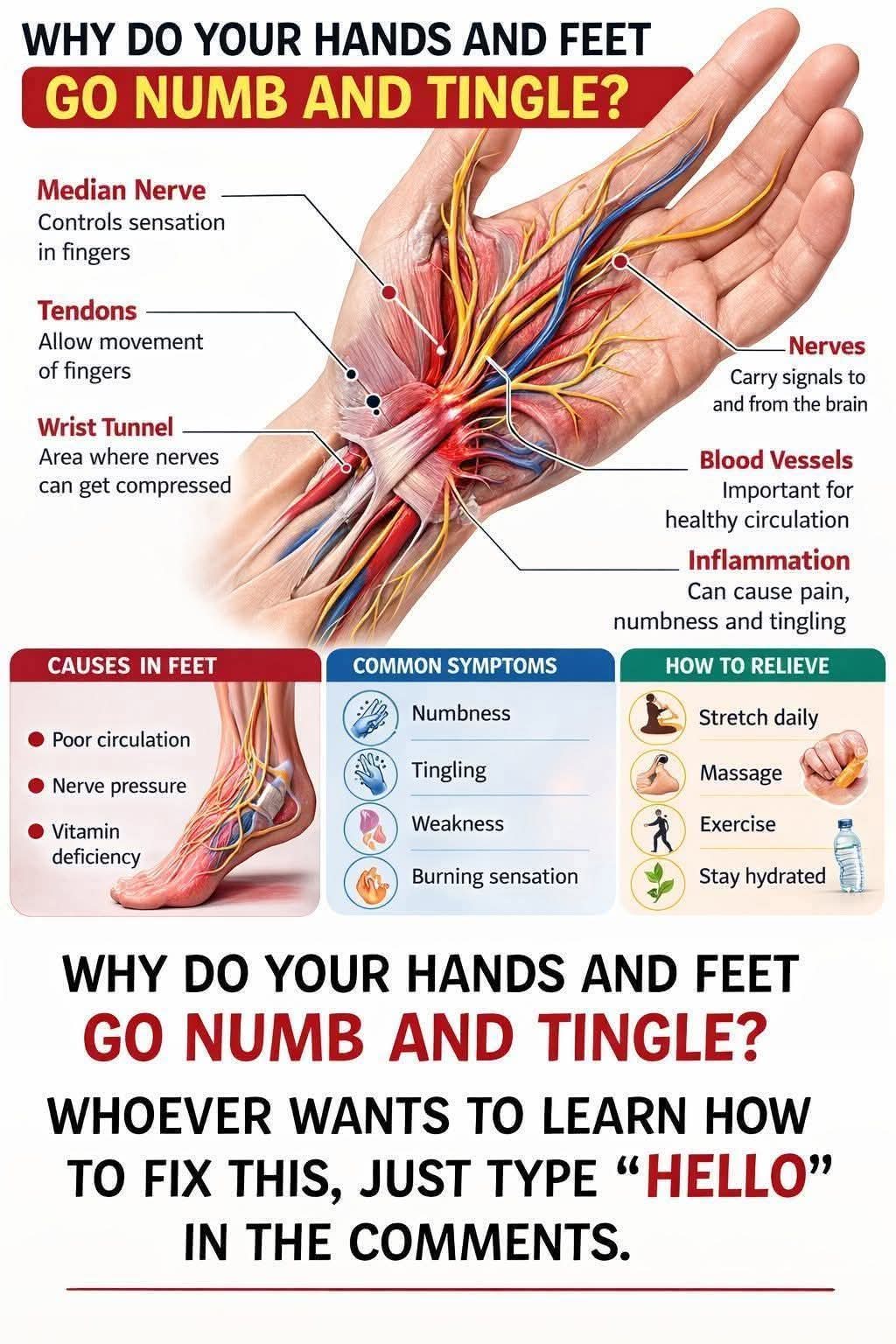
The image accompanying this article highlights several important structures in the hand, including nerves, tendons, blood vessels, and the wrist tunnel. It also mentions possible causes such as nerve pressure, poor circulation, and vitamin deficiency. These are useful topics to discuss, but it is important to understand that there is no single remedy that fixes every case of numbness or tingling. Treatment depends on the underlying cause.
This comprehensive guide explains why your hands and feet may become numb or tingle, what different patterns can mean, which symptoms deserve medical attention, how doctors investigate the problem, and what healthy habits may support nerve health.
«Important: This article is for general educational purposes and is not a diagnosis or a substitute for medical care. Persistent, worsening, unexplained, or severe numbness should be evaluated by a healthcare professional.»
What Exactly Are Numbness and Tingling?
Numbness means reduced or absent sensation in part of the body. You may feel as though your skin has become “dead,” thick, or disconnected from the rest of your body.
Tingling is slightly different. People often describe it as:
- Pins and needles
- Prickling
- Buzzing
- Electric sensations
- Burning
- Crawling sensations
- Mild shocks
- Itching without an obvious skin problem
These sensations occur because nerves are responsible for transmitting information between the body and the brain. When a nerve is compressed, irritated, injured, or damaged, the signals traveling along it can become abnormal.
Peripheral nerves are located outside the brain and spinal cord. They carry sensory information, control muscles, and help regulate certain automatic body functions. When these nerves are damaged, symptoms can include numbness, tingling, pain, weakness, and balance problems.
Why Do Hands and Feet Tingle?
There are many possible explanations. The pattern, duration, location, and associated symptoms can provide important clues.
- Temporary Nerve Compression
One of the simplest causes is temporary pressure on a nerve.
For example, you may wake up with a numb hand after sleeping with your arm underneath your body. Sitting in one position for too long can also cause a foot or leg to “fall asleep.”
When pressure on the nerve is removed, normal sensation usually returns.
This type of temporary numbness is generally different from persistent neuropathy. If the sensation repeatedly returns without an obvious explanation, however, it is worth discussing with a healthcare professional.
- Carpal Tunnel Syndrome
Carpal tunnel syndrome occurs when the median nerve becomes compressed at the wrist.
The median nerve helps provide sensation to parts of the hand and also contributes to certain thumb movements. Compression in the wrist can cause:
- Numbness
- Tingling
- Burning
- Hand discomfort
- Weakness
- Difficulty gripping objects
Symptoms often involve the thumb, index finger, middle finger, and part of the ring finger.
People who perform repetitive hand or wrist activities may notice symptoms during or after certain tasks. Nighttime symptoms are also common.
The important point is that carpal tunnel syndrome is a specific nerve-compression problem, not simply “poor circulation.” NIDDK describes carpal tunnel syndrome as a common focal neuropathy caused by compression of the nerve at the wrist.
- Peripheral Neuropathy
Peripheral neuropathy refers to damage affecting peripheral nerves.
It commonly causes symptoms in the feet and legs and can also affect the hands and arms. Symptoms may include:
- Numbness
- Tingling
- Burning
- Sharp or stabbing pain
- Increased sensitivity
- Muscle weakness
- Balance problems
Some people describe the sensation as if they are wearing invisible gloves or socks.
Peripheral neuropathy can develop gradually. In some cases, symptoms are mild at first and become more noticeable over time.
- Diabetes and Blood Sugar Problems
Diabetes is one of the most important medical conditions associated with peripheral neuropathy.
Over time, elevated blood glucose can damage nerves and the small blood vessels that supply them. Diabetic peripheral neuropathy commonly begins in the feet and legs and may later affect the hands and arms.
Possible symptoms include:
- Tingling in the toes
- Burning feet
- Reduced ability to feel pain
- Reduced ability to detect temperature
- Numbness
- Sharp pains
- Muscle weakness
One reason diabetic neuropathy deserves attention is that reduced sensation can make it easier to overlook injuries.
A person with decreased sensation may step on something sharp, develop a blister, or suffer a minor burn without immediately realizing it.
That is why people with diabetes and reduced foot sensation should pay particular attention to foot care.
- Vitamin B12 Deficiency
Vitamin B12 is important for normal nervous-system function.
Low B12 levels can be associated with neurological symptoms, including numbness and tingling. Mayo Clinic lists vitamin B12 deficiency among possible causes of numbness in the hands.
However, this does not mean everyone with tingling should automatically start taking high-dose vitamin B12.
The correct approach is to determine whether a deficiency actually exists and why. Some people may have nutritional deficiencies because of inadequate dietary intake, while others may have problems absorbing nutrients.
If unexplained numbness is persistent, a healthcare professional may decide whether blood tests are appropriate.
- Nerve Pressure in the Neck or Back
Nerves travel from the spinal cord to different areas of the body.
Problems affecting the neck can sometimes produce symptoms in the arms or hands, while problems involving nerves in the lower back can affect the legs or feet.
A herniated disk, degenerative changes, injuries, or other conditions can irritate or compress nerves.
The pattern may provide clues.
For example, symptoms following a particular path down an arm or leg may suggest involvement of a specific nerve or nerve root.
This is one reason simply treating the symptom without identifying the source may not solve the problem.
- Ulnar Nerve Compression
Not every hand tingling problem comes from the median nerve.
The ulnar nerve can become compressed around the elbow or elsewhere along its pathway.
This may cause numbness or tingling particularly involving the little finger and ring finger.
Some people notice symptoms when they keep their elbow bent for long periods or lean heavily on the elbow.
Persistent symptoms, especially when accompanied by weakness or loss of hand function, should be medically evaluated.
- Poor Circulation: A More Complicated Issue
The image suggests poor circulation as one possible cause of numbness in the feet.
Circulation can certainly affect how the limbs feel, but numbness and tingling are not automatically evidence of poor blood circulation.
Blood vessels supply oxygen and nutrients to tissues, while nerves transmit sensory information. Problems with either system can produce discomfort, but the treatment is different.
For example, cold temperatures can temporarily change sensation. Certain vascular conditions can also cause pain, color changes, coldness, or other symptoms.
If a hand or foot suddenly becomes extremely cold, pale, blue, severely painful, or unusually weak, urgent medical assessment may be necessary.
- Alcohol and Certain Toxins
Long-term excessive alcohol exposure can contribute to nerve damage.
Certain medications and toxic exposures can also cause peripheral nerve problems. Mayo Clinic lists alcohol, chemotherapy, some medications, and exposure to toxins among possible contributors to neuropathy.
This is another reason why a doctor may ask about medications, supplements, alcohol use, workplace exposures, and other aspects of your health history when investigating numbness.
- Thyroid, Kidney, and Other Medical Conditions
Numbness does not always originate from a problem specifically located in the hands or feet.
Peripheral neuropathy can be associated with several medical conditions, including thyroid and kidney disorders, autoimmune diseases, infections, and other systemic problems.
This is why persistent symptoms should not simply be treated with home remedies without considering the bigger picture.
What Symptoms Can Accompany Numbness?
Numbness may occur alone, but it can also appear with other sensations.
Common accompanying symptoms include:
Tingling
A prickling or “pins and needles” sensation is one of the most common complaints.
Burning
Some nerve conditions cause burning sensations, particularly in the feet.
Pain
Nerve-related pain can be sharp, stabbing, shooting, throbbing, or electric.
Weakness
If motor nerves are affected, muscles may become weak.
Balance Problems
Reduced sensation in the feet can make it harder to know exactly where your feet are positioned, potentially affecting balance.
Sensitivity to Touch
Some people develop increased sensitivity, where light touch becomes uncomfortable or painful.
Peripheral neuropathy can involve several of these symptoms at the same time.
Why Symptoms May Be Worse at Night
Some people notice tingling or burning more strongly at night.
Diabetic peripheral neuropathy, for example, can produce symptoms that are worse at night.
This can interfere with sleep and make symptoms feel especially frustrating.
However, nighttime symptoms do not automatically mean that you have diabetes or neuropathy. Several different nerve and musculoskeletal problems can become more noticeable during periods of rest.
The overall pattern still matters.
When Should You See a Doctor?
Persistent numbness deserves attention, particularly if there is no obvious temporary cause.
Consider arranging a medical evaluation if numbness:
- Persists for a long time
- Keeps returning
- Gradually becomes worse
- Spreads to other areas
- Affects both hands or both feet
- Is accompanied by weakness
- Interferes with walking
- Causes balance problems
- Makes it difficult to use your hands
- Occurs with unexplained pain or burning
- Develops after an injury
Mayo Clinic recommends medical assessment when hand numbness persists, spreads, affects both sides, repeatedly comes and goes, or is associated with particular activities.
When Is Numbness an Emergency?
Sudden numbness can occasionally be a medical emergency.
Seek emergency medical attention if numbness begins suddenly, especially when accompanied by:
- Weakness or paralysis
- Confusion
- Difficulty speaking
- Severe dizziness
- A sudden severe headache
- Other sudden neurological changes
Mayo Clinic specifically advises emergency evaluation for sudden hand numbness accompanied by symptoms such as weakness, confusion, trouble speaking, dizziness, or a sudden severe headache.
Do not wait for a home remedy to work if symptoms suggest a serious neurological emergency.
How Doctors Investigate Numbness and Tingling
There is no single test that explains every case.
A healthcare professional may begin by asking:
- When did the symptoms begin?
- Did they start suddenly or gradually?
- Which fingers or toes are affected?
- Is one side affected or both?
- Are symptoms worse at night?
- Is there pain?
- Is there weakness?
- Have you had an injury?
- Do certain activities trigger symptoms?
- Do you have diabetes?
- What medications do you take?
- What supplements do you use?
- Is there a family history of nerve problems?
A physical examination can also provide important information.
Depending on the situation, healthcare professionals may order blood tests, imaging, nerve conduction studies, electromyography, or other investigations.
Nerve conduction studies and electromyography are among the tests used when evaluating certain nerve disorders.
Can Stretching Help?
The image recommends daily stretching.
Stretching can be useful for general mobility and may be helpful when symptoms are associated with muscle tension or certain repetitive activities.
But stretching should not be presented as a universal cure for numbness.
If a nerve is severely compressed, damaged, or affected by diabetes or another medical condition, stretching alone will not address the underlying problem.
Gentle movement is generally different from aggressive stretching.
Avoid forcing a painful movement or repeatedly performing an exercise that makes numbness or weakness worse.
Can Massage Help?
Gentle massage may feel relaxing and can temporarily reduce muscle tension for some people.
However, massage cannot repair every cause of nerve damage.
If numbness is caused by nerve compression, inflammation, diabetes, nutritional deficiency, or another medical condition, the underlying cause still needs to be addressed.
Deep or aggressive massage should be avoided over an injured area or when there is unexplained severe pain, swelling, or loss of sensation.
Does Exercise Help Nerve Health?
Regular physical activity can be an important part of overall health.
Mayo Clinic recommends regular exercise as part of healthy lifestyle habits that can support prevention and management of peripheral neuropathy risk factors.
Exercise may also help with:
- Cardiovascular health
- Muscle strength
- Mobility
- Balance
- Weight management
- Blood sugar management
However, the appropriate exercise depends on the individual.
Someone with significant foot numbness and balance problems may need a safer exercise program than someone experiencing occasional hand tingling from repetitive work.
Why Hydration Is Not a Cure
The image also recommends staying hydrated.
Adequate fluid intake is important for general health, but dehydration is not the explanation for every case of numbness and tingling.
Drinking more water will not cure carpal tunnel syndrome, diabetic neuropathy, a vitamin deficiency, or a compressed spinal nerve.
Hydration should therefore be viewed as a healthy habit rather than a guaranteed treatment.
Healthy Eating and Nerve Health
A balanced diet supports overall health and helps provide the nutrients required by the nervous system.
A varied diet can include:
- Vegetables
- Fruits
- Whole grains
- Beans and legumes
- Eggs
- Fish
- Lean meats
- Dairy products or suitable alternatives
- Nuts and seeds
Vitamin B12 deserves particular attention because deficiency can contribute to neurological problems. However, supplements should be used thoughtfully rather than assuming that every case of tingling is caused by a vitamin deficiency.
If you suspect a deficiency, discuss appropriate testing with a healthcare professional.
Foot Care Is Especially Important When Sensation Is Reduced
If your feet are numb, you may not notice injuries immediately.
This can be particularly important for people with diabetes.
Inspect your feet regularly for:
- Cuts
- Blisters
- Redness
- Swelling
- Cracks
- Sores
- Burns
- Changes in skin appearance
Wear properly fitting footwear and avoid walking barefoot in situations where your feet could easily be injured.
NIDDK notes that peripheral neuropathy can contribute to foot sores, ulcers, and infections because reduced sensation may make injuries harder to notice.
Common Mistakes People Make
Mistake 1: Assuming It Is Always Poor Circulation
Numbness can have many causes. It is not automatically a circulation problem.
Mistake 2: Assuming It Is Always a Vitamin Deficiency
Vitamin deficiencies are possible, but taking supplements without knowing whether you are deficient may not solve the problem.
Mistake 3: Ignoring Persistent Symptoms
Occasional temporary tingling is common. Repeated or progressive numbness deserves investigation.
Mistake 4: Relying Only on Massage
Massage may provide temporary comfort but does not address every underlying cause.
Mistake 5: Ignoring Diabetes
People with diabetes should take numbness or burning in the feet seriously because nerve damage can increase the risk of unnoticed injuries.
Mistake 6: Waiting During a Neurological Emergency
Sudden numbness accompanied by weakness, speech problems, confusion, dizziness, or a severe headache needs urgent medical attention.
Can Numbness Be Prevented?
Not every cause can be prevented, but many healthy habits can reduce certain risks.
Manage Chronic Conditions
If you have diabetes or another condition that can affect nerves, follow your healthcare professional’s treatment plan.
Exercise Regularly
Choose activities appropriate for your fitness level and medical situation.
Eat a Balanced Diet
Focus on a variety of nutrient-rich foods.
Avoid Excessive Alcohol
Excessive alcohol exposure can contribute to nerve damage.
Protect Your Hands and Feet
Avoid unnecessary injuries and use appropriate protective equipment during work or sports.
Take Repetitive Activities Seriously
If your job or hobby involves repetitive wrist, hand, elbow, or leg movements, discuss persistent symptoms with a professional.
Get Persistent Symptoms Checked
Early evaluation can help identify treatable causes.
Mayo Clinic emphasizes managing underlying medical conditions and adopting healthy lifestyle habits as important parts of reducing neuropathy risk.
A Simple Daily Routine for General Nerve and Mobility Support
There is no guaranteed “nerve cleanse,” but a sensible daily routine can support overall health.
Morning
Start with gentle movement. Move your fingers, wrists, ankles, and feet through comfortable ranges of motion.
During the Day
Avoid remaining in exactly the same position for long periods. Stand up, walk around, and change positions regularly.
At Work
If you use a keyboard, tools, or other repetitive equipment, pay attention to wrist and elbow positioning.
During Exercise
Choose activities you can perform safely. If you have significant numbness or balance problems, ask a healthcare professional about suitable exercises.
Evening
Check your feet if you have reduced sensation, particularly if you have diabetes.
Before Bed
If symptoms regularly disturb sleep, keep a record of when they occur and what you were doing beforehand. This information can help your healthcare professional understand the pattern.
What Does “Fixing” Numbness Really Mean?
The phrase “fix numbness” sounds simple, but numbness is a symptom rather than one single disease.
The most effective treatment depends on the cause.
For example:
- Temporary compression may improve simply by changing position.
- Carpal tunnel syndrome may require activity changes, splinting, medication, injections, or sometimes surgery depending on severity.
- Diabetes-related neuropathy requires management of the underlying condition and symptoms.
- Vitamin deficiency requires identifying and correcting the deficiency.
- A nerve injury may require specialized treatment and rehabilitation.
- Certain medications or toxins may need to be reviewed with a healthcare professional.
Therefore, the goal should not be to find one magical drink, supplement, massage technique, or exercise that supposedly works for everyone.
The goal is to identify why the nerve is producing abnormal sensations.
Frequently Asked Questions
Is numbness in the hands always serious?
No. Temporary numbness caused by pressure on a nerve is common. However, persistent, recurring, worsening, or unexplained numbness should be evaluated.
Why do my feet tingle at night?
Many conditions can cause nighttime tingling or burning. Peripheral neuropathy, including diabetic neuropathy, can cause symptoms that are worse at night.
Can diabetes cause numb hands?
Yes. Diabetic neuropathy can affect the hands, although peripheral diabetic neuropathy commonly begins in the feet and legs.
Can vitamin B12 deficiency cause tingling?
Vitamin B12 deficiency is one possible cause of numbness and neurological symptoms. Testing may be appropriate when a deficiency is suspected.
Can exercise cure neuropathy?
Exercise can support overall health and may be part of managing risk factors, but it is not a universal cure for nerve damage.
Can massage cure numbness?
Massage may temporarily feel helpful for some types of discomfort, but it does not treat every underlying cause of numbness.
Should I take vitamin supplements for tingling?
Do not assume that tingling automatically means you have a vitamin deficiency. Talk with a healthcare professional about whether testing or supplementation is appropriate.
When should I seek emergency help?
Sudden numbness, especially when accompanied by weakness, paralysis, confusion, difficulty speaking, dizziness, or a sudden severe headache, requires emergency medical assessment.
Final Thoughts
Hands and feet that become numb or tingle can be caused by something as simple as temporary pressure on a nerve, but they can also be a sign of an underlying medical condition.
The most important lesson is that numbness is a symptom, not a diagnosis.
Peripheral neuropathy, diabetes, carpal tunnel syndrome, nerve compression, vitamin B12 deficiency, injuries, certain medications, alcohol exposure, and several other conditions can contribute to abnormal sensations.
Healthy habits such as regular movement, balanced nutrition, appropriate exercise, avoiding excessive alcohol, protecting your hands and feet, and managing chronic health conditions can support overall nerve health.
At the same time, do not rely solely on home remedies when symptoms persist.
If numbness keeps returning, spreads, becomes progressively worse, is accompanied by weakness or balance problems, or has no obvious explanation, arrange an evaluation with a healthcare professional.
And if numbness starts suddenly with neurological warning signs such as weakness, confusion, trouble speaking, severe dizziness, or a sudden severe headache, seek emergency medical care rather than waiting for the symptoms to disappear.
Your nerves play a critical role in helping you move, feel pain and temperature, maintain balance, and interact with the world around you. Paying attention to changes in sensation can therefore be an important part of protecting your long-term health.
The best “fix” for numbness is not necessarily a particular food, drink, massage, or stretch. It is finding the underlying cause and treating it appropriately.
Medical disclaimer: This article provides general educational information and should not be used to diagnose or treat a medical condition. Individual symptoms can have different causes. Consult a qualified healthcare professional for personalized advice, particularly if symptoms are persistent, worsening, severe, or associated with weakness or other neurological changes.