Lemon, Ginger, Garlic, Turmeric, Cinnamon and Black Pepper Tea: Benefits, Recipe, Safety and What Science Really Says
Introduction
For generations, people have turned to simple kitchen ingredients when they want a comforting drink during cold weather, after a heavy meal, or when they simply want to add more plant-based ingredients to their daily routine. Lemon, ginger, garlic, turmeric, cinnamon and black pepper are six familiar ingredients that have each been used in traditional cooking and wellness practices around the world.
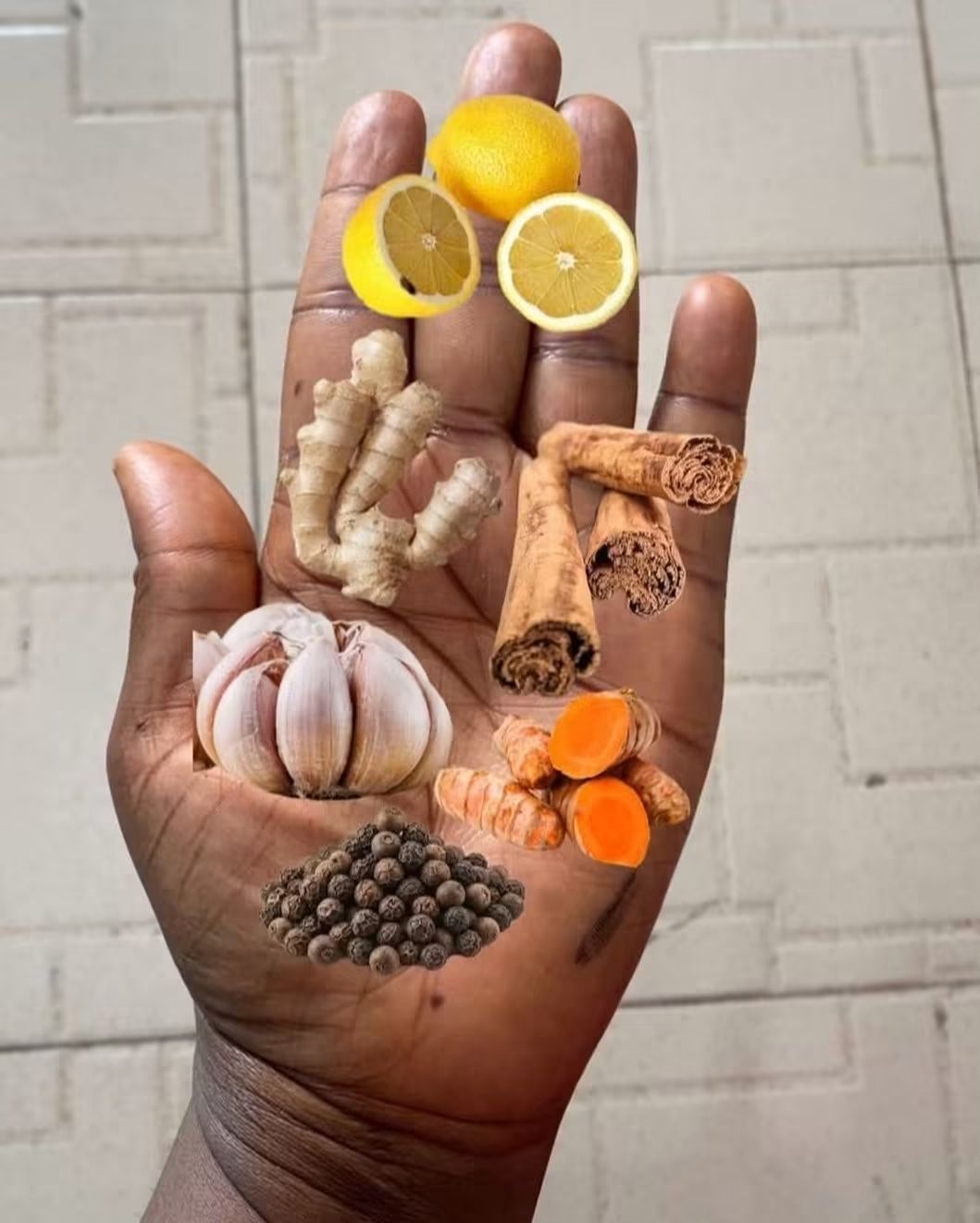
A popular homemade drink combines these ingredients with hot water and is often described online as a “natural detox,” “immune booster,” or even a remedy for infections. The colorful mixture shown in the accompanying image is especially appealing because every ingredient has a strong flavor, distinctive aroma, and long history of culinary use.
But there is an important difference between a nourishing traditional drink and a proven medical treatment.
This recipe can be enjoyed as a flavorful herbal-style beverage, but there is not enough clinical evidence to say that combining lemon, ginger, garlic, turmeric, cinnamon and black pepper can “clean the body,” cure infections, remove toxins, or eliminate viruses. In particular, no kitchen drink should be presented as a cure or treatment for COVID-19.
That does not mean the ingredients have no value. Ginger, garlic and turmeric have all been studied for different health purposes, although the quality and strength of evidence vary considerably. For example, the National Center for Complementary and Integrative Health notes that ginger has been studied for nausea and other conditions, while garlic supplements have shown limited evidence for small reductions in blood pressure. Turmeric and curcumin have also been studied extensively, but more research is needed to establish definite benefits for many conditions.
The goal of this article is therefore to explain what this popular drink contains, how to prepare it, what each ingredient contributes, possible benefits, important safety considerations, and the difference between traditional wellness claims and scientifically supported information.
The Ingredients at a Glance
The basic drink contains:
- Fresh lemon
- Fresh ginger
- Fresh garlic
- Fresh turmeric or turmeric powder
- Cinnamon stick
- Black pepper
- Water
Each ingredient contributes something different.
Lemon provides a bright citrus flavor and is naturally associated with vitamin C and other plant compounds.
Ginger contributes warmth and a spicy flavor. Ginger has a long history of traditional use and has been investigated particularly for nausea and vomiting.
Garlic provides a strong savory flavor and contains sulfur-containing compounds that have been the subject of considerable scientific research. Garlic supplements have been studied for cardiovascular and metabolic effects, although results vary depending on the preparation and condition being studied.
Turmeric gives the drink its golden color. Its best-known compound is curcumin, although turmeric contains many other compounds as well. Research into turmeric and curcumin continues, particularly concerning inflammation-related conditions and joint symptoms.
Cinnamon adds sweetness and fragrance without requiring sugar. However, evidence does not clearly support cinnamon supplementation as a treatment for a specific health condition.
Black pepper adds heat and contains piperine. Piperine can increase the bioavailability of curcumin, which is one reason turmeric and black pepper are frequently paired. However, greater absorption does not automatically mean a mixture has been proven to prevent or cure disease.
A Simple Lemon, Ginger, Garlic, Turmeric, Cinnamon and Black Pepper Drink
Ingredients
For approximately 2 servings:
- 2 cups water
- 1 small piece fresh ginger, sliced
- 1 small piece fresh turmeric, sliced, or ½ teaspoon turmeric powder
- 1 small garlic clove, lightly crushed
- 1 small cinnamon stick
- 4–6 black peppercorns, lightly crushed
- Juice of ½ lemon
- Optional: 1 teaspoon honey for taste
Instructions
Step 1: Prepare the ingredients
Wash the ginger and turmeric thoroughly. Slice them into thin pieces.
Peel the garlic and gently crush it with the side of a knife.
If using a whole cinnamon stick, leave it intact.
Fresh ingredients can be strong, so there is no need to use large quantities.
Step 2: Heat the water
Place approximately two cups of water into a small saucepan.
Bring the water to a gentle simmer rather than allowing it to boil aggressively.
Step 3: Add the spices and roots
Add the ginger, turmeric, garlic, cinnamon and black pepper.
Reduce the heat and allow the mixture to simmer gently for approximately 5–10 minutes.
This allows the water to take on the flavors and aromas of the ingredients.
Step 4: Strain
Remove the saucepan from the heat.
Strain the drink through a fine strainer into cups.
Step 5: Add lemon
Allow the drink to cool slightly before adding fresh lemon juice.
Adding the lemon toward the end gives the beverage a fresher citrus flavor.
Step 6: Adjust the flavor
If the mixture is too strong, dilute it with additional warm water.
If desired, add a small amount of honey.
The finished drink should be warming, spicy, citrusy and aromatic rather than overwhelmingly strong.
Why People Like This Combination
One reason this drink has become popular is that it combines several traditional ingredients in one cup.
Ginger brings warmth.
Cinnamon adds sweetness and aroma.
Turmeric creates a golden color.
Black pepper adds heat.
Garlic contributes a distinctive savory note.
Lemon adds brightness.
Together, these ingredients create a beverage that feels particularly comforting during colder months.
The psychological and sensory experience should not be underestimated. A warm drink can encourage people to slow down, hydrate and take a break. If the beverage replaces a sugary soft drink, it may also be a practical way to reduce added sugar consumption.
However, the pleasant experience of drinking the mixture should not be confused with proof that it treats disease.
Potential Benefits of Ginger
Ginger is one of the best-studied ingredients in this recipe.
According to NCCIH, ginger has been investigated for several types of nausea and vomiting. Research suggests that ginger may help with nausea associated with pregnancy, while evidence for other forms of nausea is less consistent. Ginger supplements have also been studied for menstrual cramps and osteoarthritis symptoms, although researchers note limitations in the evidence.
Ginger may therefore be a useful culinary ingredient for people who enjoy its flavor and may find it soothing.
It can be used fresh, dried, powdered or as part of a beverage.
However, more is not necessarily better.
Large amounts can cause abdominal discomfort, heartburn, diarrhea or irritation of the mouth and throat in some people.
For a homemade drink, a modest amount is generally more sensible than attempting to create an extremely concentrated preparation.
Potential Benefits of Garlic
Garlic has been used in food and traditional practices for centuries.
Its characteristic smell comes from sulfur-containing compounds that are released when garlic is cut or crushed.
Modern research has examined garlic supplements in relation to blood pressure, blood sugar and cardiovascular risk factors.
NCCIH reports that limited evidence suggests garlic supplements may reduce blood pressure by a small amount in people with hypertension. Garlic supplements may also reduce blood sugar by a small amount in people with diabetes.
This does not mean that eating garlic or drinking garlic tea can replace prescribed medication.
It also does not mean that garlic can prevent or cure viral infections.
Research on garlic as an immune-system “booster” is limited. NCCIH notes that very little research has been conducted on this topic, with only a small number of studies suggesting possible benefit.
Garlic can nevertheless be an excellent addition to a balanced diet.
Potential Benefits of Turmeric
Turmeric is famous for its deep yellow-orange color.
The compound most frequently discussed in turmeric research is curcumin, one of the curcuminoids found in turmeric.
Laboratory research has produced considerable interest in curcumin because of its biological activity. Human studies have also examined turmeric and curcumin for conditions including osteoarthritis and other inflammatory-related problems.
NCCIH states that some evidence concerning osteoarthritis is encouraging, but higher-quality research is still required before definitive conclusions can be reached.
This is an important distinction.
A substance can show interesting biological activity in laboratory experiments without being proven to prevent or cure a disease in humans.
Turmeric can certainly be enjoyed as a culinary spice, but concentrated turmeric or curcumin supplements should be treated differently from the small amounts commonly used in food.
Why Add Black Pepper to Turmeric?
Many recipes pair turmeric with black pepper because of the compound piperine found in black pepper.
Piperine can increase the bioavailability of curcumin.
In simple terms, it can affect how much curcumin is absorbed.
NCCIH specifically notes that some curcumin products contain piperine to increase bioavailability.
But there is an important lesson here:
Improved absorption does not automatically equal a proven health benefit.
A drink containing turmeric and black pepper is not therefore a medically proven anti-inflammatory treatment, antiviral remedy or cancer treatment.
It is simply a flavorful combination with interesting compounds that scientists continue to study.
What About Cinnamon?
Cinnamon has a long history in cooking and traditional medicine.
Its warm aroma makes it particularly popular in teas and other beverages.
Cinnamon has been investigated for blood sugar, diabetes and weight management, but NCCIH states that research results are difficult to interpret and that evidence does not clearly support cinnamon supplementation for any particular health condition.
That does not mean cinnamon is unhealthy.
Cinnamon is generally considered safe in the amounts commonly used as a food spice.
The concern is mainly with large amounts or prolonged use, particularly with certain varieties of cinnamon.
Cassia cinnamon contains varying amounts of coumarin, a compound that can be problematic for the liver when consumed in large quantities. People with liver disease should be particularly cautious about consuming large amounts of cassia cinnamon.
For a simple homemade drink, using a small cinnamon stick for flavor is very different from consuming large quantities of cinnamon powder every day.
The Role of Lemon
Lemon is perhaps the simplest ingredient in the recipe.
Its juice provides a strong citrus flavor and naturally occurring vitamin C.
Lemon can make a spicy ginger-and-turmeric drink considerably easier to enjoy.
It can also encourage people to drink more water because many people find flavored water more appealing than plain water.
However, lemon water should not be described as a “detox” that removes toxins from the bloodstream.
The body already has highly specialized organs, including the liver and kidneys, that perform detoxification and waste-removal functions.
A lemon drink can be part of a healthy diet, but it does not need a “detox” claim to be valuable.
Does This Drink “Clean the Body”?
This is one of the most common claims associated with mixtures like this.
The phrase “clean the body” sounds appealing, but it is scientifically vague.
What exactly is being removed?
Which toxin?
How is it measured?
What organ is supposedly being cleaned?
Without specific answers, the claim is difficult to evaluate scientifically.
Your body continuously processes substances through normal physiological systems involving the liver, kidneys, lungs, digestive system and other organs.
Drinking a homemade beverage does not literally scrub the bloodstream or wash toxins out of the body.
The healthier message is much simpler:
This drink can provide fluid and flavorful plant ingredients, but it is not a medical detoxification treatment.
Can This Drink Cure COVID-19?
No.
This is perhaps the most important clarification for anyone publishing an article about this recipe.
There is currently no credible evidence that boiling lemon, ginger, garlic, turmeric, cinnamon and black pepper together creates a cure for COVID-19.
The ingredients may be nutritious and enjoyable, but they should never replace appropriate medical care.
For people at higher risk of severe COVID-19, CDC guidance states that antiviral treatment can reduce the risk of hospitalization and death, and treatment should be started as soon as possible within the recommended treatment window.
This matters because delaying appropriate treatment while relying exclusively on a homemade drink could have serious consequences.
A responsible wellness article should therefore avoid headlines such as:
- “This drink kills coronavirus.”
- “One cup cures COVID-19.”
- “Doctors don’t want you to know this cure.”
- “Drink this and coronavirus disappears.”
- “This tea replaces antiviral treatment.”
Those claims are not supported by the evidence.
Instead, the recipe can be presented honestly as a traditional, warming beverage.
Can It Boost Immunity?
The phrase “boost immunity” is frequently used in online wellness content.
The immune system is extremely complex. It does not simply become “stronger” every time someone drinks a particular food or herbal mixture.
Nutrition does matter for normal immune function.
A varied diet containing vegetables, fruits, whole grains, legumes, protein sources and healthy fats provides nutrients that the immune system needs.
Adequate sleep, physical activity, hydration, stress management, vaccination where recommended, and good hygiene can also contribute to overall health.
But one drink cannot substitute for these broader habits.
Garlic supplements, for example, have been promoted as immune boosters, but NCCIH notes that research in this area is limited.
The same principle applies to turmeric, cinnamon, ginger and lemon.
How Often Can You Drink It?
For most healthy adults, a mild homemade drink containing food-level quantities of these ingredients can be treated like other culinary beverages.
There is no established medical requirement to drink it every morning, every night or on an empty stomach.
In fact, there is no scientific reason to believe that drinking an increasingly concentrated version will produce increasingly large health benefits.
A sensible approach is moderation.
You might enjoy a small cup occasionally or incorporate the ingredients into ordinary meals.
The purpose should be flavor, hydration and dietary variety—not replacing medical treatment.
Should You Drink It on an Empty Stomach?
There is no universal scientific rule requiring this drink to be consumed before breakfast.
Some people enjoy spicy herbal drinks first thing in the morning.
Others may experience stomach irritation, heartburn or nausea.
Ginger can cause heartburn and abdominal discomfort in some people, while turmeric can also cause stomach upset or acid reflux.
If you notice discomfort when drinking the mixture on an empty stomach, try having it with or after food—or simply discontinue it.
There is no special detoxification advantage that requires an empty stomach.
Important Safety Considerations
Natural does not automatically mean risk-free.
This recipe contains several biologically active ingredients, and concentrated amounts can have stronger effects than ordinary culinary use.
Garlic and blood-thinning medicines
Garlic supplements may increase bleeding risk.
People taking anticoagulants or medicines such as aspirin should discuss garlic supplements and concentrated herbal products with a healthcare professional.
Using a small amount of garlic as food is different from taking concentrated garlic supplements.
Ginger and medication interactions
Ginger can cause digestive side effects, and NCCIH recommends talking with a healthcare professional if you take medications because herbs and medicines can interact.
Turmeric and liver concerns
Ordinary culinary turmeric is different from highly concentrated curcumin supplements.
NCCIH reports that some highly bioavailable curcumin formulations have been associated with liver injury.
If someone develops symptoms such as unusual fatigue, nausea, poor appetite, dark urine or yellowing of the skin or eyes after using a turmeric or curcumin product, they should stop the product and seek medical advice.
Cinnamon and coumarin
Large or prolonged amounts of cassia cinnamon may expose a person to significant amounts of coumarin.
People with liver problems should be particularly careful.
Pregnancy and breastfeeding
Pregnant or breastfeeding individuals should be especially cautious about concentrated herbal preparations.
The amounts of spices normally used in food are not equivalent to medicinal doses or concentrated supplements.
NCCIH notes that safety information can be limited for higher-than-food amounts of several of these ingredients.
When in doubt, consult a qualified healthcare professional.
Who Should Be Especially Careful?
A healthcare professional should be consulted before regularly consuming concentrated versions of this drink if you:
- Take blood-thinning medication.
- Take several prescription medicines.
- Have liver disease.
- Have a history of gallbladder problems.
- Have significant digestive problems or severe acid reflux.
- Are pregnant or breastfeeding.
- Are preparing for surgery.
- Have a chronic medical condition.
- Are considering using the drink instead of prescribed medication.
Children should also not automatically be given concentrated herbal preparations simply because the ingredients are “natural.”
A Better Way to Think About This Drink
Rather than calling it a miracle cure, consider it a spiced citrus wellness beverage.
That description is more accurate and still appealing.
It contains recognizable food ingredients.
It can be prepared without refined sugar.
It can replace some sugary beverages.
It provides hydration.
It brings together several aromatic plant foods.
And it can be comforting when served warm.
Those are worthwhile qualities.
Healthy living does not require every food to be a medicine.
Sometimes a food can simply be enjoyable and nutritious.
Ways to Make the Recipe More Pleasant
The original combination can be quite intense.
If the taste is too strong, reduce the garlic and black pepper.
If you prefer a sweeter drink, add a small amount of honey after the drink has cooled somewhat.
If you want stronger citrus flavor, add more lemon.
If you enjoy a deeper spice profile, keep the cinnamon stick in the simmering water for several minutes.
If turmeric stains your utensils or clothing, rinse them promptly because its yellow pigment can be difficult to remove.
Fresh ginger and turmeric can also be refrigerated to extend their usable life.
A Gentle Version for Beginners
If you have never tried this combination before, begin with a milder version:
Ingredients
- 2 cups water
- 3–4 thin slices ginger
- 2 thin slices turmeric
- ½ cinnamon stick
- 2–3 black peppercorns
- ½ lemon
- A very small piece of garlic
Simmer for 5–7 minutes.
Strain.
Add lemon juice after cooking.
Taste before adding anything else.
There is no reason to make the drink extremely concentrated.
The Importance of a Balanced Diet
One of the biggest mistakes in wellness culture is focusing intensely on one “miracle” ingredient while ignoring the overall diet.
Eating garlic does not compensate for a diet dominated by ultra-processed foods.
Drinking turmeric tea does not replace vegetables.
Lemon water does not replace adequate protein.
Ginger tea does not replace sleep.
Cinnamon does not replace physical activity.
And a homemade herbal drink does not replace appropriate medical care.
The strongest foundation for health is a pattern of habits maintained over time.
This includes eating a wide variety of foods, staying physically active, maintaining healthy sleep habits, avoiding tobacco, limiting excessive alcohol, staying hydrated and receiving appropriate preventive healthcare.
What Science Can and Cannot Tell Us
Scientific research often produces more nuanced conclusions than social media headlines.
A laboratory study might show that a compound interacts with a biological pathway.
An animal study might suggest a possible effect.
A small human trial might show an interesting result.
A systematic review might then conclude that the evidence remains uncertain because studies were small, inconsistent or used different preparations.
This is why it is important not to turn “studied for” into “proven to cure.”
For turmeric, for example, there are many studies, but NCCIH says there is not enough evidence to definitively conclude that turmeric or curcumin provides benefits for many health conditions.
Cinnamon research has similar limitations, with NCCIH stating that research does not clearly support its use for any particular health condition.
Ginger has somewhat more encouraging evidence for certain types of nausea, but that does not make ginger a universal treatment.
Understanding these distinctions makes health information more trustworthy.
If You Are Sick
A homemade drink may be comforting when you have a mild respiratory illness, but it should not distract from symptoms that require medical attention.
If you suspect COVID-19 or influenza, testing may be useful, particularly if you are at higher risk of severe illness.
CDC guidance advises people at higher risk to seek healthcare promptly because antiviral treatments can be time-sensitive.
Seek medical care for concerning symptoms such as difficulty breathing, dehydration, persistent or worsening symptoms, or other severe symptoms.
A warm beverage can be part of supportive care, but it should remain exactly that: supportive care.
Frequently Asked Questions
Can I drink lemon, ginger, turmeric and garlic tea every day?
Many healthy adults can consume food-level amounts of these ingredients, but there is no established requirement to drink this particular mixture every day. If it causes stomach irritation, heartburn or other symptoms, reduce the amount or stop drinking it.
Does this drink remove toxins?
There is no good evidence that this specific drink “flushes toxins” from the body. The body has its own organs and systems responsible for processing and eliminating waste.
Does it kill viruses?
There is no evidence that this homemade beverage can reliably kill viruses inside a person’s body.
Can it cure COVID-19?
No. It should not be promoted as a cure or substitute for proven COVID-19 treatment. People at higher risk should seek medical advice promptly because antiviral treatment can be time-sensitive.
Is turmeric better with black pepper?
Black pepper contains piperine, which can increase curcumin bioavailability. However, greater absorption does not mean that the resulting drink is proven to cure or prevent disease.
Can I use powdered turmeric?
Yes. Powdered turmeric is convenient and works well in a beverage. However, avoid assuming that larger quantities are healthier.
Can I add honey?
Yes, if you enjoy the flavor. Honey can make the drink more pleasant, especially when the ginger, garlic and black pepper are strong.
Can I drink it before bed?
You can if it agrees with you. However, spicy ingredients and lemon may aggravate reflux or digestive discomfort in some people.
Final Thoughts
Lemon, ginger, garlic, turmeric, cinnamon and black pepper make a colorful and flavorful combination with a long connection to traditional food and wellness practices.
There are legitimate reasons to appreciate these ingredients.
Ginger has been studied for nausea.
Garlic has been investigated for cardiovascular and metabolic effects.
Turmeric and curcumin have attracted extensive scientific interest.
Cinnamon remains a popular culinary spice.
Lemon contributes citrus flavor and nutrients.
Black pepper adds flavor and can increase curcumin absorption.
But none of these facts turns the mixture into a miracle medicine.
The most responsible way to enjoy this drink is as a warming, flavorful beverage that can fit into an overall healthy lifestyle.
Use reasonable quantities.
Do not make it unnecessarily concentrated.
Pay attention to your body’s response.
Be cautious if you take medications or have medical conditions.
And most importantly, do not use this drink as a replacement for professional medical treatment.
For people with COVID-19 who are at increased risk of severe illness, timely medical treatment matters. CDC guidance states that eligible patients may benefit from antiviral medications and that treatment should begin within the appropriate early window.
A good wellness recipe does not need exaggerated claims to be useful.
Sometimes the healthiest message is also the simplest:
Enjoy wholesome ingredients, stay hydrated, eat a varied diet, take care of your overall health, and seek appropriate medical care when you need it.
That approach is far more sustainable than chasing the next “miracle cure.”
Disclaimer
This article is for general educational and informational purposes only. The recipe described here is a food-based beverage, not a treatment for COVID-19, influenza, cancer, diabetes, hypertension, or any other medical condition. Evidence for the health effects of individual herbs and spices varies, and concentrated supplements can behave differently from culinary amounts. If you take prescription medicines, have a chronic health condition, are pregnant or breastfeeding, are preparing for surgery, or have concerning symptoms, consult a qualified healthcare professional before using concentrated herbal preparations.