Medications That Can Become Dangerous When Misused or Combined: What You Need to Know Before Taking Your Next Pill
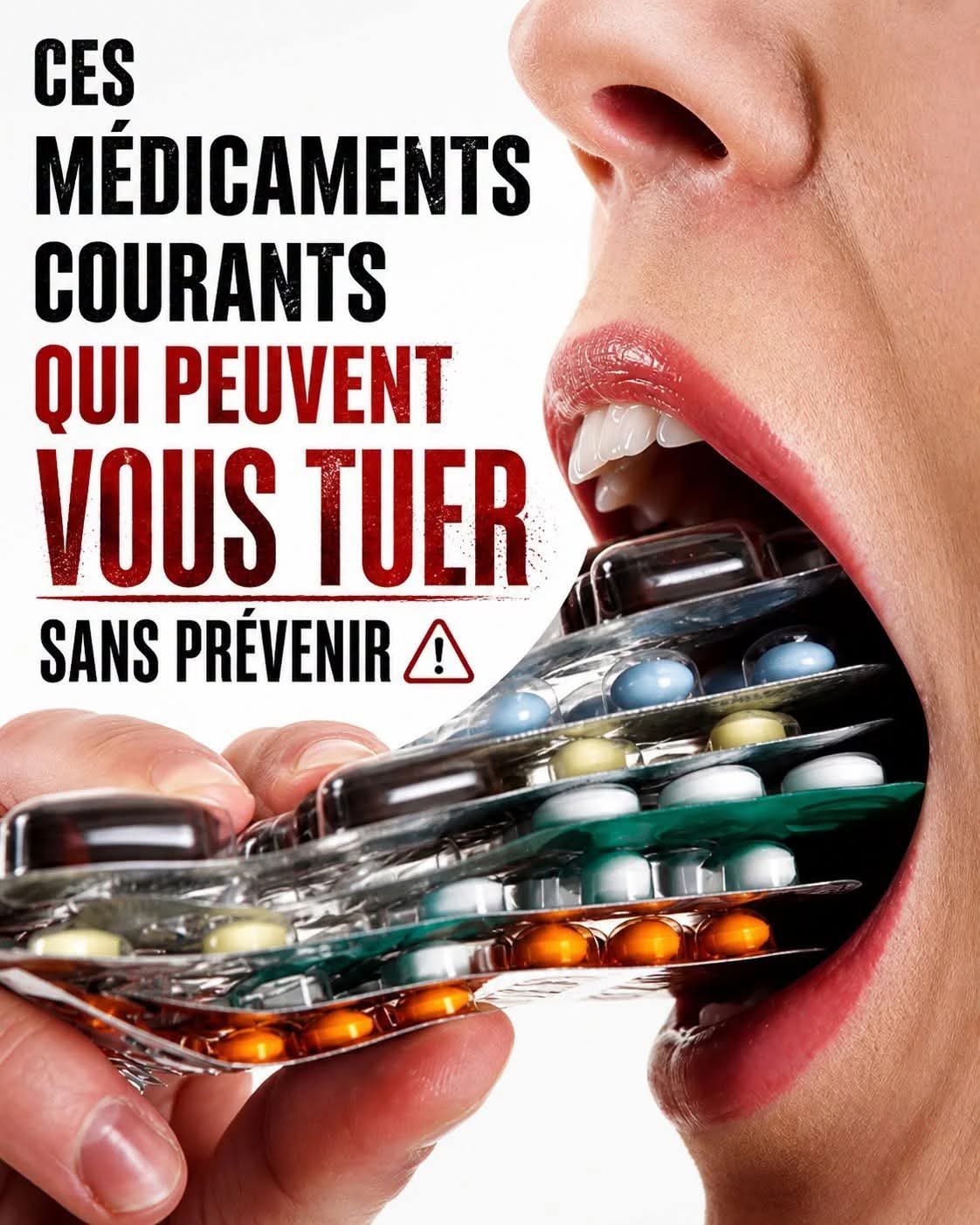
Important note: The image accompanying this article uses dramatic language suggesting that certain medicines can “kill without warning.” That wording is designed to attract attention and should not be interpreted literally. Most medicines are safe and beneficial when used correctly. The real danger usually comes from overdose, incorrect combinations, alcohol or food interactions, underlying medical conditions, or taking a medicine without appropriate professional advice.
Medicines are among the most useful tools in modern healthcare. They can relieve pain, control blood pressure, prevent blood clots, treat infections, improve sleep, manage anxiety, control blood sugar, and help people live longer and healthier lives.
But every medicine has an appropriate dose, purpose, and set of precautions.
A medicine that is helpful at the correct dose can become dangerous when too much is taken, when two incompatible medicines are combined, or when it is mixed with alcohol or certain foods. The risk can also change depending on age, kidney function, liver function, pregnancy, other health conditions, and the other medications a person takes.
The U.S. Food and Drug Administration explains that drug interactions can occur between two medicines, between a medicine and food or beverages, or between a medicine and an existing medical condition. Such interactions can make a drug less effective, increase side effects, or cause harmful reactions.
That is why medication safety is not simply about knowing the name of a pill. It is about understanding how that medicine fits into your entire health situation.
This comprehensive guide explains some important medication risks, common combinations that deserve caution, warning signs that should never be ignored, and practical ways to make everyday medicine use safer.
Why Medication Safety Matters
Many people take more than one medication every day.
Someone might take a prescription medicine for high blood pressure, another for cholesterol, a painkiller for arthritis, a vitamin supplement, and an occasional cold remedy.
Each product may seem harmless on its own.
The problem is that medicines do not always act independently.
One medicine can increase or decrease the effect of another. A food or beverage can change how a medicine is absorbed or broken down. A supplement can interfere with a prescription. A medication that is safe for one person may be inappropriate for someone with kidney disease, liver disease, an ulcer, or another medical condition.
The risk can also increase when people accidentally take two products containing the same active ingredient.
For example, acetaminophen—also known as paracetamol in many countries—is found in numerous prescription and nonprescription products. The FDA warns that taking more than recommended can cause severe liver damage and, in serious cases, liver failure and death.
This is why reading labels and keeping an updated medication list are simple but powerful safety habits.
- Acetaminophen or Paracetamol: The Hidden Double-Dose Problem
Acetaminophen is one of the world’s most widely used pain and fever medicines.
It is available under many brand names and is also included in combination products for colds, flu, headaches, and other conditions.
The problem is not that acetaminophen is inherently unsafe. When taken according to directions, it can be an effective medicine.
The danger occurs when people unintentionally take too much.
Imagine someone takes a cold-and-flu medicine containing acetaminophen. Later, they develop a headache and take a separate painkiller containing the same ingredient.
They may believe they are taking two different medicines.
Their body, however, receives acetaminophen from both products.
The FDA specifically advises consumers to check whether multiple medicines contain acetaminophen and not to use more than one acetaminophen-containing product at the same time unless instructed by a healthcare professional.
How to reduce the risk
Always check the “active ingredients” section of medicine packaging.
Look for names such as:
- Acetaminophen
- Paracetamol
- APAP
Do not assume that two different brand names contain different ingredients.
If you are already taking prescription medication, ask your doctor or pharmacist before adding an over-the-counter pain or cold medicine.
- NSAID Painkillers: Ibuprofen, Naproxen and Similar Medicines
Non-steroidal anti-inflammatory drugs, commonly called NSAIDs, include medicines such as ibuprofen and naproxen.
They can be useful for pain, inflammation, headaches, muscle aches, arthritis, and other conditions.
However, they are not appropriate for everyone.
NSAIDs can cause stomach irritation and, in some people, serious gastrointestinal bleeding. They can also contribute to kidney problems and other complications.
The NHS notes that NSAIDs can interact with anticoagulants such as warfarin, steroids, certain antidepressants, and some medicines used for high blood pressure.
Taking more than one NSAID at the same time can also increase the risk of side effects.
For example, taking ibuprofen and naproxen together without professional advice is generally not recommended.
The NHS specifically warns that combining ibuprofen with another NSAID such as naproxen or aspirin can increase the risk of serious side effects, including stomach ulcers.
Who should be particularly careful?
People should speak with a healthcare professional before using NSAIDs if they have a history of:
- Stomach ulcers or gastrointestinal bleeding
- Kidney disease
- Certain heart conditions
- High blood pressure
- Asthma triggered by NSAIDs
- Problems with blood clotting
- Certain pregnancy-related concerns
Never assume that an over-the-counter medicine is automatically safe simply because you can buy it without a prescription.
- Blood Thinners and the Risk of Bleeding
Anticoagulants are extremely important medicines.
They are prescribed to reduce the risk of dangerous blood clots in people with certain heart rhythm problems, previous clots, artificial heart valves, and other medical conditions.
Examples include warfarin, apixaban, rivaroxaban, dabigatran, and edoxaban.
These medicines can save lives.
But because they reduce the blood’s ability to clot, interactions can sometimes increase bleeding risk.
The NHS advises people taking anticoagulants to speak with a doctor, anticoagulation clinic, or pharmacist before taking other medicines, over-the-counter products, herbal remedies, vitamins, or supplements.
NSAIDs such as ibuprofen and naproxen deserve particular attention.
The NHS Specialist Pharmacy Service notes that NSAIDs can increase bleeding risk when used with direct oral anticoagulants.
Warning signs of possible serious bleeding
Seek urgent medical attention for symptoms such as:
- Vomiting blood
- Black or bloody stools
- Heavy or uncontrolled bleeding
- Severe unexplained bruising
- Blood in the urine
- Sudden severe headache
- Fainting or significant weakness
- Bleeding following a serious injury
If you take an anticoagulant, do not stop it simply because you are worried about side effects. Stopping certain anticoagulants suddenly can increase the risk of blood clots. Instead, contact your healthcare professional for individualized advice.
- Opioids and Sedative Medicines: A Particularly Serious Combination
Some of the most important medication warnings concern combinations that suppress the central nervous system.
Opioids are powerful medicines used for certain types of severe pain and other medical purposes.
Examples include medicines containing oxycodone, hydrocodone, morphine, and codeine.
Benzodiazepines are another class of medicines that can cause sedation and are sometimes prescribed for anxiety, panic disorder, seizures, or other conditions. Examples include diazepam, lorazepam, and temazepam.
Combining opioids with benzodiazepines can be extremely dangerous.
The FDA warns that combining opioids with benzodiazepines or other central nervous system depressants can cause extreme sleepiness, slowed or difficult breathing, coma, and death.
Alcohol can also increase the danger because it can add to the sedating effects of these medicines.
Possible emergency warning signs
A person who has taken a dangerous combination may become:
- Extremely sleepy
- Difficult to wake
- Confused
- Very dizzy
- Unresponsive
- Breathing slowly or irregularly
- Blue or gray around the lips or fingertips
This situation requires emergency medical attention.
Never combine prescription sedatives, opioid pain medicines, sleeping pills, or alcohol unless your healthcare professional has specifically advised you that the combination is appropriate.
- Benzodiazepines Should Not Be Stopped Suddenly Without Medical Advice
Another important safety issue involves medicines such as diazepam, lorazepam, alprazolam, clonazepam, and other benzodiazepines.
These medicines can be effective when appropriately prescribed.
However, prolonged use can lead to physical dependence.
The FDA warns that abruptly stopping benzodiazepines or reducing the dose too quickly can cause withdrawal reactions, including potentially life-threatening seizures.
That does not mean someone should continue taking the medicine indefinitely without review.
It means changes should be planned with a healthcare professional.
A doctor may gradually reduce the dose when appropriate rather than stopping the medicine suddenly.
- Grapefruit Can Interact With Certain Medicines
Many people are surprised to learn that food can affect medication.
Grapefruit is a well-known example.
Grapefruit and grapefruit juice can alter how certain medicines are processed in the body. The FDA explains that grapefruit can increase the amount of some medicines entering the bloodstream, potentially increasing side effects. In other cases, it can reduce the amount of a medicine absorbed and make the medicine less effective.
Examples of medicines that can interact with grapefruit include certain:
- Cholesterol-lowering statins
- Blood-pressure medicines
- Organ-transplant medicines
- Anti-anxiety medicines
- Corticosteroids
- Heart-rhythm medicines
- Antihistamines
Importantly, not every medicine in these categories interacts with grapefruit.
The interaction depends on the specific drug.
Therefore, people should not automatically eliminate grapefruit from their diet unless their medication information or healthcare professional says it is necessary.
- Herbal Remedies Are Not Automatically Risk-Free
Natural products can be useful, but “natural” does not mean “interaction-free.”
Herbal remedies and dietary supplements can affect the way prescription medicines work.
One example is St John’s wort.
The NHS warns that St John’s wort can interact with anticoagulants such as warfarin and certain other medicines.
It can also interact with medicines such as rivaroxaban.
This is one reason patients should tell healthcare professionals about everything they take—including:
- Herbal teas used medicinally
- Herbal capsules
- Vitamins
- Mineral supplements
- Weight-loss products
- Sleep supplements
- Traditional remedies
- Products purchased online
A supplement can still have powerful biological effects.
- Cold and Flu Medicines Can Create Unexpected Problems
Cold and flu products are another common source of accidental medication duplication.
A single “multi-symptom” product may contain several active ingredients.
For example, one product may contain:
- A pain reliever
- A decongestant
- An antihistamine
- A cough suppressant
If someone then takes another product for headache, congestion, or cough, they may unknowingly duplicate one or more ingredients.
This can increase the risk of overdose or side effects.
The safest approach is to read the active ingredients before combining products.
If you are already taking prescription medicines, ask a pharmacist to check whether an over-the-counter cold remedy is appropriate.
- Pay Attention to Medicines That Affect Blood Pressure
Some medicines can affect blood pressure.
This includes certain prescription drugs as well as some over-the-counter products.
For example, certain decongestants can be problematic for people with high blood pressure or particular cardiovascular conditions.
The FDA identifies drug-condition interactions as an important category of medication interaction. A medicine can cause a problem not because it conflicts with another drug, but because the person’s existing health condition makes that medicine unsuitable.
This is why a pharmacist may ask questions about your medical history before recommending an over-the-counter medicine.
Those questions are not unnecessary.
They can help prevent serious complications.
- Older Adults May Face Greater Medication Risks
Medication safety becomes especially important as people age.
Older adults are more likely to take several medicines at the same time.
Kidney and liver function can also change with age, affecting how certain drugs are processed.
A medicine that was tolerated years ago may need to be reviewed if a person’s health or medication list changes.
For older adults, medication reviews can be particularly valuable.
A healthcare professional can check:
- Whether every medicine is still necessary
- Whether two medicines overlap
- Whether doses remain appropriate
- Whether an over-the-counter product is causing problems
- Whether supplements are interacting with prescriptions
- Whether there are medicines that increase fall risk or sedation
Never assume that a long-standing prescription should continue forever without periodic review.
- Kidney and Liver Health Matter
The kidneys and liver play major roles in processing and eliminating many medicines.
If kidney or liver function is impaired, a medicine may remain in the body longer or reach higher concentrations.
This can increase the risk of side effects.
People with kidney or liver problems should therefore tell their healthcare professional about these conditions before starting a new medication.
This information may affect:
- Which medicine is selected
- The dose
- How often it is taken
- Whether laboratory monitoring is needed
- Which over-the-counter products should be avoided
- Pregnancy and Breastfeeding Require Extra Caution
Pregnancy can change the way medications are used.
Some medicines are safe during pregnancy, while others may pose risks to the developing baby.
Breastfeeding also requires careful consideration because some medicines can pass into breast milk.
Do not assume that an over-the-counter painkiller, herbal product, or supplement is safe simply because it is sold without a prescription.
If you are pregnant, trying to become pregnant, or breastfeeding, discuss medicines and supplements with a qualified healthcare professional.
- Why You Should Keep a Medication List
One of the easiest ways to improve medication safety is to maintain a complete medication list.
Write down:
- Prescription medicines
- Over-the-counter medicines
- Vitamins
- Minerals
- Herbal products
- Supplements
- Medication allergies
- Important medical conditions
Include the dose and how often each medicine is taken.
Keep the list updated.
Bring it to medical appointments and show it to your pharmacist.
This is especially important if you see more than one healthcare professional.
The FDA recommends making sure healthcare professionals know about all medicines, vitamins, and supplements you take because this can help identify potentially harmful interactions.
- Read the Label Every Time
Many people stop reading medication labels after they have used a product several times.
That can be a mistake.
Manufacturers may offer different formulations, concentrations, or combination products under similar brand names.
Before taking a medicine, check:
- The active ingredients.
- The strength.
- The recommended dose.
- How frequently it should be taken.
- Maximum daily amounts.
- Age restrictions.
- Important warnings.
- Drug interactions.
- Food or alcohol restrictions.
- Whether it contains an ingredient you already take.
If something is unclear, ask a pharmacist.
- Never Take Someone Else’s Prescription Medicine
A medicine prescribed for another person may seem appropriate because the symptoms appear similar.
But treatment decisions depend on much more than symptoms.
A doctor considers medical history, allergies, kidney and liver function, other medications, age, pregnancy status, and the reason the medicine is being prescribed.
A medicine that helped your friend, spouse, relative, or neighbor may be inappropriate for you.
Prescription medicines should be taken only by the person for whom they were prescribed.
- Don’t Increase the Dose Because the Medicine Isn’t Working Quickly
Another common mistake is assuming that a larger dose will produce faster relief.
That is not necessarily true.
Taking more medicine than directed can increase toxicity without providing proportional benefit.
This is particularly important with pain medicines.
If a medicine is not providing adequate relief, contact a healthcare professional rather than repeatedly increasing the dose.
The FDA specifically warns that exceeding recommended acetaminophen doses can cause severe liver damage.
- Store Medicines Properly
Medication safety does not end after swallowing a pill.
Medicines should be stored according to their labels.
Some need protection from excessive heat, moisture, or light.
Keep medicines out of reach of children and, when appropriate, away from other people who might accidentally take them.
Do not use medicines that have changed appearance when the label or pharmacist indicates they should be discarded.
Expired or unwanted medicines should be disposed of according to local medication-disposal recommendations.
- Warning Signs That Require Immediate Medical Attention
Some medication reactions can become serious quickly.
Seek urgent medical help if someone develops symptoms such as:
- Difficulty breathing
- Severe swelling of the face, lips, tongue, or throat
- Loss of consciousness
- Severe confusion
- Seizures
- Extreme sleepiness with difficulty waking
- Slow or difficult breathing
- Vomiting blood
- Severe or uncontrolled bleeding
- Sudden severe chest pain
- Severe allergic reaction
- Suspected overdose
Do not wait for symptoms to become worse if you believe someone has taken a potentially dangerous amount of medicine.
If an overdose may have occurred, contact your local emergency or poison-control service immediately.
- What to Do If You Accidentally Take the Wrong Medicine
First, do not panic.
Try to determine:
- What medicine was taken
- How much was taken
- When it was taken
- The person’s age
- Other medicines being taken
- Any symptoms currently present
Keep the packaging available.
Do not induce vomiting unless a medical professional specifically tells you to do so.
Do not take another medicine in an attempt to “cancel out” the first medicine.
Contact an appropriate medical professional or emergency service for advice.
The earlier a possible overdose or dangerous interaction is assessed, the better the opportunity to manage it safely.
- Pharmacists Can Be One of Your Best Medication-Safety Resources
Many people think of pharmacists simply as people who dispense prescriptions.
In reality, pharmacists are medication experts.
They can help identify:
- Duplicate ingredients
- Potential drug interactions
- Incorrect doses
- Food interactions
- Supplement interactions
- Appropriate over-the-counter alternatives
- Questions about how and when to take medicines
The FDA encourages patients to use pharmacists as a resource for medication questions and interaction concerns.
Before purchasing a new supplement or over-the-counter medicine, a quick conversation with a pharmacist can sometimes prevent a serious problem.
Common Medication Mistakes to Avoid
Here are some everyday mistakes that can increase medication risk:
Taking two products with the same active ingredient
This is particularly common with painkillers and cold medicines.
Mixing medicines with alcohol
Alcohol can increase sedation and other side effects from certain medicines.
Taking another person’s prescription
Different people can respond very differently to the same drug.
Stopping a medicine suddenly
Some medications require gradual dose reduction.
Doubling a missed dose
The correct response depends on the medication. Check its instructions or ask a pharmacist rather than automatically taking two doses.
Ignoring herbal supplements
Supplements can interact with prescription medications.
Not telling your doctor about over-the-counter medicines
Healthcare professionals need the complete picture.
Assuming natural means safe
Natural substances can have strong pharmacological effects.
Failing to update your medication list
Old medication information can lead to confusion and duplication.
The Most Important Lesson: Don’t Fear Medicines—Use Them Correctly
The dramatic image that inspired this article can make medication seem frightening.
But the goal should not be to scare people away from medicines.
Millions of people rely on medications every day to control chronic diseases, prevent complications, relieve pain, treat infections, and improve quality of life.
The important lesson is that medicines deserve respect.
A medication is not simply a pill.
It is a substance designed to change something inside the body.
That change can be beneficial when the medicine is appropriate and used correctly. But the same biological activity can cause harm if the dose is too high, if the wrong combination is taken, or if the medicine is used by someone for whom it is unsuitable.
A Simple Medication-Safety Checklist
Before taking a new medicine, ask:
- What is this medicine for?
Understand why you are taking it.
- What is the correct dose?
Never guess.
- How often should I take it?
Follow the prescription or package instructions.
- Can I take it with my other medicines?
Give your pharmacist a complete list.
- Can I take it with food?
Some medicines have food-related restrictions.
- Should I avoid alcohol?
Ask specifically if you are unsure.
- Are there supplements I should avoid?
Mention herbal products and vitamins.
- Are there medical conditions that affect its safety?
Tell your healthcare professional about kidney, liver, heart, stomach, or other significant health problems.
- What side effects should I watch for?
Know which symptoms require urgent help.
- What should I do if I miss a dose?
Ask rather than automatically doubling the next dose.
Final Thoughts
The message behind the viral-style image is worth reconsidering.
It is not accurate to say that ordinary medications are simply “drugs that can kill you without warning.” Such a statement is sensational and can create unnecessary fear.
The more useful truth is this:
Some medicines can become dangerous when they are taken incorrectly, combined with incompatible medicines, mixed with alcohol or certain foods, taken in excessive amounts, or used despite medical conditions that make them unsuitable.
Acetaminophen can cause severe liver damage when too much is taken.
NSAIDs can cause serious side effects and may interact with anticoagulants and other medicines.
Anticoagulants can cause dangerous bleeding when their effects are increased by certain medicines or supplements.
Opioids combined with benzodiazepines or other central nervous system depressants can cause profound sedation and dangerous respiratory depression.
And even something as ordinary as grapefruit can interfere with certain medications.
The answer is not to stop necessary treatment.
The answer is medication awareness.
Read the label. Follow the prescribed dose. Keep an updated medication list. Tell your doctor and pharmacist about everything you take. Ask before adding a new medicine or supplement. Avoid sharing prescription medicines. And seek urgent medical attention when serious symptoms or a possible overdose occur.
A few minutes of careful checking can make medication use considerably safer.
Your medicines can help you—but they need to be used with the same care and respect as any other powerful medical treatment.
This article is for general educational purposes and does not replace individualized medical advice. Medication decisions should be based on the specific product, dose, health condition, and other medicines involved. If you are concerned about a medicine or possible interaction, speak with a doctor or pharmacist.