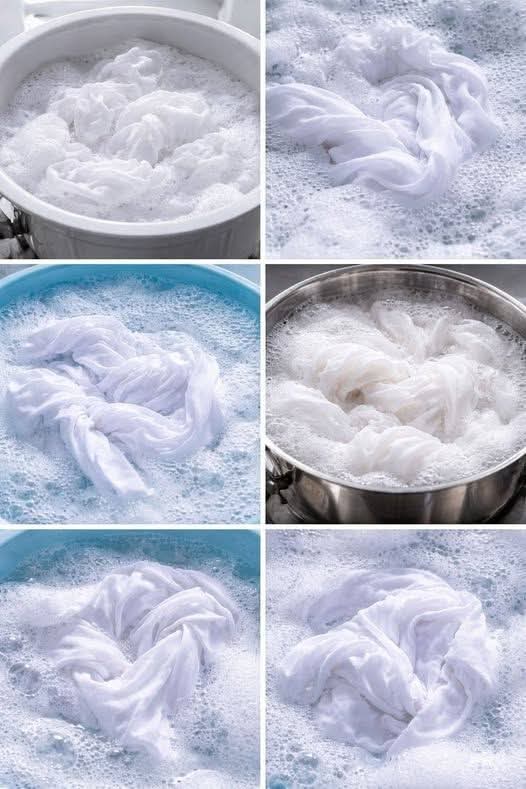
Laundry as White and Pure as Milk: The Simple Baking Soda Trick for Brighter Clothes
White clothes can look beautiful when they are fresh, bright, and clean. Unfortunately, keeping them that way is not always easy. Over time, white shirts, towels, sheets, socks, and other fabrics can become gray, dull, yellowish, or stained. Even after washing, they may not have that crisp, fresh appearance they had when they were new.
The good news is that you do not always need an expensive specialty laundry product to give your whites a cleaning boost. One inexpensive household ingredient that many people already have in their kitchen is baking soda.
Baking soda, also called sodium bicarbonate, can be useful as a laundry booster. It can help freshen fabrics, reduce unpleasant odors, soften the feel of wash water, and support the cleaning action of regular laundry detergent. When used correctly, it can be especially helpful for everyday white laundry that has become dull from sweat, body oils, detergent residue, and general household grime.
However, there is an important distinction between making clothes look fresher and actually bleaching them. Baking soda is not a replacement for chlorine bleach or oxygen bleach, and it will not magically remove every stain. The dramatic “white as milk” results often shown in viral laundry posts can be exaggerated.
Still, baking soda can be a simple, affordable addition to a sensible laundry routine.
Why Do White Clothes Become Gray or Yellow?
Before trying to whiten laundry, it helps to understand why white fabrics lose their brightness.
White clothing is exposed to many substances during normal daily life. Sweat, skin oils, deodorant, body lotions, cooking oils, dust, dirt, and environmental pollutants can gradually accumulate in the fibers.
Even when a garment looks clean immediately after washing, tiny amounts of residue can remain. Repeated washing can also leave detergent or fabric-softener residue behind, particularly when too much product is used or when the washing machine is overloaded.
Hard water can make the problem more noticeable because minerals in the water can interact with detergents and deposit on fabrics.
White towels and bedding can become particularly dull because they absorb a large amount of moisture, body oils, and skin residue.
Yellowing around collars, cuffs, underarms, and other areas is often caused by a combination of sweat, oils, deodorant ingredients, and repeated exposure to heat.
The answer is not necessarily to use stronger and stronger chemicals. In many situations, better washing habits and an appropriate laundry booster can make a significant difference.
What Makes Baking Soda Useful for Laundry?
Baking soda is mildly alkaline. In laundry, this property can help create conditions that support detergent performance.
It can also help neutralize some odors, making it useful for clothing, towels, bedding, sportswear, and other washable fabrics.
One of its biggest practical advantages is its affordability. A small amount can be added to a normal wash without requiring you to purchase a separate expensive laundry product.
Baking soda may help with:
- Everyday odors
- Sweat smells
- Musty laundry
- General dullness
- Detergent residue
- Slightly dingy whites
- Freshening towels and bedding
- Improving the overall feel of washed fabrics
It is best thought of as a laundry booster, not a miracle bleach.
The Simple Baking Soda Laundry Method
For a normal load of laundry, begin by separating your whites from colored clothing.
Check the care labels on your garments before using any laundry treatment. Some delicate fabrics require special handling and should not be treated like ordinary cotton clothing.
What You Need
- ½ cup baking soda for a normal washing-machine load
- Your usual laundry detergent
- Clean water
- A washing machine or suitable washing basin
For a smaller load, you can use less baking soda.
Step 1: Sort the Laundry
Separate white garments from dark and strongly colored clothing.
Sorting is one of the simplest ways to keep whites looking bright. Even a small amount of dye transfer can gradually affect white fabrics.
Do not assume that a garment will never bleed color simply because it has been washed before.
Step 2: Check the Care Labels
Look at the manufacturer’s instructions.
Pay particular attention to:
- Maximum washing temperature
- Whether bleach is permitted
- Whether the item requires delicate washing
- Drying instructions
- Special fabric restrictions
Cotton whites are generally more forgiving than delicate garments.
Step 3: Add Your Normal Detergent
Use the recommended amount of laundry detergent.
More detergent does not necessarily mean cleaner clothes. Excess detergent can remain in fabrics and may contribute to buildup.
Follow the instructions on the detergent package and adjust for the size and soil level of the load.
Step 4: Add Baking Soda
Add approximately ½ cup of baking soda to a typical washing-machine load.
It can be added directly to the drum with the laundry or according to your washing machine manufacturer’s recommendations.
If you have a small load, reduce the amount.
Step 5: Choose the Appropriate Wash Cycle
Use the hottest water that is safe for the fabric.
However, hot water is not automatically better for every garment. Some fabrics can shrink, fade, stretch, or become damaged when exposed to high temperatures.
For many everyday cotton whites, warm or hot water may be appropriate if the care label allows it.
Step 6: Rinse Thoroughly
A complete rinse is important.
If your machine has an extra-rinse option and your clothing tends to retain detergent, using it may help remove residue.
Step 7: Dry Correctly
Dry the clothing according to its care instructions.
When possible, drying white cotton clothing in sunlight can be useful because sunlight can naturally brighten some fabrics. However, prolonged intense sunlight may weaken or damage certain materials, so avoid assuming that more sun is always better.
A Baking Soda Soak for Dingy Whites
For heavily worn but washable white cotton items, a pre-soak can provide additional cleaning time.
Fill a suitable basin with warm water and dissolve baking soda thoroughly.
A practical starting point is around ½ cup of baking soda in several liters of water, adjusting the amount according to the size of the basin.
Place the washable white garments in the solution and allow them to soak for about 30 minutes to one hour.
After soaking, wash them normally with detergent.
The purpose of the soak is not to chemically bleach the fabric. Instead, it gives the baking soda and water additional contact time with residues and odors before the normal wash.
Can Baking Soda Really Make Clothes White?
This is where viral laundry claims need a little perspective.
Baking soda can help laundry appear cleaner and fresher, but it is not a powerful bleaching agent.
If your white shirt is gray because of detergent buildup or accumulated grime, baking soda may help improve its appearance.
If the fabric has been permanently dyed, chemically discolored, badly stained, or damaged by age, baking soda may not restore the original color.
Likewise, old yellow stains may require a different treatment.
The phrase “white as milk” makes an excellent headline, but real laundry results depend on the fabric, stain, water quality, detergent, washing temperature, age of the garment, and cause of discoloration.
Baking Soda and Laundry Detergent
Baking soda works best when viewed as a companion to regular detergent rather than a complete replacement.
Laundry detergent contains ingredients specifically designed to loosen and remove soil from fabrics.
Baking soda can support the cleaning process by changing the wash environment and helping with odors.
This means you should not necessarily stop using detergent just because you are adding baking soda.
For normal laundry, a simple combination is:
Laundry detergent + baking soda + appropriate water temperature + thorough rinsing.
That basic routine can be more useful than constantly switching between complicated homemade laundry mixtures.
What About Yellow Underarm Stains?
Underarm discoloration is one of the most common complaints involving white clothing.
These stains are often complicated because they may involve sweat, skin oils, deodorant or antiperspirant ingredients, and repeated washing.
Baking soda alone may not completely remove an old yellow stain.
For a washable white cotton garment, you can try making a mild paste with baking soda and a small amount of water.
Apply it gently to the affected area, leave it for a short period, and then wash according to the garment’s care instructions.
Avoid aggressive scrubbing because excessive friction can damage fabric fibers.
For persistent stains, a commercial oxygen-based stain remover may be more appropriate than repeatedly treating the garment with baking soda.
Baking Soda for Towels
Towels are excellent candidates for an occasional laundry refresh.
Because towels absorb moisture and body oils, they can develop a musty smell if they are not dried completely between uses.
A baking soda wash can help freshen them.
Wash towels using the recommended amount of detergent and add baking soda as a laundry booster.
Avoid using excessive fabric softener on towels. Fabric softener can coat fibers and reduce absorbency over time.
After washing, make sure towels dry completely.
If a towel continues to smell musty after repeated washing, the problem may involve the washing machine itself, insufficient drying, or buildup inside the machine.
Baking Soda for White Bed Sheets
White sheets can become dull because they regularly absorb sweat, skin oils, lotions, and other residues.
Washing sheets regularly is important, but overloading the washing machine can reduce cleaning performance.
Give sheets enough space to move freely.
Use the correct detergent amount and consider adding baking soda to the wash.
If the fabric care label allows it, a warm or hot cycle can help with heavily soiled bedding.
Always follow the manufacturer’s washing instructions, especially for delicate bedding.
Baking Soda for Socks
White socks can become surprisingly dirty.
They collect sweat, skin oils, dust, and soil from floors and shoes.
For washable cotton socks, baking soda can be added to the normal wash.
For very dirty socks, a pre-soak may help.
However, if the socks contain elastic fibers, printed designs, or special materials, avoid overly aggressive treatments.
Can You Mix Baking Soda With Vinegar?
This is one of the most common laundry questions.
Baking soda and vinegar are both popular household cleaning ingredients, but combining them produces an acid-base reaction that creates carbon dioxide bubbles and water while largely neutralizing the two ingredients.
The dramatic fizz may look impressive, but fizzing does not automatically mean better cleaning.
For laundry, there is usually little reason to dump large quantities of baking soda and vinegar together and expect a super-powered whitening effect.
If you choose to use vinegar in laundry for a specific purpose, it is generally more sensible to use it separately and appropriately rather than mixing it directly with baking soda.
Most importantly, never mix vinegar with chlorine bleach.
That combination can produce dangerous chlorine gas.
Baking Soda vs. Oxygen Bleach
If your main goal is whitening, oxygen bleach may be more effective than baking soda.
Oxygen-based laundry products are specifically designed to help remove stains and brighten fabrics.
They can be particularly useful for white cotton garments, towels, sheets, and other washable items.
Baking soda, by comparison, is a gentler household laundry booster.
A useful way to think about the difference is:
Baking soda: freshening, odor control, laundry boosting, mild cleaning support.
Oxygen bleach: stain removal and whitening.
Neither product is suitable for every fabric, so always check the care label and product instructions.
What About Chlorine Bleach?
Chlorine bleach can whiten certain white fabrics and disinfect some surfaces, but it must be used carefully.
It is a much stronger chemical than baking soda and can damage fabrics if used incorrectly.
Repeated chlorine bleach use can weaken some fibers and may even contribute to yellowing or deterioration under certain circumstances.
Never mix chlorine bleach with vinegar, ammonia, acids, or other incompatible cleaning products.
If you use bleach, follow the product label exactly.
For everyday laundry maintenance, you may not need chlorine bleach at all.
Mistakes That Can Make White Laundry Worse
Even the best laundry ingredient cannot compensate for poor washing habits.
Overloading the Washing Machine
When the machine is packed too tightly, water and detergent cannot circulate properly.
Clothes may come out technically washed but still look dull.
Using Too Much Detergent
More detergent is not always better.
Excess detergent can leave residue behind.
Washing Whites With Dark Clothing
Dye transfer can gradually make white fabrics look gray.
Leaving Wet Laundry in the Machine
Wet laundry sitting for hours can develop unpleasant odors.
Move clothing to the dryer or drying area promptly after the cycle ends.
Using Too Much Fabric Softener
Fabric softener can build up on certain fabrics and towels.
Ignoring the Care Label
High temperatures and aggressive chemicals can damage clothing.
Expecting Baking Soda to Remove Everything
Baking soda is useful, but it is not a universal stain remover.
How to Keep White Clothes White Longer
Whitening laundry is easier when you prevent excessive buildup in the first place.
Wash white clothing regularly rather than allowing sweat and body oils to remain in the fibers for long periods.
Treat stains promptly.
Avoid putting heavily stained clothing directly into a dryer before the stain has been removed, because heat can make some stains more difficult to remove.
Do not overload the washer.
Use the right amount of detergent.
Keep the washing machine clean.
Allow clothes to dry thoroughly.
Store white clothing in a clean, dry place.
These simple habits can have a greater long-term effect than any single laundry trick.
A Simple Monthly White-Laundry Routine
If your whites frequently become dull, create a simple maintenance routine.
Week 1: Normal Wash
Wash whites separately with detergent and an optional baking soda boost.
Week 2: Stain Check
Inspect collars, cuffs, underarms, socks, and towels.
Treat visible stains before washing.
Week 3: Machine Check
Clean the washing machine according to its manufacturer’s instructions.
Look for detergent buildup, mildew, or unpleasant odors.
Week 4: Deep Refresh
For washable fabrics that need extra attention, consider a baking soda soak or an appropriate oxygen-based laundry treatment.
This routine does not require complicated formulas.
Consistency is often more important than using large quantities of cleaning products.
Does More Baking Soda Mean Whiter Clothes?
No.
Using excessive amounts does not guarantee better results.
A moderate amount is generally sufficient as a laundry booster.
Too much powder may not dissolve or rinse away effectively depending on the washing conditions.
Laundry works best when every component is balanced: water, detergent, mechanical movement, temperature, time, and rinsing.
Instead of thinking, “more ingredient equals more cleaning,” think about creating the right washing conditions.
A Simple Homemade Whitening Paste
For small areas of washable white cotton, you can create a basic baking soda paste.
Mix baking soda with a small amount of water until it forms a spreadable paste.
Apply a thin layer to the stained area.
Allow it to sit for a short period.
Gently work the area if the fabric permits, then rinse or wash normally.
Always test an inconspicuous area first, particularly with delicate fabrics or garments with special finishes.
Do not use aggressive rubbing on fragile material.
When Baking Soda Is Not the Right Choice
There are situations where you should choose another solution.
If the garment is silk, wool, leather, or another delicate material, follow specialized care instructions.
If a stain is caused by dye transfer, rust, ink, grease, or another difficult substance, baking soda may not be the most appropriate treatment.
If the garment has been damaged by excessive heat or chemicals, no household powder can restore the original fibers.
For valuable or delicate clothing, professional cleaning may be safer.
The Importance of Water Temperature
Water temperature can affect laundry results.
Warm or hot water can help with certain heavily soiled washable fabrics, but it can also shrink or damage some garments.
Cold water is appropriate for many modern detergents and can be gentler on fabrics.
Always check the care label before selecting the temperature.
The goal is not to use the hottest water possible. The goal is to use the highest temperature that is safe and appropriate for the fabric and soil level.
Sunlight: A Traditional White-Laundry Helper
For suitable white fabrics, sunlight can be another simple part of a laundry routine.
After washing, hang white cotton garments outside when practical.
Sunlight can help brighten some fabrics and gives laundry a naturally fresh smell.
However, prolonged exposure can weaken fibers and may affect certain fabrics.
Do not leave delicate garments baking in direct sunlight for hours simply because you want them whiter.
Moderation matters.
Why the Washing Machine Matters
Sometimes the problem is not your clothes.
It is the washing machine.
Detergent residue, fabric softener buildup, dirt, and moisture can accumulate inside machines.
If the machine itself smells bad, freshly washed laundry may also smell unpleasant.
Follow the manufacturer’s instructions for cleaning the washer.
Leave the door or lid open when appropriate after washing so the interior can dry.
Clean detergent compartments regularly.
Check the rubber gasket on front-loading machines for residue and moisture.
A clean washing machine is an important part of clean laundry.
A Practical White-Laundry Formula
If you want a simple routine to remember, keep it straightforward:
Sort → Treat → Detergent → Baking Soda → Wash → Rinse → Dry
Sort whites separately.
Treat stains before washing.
Use the correct amount of detergent.
Add a moderate amount of baking soda when appropriate.
Select the correct cycle.
Rinse thoroughly.
Dry promptly and completely.
This simple approach is far more reliable than complicated viral recipes involving many ingredients.
Frequently Asked Questions
Can I use baking soda in every white wash?
For many washable fabrics, baking soda can be used occasionally or regularly as a laundry booster. However, always follow garment and washing-machine instructions.
Will baking soda bleach my clothes?
No. Baking soda is not a true bleaching agent. It can help freshen laundry and support cleaning, but it should not be expected to produce the same whitening action as a dedicated bleach.
Can baking soda remove yellow stains?
It may help with mild residue and some fresh stains, but old yellow discoloration may require a dedicated stain remover or oxygen-based laundry product.
Is baking soda safe for towels?
It can generally be used with washable towels, provided the care instructions allow normal washing. Avoid excessive amounts of any laundry product.
Can I use baking soda with detergent?
Yes, baking soda can be used as a laundry booster alongside regular detergent for many washable fabrics.
Can I mix baking soda and bleach?
Do not experiment with mixing cleaning chemicals. Follow the bleach manufacturer’s instructions and avoid combinations that are not specifically approved.
Can I use baking soda on colored clothes?
Baking soda is not a bleaching agent like chlorine bleach, but you should still follow fabric-care instructions and consider testing delicate or unusual garments first.
The Bottom Line
The idea of making laundry “white as milk” with one simple ingredient is appealing, but the reality is more practical.
Baking soda can be a useful, inexpensive laundry booster. It can help freshen fabrics, reduce odors, and support the cleaning performance of your normal detergent. It may also help dull whites look cleaner when the discoloration comes from ordinary buildup.
But it is not a magic bleaching powder.
The biggest improvements usually come from combining good laundry habits: sorting whites, using the correct detergent amount, avoiding an overloaded washing machine, treating stains promptly, selecting an appropriate water temperature, rinsing properly, and drying laundry completely.
For stubborn stains and serious discoloration, an appropriate oxygen-based laundry product may be more effective.
The next time your white clothes look tired and dull, you do not necessarily need an expensive collection of laundry products. Start with the basics. A little baking soda, used correctly alongside your normal detergent and a sensible washing routine, may be all you need to give everyday laundry a fresh start.
And remember: cleaner-looking whites come from the right combination of detergent, washing conditions, fabric care, and consistency—not from using as much of one ingredient as possible.
Final Laundry Tip
Before treating an entire garment, especially an expensive or delicate item, read its care label and test your chosen method on a small, inconspicuous area.
Simple laundry care is often the secret to keeping white clothes bright for much longer.
Save this laundry tip, share it with someone who loves fresh white clothes, and try the baking soda method on your next suitable load.