Hibiscus and Lemon Tea: A Refreshing Herbal Drink with Potential Health Benefits
Hibiscus and lemon tea is a beautiful, refreshing drink made by combining the naturally tart flavor of hibiscus flowers with the bright citrus taste of fresh lemon. It can be enjoyed hot or cold and is especially popular among people looking for a flavorful alternative to sugary drinks.
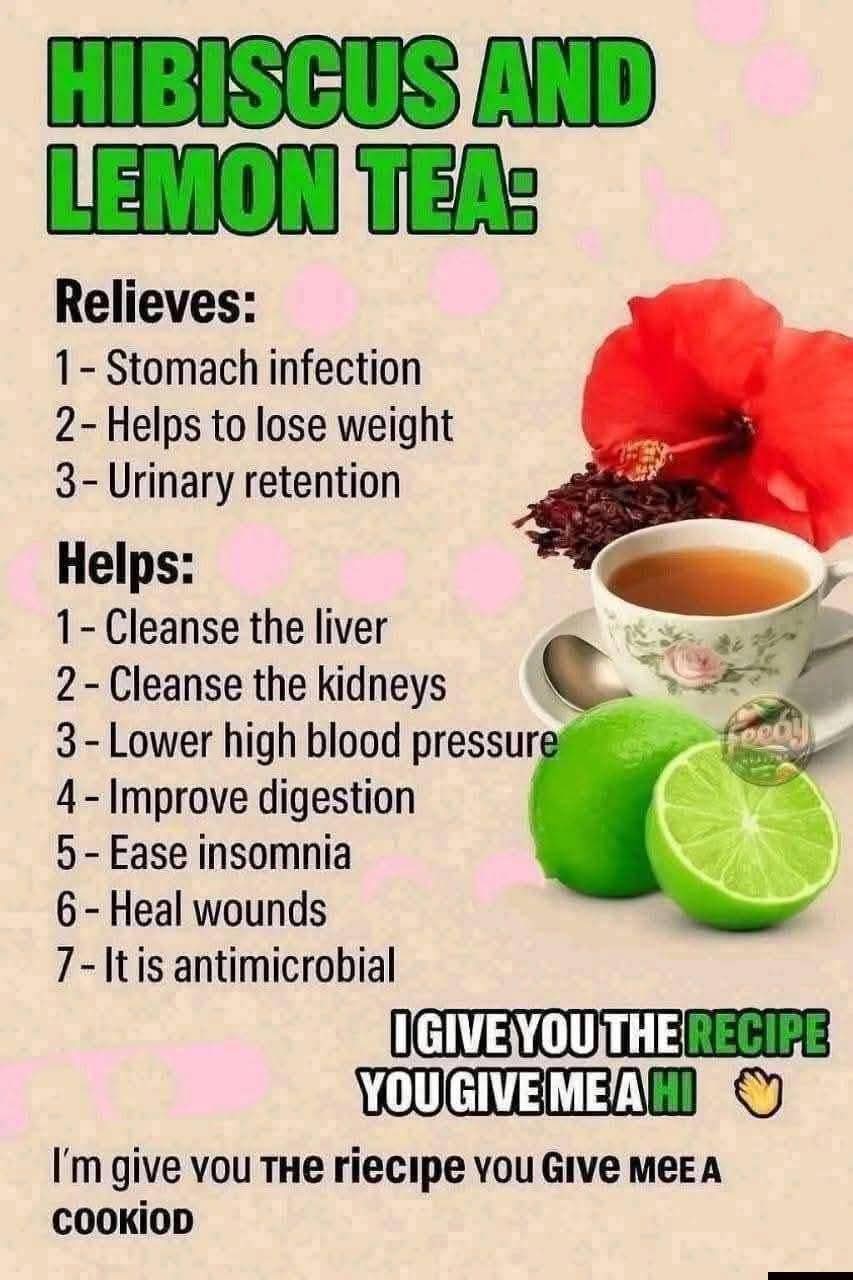
A viral-style health graphic often claims that hibiscus and lemon tea can “cleanse the liver,” “cleanse the kidneys,” cure stomach infections, cause weight loss, relieve urinary retention, heal wounds, and eliminate insomnia. Some of these statements go far beyond what scientific research supports. Hibiscus has been studied particularly for its potential effect on blood pressure, but it should not be considered a cure for disease or a replacement for medical treatment.
Research involving Hibiscus sabdariffa has found that regular consumption may modestly lower blood pressure in some adults, particularly those with elevated blood pressure. A 2022 systematic review and meta-analysis of randomized controlled trials found reductions in systolic and diastolic blood pressure compared with placebo, although the researchers also emphasized that more research is needed to establish the best dose and duration.
This article explains how to prepare hibiscus and lemon tea, its nutritional characteristics, possible benefits, traditional uses, safety considerations, and the difference between popular claims and evidence-based information.
What Is Hibiscus and Lemon Tea?
Hibiscus and lemon tea is an herbal infusion prepared from dried hibiscus calyces or hibiscus tea and fresh lemon.
Hibiscus tea is naturally deep red or ruby-colored and has a pleasantly sour flavor. Lemon adds additional acidity, freshness, and aroma. The drink can be prepared without sugar, making it a naturally low-calorie beverage.
Unlike traditional black or green tea, hibiscus tea is naturally caffeine-free when made solely from hibiscus flowers. This makes it an attractive evening beverage for people who want to avoid caffeine.
The flavor can be enjoyed in several ways:
- Hot and freshly brewed
- Chilled over ice
- Sweetened lightly with honey
- Combined with ginger
- Infused with mint
- Mixed with cinnamon
- Served with orange or lime
- Used as the base for a refreshing summer drink
The simplest version requires only three ingredients: hibiscus, water, and lemon.
Hibiscus and Lemon Tea Recipe
Ingredients
For 2–3 cups
- 2 tablespoons dried hibiscus calyces or approximately 2–3 hibiscus tea bags
- 3 cups water
- ½ to 1 fresh lemon
- 1 teaspoon honey, optional
- A few fresh mint leaves, optional
- A small piece of fresh ginger, optional
- Ice cubes, optional for iced tea
Optional natural flavor additions
You can personalize your tea with:
- Cinnamon stick
- Fresh ginger
- Orange peel
- Lime
- Fresh mint
- A small amount of honey
- A few berries
If you want the drink to remain low in calories, leave out added sugar and enjoy the natural tartness of the hibiscus and lemon.
How to Make Hibiscus and Lemon Tea
Step 1: Prepare the Water
Pour approximately 3 cups of water into a saucepan or kettle.
Heat the water until it is very hot. You do not necessarily need to boil the water vigorously for an extended period.
Step 2: Add the Hibiscus
Add the dried hibiscus flowers to the hot water.
If you are using tea bags, place two or three bags into the water according to the strength you prefer.
Allow the hibiscus to steep for approximately 5–10 minutes.
The longer it steeps, the deeper the color and stronger the flavor will become.
Step 3: Strain the Tea
If you used loose hibiscus flowers, strain the liquid through a fine tea strainer.
Pour the bright red tea into cups or a heat-resistant jug.
Step 4: Add Fresh Lemon
Allow the tea to cool slightly before adding fresh lemon juice.
Start with the juice of half a lemon and taste it.
If you prefer a stronger citrus flavor, add more.
Fresh lemon is particularly delicious because it complements the natural tartness of hibiscus.
Step 5: Sweeten if Desired
Hibiscus can be quite sour.
If you prefer a sweeter drink, add a small amount of honey while the tea is warm.
You can also use another sweetener of your choice.
However, if you are trying to reduce your sugar intake, drinking it unsweetened is an excellent option.
Step 6: Serve Hot or Cold
For hot tea, serve immediately.
For iced hibiscus and lemon tea, allow it to cool and refrigerate it before pouring over ice.
Add lemon slices and mint leaves for an attractive presentation.
The History of Hibiscus Tea
Hibiscus has been used as a food and traditional herbal beverage in different parts of the world for centuries.
One species commonly used for tea is Hibiscus sabdariffa, sometimes called roselle.
The colorful calyces are used to prepare beverages in various cultures. Hibiscus drinks have been enjoyed in Africa, the Middle East, Asia, the Caribbean, and Latin America.
In different regions, hibiscus beverages have different names and preparation methods.
The plant became especially popular because it grows well in warm climates and produces colorful, flavorful calyces that can be dried and stored.
Traditional uses of hibiscus have included refreshing beverages and folk remedies. Modern research has increasingly examined hibiscus for possible cardiovascular and metabolic effects.
However, traditional use and scientific evidence are not the same thing. A plant can have a long history of traditional use without proving that it treats or cures a particular medical condition.
Why Hibiscus Has Such a Strong Color
One of the most recognizable characteristics of hibiscus tea is its beautiful red color.
Hibiscus contains naturally occurring plant compounds, including anthocyanins and other polyphenols. These compounds contribute to the color and are also being studied for their antioxidant properties.
When the dried hibiscus comes into contact with hot water, many of its water-soluble compounds move into the liquid, producing the characteristic ruby-red beverage.
Adding lemon can make the flavor brighter and may also influence the color and appearance of the drink because of the acidity.
Potential Benefit 1: May Support Healthy Blood Pressure
This is one of the most interesting areas of research surrounding hibiscus.
Several clinical trials and systematic reviews have investigated whether hibiscus consumption can influence blood pressure.
A 2022 meta-analysis involving 13 randomized controlled trials and 1,205 participants reported that Hibiscus sabdariffa significantly reduced systolic and diastolic blood pressure compared with placebo. The researchers concluded that hibiscus may be useful for people with mild-to-moderate hypertension, but it was not shown to be superior to standard antihypertensive medications.
Another systematic review of randomized trials also reported reductions in blood pressure following hibiscus consumption.
This does not mean that hibiscus tea can replace prescribed blood-pressure medication.
If you have hypertension, consider hibiscus tea a beverage that may complement a healthy lifestyle—not a substitute for treatment.
Potential Benefit 2: Provides Plant Compounds
Hibiscus contains various naturally occurring plant compounds, including polyphenols and anthocyanins.
These compounds are associated with antioxidant activity in laboratory and nutritional research.
Antioxidants are substances that help protect cells from oxidative stress.
A balanced diet containing fruits, vegetables, legumes, nuts, seeds, and other plant foods provides many different antioxidants, so hibiscus tea should be viewed as one small part of an overall healthy eating pattern.
Potential Benefit 3: A Low-Calorie Alternative to Sugary Drinks
One of the most practical benefits of hibiscus and lemon tea is that it can replace sugary beverages.
A glass of soda, sweetened juice, or heavily sweetened tea can contribute significant amounts of added sugar.
Unsweetened hibiscus and lemon tea provides a flavorful alternative without needing added sugar.
This can be useful for people trying to improve their overall diet.
Can Hibiscus and Lemon Tea Help With Weight Loss?
The image associated with this recipe claims that hibiscus and lemon tea “helps to lose weight.”
That statement needs to be interpreted carefully.
There is no good reason to consider hibiscus and lemon tea a magic fat-burning drink.
Drinking this tea does not automatically cause body fat to disappear.
However, replacing high-calorie sugary drinks with unsweetened hibiscus tea can reduce overall calorie intake. That change may support weight management when combined with an appropriate diet and regular physical activity.
So rather than saying that hibiscus tea “burns fat,” a more accurate statement is:
Unsweetened hibiscus and lemon tea can be a useful low-calorie beverage choice as part of a balanced weight-management plan.
Can It “Cleanse” the Liver?
The popular graphic claims that hibiscus and lemon tea can cleanse the liver.
Your liver already performs complex processes involved in metabolism and detoxification.
There is no need for a special tea to “flush toxins” from a healthy liver.
Although hibiscus contains plant compounds that are being studied for antioxidant and metabolic effects, this is different from proving that hibiscus tea detoxifies the liver.
The best way to support normal liver health is through healthy lifestyle habits, including:
- Maintaining a healthy weight
- Eating a balanced diet
- Limiting excessive alcohol consumption
- Staying physically active
- Avoiding unnecessary medications or supplements
- Managing metabolic conditions with appropriate medical care
Can It Cleanse the Kidneys?
Another common claim is that hibiscus tea “cleanses the kidneys.”
This is also misleading.
Your kidneys continuously filter the blood and regulate fluids, electrolytes, and waste products.
There is no established need for a “kidney cleanse” tea in healthy people.
Hibiscus may have effects on fluid and sodium handling in some studies, but that does not mean it can remove kidney toxins or repair kidney disease.
People with kidney disease should be particularly cautious about herbal products and should discuss regular use with their healthcare professional.
Hibiscus and Urinary Retention
The graphic claims that hibiscus tea relieves urinary retention.
This is an important claim to correct.
Urinary retention means being unable to empty the bladder properly.
It can have serious causes, including obstruction, prostate problems, medications, nerve problems, or other medical conditions.
A person who suddenly cannot urinate should not attempt to treat the problem with herbal tea.
Urinary retention can require urgent medical assessment.
Therefore, hibiscus and lemon tea should not be promoted as a treatment for urinary retention.
Hibiscus and Digestion
Some people enjoy hibiscus tea after meals because it is refreshing and naturally acidic.
However, the evidence that hibiscus tea specifically “improves digestion” or treats digestive disorders is limited.
Individual people may find a warm, non-caffeinated beverage comfortable after eating, but that is different from proving a medical digestive benefit.
If you experience persistent abdominal pain, vomiting, severe diarrhea, blood in the stool, unexplained weight loss, or ongoing digestive problems, seek medical advice instead of relying on herbal tea.
Does Hibiscus Tea Treat Stomach Infections?
The graphic suggests that hibiscus and lemon tea can relieve stomach infections.
This claim should not be treated as established medical fact.
Hibiscus contains compounds with antimicrobial activity in laboratory studies, but laboratory activity does not automatically mean that drinking hibiscus tea will eliminate an infection inside the human body.
A bacterial or parasitic gastrointestinal infection may require specific treatment.
Tea can be a pleasant beverage while recovering from some illnesses, but it should not replace appropriate diagnosis and treatment.
Is Hibiscus Antimicrobial?
Hibiscus contains compounds that have demonstrated antimicrobial activity in some laboratory research.
However, “antimicrobial in a laboratory” is not the same as “cures infection in humans.”
The amount of an active compound that reaches a particular part of the body after drinking tea may also be very different from the concentration used in laboratory experiments.
Therefore, hibiscus tea should not be used as an alternative to antibiotics or other medically recommended treatments.
Can Hibiscus Heal Wounds?
The graphic also claims that hibiscus helps heal wounds.
This is another claim that requires caution.
A beverage made from hibiscus and lemon should not be applied directly to an open wound.
Proper wound care depends on the type and severity of the injury.
For minor wounds, appropriate cleaning and protection are generally more important than applying herbal drinks.
For deep wounds, infected wounds, burns, animal bites, or wounds that do not heal properly, medical assessment may be necessary.
Hibiscus and Sleep
Because pure hibiscus tea is naturally caffeine-free, it can be a pleasant evening beverage.
This may make it preferable to caffeinated drinks before bedtime.
However, saying that hibiscus tea “cures insomnia” would be an exaggeration.
Persistent insomnia can be related to stress, anxiety, medications, sleep disorders, irregular schedules, caffeine, alcohol, medical conditions, or other factors.
If sleep problems continue, addressing the underlying cause is more important than relying on a particular tea.
Hibiscus and Lemon for a Healthy Lifestyle
The strongest way to think about this beverage is not as a miracle remedy, but as a healthy drink that can fit into a balanced lifestyle.
For example, you might replace:
- Sugary soda → unsweetened hibiscus tea
- Sweetened iced tea → homemade hibiscus and lemon tea
- High-calorie fruit drinks → chilled hibiscus infusion
- Late-day caffeinated drinks → caffeine-free hibiscus tea
Small changes like these can become meaningful when repeated consistently.
Best Time to Drink Hibiscus and Lemon Tea
There is no universally proven “best time” to drink hibiscus tea.
You can enjoy it:
In the morning
A refreshing alternative to sugary breakfast drinks.
After lunch
A pleasant caffeine-free beverage.
In the afternoon
Serve it cold with lemon and mint.
In the evening
Because pure hibiscus tea is caffeine-free, it can be a suitable alternative to caffeinated tea or coffee.
However, drinking large amounts of any liquid immediately before bed may cause nighttime bathroom trips.
Hot Hibiscus and Lemon Tea
For a comforting hot version, steep the hibiscus in hot water for several minutes.
Add fresh lemon after brewing.
You can add a small amount of honey if desired.
This version is especially enjoyable during cool weather.
Cold Hibiscus and Lemon Tea
For summer, prepare a stronger hibiscus infusion and allow it to cool.
Refrigerate it for several hours.
Serve over ice with:
- Lemon slices
- Fresh mint
- Lime
- Orange slices
- Berries
The result is colorful, refreshing, and naturally flavorful.
Hibiscus and Lemon Tea With Ginger
Ginger can add warmth and a slightly spicy flavor.
Ingredients
- 2 tablespoons dried hibiscus
- 3 cups water
- ½ lemon
- 1 small piece fresh ginger
- Honey, optional
Method
Simmer or steep the hibiscus and ginger in hot water.
Strain.
Allow it to cool slightly.
Add fresh lemon juice.
Sweeten lightly if desired.
Serve hot or chilled.
Hibiscus, Lemon and Mint Iced Tea
This is one of the best versions for warm weather.
Ingredients
- 2 tablespoons dried hibiscus
- 4 cups water
- 1 lemon
- A handful of fresh mint
- Ice
- Honey, optional
Preparation
Brew the hibiscus.
Strain and cool.
Add fresh lemon juice.
Add mint leaves.
Refrigerate.
Serve over plenty of ice.
This makes a colorful homemade beverage without requiring commercial flavorings.
Nutrition Considerations
The nutritional value of hibiscus and lemon tea depends heavily on the recipe.
Unsweetened tea made from water, hibiscus, and lemon is generally very low in calories.
Adding large amounts of sugar or honey changes the nutritional profile.
For people watching their added-sugar intake, the best version is:
Hibiscus + water + fresh lemon + optional mint
If you prefer sweetness, use a small amount rather than turning the beverage into a sugary drink.
Important Safety Considerations
Although hibiscus tea is commonly consumed as a beverage, “natural” does not automatically mean “risk-free.”
The available clinical research suggests hibiscus can lower blood pressure. This means people taking blood-pressure-lowering medication should be cautious about combining the two without discussing it with a healthcare professional.
People who are pregnant or breastfeeding should ask a qualified healthcare professional before using concentrated herbal preparations.
People with chronic medical conditions, particularly conditions involving blood pressure, kidneys, liver, or medications affecting fluid balance, should also discuss regular herbal-tea consumption with their healthcare professional.
If you experience dizziness, weakness, allergic symptoms, or other unusual reactions after consuming the tea, stop drinking it and seek appropriate advice.
Who Should Be Especially Careful?
Talk with a healthcare professional before regularly consuming large amounts of hibiscus tea if you:
- Take blood-pressure medication
- Have unusually low blood pressure
- Have kidney disease
- Have liver disease
- Take multiple prescription medications
- Are pregnant
- Are breastfeeding
- Have a significant chronic medical condition
- Have experienced allergies to hibiscus or related plants
Moderate culinary consumption is different from concentrated herbal extracts or supplements. Supplements may contain much higher amounts of active compounds than an ordinary cup of tea.
Hibiscus Tea Is Not a Replacement for Medical Treatment
This point is especially important.
A beautiful cup of herbal tea can be part of a healthy lifestyle, but it should not be presented as a cure for hypertension, infections, urinary retention, kidney disease, liver disease, insomnia, wounds, or other medical conditions.
For example, research suggests hibiscus may modestly reduce blood pressure, but clinical evidence does not establish that it should replace prescribed antihypertensive treatment. One large systematic review found hibiscus was not superior to antihypertensive drugs.
That distinction allows us to enjoy traditional herbal beverages without making exaggerated health promises.
How to Make the Tea Taste Better
Hibiscus is naturally sour, so some people find it too acidic when prepared strongly.
Try these adjustments:
For a milder flavor
Use less hibiscus or steep it for less time.
For stronger flavor
Use more hibiscus or steep longer.
For sweetness
Add a small amount of honey.
For freshness
Add mint and lemon.
For warmth
Add ginger or cinnamon.
For summer
Chill thoroughly and serve over ice.
How to Store Hibiscus Tea
Dried hibiscus should be kept in a cool, dry place away from moisture and direct sunlight.
Once brewed, store the tea in a clean covered container in the refrigerator.
For best quality, prepare reasonable quantities rather than leaving a large batch sitting for many days.
Fresh lemon slices and mint are best added shortly before serving.
Frequently Asked Questions
Can I drink hibiscus and lemon tea every day?
Many people consume hibiscus tea regularly as a beverage, but individual suitability depends on health status, medications, and quantity. If you take medication—particularly blood-pressure medication—ask your healthcare professional before making it a daily habit.
Does hibiscus tea burn belly fat?
No beverage can selectively burn belly fat. Unsweetened hibiscus tea can support a healthy diet because it is a low-calorie alternative to sugary drinks, but weight loss requires an overall calorie-controlled eating pattern and appropriate physical activity.
Does hibiscus tea lower blood pressure?
Research suggests it can modestly lower blood pressure in some adults, especially people with elevated blood pressure. However, it should not replace prescribed treatment.
Does lemon detox the body?
Lemon provides flavor and vitamin C, but the body already has organs responsible for processing and eliminating waste. Lemon water should not be described as a medical detox treatment.
Can hibiscus cure infections?
There is laboratory evidence of antimicrobial activity, but that does not establish hibiscus tea as a treatment for human infections.
Can I drink it cold?
Absolutely. Hibiscus and lemon tea is excellent chilled over ice.
Does hibiscus tea contain caffeine?
Pure hibiscus tea is naturally caffeine-free. However, check the ingredient list if you are buying a commercial blend because some products combine hibiscus with caffeinated teas.
A Simple Daily Wellness Routine
If you enjoy hibiscus and lemon tea, it can easily become part of a broader healthy routine.
Start the day with a nutritious breakfast.
Drink plenty of water throughout the day.
Choose unsweetened beverages more often.
Eat a variety of fruits and vegetables.
Include protein and fiber-rich foods.
Stay physically active.
Get enough sleep.
Manage stress.
And enjoy hibiscus tea simply because it tastes good.
The healthiest approach is to make the tea one small part of your lifestyle rather than expecting it to solve multiple health problems.
Final Thoughts
Hibiscus and lemon tea is a flavorful, colorful, naturally caffeine-free beverage that can be enjoyed hot or cold. Its tart hibiscus flavor pairs beautifully with fresh lemon, mint, ginger, or a small amount of honey.
The most promising scientific evidence surrounding hibiscus concerns blood pressure. Several randomized trials and meta-analyses have reported modest reductions in blood pressure among some adults consuming Hibiscus sabdariffa.
At the same time, many claims circulating online are too strong. Hibiscus and lemon tea should not be described as a cure for stomach infections, urinary retention, kidney problems, liver disease, wounds, insomnia, or obesity.
Instead, think of it as a delicious herbal beverage that can contribute to a healthy lifestyle—especially when enjoyed without excessive added sugar.
If you love refreshing homemade drinks, this recipe is easy to prepare, inexpensive, attractive, and versatile. Make it hot on a cool morning, chill it with ice on a warm afternoon, or add mint and ginger for an extra layer of flavor.
Most importantly, enjoy the tea for what it genuinely offers: a refreshing plant-based drink with interesting nutritional and research potential, rather than a miracle cure.
Easy Recipe Card
Recipe: Hibiscus and Lemon Tea
Prep time: 5 minutes
Steeping time: 5–10 minutes
Servings: 2–3 cups
Best served: Hot or chilled
Ingredients:
2 tablespoons dried hibiscus, 3 cups water, ½–1 fresh lemon, optional honey, mint, or ginger.
Instructions:
- Heat the water.
- Add the dried hibiscus.
- Steep for 5–10 minutes.
- Strain the flowers.
- Add fresh lemon juice.
- Sweeten lightly if desired.
- Serve hot or refrigerate and serve over ice.
Important: Hibiscus may lower blood pressure, so people taking blood-pressure medication or those with relevant medical conditions should discuss regular consumption with a healthcare professional.