Homemade Canned Blueberries in Light Syrup
Introduction
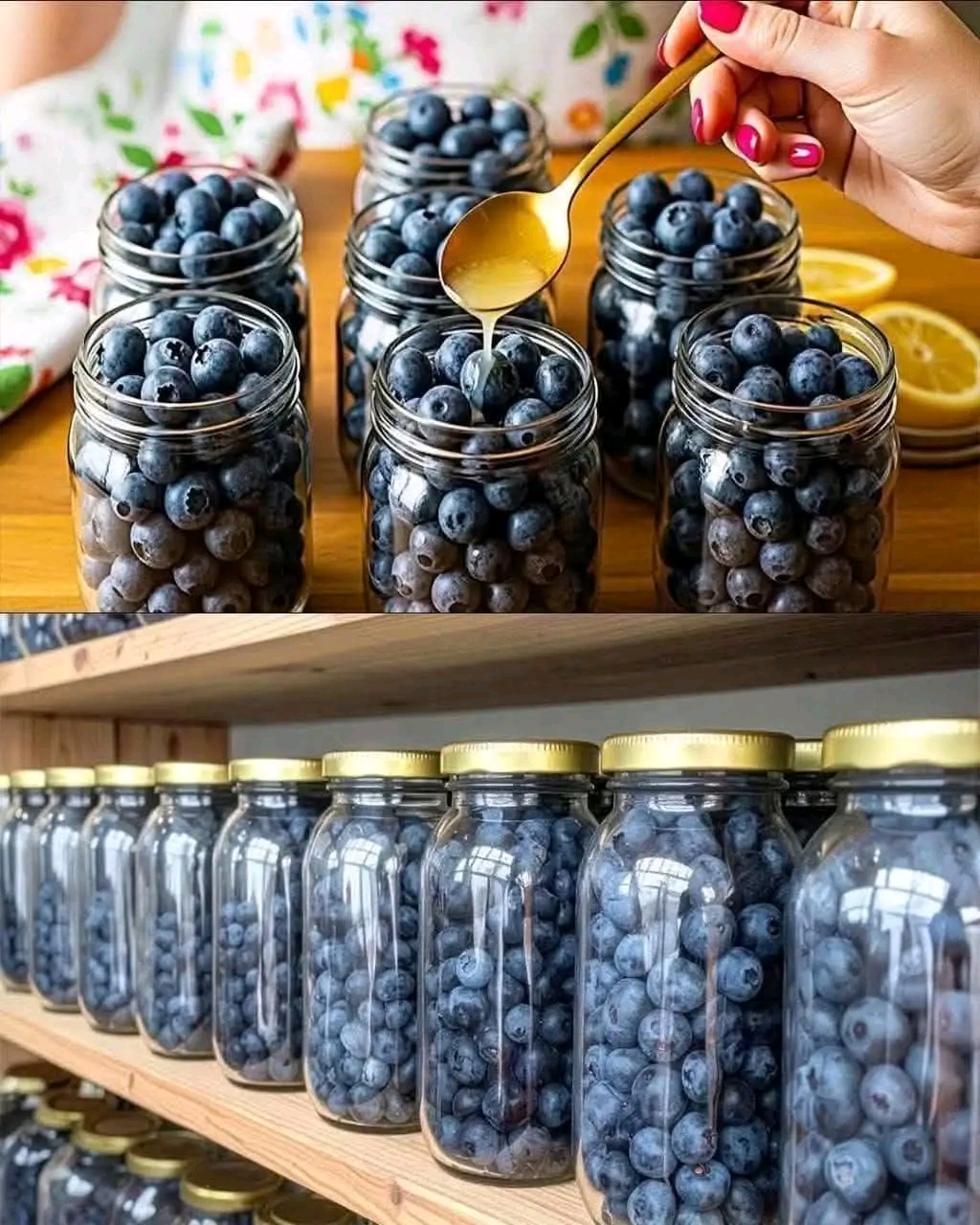
There’s something deeply satisfying about rows of golden-lidded jars filled with plump, deep-blue blueberries lining a pantry shelf. This simple water-bath canning method captures the bright, sweet-tart flavor of fresh summer berries so you can enjoy them months later on yogurt, oatmeal, pancakes, ice cream, or stirred into muffins and cobblers. The liquid poured over the berries in the photo is typically a light sugar syrup (or honey syrup, fruit juice, or even plain water). The result is tender whole berries in a lightly sweetened liquid that keeps their shape and color beautifully.
History
Blueberries were a vital food for Indigenous peoples of North America for thousands of years. They dried the berries for winter storage long before European settlers arrived. Commercial cultivation only began in the early 20th century in New Jersey, thanks to the pioneering work of Elizabeth White and botanist Frederick Coville. Home canning of blueberries became popular as a practical way to preserve the short seasonal harvest. Today they are celebrated as a “superfood,” but the humble jar of home-canned blueberries remains a timeless pantry staple.
Benefits
- Excellent source of anthocyanins (the pigments that give them their color) and other antioxidants.
- Support heart health, brain function, and healthy blood vessels.
- Provide fiber, vitamin C, vitamin K, and manganese with relatively few calories.
- Canning locks in much of the nutritional value; some research even suggests certain antioxidants can be well retained or made more available after processing.
- Shelf-stable for 12–18 months when properly sealed, reducing food waste and giving you summer flavor in winter.
Ingredients
(Makes roughly 7–9 pint jars or 7 quart jars — scale as needed)
- 8–12 pounds fresh blueberries (about 8 lb for 9 pints or 12 lb for 7 quarts)
- Sugar or alternative sweetener for syrup (optional but recommended for best flavor and color):
- Very light syrup: ¾–1 cup sugar + 6–6½ cups water
- Light syrup: 2–2¼ cups sugar + 5–5¼ cups water
- Honey option: 1 cup honey + 4 cups water
- Or use apple/white grape juice or plain boiling water for no added sugar
- Optional: 1 tablespoon bottled lemon juice per pint (or 2 tablespoons per quart) for brightness
- Clean pint or quart canning jars, new lids, and bands
- Water-bath canner (or large deep pot with rack)
Methods & Instructions
Two packing styles are approved by the National Center for Home Food Preservation / USDA:
1. Hot-Pack Method (recommended for firmer berries and fuller jars)
- Wash berries gently in small batches; remove stems, leaves, and any soft fruit. Drain well.
- Prepare syrup: dissolve sugar (or honey) in water and bring to a boil. Keep hot.
- Working in batches, blanch berries in boiling water for 30 seconds. Drain, reserving the liquid.
- Pack hot berries into hot jars, leaving ½-inch headspace.
- Cover with the hot blanching liquid or prepared syrup, maintaining ½-inch headspace.
- Remove air bubbles with a non-metallic tool, wipe rims clean, apply lids and bands fingertip-tight.
2. Raw-Pack Method (quicker)
- Wash and sort berries as above.
- Pack raw berries into hot jars, gently shaking to settle, leaving ½-inch headspace.
- Ladle boiling syrup, juice, or water over berries to cover, still leaving ½-inch headspace.
- Debubble, wipe rims, and apply lids and bands.
Processing (Water-Bath Canning)
- Place jars in the canner with water covering the lids by at least 1–2 inches.
- Bring to a full rolling boil and process:
- Hot pack (pints or quarts): 15 minutes at 0–1,000 ft elevation (adjust upward for higher altitudes).
- Raw pack: 15 minutes for pints / 20 minutes for quarts at 0–1,000 ft (add time for altitude).
- Turn off heat, wait 5 minutes, then remove jars. Cool undisturbed 12–24 hours.
- Check seals (lids should be concave and not flex). Remove bands, wipe jars, label, and store in a cool, dark place.
Altitude adjustments: Add 5 minutes for 1,001–3,000 ft, and further time as needed above that.
Formation
The syrup or liquid fills the spaces between the berries and helps create a vacuum seal during processing. The heat of the water bath kills microorganisms while the natural acidity of blueberries (plus optional lemon juice) makes them safe for water-bath canning. Proper headspace and clean rims ensure a strong seal so the jars stay shelf-stable.
Nutrition (approximate, per ½-cup serving of drained berries + light syrup)
- Calories: ~80–120 (depending on syrup strength)
- Carbohydrates: 20–30 g
- Fiber: ~2–3 g
- Natural sugars + added sugar from syrup
- Vitamin C, vitamin K, manganese, and anthocyanins retained well
(Exact values vary with syrup strength and whether juice or water is used.)
For Blueberry Lovers
These jars are pure joy for anyone who loves blueberries. Spoon them over Greek yogurt or oatmeal, swirl into vanilla ice cream, bake into muffins or pies, make a quick sauce for cheesecake, or simply eat them straight from the jar with a spoon. The lightly sweetened liquid is delicious too — use it in smoothies, lemonade, or as a glaze.
Conclusion
Canning blueberries is one of the simplest and most rewarding preserving projects. With just berries, a bit of syrup, and a water bath, you turn a fleeting summer harvest into beautiful, ready-to-use jars that will make you smile every time you open the pantry. Follow tested times and headspace carefully for safety, and you’ll have shelves of pure blueberry goodness to enjoy all year. Happy canning!