Important safety note first:
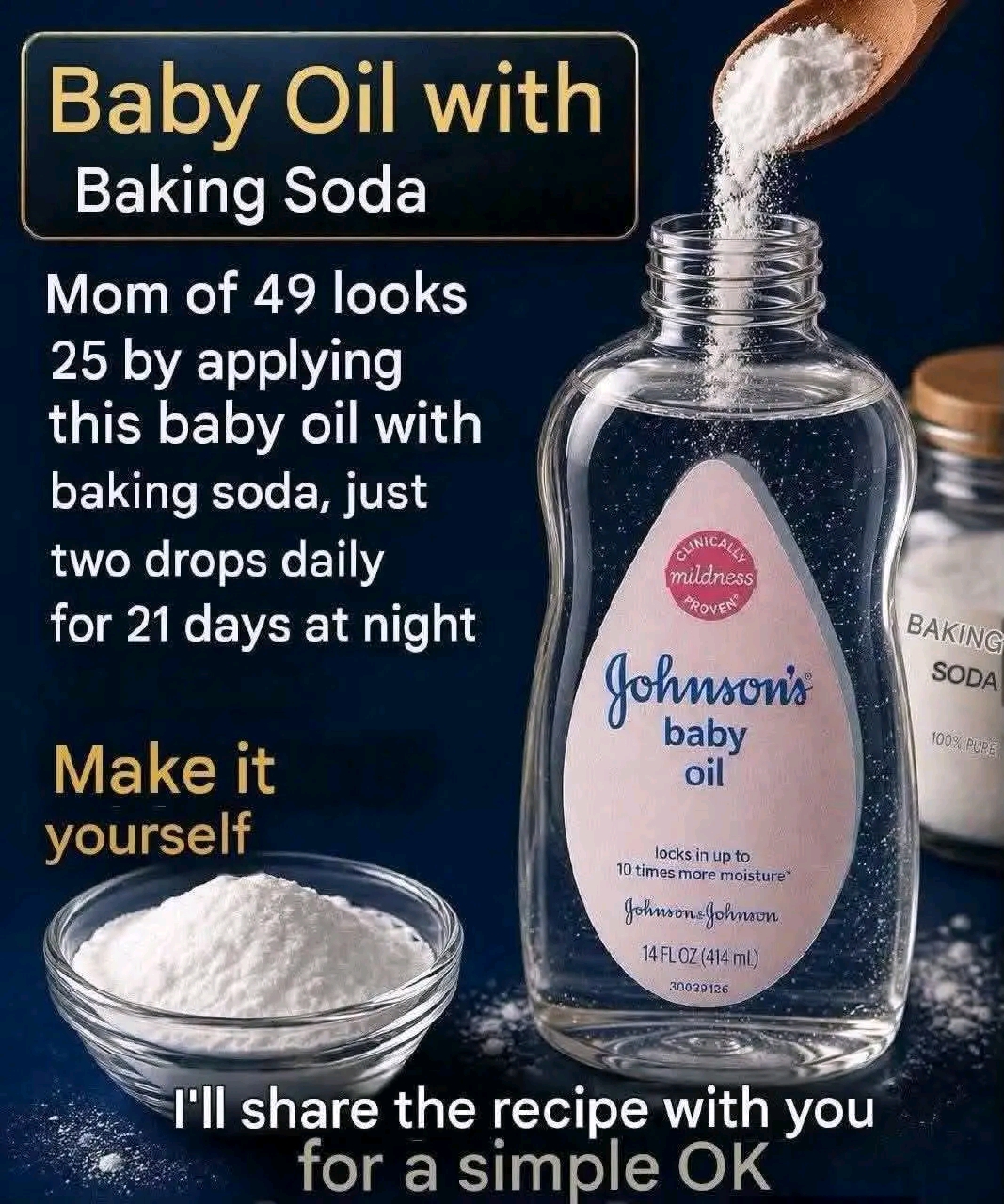
The viral claim in the image (“Mom of 49 looks 25… two drops daily for 21 days”) is exaggerated clickbait with no scientific support. Baking soda (sodium bicarbonate, pH ≈ 9) is highly alkaline and can disrupt the skin’s natural acid mantle (pH 4.5–5.5). This often causes dryness, irritation, redness, barrier damage, or worsened sensitivity—especially with daily leave-on use. Dermatologists generally advise against baking soda on the face.
Baby oil (usually refined mineral oil) is a safe occlusive moisturizer for many people and helps lock in moisture, but it does not reverse aging, erase wrinkles, or produce dramatic “look 25” results.
Use any homemade mixture only after a 24-hour patch test on the inner arm. Avoid the eye area, broken skin, active acne, eczema, or rosacea. Start with very infrequent use (once a week maximum) and stop immediately if irritation occurs. Prefer proven, pH-balanced skincare for real anti-aging results (retinoids, sunscreen, moisturizers, etc.). This is not medical advice—consult a dermatologist.
Introduction
This popular social-media DIY combines Johnson’s (or similar) baby oil with baking soda. People claim it softens skin, gently exfoliates, and creates a temporary smoother appearance. The oil provides occlusion and shine; the baking soda offers mild mechanical exfoliation. Results are modest at best and temporary. Consistency, sun protection, and a healthy lifestyle matter far more than any two-ingredient kitchen mix.
Ingredients (basic version for a small batch)
- 2–3 tablespoons pure, fragrance-free baby oil (or mineral oil)
- ½–1 teaspoon baking soda (aluminum-free if possible)
- Optional add-ins for better tolerability and mild benefits:
– 1 vitamin E capsule (pierce and squeeze)
– ½ teaspoon pure aloe vera gel or a drop of honey (for soothing)
Formulation / How to Mix
- Place the baby oil in a small clean glass or ceramic bowl.
- Add the baking soda a little at a time while stirring continuously.
- Mix until you get a smooth, slightly gritty paste or thin lotion (not watery, not dry powder). Adjust oil or soda to reach a spreadable consistency.
- If using vitamin E or aloe, stir them in last.
- Transfer to a clean, airtight small jar or bottle. Label and date it. Use within 1–2 weeks; discard if it smells off or separates badly.
Instructions & Methods of Use
Gentle scrub method (preferred over leave-on):
- Cleanse face with lukewarm water.
- Apply a pea-sized amount to damp skin.
- Massage very gently in circular motions for 20–30 seconds only (avoid aggressive scrubbing).
- Rinse thoroughly with lukewarm water.
- Pat dry and follow with a proper moisturizer and, in the daytime, sunscreen.
- Frequency: once a week maximum.
Overnight “two-drops” style (higher risk):
Some viral posts suggest mixing a tiny amount and applying 1–2 drops at night. This leaves the alkaline baking soda on the skin for hours and is more likely to cause irritation. If you try it, use an extremely dilute mixture (mostly oil, barely any soda) and only on a small test area.
Body use (safer):
The same mixture can be used more freely on rough areas such as elbows, knees, or heels as a short scrub, then rinsed.
History
Baking soda has been a household staple for cleaning and occasional skin remedies for over a century (Hints from Heloise-style advice dates back decades). Baby oil became widely available in the mid-20th century as a gentle mineral-oil moisturizer for infants and later for adults. Combining the two is a modern social-media invention that recycles older “kitchen cabinet” beauty hacks. No traditional medical system or clinical study supports the dramatic age-reversal claims.
Benefits (realistic)
- Moisture locking: Baby oil reduces transepidermal water loss, leaving skin feeling softer and smoother temporarily.
- Mild physical exfoliation: Baking soda’s fine particles can remove surface dead cells, giving a short-term smoother texture.
- Affordability & accessibility: Extremely cheap and uses items most people already have.
- Possible mild deodorizing or clarifying effect on body skin.
There is no credible evidence for deep wrinkle reduction, collagen boosting, permanent brightening, or looking decades younger.
Nutrition
This is a topical product only. It has zero nutritional value when applied to skin and must never be ingested. Baby oil is mineral oil (petroleum-derived); baking soda is sodium bicarbonate. Neither provides vitamins, minerals, or calories through the skin in meaningful amounts.
For Lovers of Natural / DIY Beauty
If you enjoy simple, low-cost kitchen experiments and have resilient, non-sensitive skin, this can be a fun occasional treat. Pair it with evidence-based habits (daily broad-spectrum SPF, gentle cleansing, sleep, hydration, and proven actives) rather than relying on it as a miracle. Many people who love natural routines eventually move toward better-tolerated plant oils (jojoba, squalane) or properly formulated products that respect skin pH.
Conclusion
The baby-oil-plus-baking-soda mixture can temporarily soften and lightly polish the skin for some people, but it is not a youth elixir. The viral “look 25 at 49 in 21 days” claim is marketing hype. Respect your skin barrier: patch-test, use sparingly, rinse thoroughly, and prioritize sunscreen and proven ingredients. If your goal is healthier, more radiant skin long-term, consistent gentle care beats any single kitchen recipe.
Enjoy experimenting safely—and if irritation appears, return to plain moisturizer and consult a professional.