The Internet Couldn’t Figure Out What This Strange Metal Tool Is—But the Answer Is Surprisingly Simple
Every now and then, an unusual object appears online and captures the attention of millions of curious people. A single photograph is posted with a mysterious caption, and before long, social media users, collectors, historians, mechanics, and everyday internet detectives begin trying to identify it. Some guesses are serious, others are humorous, and a few are completely outrageous. Yet these posts continue to fascinate people because they tap into our natural curiosity and love of solving puzzles.
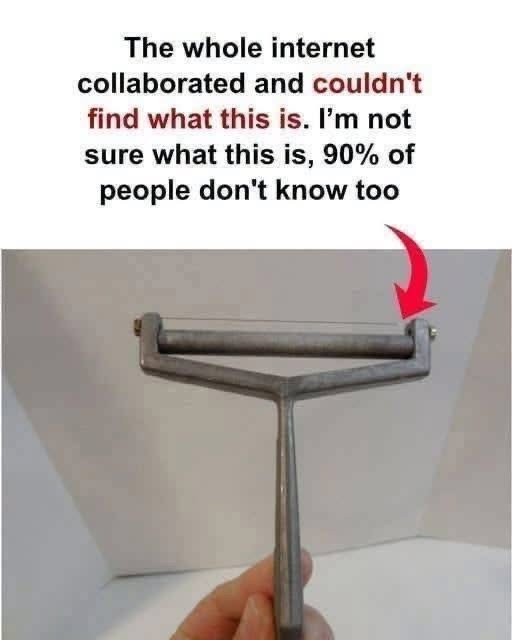
One recent image that has been making the rounds features a simple-looking metal tool with a T-shaped handle and a cylindrical roller mounted between two small brackets. The accompanying caption claims:
“The whole internet collaborated and couldn’t find what this is. I’m not sure what this is, 90% of people don’t know too.”
Like many viral posts, the statement encourages readers to click, comment, and share their own theories. Some people confidently call it a paint roller. Others think it’s a kitchen gadget, an old farming tool, or even a piece of industrial machinery. The mystery grows as hundreds of conflicting answers appear beneath the photo.
In reality, however, the object has a practical purpose that dates back many decades.
It is commonly known as a pastry lattice roller, sometimes called a lattice dough cutter or pastry roller—a specialized kitchen tool used to create decorative lattice patterns in dough for pies, pastries, and baked goods.
Although it may seem unfamiliar today, especially to younger generations accustomed to modern kitchen gadgets, this simple device once played an important role in many home kitchens and bakeries.
Let’s take a closer look at what this tool is, how it works, why it became so popular, and why so many people no longer recognize it.
Why Vintage Kitchen Tools Become Internet Mysteries
One reason objects like this go viral is that household technology has changed dramatically over the past century.
Many tools that were once considered essential have gradually disappeared from everyday use.
As lifestyles changed, manufacturers introduced:
Electric appliances
Food processors
Silicone baking tools
Disposable kitchen products
Multipurpose utensils
As a result, specialized hand tools slowly faded from memory.
What was instantly recognizable to someone’s grandmother may appear completely mysterious to younger generations.
The Object in the Picture
At first glance, the tool looks surprisingly simple.
It consists of: