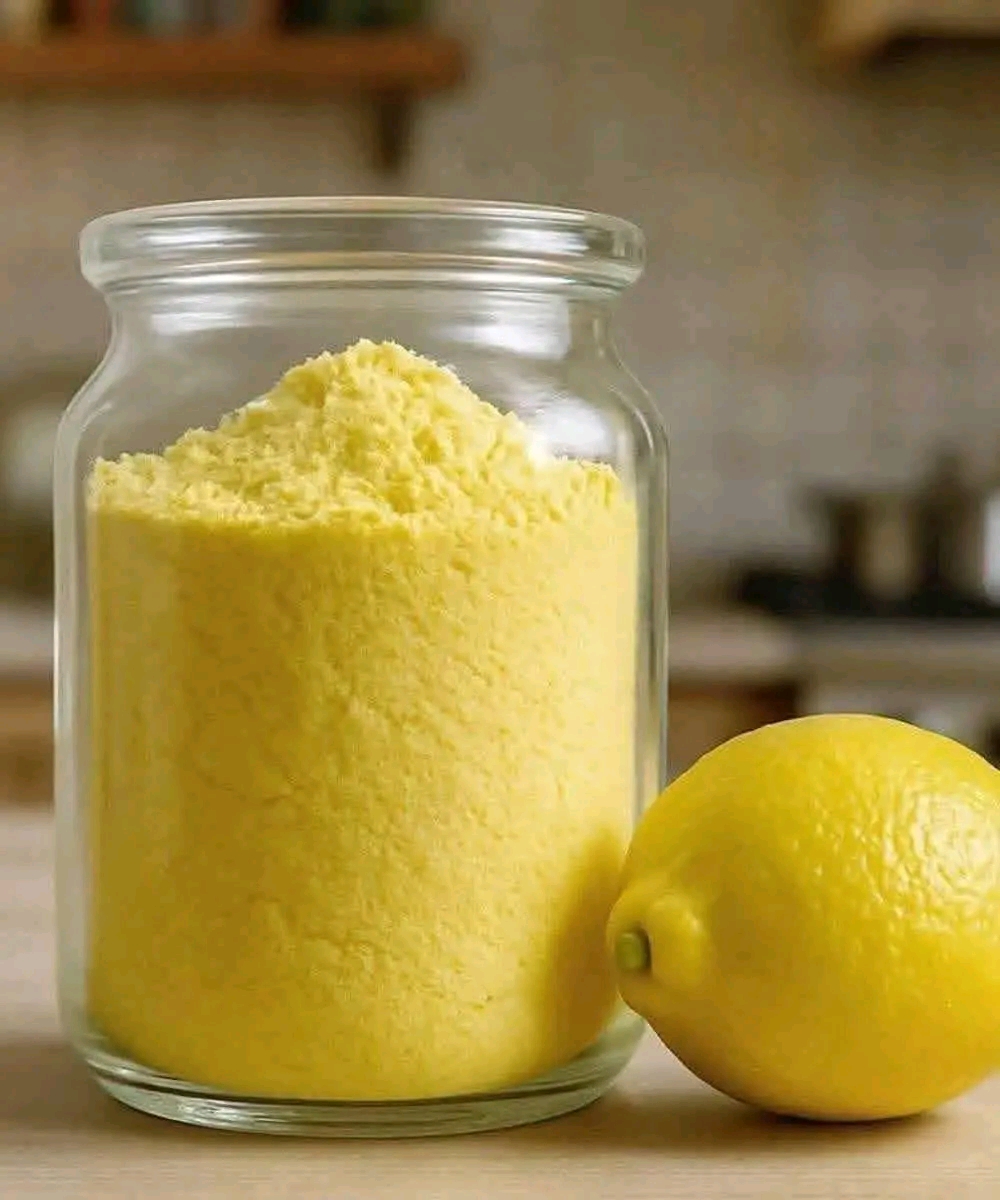
Homemade Lemon Powder Recipe (Dried Lemon Zest Powder)
Introduction
Homemade lemon powder is a wonderful natural ingredient made by drying and grinding fresh lemon peels into a fine, fragrant powder. It captures the bright citrus aroma, refreshing flavor, and beautiful golden color of lemons while giving you a long-lasting ingredient that can be used in cooking, baking, drinks, skincare recipes, and natural home remedies.
Instead of throwing away lemon peels after using the juice, this recipe transforms them into a valuable kitchen treasure. Lemon powder adds a sweet-tart citrus flavor to desserts, teas, marinades, spice blends, and many traditional recipes.
Ingredients
Main Ingredients:
- 6–8 fresh organic lemons (preferably unwaxed)
- 1 teaspoon turmeric powder (optional for extra color and benefits)
- 1 tablespoon powdered sugar (optional for sweet recipes)
Equipment:
- Vegetable peeler or grater
- Knife
- Baking tray
- Oven or food dehydrator
- Blender, spice grinder, or coffee grinder
- Airtight glass jar
History of Lemon Powder
Lemons have been used for thousands of years in cooking, medicine, and traditional cultures around the world. Ancient civilizations valued lemons for their refreshing taste and natural preservation qualities.
Before modern refrigeration, people dried fruits, herbs, and peels to preserve their flavors for longer periods. Citrus peels were commonly dried and ground into powders to add aroma to food and drinks.
Lemon powder became especially popular in regions where fresh lemons were seasonal or difficult to transport. Today, it is used by chefs, bakers, herbal enthusiasts, and home cooks as a convenient way to enjoy lemon flavor throughout the year.
Benefits of Homemade Lemon Powder
1. Rich in Antioxidants
Lemon peel contains plant compounds such as flavonoids that help protect cells from oxidative stress.
2. Supports Flavor Without Extra Liquid
Lemon powder provides strong citrus flavor without adding extra moisture, making it perfect for cakes, cookies, and spice mixes.
3. Source of Vitamin C
Although drying reduces some vitamin C, lemon peel still contains beneficial nutrients and natural compounds.
4. Helps Reduce Food Waste
Using lemon peels creates a sustainable ingredient and reduces kitchen waste.
5. Natural Aroma Booster
The fresh citrus fragrance can improve the taste and smell of many dishes.
6. Useful in Homemade Beauty Recipes
Lemon peel powder is sometimes used in homemade scrubs and masks. Always test on a small skin area first.
Formation Process
The formation of lemon powder happens through several simple steps:
- Selection: Fresh lemons are chosen for their strong aroma and healthy skin.
- Cleaning: Lemons are washed to remove dirt and impurities.
- Drying: The peel is slowly dried to remove moisture while preserving flavor.
- Grinding: The dried peel is crushed into a fine powder.
- Storage: The powder is stored in an airtight container to maintain freshness.
Instructions
Step 1: Prepare the Lemons
Wash lemons thoroughly under running water. Dry them completely with a towel.
Using a peeler or grater, remove only the yellow outer peel. Avoid taking too much of the white inner part because it can taste bitter.
Step 2: Dry the Lemon Peel
Oven Method:
- Preheat oven to 80–90°C (175–195°F).
- Spread lemon peels on a baking tray.
- Dry for 1–2 hours until completely crisp.
- Allow them to cool.
Natural Sun-Drying Method:
- Place peels on a clean tray.
- Leave them under sunlight for 2–4 days.
- Bring them indoors at night to avoid moisture.
Dehydrator Method:
Dry at 50–60°C until the peels become completely brittle.
Step 3: Grind Into Powder
Place dried lemon peels into a blender or grinder.
Blend until you get a smooth powder.
Sift the powder if you want a finer texture.
Step 4: Store Properly
Transfer lemon powder into a clean glass jar.
Keep it in a cool, dry place away from sunlight.
When stored correctly, it can last several months.
Methods of Using Lemon Powder
1. Lemon Tea
Add:
- ½ teaspoon lemon powder
- 1 cup hot water
- Honey or ginger (optional)
Mix and enjoy a refreshing drink.
2. Baking
Add lemon powder to:
- Cakes
- Cookies
- Muffins
- Bread
- Frosting
It gives a natural citrus flavor.
3. Cooking
Use it in:
- Chicken marinades
- Fish seasoning
- Salad dressings
- Rice dishes
- Sauces
4. Spice Mix
Combine with:
- Black pepper
- Garlic powder
- Salt
- Chili powder
for a delicious citrus seasoning.
Nutrition Information (Approximate per teaspoon)
- Calories: 5–10 kcal
- Carbohydrates: 2 g
- Fiber: 1 g
- Vitamin C: Small amount
- Natural plant compounds: Present
- Fat: 0 g
- Protein: Trace amounts
Nutrition values vary depending on preparation and concentration.
People Who Love Lemon Powder
Lemon powder is loved by:
- Home cooks who enjoy natural ingredients
- Bakers who want strong citrus flavor
- Tea lovers who enjoy refreshing drinks
- People who prefer homemade pantry ingredients
- Health-conscious individuals looking for natural flavor boosters
- Chefs who use dried ingredients for convenience
Tips for the Best Lemon Powder
- Use organic lemons when possible.
- Avoid lemons with wax coating.
- Dry completely before grinding.
- Store in airtight glass containers.
- Use fresh peels for the strongest aroma.
- Mix with herbs like mint, ginger, or cinnamon for unique flavors.
Conclusion
Homemade lemon powder is a simple, affordable, and useful recipe that turns ordinary lemon peels into a powerful kitchen ingredient. With its bright citrus flavor, pleasant aroma, and many uses, it can become a valuable addition to your pantry.
Whether added to desserts, drinks, savory dishes, or homemade creations, lemon powder brings freshness and creativity to everyday recipes. Making it at home is a beautiful way to preserve lemons, reduce waste, and enjoy their flavor all year long.