How to Grow Ginger at Home: A Complete Guide From Root to Harvest 🌱🫚
Introduction
Growing ginger at home is one of the most rewarding gardening experiences. This amazing plant does not require a large garden or complicated equipment. With just a fresh ginger root, water, soil, sunlight, and patience, you can grow your own beautiful ginger plant and harvest fresh ginger from your home.
Ginger (Zingiber officinale) is a tropical plant known for its aromatic flavor, healing properties, and long history in traditional cooking and medicine. The underground rhizome (often called the ginger root) is the part we use in teas, recipes, and natural remedies.
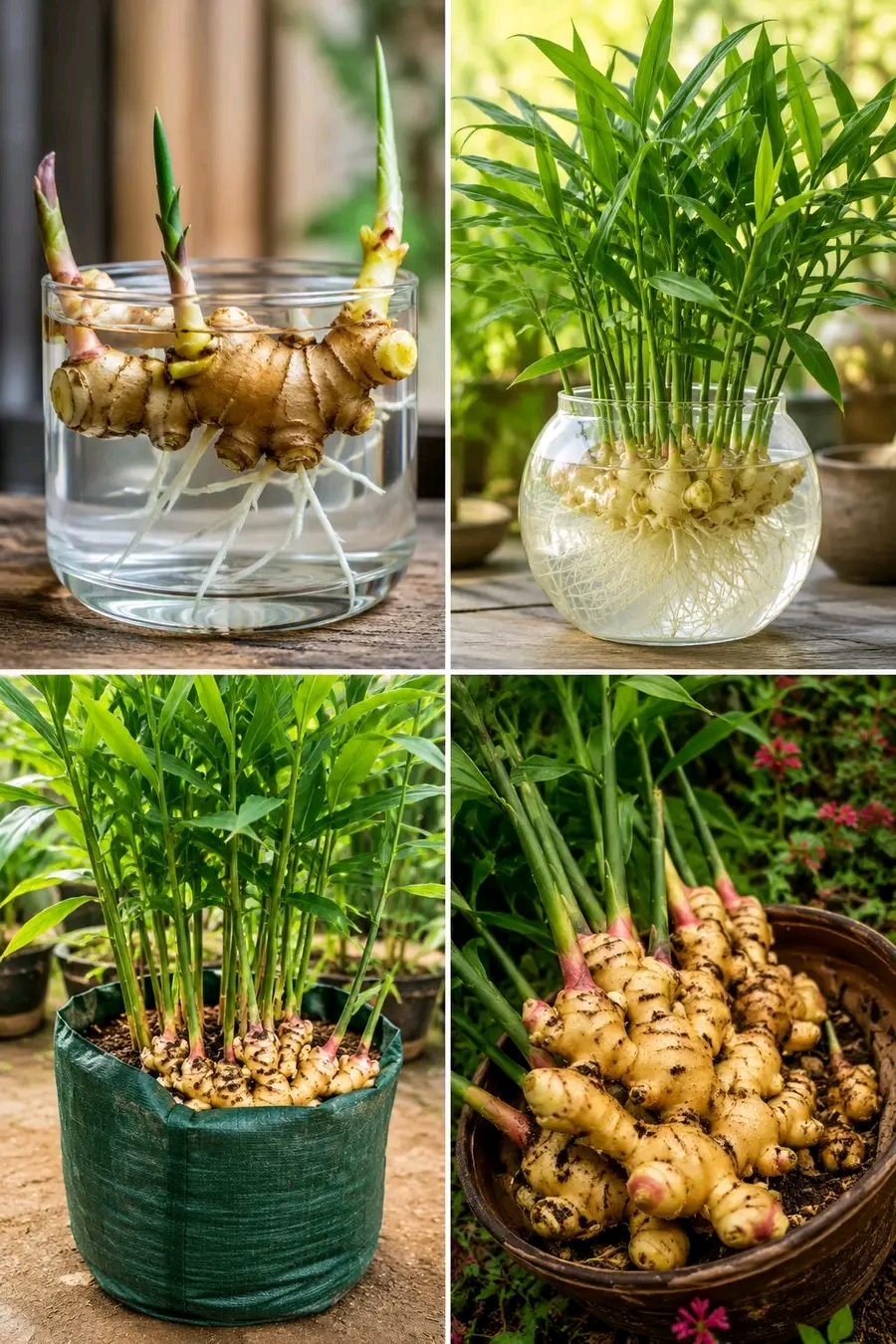
The pictures show the complete journey of ginger growth: starting from a small piece of ginger placed in water, developing roots and shoots, growing into a green leafy plant, and finally producing fresh ginger rhizomes ready for harvest.
Growing ginger is not only useful for having a fresh supply of this valuable spice, but it also brings beauty to your home, teaches patience, and connects you with nature.
History of Ginger
Ginger has been used for thousands of years and has a fascinating history. It originally comes from Southeast Asia and later spread throughout India, China, the Middle East, Africa, and Europe.
Ancient civilizations valued ginger for both food and medicine. In traditional Chinese and Indian practices, ginger was commonly used to support digestion, warm the body, and prepare herbal drinks.
During ancient trade routes, ginger became one of the most popular spices in the world. Traders carried it across continents because of its unique flavor and long shelf life.
In medieval Europe, ginger was considered a precious spice and was often used in desserts, drinks, and special meals. Today, ginger remains one of the most popular natural ingredients worldwide.
Materials and Ingredients Needed
For Growing Ginger at Home:
1. Fresh Ginger Root
- Choose a healthy ginger piece with visible buds or “eyes.”
- Organic ginger is often preferred because some conventionally grown roots may have been treated to prevent sprouting.
2. Water
- Used for the first stage of sprouting.
- Helps encourage root development.
3. A Container
- Glass jar, bowl, or small container for water propagation.
4. Quality Soil
A good mixture includes:
- Garden soil
- Compost
- Coconut coir or peat moss
- Sand for drainage
5. A Plant Pot or Grow Bag
- Choose a wide container because ginger grows horizontally underground.
6. Sunlight
- Ginger prefers bright indirect sunlight.
- Avoid harsh direct midday sun.
Instructions: How to Grow Ginger Step by Step
Step 1: Choosing the Right Ginger
Select a fresh ginger root that is:
- Firm
- Healthy
- Free from mold
- Has small greenish buds
The buds are where new shoots will grow.
Step 2: Preparing the Ginger
Wash the ginger gently and cut it into pieces.
Each piece should have:
- One or two growing buds
- A healthy section of rhizome
Allow the cut pieces to dry for a day. This helps protect them from rotting.
Step 3: Starting Ginger in Water
Place the ginger pieces in a glass container.
Add enough water to cover part of the ginger but do not completely submerge it.
Change the water regularly to keep it fresh.
After several days to weeks:
- Small roots begin to appear
- Green shoots start growing upward
This stage is shown in the first part of the image.
Step 4: Planting Ginger in Soil
Once roots and shoots develop:
- Fill a pot with rich, loose soil.
- Place the ginger horizontally.
- Cover lightly with soil.
- Leave the growing shoots above the soil.
- Water gently.
Do not bury the ginger too deeply because the rhizomes need space to expand.
Step 5: Caring for the Ginger Plant
Watering
Ginger likes moist soil but does not like standing water.
Water when the top layer of soil becomes slightly dry.
Temperature
Best growing temperature:
- 20–30°C
Light
Provide:
- Bright indirect sunlight
- Partial shade
Fertilizing
Use compost or natural fertilizer every few weeks to encourage healthy growth.
Growing Method and Formation Process
The growth process of ginger happens in several stages:
Stage 1: Sprouting
The ginger bud awakens and produces new shoots.
Stage 2: Root Formation
White roots grow downward and begin absorbing nutrients.
Stage 3: Leaf Development
Green stems rise above the soil with long, narrow leaves.
Stage 4: Rhizome Expansion
The underground ginger spreads and forms larger roots.
Stage 5: Harvest
After approximately 8–10 months, the ginger becomes mature and can be harvested.
Harvesting Fresh Ginger
When the leaves begin turning yellow and drying, the ginger is usually ready.
Steps:
- Carefully remove soil around the plant.
- Lift the ginger rhizome.
- Separate fresh ginger pieces.
- Wash and clean before use.
You can also harvest young ginger earlier for a milder flavor.
Benefits of Growing Ginger at Home
1. Fresh and Natural Supply
Homegrown ginger provides fresh flavor without depending on store availability.
2. Saves Money
A single ginger root can grow into multiple new pieces, making it economical.
3. Gardening Benefits
Growing plants can:
- Reduce stress
- Improve mood
- Create a relaxing hobby
4. Chemical Control
Growing your own ginger allows you to control:
- Soil quality
- Fertilizers
- Growing methods
5. Decorative Plant
Ginger produces attractive green leaves that add beauty to homes, balconies, and gardens.
Health Benefits of Ginger
Ginger is famous for its natural compounds, especially gingerol.
Supports Digestion
Ginger has traditionally been used to help with:
- Occasional stomach discomfort
- Feeling of fullness
- Digestive wellness
Contains Antioxidants
Ginger contains plant compounds that help protect cells from oxidative stress.
Supports Immune Health
Many people enjoy ginger tea during cold seasons because of its warming and soothing qualities.
Helps With Inflammation
Ginger contains natural compounds studied for their role in supporting the body’s healthy inflammatory response.
May Support Heart Health
Ginger is often included in balanced diets because of its beneficial plant nutrients.
Nutritional Information of Ginger
Approximate nutrition per 100 grams of fresh ginger:
- Calories: 80 kcal
- Carbohydrates: 18 g
- Fiber: 2 g
- Protein: 1.8 g
- Fat: 0.8 g
- Vitamin C: Small amount
- Potassium: Rich source
- Magnesium: Present
- Iron: Present
Ginger also provides:
- Gingerol
- Essential oils
- Natural antioxidants
Ways to Use Homegrown Ginger
Ginger Tea
Slice fresh ginger and boil with water for a warm, flavorful drink.
Cooking
Use ginger in:
- Soups
- Stir-fries
- Sauces
- Marinades
- Desserts
Smoothies
Add a small piece for a fresh spicy flavor.
Homemade Remedies
Many cultures use ginger in traditional drinks and preparations.
Who Loves Ginger?
Ginger is loved by many people, including:
Cooking Lovers
People who enjoy adding unique flavors to meals.
Tea Lovers
Those who appreciate warm herbal drinks.
Garden Lovers
People who enjoy growing useful plants.
Natural Ingredient Lovers
Those who prefer fresh ingredients from nature.
Healthy Lifestyle Enthusiasts
People who include nutritious spices in their daily routines.
Tips for Successful Ginger Growing
- Use fresh ginger with visible buds.
- Keep soil moist but never waterlogged.
- Give the plant enough space.
- Be patient because ginger grows slowly.
- Use compost for stronger growth.
- Protect the plant from cold temperatures.
Common Problems When Growing Ginger
Yellow Leaves
Possible causes:
- Too much sunlight
- Lack of nutrients
- Natural maturity
Root Rot
Usually caused by:
- Too much water
- Poor drainage
Slow Growth
Can happen because of:
- Cold temperatures
- Weak ginger pieces
- Poor soil
Conclusion
Growing ginger at home is a simple, enjoyable, and rewarding project. From a small piece of ginger placed in water to a beautiful green plant producing fresh rhizomes, the journey shows the amazing power of nature.
Homegrown ginger provides freshness, beauty, and a connection to gardening. Whether you use it for cooking, tea, or traditional wellness practices, having your own ginger plant is a wonderful addition to any home.
With patience, proper care, and the right growing conditions, anyone can enjoy the satisfaction of harvesting fresh ginger directly from their own garden or balcony.
🌱 Plant a small piece today, and enjoy the gift of fresh ginger tomorrow.