Introduction
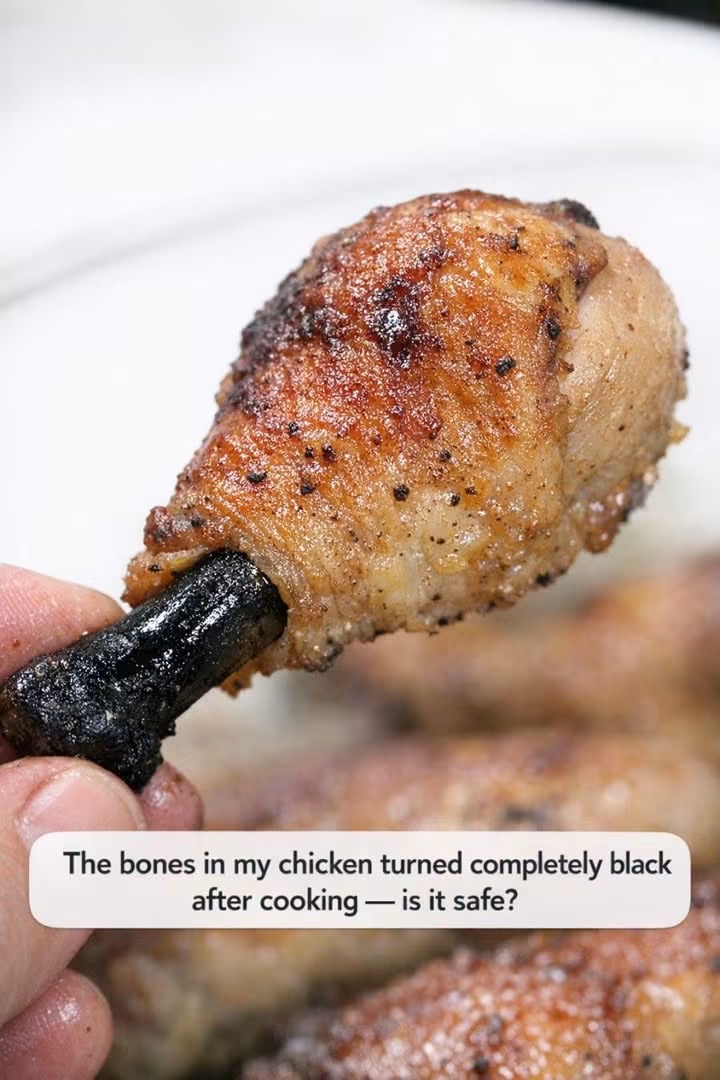
Have you ever cooked chicken and noticed that the bones turned dark gray or completely black? It can look alarming, but in many cases, it is perfectly normal. This discoloration is often caused by pigments from the bone marrow seeping into the surrounding bone during cooking, especially in younger chickens. Understanding why this happens can help you determine whether your chicken is safe to eat.
Instruction
Ingredients
6 chicken drumsticks
1 tablespoon olive oil
1 teaspoon salt
½ teaspoon black pepper
1 teaspoon garlic powder
1 teaspoon paprika
Method
Preheat your oven to 400°F (200°C).
Pat the chicken drumsticks dry with paper towels.
Rub them with olive oil and season with salt, pepper, garlic powder, and paprika.
Arrange the drumsticks on a baking tray.
Bake for 35–45 minutes or until the internal temperature reaches 165°F (74°C).
Remove from the oven and let rest for 5 minutes before serving.
Method
The blackening of chicken bones usually occurs when bone marrow pigments migrate through porous bones during cooking. This is most common in young chickens and frozen chicken products. If the meat is fully cooked to a safe internal temperature and smells fresh, the dark bones are generally not a sign of spoilage.
Benefits
Provides a rich source of high-quality protein.
Contains essential vitamins such as B6 and B12.
Supports muscle growth and repair.
Offers minerals like phosphorus and selenium.
A budget-friendly and versatile meal option.
Nutrition
Approximate nutrition per drumstick:
Calories: 180
Protein: 20g
Fat: 10g
Carbohydrates: 0g
Sodium: 320mg
Selenium: 25mcg
Tips
Always use a meat thermometer to verify doneness.
Chicken is safe when the thickest part reaches 165°F (74°C).
Discard chicken if it has a sour smell, slimy texture, or unusual discoloration in the meat itself.
Dark bones alone do not indicate undercooked or spoiled chicken.
Store cooked chicken in the refrigerator within two hours of cooking.
Conclusion
Black or dark-colored chicken bones after cooking are usually a harmless result of bone marrow pigments and are not necessarily a food safety concern. As long as the chicken is cooked to the proper temperature and shows no signs of spoilage, it is generally safe to enjoy. When in doubt, rely on temperature, smell, and texture rather than bone color alone.