Traditional Skillet Flatbread (Golden Pan Bread) – A Soft and Fluffy Homemade Bread Recipe
Introduction
Golden skillet flatbread is a beloved homemade bread enjoyed in many cultures around the world. Known for its crispy golden exterior and soft, fluffy interior, this bread is cooked in a skillet or baked until beautifully browned. It pairs perfectly with butter, honey, jam, cheese, soups, stews, grilled meats, or simply enjoyed warm on its own.
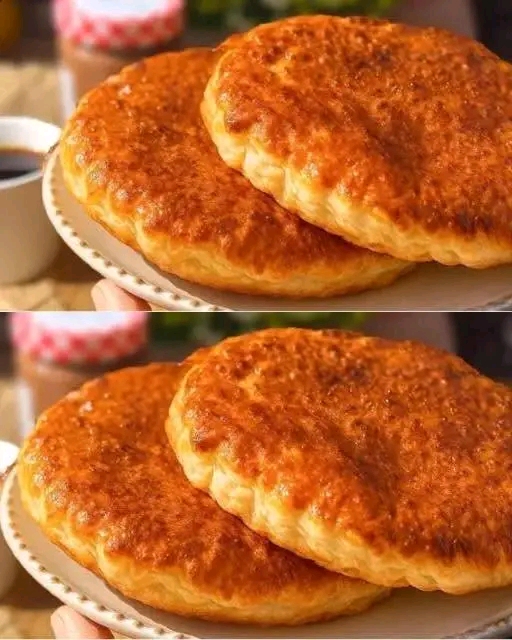
As shown in your image, these breads are thick, evenly browned, and incredibly soft inside. Their rich golden crust is achieved by brushing the dough with butter or egg wash before cooking, creating a bakery-style finish that is both attractive and delicious.
This easy recipe uses simple pantry ingredients—flour, yeast, milk, butter, and a few seasonings—to create bakery-quality flatbreads that are perfect for breakfast, lunch, dinner, or snacks.
—
Recipe Information
Preparation Time: 25 minutes
Rising Time: 1½ hours
Cooking Time: 15–20 minutes
Total Time: About 2 hours 15 minutes
Servings: 6 large flatbreads
Difficulty: Easy to Intermediate
—
Ingredients
For the Dough
4 cups (500 g) all-purpose flour
2¼ teaspoons (1 packet) active dry yeast
1 tablespoon sugar
1 teaspoon salt
1¼ cups warm milk
¼ cup warm water
¼ cup unsalted butter, melted
2 tablespoons vegetable oil
1 large egg
For Brushing
1 egg yolk
1 tablespoon milk
1 tablespoon melted butter
Optional Toppings
Sesame seeds
Nigella seeds
Dried herbs
Garlic butter
Grated cheese
—
Kitchen Equipment
Large mixing bowl
Measuring cups and spoons
Rolling pin
Clean kitchen towel
Large skillet or baking tray
Pastry brush
Cooling rack
—
Step-by-Step Instructions
Step 1 – Activate the Yeast
In a bowl, combine the warm water, warm milk, sugar, and yeast. Let it stand for 5–10 minutes until foamy.
Step 2 – Make the Dough
Add the flour, salt, egg, melted butter, and vegetable oil. Mix until a soft dough forms, then knead for 8–10 minutes until smooth and elastic.
Step 3 – First Rise
Place the dough in a lightly oiled bowl, cover with a towel, and let it rise in a warm place for 1–1½ hours, or until doubled in size.
Step 4 – Divide and Shape
Punch down the dough and divide it into 6 equal portions. Shape each into a smooth ball and roll into circles about ½ inch (1.25 cm) thick.
Step 5 – Second Rise
Arrange the shaped dough on a lightly floured surface, cover, and let rest for 20–30 minutes.
Step 6 – Brush the Surface
Mix the egg yolk with milk and brush each bread generously. Sprinkle sesame or nigella seeds if desired.
Step 7 – Cook
Skillet Method
Heat a heavy skillet over medium-low heat. Cook each bread for 6–8 minutes per side, covering the skillet to help the bread cook evenly.
Oven Method
Bake at 375°F (190°C) for 15–20 minutes, or until the tops are deep golden brown.
Step 8 – Finish
Brush the hot breads with melted butter and allow them to cool slightly before serving.
—
Cooking Methods
Traditional Skillet
Produces a crisp crust with a soft interior.
Oven-Baked
Creates an evenly browned, bakery-style loaf.
Stone-Baked
Offers a rustic texture and excellent rise.
Grill Method
Adds a smoky flavor and attractive char marks.
—
Helpful Tips
Use fresh yeast for the best rise.
Knead until the dough is smooth and elastic.
Allow enough time for both rises.
Do not cook over high heat to prevent burning.
Brush with butter immediately after cooking for extra softness.
Store wrapped to keep the bread fresh.
—
History
Flatbreads are among the oldest breads in human history, dating back thousands of years to ancient civilizations in the Middle East, North Africa, Central Asia, and the Mediterranean. Before modern ovens, people baked bread on hot stones, clay ovens, or iron skillets.
Over time, enriched doughs containing milk, butter, and eggs became popular, producing softer, richer breads suitable for family meals and celebrations. Today, skillet flatbreads remain a cherished staple in many homes around the world because they are simple, economical, and incredibly versatile.
—
Health Benefits
Flour
Provides carbohydrates for energy.
Contains B vitamins and minerals.
Milk
Rich in calcium and protein.
Supports healthy bones and teeth.
Eggs
Excellent source of high-quality protein.
Provide vitamins D and B12.
Butter
Adds flavor and healthy fats in moderation.
Contributes to a tender crumb.
Yeast
Helps the dough rise.
Adds flavor and improves texture.
—
Formation (How the Bread Develops)
During kneading, gluten forms a strong, elastic network that traps gases produced by the yeast. As the dough rises, these air pockets expand, creating a light and fluffy interior. During cooking, the surface browns through the Maillard reaction, giving the bread its beautiful golden color and rich aroma while the inside remains soft and tender.
—
Serving Suggestions
Serve these golden flatbreads with:
Butter and honey
Fruit jam or preserves
Cream cheese
Grilled chicken
Beef stew
Lentil soup
Vegetable curry
Scrambled eggs
Hummus
Olive oil and herbs
—
Storage
Store at room temperature in an airtight container for 2–3 days.
Refrigerate for up to 5 days.
Freeze for up to 3 months. Reheat in a skillet or oven before serving.
—
Nutrition (Approximate Per Serving)
Calories: 340
Protein: 9 g
Carbohydrates: 48 g
Fat: 12 g
Saturated Fat: 5 g
Fiber: 2 g
Sugar: 4 g
Sodium: 310 mg
Calcium: 10% Daily Value
Iron: 15% Daily Value
—
Why People Love This Bread
This traditional skillet flatbread is loved because it is:
Soft, fluffy, and satisfying
Easy to make with basic pantry ingredients
Perfect for breakfast, lunch, or dinner
Delicious with both sweet and savory toppings
Budget-friendly and family-friendly
Great for meal prep and freezing
Golden and crispy on the outside with a tender interior
Versatile enough to accompany almost any meal
—
Conclusion
Traditional skillet flatbread is a timeless recipe that combines simple ingredients with classic baking techniques to create an irresistibly soft and golden loaf. Whether enjoyed warm with butter and honey, paired with hearty soups and stews, or used as a sandwich bread, its rich flavor, fluffy texture, and homemade charm make it a favorite across generations. With minimal ingredients and straightforward preparation, this recipe is perfect for beginner and experienced bakers alike, delivering fresh, comforting bread that everyone will love.