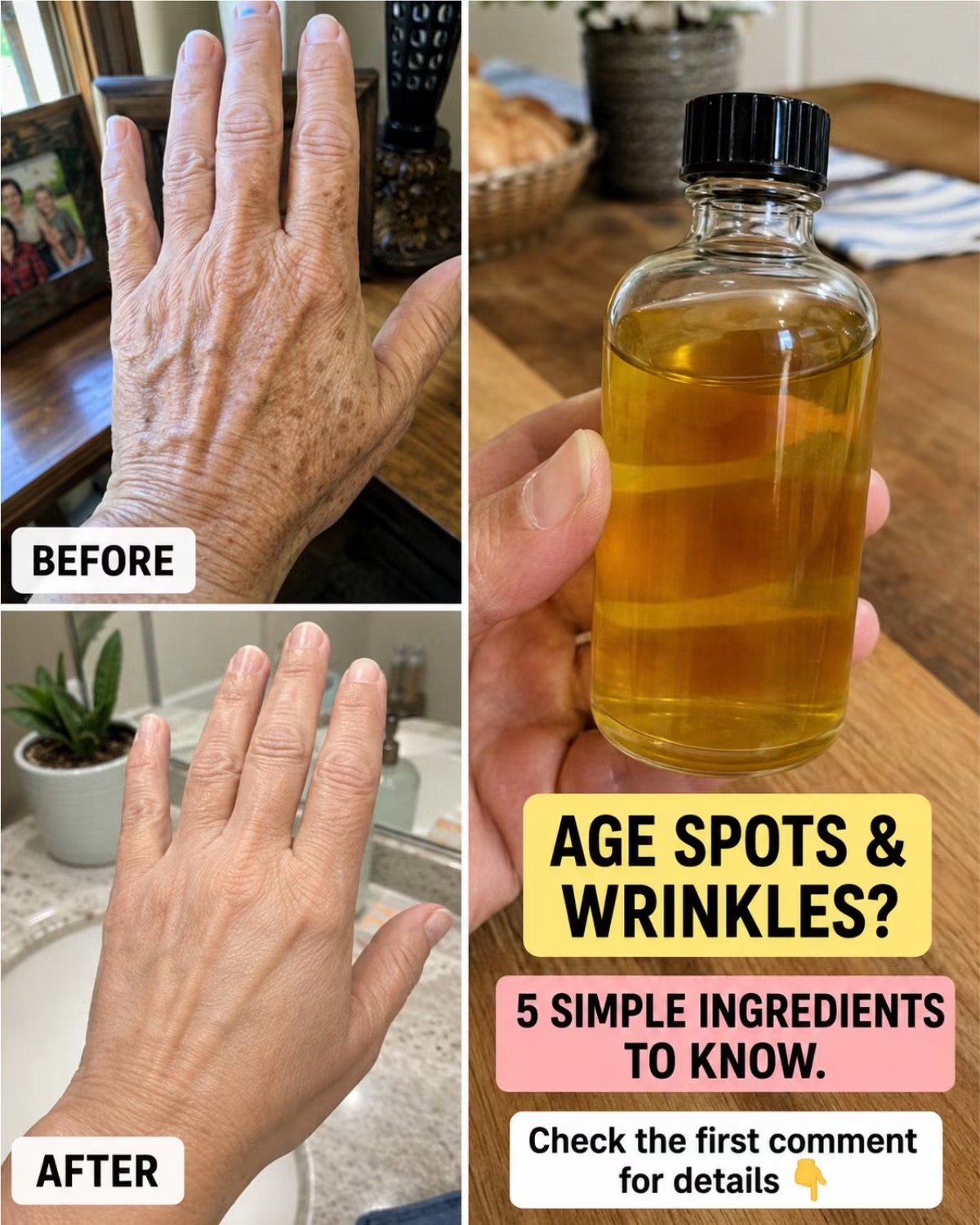
That brown freckling spreading across the backs of your hands. The papery skin. The veins and tendons that look louder every year. Those are not random cosmetic annoyances — they’re the visible fallout of UV damage, collagen collapse, and pigment cells that have gone rogue.
And the part that makes people furious? Most creams are built to sit on top of the problem like a coat of paint over a cracked wall. The damage keeps chewing through the structure underneath while the packaging stays pretty.
What changes the game is not a single “miracle” ingredient — it’s the right molecules hitting the right biological targets. One clears the debris. One blocks the pigment handoff. One forces new collagen. One feeds the repair engine. And one restores the fuel your cells have been starving for.
That’s why some hands age like dry parchment while others hold firmness longer. The surface story is only the headline. Underneath, the machinery is still making decisions — and the first one starts with the layer of dead, damaged cells you can feel but not see.
The Cellular Sweep: glycolic acid strips off the dead skin shell
Glycolic acid is the first hard hit. It breaks the glue holding dull, pigmented surface cells together, then flushes them off like barnacles scraped from a boat hull.
That rough, sandpapery feel on aging hands? That’s the buildup. The skin is carrying a crust of tired cells that catch light badly and make spots look darker. Glycolic acid dissolves the bridge between those cells and the skin underneath, exposing fresher tissue below.
But that’s not even the part that matters most. Once the top layer starts shedding properly, the deeper skin gets the signal to wake up and rebuild instead of just sitting there like a dead warehouse.
Here’s the ugly contrast: without that turnover, the spots stay trapped in the same stale surface layer, and every lotion just slides over the top like rain on wax. With it, the skin starts looking less dusty, less thick, less trapped in yesterday.
Wall Street doesn’t build empires around a sugarcane acid that peels dead skin off hands. That’s exactly why this ingredient gets ignored by the people selling fancy jars. It works too directly, too mechanically, too cheaply.
And once the surface starts clearing, the next problem becomes impossible to hide: the pigment factories themselves. That’s where the second ingredient goes to work.
The Pigment Brake: niacinamide blocks the spot-making transfer
Niacinamide doesn’t just “brighten.” It jams the conveyor belt that moves pigment from the melanocyte into the skin cell above it.
Think of age spots like ink being packed into tiny shipping crates and moved to the surface over and over again. Niacinamide kicks the crates off the line. The pigment may still be produced, but it never completes the handoff that makes the spot visible.
That’s why hands can look blotchy for years and then suddenly start evening out once the transfer gets interrupted. The brown islands don’t vanish because of wishful thinking. They fade because the supply chain is being cut.
And the anger is justified here: most people are sold “hydrating” hand creams that never touch the pigment pipeline at all. They moisturize the roof while the fire is still burning in the basement.
For women who feel exposed every time they glance down at their hands, this is the first real relief. The spots don’t get to run the show forever. The skin starts looking less mottled, less blotched, less like a map of old sun damage.
But spots are only half the war. The wrinkles, the crepe, the slackness — those come from a different collapse entirely. And that’s where the third ingredient hits like a structural jack.
The Collagen Rebuild: retinol forces new support into thin skin
Retinol is the ingredient that tells skin cells to stop acting old and start behaving like builders again.
Once it converts inside the skin, it binds to nuclear receptors and switches on genes tied to collagen production and cell turnover. That means it doesn’t just polish the surface — it pushes the dermis to lay down fresh support under the skin like beams under a sagging floor.
The feeling is subtle at first, then obvious. The skin starts looking less translucent. Knuckle lines lose some of their carved-in depth. The hand stops looking like a stretched glove over bones.
But there’s a catch, and it matters: too much retinol too fast can light the skin on fire with redness and peeling. Start low, go slow, and let the skin adapt instead of punishing it.
The third place you feel the shift is in the mirror when the light hits your hands differently. Not shiny. Not greasy. Just less fragile. Less wrecked.
And if retinol is the builder, vitamin C is the raw material loader. Without it, the construction crew runs out of supplies halfway through the job.
The Repair Fuel: vitamin C powers collagen and blunts discoloration
Vitamin C, specifically L-ascorbic acid, is the molecule your skin uses to finish collagen properly. Without it, the fibers come out weak, sloppy, and easy to break.
That sharp, acidic sting when a fresh serum hits the skin? That’s the chemistry waking up. When the formula is stable, dark, and properly sealed, it feeds the fibroblasts the fuel they need to make stronger support tissue and reduce the look of discoloration.
Here’s the part most brands hide: once vitamin C turns yellow or amber, it’s dying. That bottle on the bathroom shelf can look expensive and still be chemically dead. You’re rubbing oxidized liquid onto a problem that needs active biology.
For men, this is often the first ingredient that gets dismissed — until they notice the backs of their hands looking less weathered and more solid after consistent use. The change is not flashy. It’s the kind that makes people stop squinting at your skin.
And now comes the ingredient that doesn’t sit on the surface at all. It works deeper, like restoring power to the building instead of repainting the lobby.
The Repair Engine: NAD+ restores the fuel aging cells are burning through
NAD+ is the cellular battery your skin runs on. When it drops, the repair crews slow down, the inflammation rises, and the pigment and collagen systems start making sloppy decisions.
By the time people hit their 60s, that fuel has been cut nearly in half. It’s like trying to run a factory on a dying generator while the roof leaks, the lights flicker, and the workers keep getting weaker.
Restore the fuel, and the whole system behaves differently. Repair enzymes wake up. Inflammatory signals quiet down. The skin’s internal cleanup and rebuilding work gets back online.
That’s why the strongest results come from stacking the inside and the outside together. Surface ingredients clear, block, rebuild, and feed — while NAD+ helps the deeper machinery recover enough to keep responding.
So the hands stop looking like they’ve been left in the sun for decades without maintenance. They start looking less brittle, less transparent, less defeated. Not perfect. But visibly, unmistakably better.
And one small mistake can wreck the whole process before it even starts.
P.S. The wrong way to use these ingredients can sabotage everything
Slapping retinol on damp skin, using vitamin C that’s already turned amber, or layering acids over irritated hands is like trying to sand a splintered board with broken glass. The skin turns red, stings, peels, and shuts down instead of rebuilding.
That’s the hidden trap: the ingredients are powerful, but timing and freshness decide whether they repair or inflame. One bad bottle, one wrong layer, one overzealous application — and the whole hand routine turns into a burn.
The next thing that changes everything is the pairing rule most people never hear about.
This article is for informational purposes only and does not replace professional medical advice. Please consult your healthcare provider for personalized guidance.