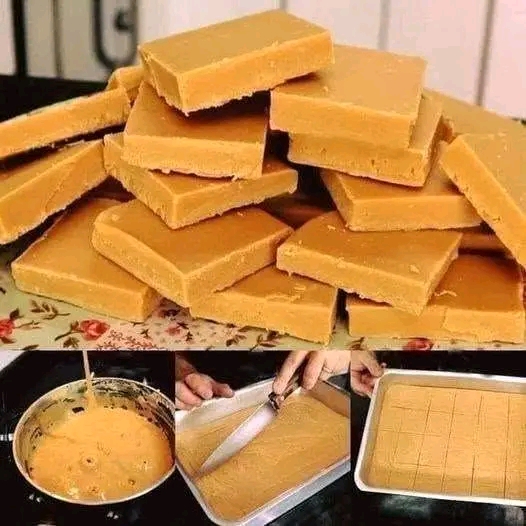
Traditional Creamy Vanilla Fudge Recipe – A Complete Guide
Introduction
Few homemade sweets are as comforting and satisfying as a rich, creamy piece of traditional vanilla fudge. The dessert shown in the image appears to be classic old-fashioned fudge cut into neat squares, with a smooth texture and a beautiful golden caramel color. Fudge is one of those timeless treats that has been enjoyed for generations because it requires simple ingredients yet produces luxurious results.
Homemade fudge is known for its melt-in-your-mouth texture, sweet flavor, and versatility. Whether served during holidays, family gatherings, tea time, or as a homemade gift, fudge remains one of the most beloved confectioneries around the world. This recipe creates a silky, buttery vanilla fudge with a delicate caramel note that makes every bite irresistible.
Unlike commercial candies filled with preservatives and artificial flavorings, homemade fudge allows you to control every ingredient. The result is a rich confection that tastes fresh, authentic, and wonderfully indulgent.
This comprehensive guide will teach you everything you need to know about making traditional vanilla fudge, from its fascinating history to detailed preparation methods, nutritional information, serving suggestions, and expert tips for perfect results every time.
—
History of Fudge
The origins of fudge can be traced back to the United States during the late nineteenth century. According to popular culinary history, fudge was accidentally created when a batch of caramel was “fudged” or improperly prepared. Instead of discarding the mistake, the confection was enjoyed and eventually became popular.
By the 1880s, fudge recipes began appearing in cookbooks and household recipe collections. Women’s colleges played an important role in spreading the popularity of fudge. Students often prepared it in dormitories because it required minimal equipment and ingredients.
Over time, fudge evolved into countless varieties, including:
Chocolate fudge
Vanilla fudge
Maple fudge
Peanut butter fudge
Caramel fudge
Walnut fudge
Coffee fudge
Today, fudge is especially popular during Christmas celebrations, fairs, festivals, and special occasions. Homemade fudge remains a treasured family recipe passed down through generations.
—
Why People Love Vanilla Fudge
Vanilla fudge has remained popular because it offers:
Rich buttery flavor
Smooth creamy texture
Simple ingredients
Easy customization
Long shelf life
Perfect gifting option
Excellent dessert accompaniment
Beautiful presentation
Its delicate vanilla flavor allows the buttery sweetness to shine, creating a dessert that appeals to both children and adults.
—
Ingredients
Main Ingredients
Sweetened Condensed Milk
2 cans (14 ounces each)
Provides sweetness and creamy texture.
Granulated Sugar
2 cups
Creates structure and sweetness.
Unsalted Butter
1 cup
Adds richness and smoothness.
White Chocolate Chips
4 cups
Provides body and creamy consistency.
Pure Vanilla Extract
2 teaspoons
Enhances flavor and aroma.
Salt
¼ teaspoon
Balances sweetness.
—
Optional Additions
Chopped Pecans
1 cup
Adds crunch and nutty flavor.
Chopped Walnuts
1 cup
Provides texture and richness.
Sea Salt Flakes
1 teaspoon
Creates a sweet-salty contrast.
Caramel Swirl
¼ cup
Adds deeper caramel flavor.
Toffee Bits
½ cup
Introduces crunch and complexity.
—
Equipment Needed
Heavy-bottom saucepan
Wooden spoon
Candy thermometer
9×13-inch baking pan
Parchment paper
Sharp knife
Measuring cups
Measuring spoons
Mixing bowl
—
Preparation Time
Activity Time
Preparation 15 minutes
Cooking 15 minutes
Cooling 4 hours
Total Time Approximately 4 hours 30 minutes
—
Step-by-Step Instructions
Step 1: Prepare the Pan
Line a 9×13-inch baking dish with parchment paper.
Allow extra paper to hang over the sides for easy removal later.
Lightly grease the parchment paper with butter.
Set aside.
—
Step 2: Combine Ingredients
Place the following into a heavy saucepan:
Sweetened condensed milk
Sugar
Butter
Salt
Stir continuously over medium heat.
Continue stirring until butter melts completely.
—
Step 3: Cook the Mixture
Bring mixture to a gentle boil.
Reduce heat slightly.
Cook while stirring constantly.
The mixture should reach approximately:
234°F–240°F (112°C–116°C)
This is known as the soft-ball stage.
Proper temperature ensures perfect fudge texture.
—
Step 4: Add White Chocolate
Remove saucepan from heat.
Immediately add:
White chocolate chips
Vanilla extract
Stir vigorously until completely smooth.
The mixture should become glossy and creamy.
—
Step 5: Pour into Pan
Transfer mixture into prepared baking dish.
Spread evenly using a spatula.
Tap pan gently on countertop to remove air bubbles.
—
Step 6: Score the Surface
After approximately 15 minutes of cooling:
Use a knife to lightly score squares on top.
This makes cutting easier later.
—
Step 7: Cool Completely
Allow fudge to cool at room temperature.
Then refrigerate for at least:
3–4 hours
or
Overnight for best results
—
Step 8: Cut into Squares
Lift fudge from pan using parchment paper.
Place on cutting board.
Using a sharp knife, cut into squares.
Serve immediately or store.
—
Alternative Traditional Stove-Top Method
For a more authentic old-fashioned fudge:
Ingredients
3 cups sugar
1 cup whole milk
½ cup butter
1 teaspoon vanilla
Method
1. Combine sugar and milk.
2. Bring to boil.
3. Cook to soft-ball stage.
4. Remove from heat.
5. Add butter and vanilla.
6. Cool slightly.
7. Beat vigorously until thick.
8. Pour into pan.
9. Let set.
This method creates a slightly grainier traditional texture.
—
Professional Tips for Perfect Fudge
Use a Heavy Pan
Thin pans may scorch the sugar.
Heavy-bottom cookware distributes heat evenly.
—
Avoid High Heat
High temperatures can cause:
Burning
Graininess
Separation
Medium heat works best.
—
Stir Consistently
Continuous stirring prevents:
Burning
Crystallization
Uneven cooking
—
Use Quality Vanilla
Pure vanilla extract produces superior flavor.
Avoid artificial vanilla when possible.
—
Measure Carefully
Candy making requires precision.
Accurate measurements produce consistent results.
—
Common Mistakes and Solutions
Fudge Too Soft
Cause:
Undercooking
Solution:
Cook to proper temperature.
—
Fudge Too Hard
Cause:
Overcooking
Solution:
Monitor thermometer carefully.
—
Grainy Texture
Cause:
Sugar crystals forming
Solution:
Stir gently and consistently.
—
Oily Surface
Cause:
Excess butter separation
Solution:
Mix thoroughly before pouring.
—
Variations
Chocolate Fudge
Add:
½ cup cocoa powder
Result: Rich chocolate flavor.
—
Peanut Butter Fudge
Add:
1 cup peanut butter
Result: Creamy nutty sweetness.
—
Maple Fudge
Replace vanilla with:
Maple extract
Result: Traditional maple flavor.
—
Coffee Fudge
Add:
2 tablespoons instant espresso powder
Result: Sophisticated coffee taste.
—
Salted Caramel Fudge
Add:
Caramel sauce
Sea salt flakes
Result: Sweet and salty balance.
—
Serving Suggestions
Vanilla fudge pairs beautifully with:
Coffee
Tea
Hot chocolate
Cappuccino
Espresso
Milk
Ice cream
It also works wonderfully on dessert platters during celebrations.
—
Storage Instructions
Room Temperature
Store in airtight container:
Up to 1 week
—
Refrigerator
Store:
Up to 3 weeks
—
Freezer
Store in freezer-safe container:
Up to 3 months
Thaw overnight before serving.
—
Health Benefits of Homemade Fudge
While fudge is considered a treat, it does provide some nutritional benefits.
Dairy Benefits
Milk products provide:
Calcium
Protein
Phosphorus
Energy Source
Sugars provide quick energy.
Mood Enhancement
Sweet treats can increase enjoyment and satisfaction when consumed in moderation.
Homemade Quality
Homemade fudge contains fewer preservatives than many commercial alternatives.
—
Formation and Food Science
Fudge is a crystalline candy.
During cooking:
1. Sugar dissolves.
2. Water evaporates.
3. Concentration increases.
4. Cooling begins crystallization.
5. Tiny sugar crystals form.
6. Smooth texture develops.
The secret to perfect fudge lies in controlling crystal formation.
Too many crystals create graininess.
Tiny crystals create creamy perfection.
—
Nutritional Information
Approximate values per serving (1 square)
Nutrient Amount
Calories 180
Carbohydrates 25g
Protein 2g
Fat 8g
Saturated Fat 5g
Sugar 22g
Sodium 40mg
Calcium 60mg
Values vary depending on ingredients used.
—
Who Loves Vanilla Fudge?
Vanilla fudge has fans of all ages.
Children
Love its creamy sweetness.
Adults
Enjoy its nostalgic flavor.
Holiday Bakers
Include it in festive gift boxes.
Candy Enthusiasts
Appreciate its smooth texture.
Coffee Lovers
Pair it with hot beverages.
Home Bakers
Value its simplicity and reliability.
—
Occasions Perfect for Fudge
Christmas
Easter
Birthdays
Weddings
Baby showers
Afternoon tea
Family gatherings
Holiday gift baskets
School events
Bake sales
Its elegant appearance makes it suitable for almost any celebration.
—
Conclusion
Traditional vanilla fudge is a timeless confection that combines simple ingredients with extraordinary flavor. Rich butter, sweetened condensed milk, sugar, white chocolate, and vanilla come together to create a luxurious candy that melts smoothly in every bite. Its creamy texture, beautiful golden color, and irresistible sweetness make it a favorite for holidays, gifts, and everyday indulgence.
Whether you’re making fudge for a festive gathering, sharing it with friends, or simply satisfying a sweet craving, this recipe delivers reliable and delicious results. With proper technique and patience, you can create bakery-quality vanilla fudge right in your own kitchen and enjoy one of the world’s most beloved homemade candies.