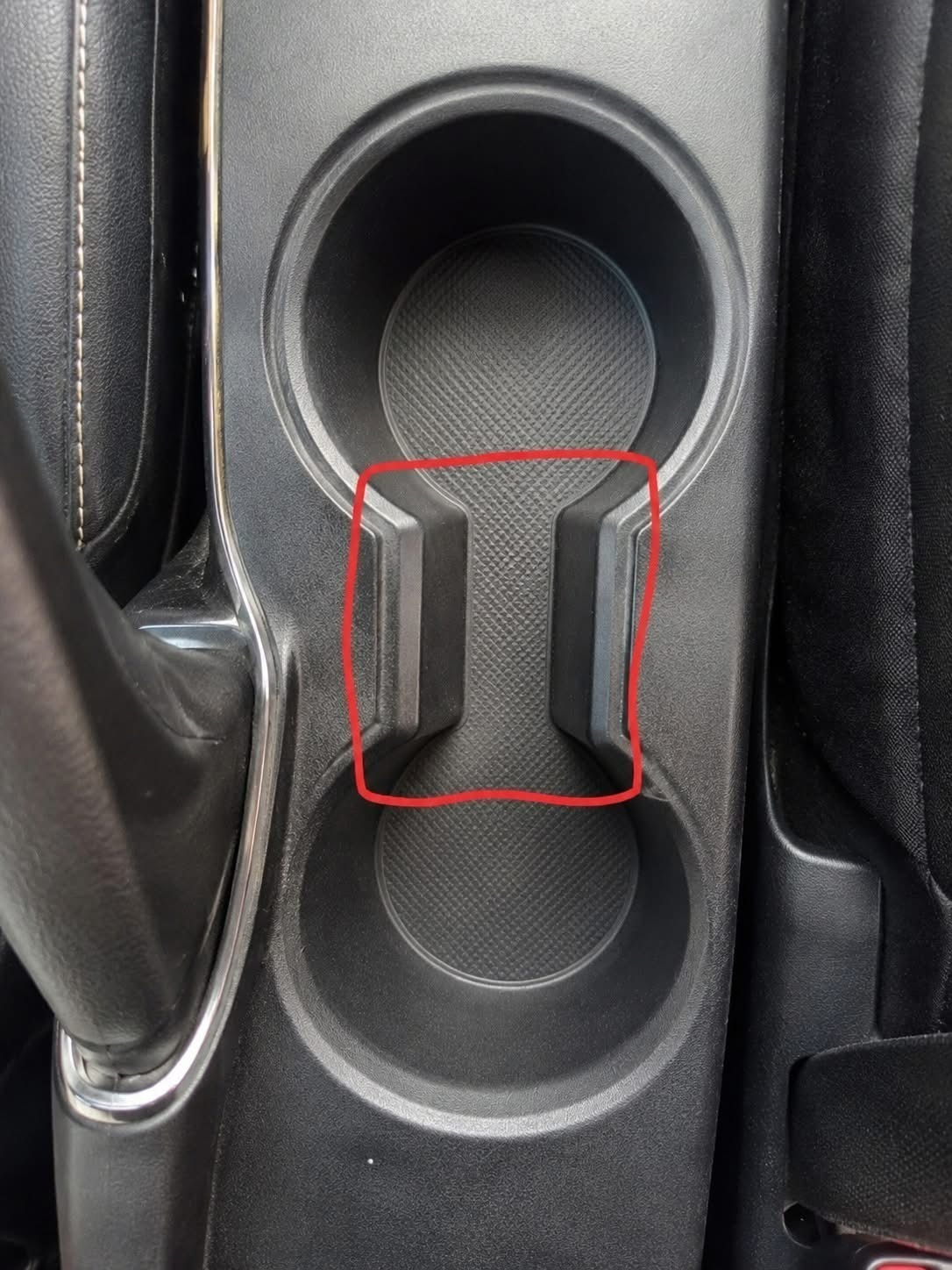
For years, I thought that narrow slot between my car’s cup holders was just a quirk of the plastic molding—a design afterthought with no real purpose. You know the one: that slim, slightly awkward divider sitting between two drink wells, too small for a phone, too odd for coins, and seemingly useless for anything at all.
I ignored it. Sometimes I’d wedge a pack of gum in there. Occasionally, my phone. Once, I even tried balancing my keys in it—a decision that ended exactly as you’d expect during a sharp turn.
Then, one day, while scrolling online, I stumbled across a comment that changed everything: That mysterious slot actually has a purpose.
Suddenly, I started noticing it everywhere—in SUVs, sedans, trucks, rental cars, even my friend’s decade-old Honda. That tiny “design flaw” wasn’t random at all. And when a former automotive designer finally explained its real function to me, I couldn’t believe I’d gone decades without knowing.
Because it turns out that weird little gap is actually one of the smartest hidden features ever built into a car interior.
What Is That Gap Really For?
The narrow slot between your cup holders is designed to hold grocery bag handles—or purse straps—while you drive.
Yes, seriously.
Instead of letting shopping bags slide across the passenger seat or spill onto the floor, the handles slide directly into that center slot, allowing the bag to hang securely between the cup holders. It keeps groceries upright, prevents drinks and fragile items from tipping, and stops everything from shifting every time you brake or turn.
Once you know this, you’ll never look at your center console the same way again.
Why This Hidden Feature Is Actually Genius
If you’ve ever driven home with groceries balanced precariously on the passenger seat, you already know the struggle. Car interiors weren’t originally designed with grocery runs in mind—until someone realized the unused space between cup holders could solve the problem perfectly.
Instead of adding bulky hooks, extra compartments, or complicated mechanisms, designers used a space that already existed.
Simple. Invisible. Brilliant.
How the Grocery Bag Holder Actually Works
The feature is surprisingly elegant once you understand the design logic. Most vehicles with dual cup holders include:
Two round cup wells sized for standard beverages
A narrow, reinforced slot or divider between them
An opening that extends downward, creating a secure anchor point
That center gap is engineered to support lightweight shopping bags by their handles. The weight of the bag creates natural tension, keeping the handles snug in place without slipping.
How to Use It (It’s Easier Than You Think)
Take your grocery bag by the handles.
Slide the handles through the gap between the cup holders.
Let the bag hang naturally below the console.
Drive normally—your groceries stay upright, secure, and spill-free.
That’s it. No more balancing bags on seats, no more chasing escaped oranges across the floorboard.
Why Most Drivers Never Notice This Feature
Honestly, this may be one of the biggest automotive design secrets hiding in plain sight.
Car manufacturers rarely explain it. It’s not marketed as:
A luxury upgrade
A safety innovation
A tech-forward feature
So people assume it’s just part of the plastic design. And because the slot blends so seamlessly into the console’s aesthetic, most drivers never stop to question it—until someone points it out. Then, suddenly, it becomes impossible to unsee.
Which Vehicles Usually Have This Feature?
The grocery bag slot is especially common in:
Honda vehicles
Toyota models
Nissan cars
Mazda sedans and SUVs
Subaru vehicles
Older Ford and GM trucks
Many early 2000s models included this design as a quiet convenience feature. Some newer vehicles now use adjustable or modular cup holders instead, so the slot may look slightly different or disappear entirely—but the principle remains the same.
Other Clever Ways People Use the Slot
Even though grocery bags are the intended purpose, drivers have found plenty of creative secondary uses over the years:
Purse or handbag straps: Keeps bags upright and prevents them from sliding onto the floor
Takeout bags: Fast food containers stay secure during turns and stops
Cell phone holder: Some phones fit horizontally inside the slot (though not the original intent)
Sunglasses or gum storage: Not official—but many people use it this way
Reusable shopping bags: Works exactly like disposable bags, often even better thanks to sturdier handles
The Evolution of Cup Holder Design
Modern cup holders have become surprisingly sophisticated. Older cars barely included them at all; before the 1980s, most vehicles prioritized ashtrays over coffee cups.
Eventually, automakers realized drivers needed:
Reliable drink storage
Small-item organization
Quick-access compartments
Thoughtful convenience features
The grocery bag slot emerged as a smart, multi-purpose solution that required no additional cabin space. It’s a perfect example of functional design hiding inside everyday objects—engineering that serves you without demanding attention.
Common Mistakes Drivers Make
Overloading the slot: Heavy grocery loads (gallons of milk, large detergent bottles, dense canned goods) can crack plastic dividers. This feature is designed for lightweight bags, not heavy hauls.
Using loose items: Small objects like keys or coins can fall through the opening and disappear into the console abyss.
Ignoring driving dynamics: Even secure bags can swing if you’re taking sharp turns or braking hard. Drive smoothly, and your groceries will thank you.
What If Your Car Doesn’t Have One?
Not all vehicles include the feature. Many modern center consoles now use:
Deep, adjustable cup holders
Sliding inserts or modular trays
Wide, open storage compartments
But you can still buy aftermarket grocery bag hooks that attach to headrests, seat backs, or console sides. Still, the built-in slot remains one of the cleanest, most integrated designs—a solution that feels like it was always meant to be there.
Frequently Asked Questions
Is the cup holder gap really meant for grocery bags?
Yes. In many vehicles, the slot was intentionally engineered to hold bag handles securely during driving.
Can it hold reusable shopping bags?
Absolutely. Reusable bags often work even better thanks to their stronger, wider handles.
Will grocery bags fall out while driving?
Usually no. The weight of the bag creates natural tension on the handles, helping to keep them anchored in place.
Why don’t car companies explain this feature?
Because it’s considered a small convenience design rather than a major selling point. Marketing tends to focus on flashier innovations.
Can I use it for my phone?
Many people do, although that wasn’t the original purpose. Just be mindful of sharp turns.
A Tiny Feature That Makes Driving Easier
What makes this little hidden feature so satisfying is how simple it is.
No screens. No apps. No complicated technology. Just smart, human-centered design solving a common, everyday problem.
And once you finally understand what that weird little gap is for, you suddenly appreciate how much thought goes into even the smallest parts of a car interior. Engineers aren’t just shaping metal and plastic—they’re anticipating your life, your errands, your moments of frustration, and quietly building solutions you might never notice… until you do.
So next time you load groceries into your car, take another look at your cup holders.
That mysterious slot sitting quietly between them?
It was helping drivers all along—even if most of us never noticed.