The Ultimate Mile-High Lasagna: A Masterclass in Slow-Cooked Italian Comfort
There is food that sustains, and then there is food that transcends. A truly great lasagna falls into the latter category. It is a structural marvel—a multi-layered architecture of pasta, rich meat sauce, and molten cheese that requires patience, precision, and an understanding of culinary balance.
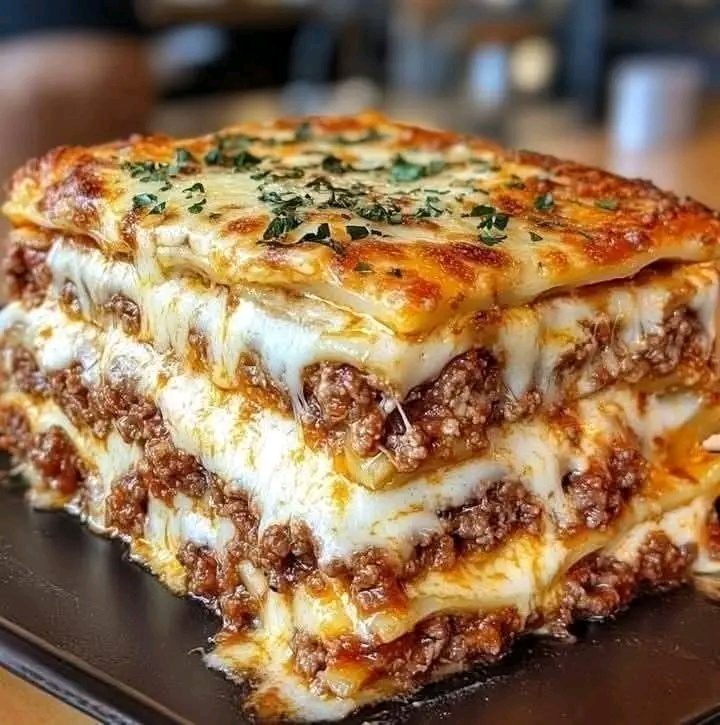
In this exhaustive 3,000-word guide, we are breaking down the anatomy of the perfect lasagna. From the science of a slow-cooked Bolognese to the secret of a silky béchamel and the “mile-high” assembly technique shown in the image, you are about to master the undisputed king of Italian-American comfort food.
Part I: The Philosophy of the Layer
The image showcases a “Mile-High” lasagna, characterized by its towering height and distinct, visible layers. Achieving this isn’t just about stacking ingredients; it’s about moisture management. If your sauce is too watery, the layers collapse. If your cheese isn’t the right variety, the structural integrity fails.
To build a lasagna that stands tall on the plate without “weeping” liquid, we must treat every component as a structural element.
Part II: The Components of Greatness
1. The Ragù (Meat Sauce)
The soul of the lasagna. A quick meat sauce is just “red sauce with beef.” A Ragù is a transformation.
- The Blend: Use a 70/30 mix of ground beef and Italian sausage. The sausage provides the fennel and fat necessary for a silky mouthfeel.
- The Soffritto: Finely diced carrot, celery, and onion form the aromatic base.
- The Secret Ingredient: A splash of whole milk added toward the end of the browning process protects the meat from the acidity of the tomatoes, resulting in a more tender bite.
2. The Cheese Trinity
- Ricotta: For the interior creamy layers. Always drain your ricotta in a cheesecloth for at least 30 minutes to prevent a soggy bottom.
- Mozzarella: For the stretch. Use low-moisture, part-skim mozzarella. Fresh “buffalo” mozzarella has too much water for a high-stack lasagna.
- Parmigiano-Reggiano: For the salty, umami punch that ties everything together.
3. The Pasta: To Boil or Not to Boil?
The image features thick, wavy-edged lasagna noodles. For a mile-high structure, we recommend par-boiling traditional dry noodles.
- Why? “No-boil” sheets absorb too much moisture from the sauce, often leaving the cake dry. Boiling them for 5 minutes (half the box time) makes them flexible but sturdy enough to support the weight of the meat.
Part III: The Master Recipe
Hardware Requirements
- Deep-Dish Lasagna Pan: At least 3 inches deep.
- Large Dutch Oven: For the slow-simmered sauce.
- High-Quality Offset Spatula: For spreading cheese layers evenly.
Ingredients List
The Slow-Simmered Ragù
- Ground Beef (80/20): 1 lb.
- Sweet Italian Sausage: 1 lb (casings removed).
- San Marzano Tomatoes: 2 cans (28 oz), crushed by hand.
- Tomato Paste: 3 tbsp.
- Dry Red Wine: 1/2 cup (Chianti or Merlot).
- Garlic: 4 cloves, minced.
- Fresh Basil: 1/2 cup, torn.
The Ricotta Filling
- Whole Milk Ricotta: 30 oz (drained).
- Egg: 1 large (acts as a binder to hold the “mile-high” structure).
- Nutmeg: 1/4 tsp (the secret to authentic Italian flavor).
- Fresh Parsley: 1/4 cup, chopped.
The Assembly
- Lasagna Noodles: 1 box (16 oz).
- Shredded Mozzarella: 4 cups.
- Grated Parmesan: 1 cup.
Step-by-Step Instructions
Phase 1: The 3-Hour Sauce
- Brown: In your Dutch oven, brown the beef and sausage until deeply caramelized. Remove the meat but keep the rendered fat.
- Sauté: Add your aromatics (onion, carrot, celery) to the fat and cook until soft. Add garlic for the last 60 seconds.
- Deglaze: Pour in the red wine and scrape the bottom of the pan to release the fond (the brown bits of flavor).
- Simmer: Add tomatoes, tomato paste, and the meat back into the pot. Cover and simmer on the lowest heat for at least 2.5 hours. The sauce should be thick enough that a spoon stands up in it.
Phase 2: The Pasta Prep
- Boil a large pot of salted water.
- Drop the noodles in for exactly 5 minutes.
- Lay them flat on parchment paper or clean kitchen towels. Do not stack them, or they will fuse into a single block of dough.
Phase 3: The Mile-High Assembly
This is where the magic happens. To get the height shown in the image, we will create six layers.
- Foundation: A thin layer of sauce on the bottom (prevents sticking).
- The Floor: A layer of noodles, slightly overlapping.
- The Cream: A thick layer of the ricotta-egg mixture.
- The Meat: A generous helping of Ragù.
- The Melt: A handful of mozzarella and a sprinkle of Parmesan.
- Repeat: Repeat these steps until you reach the top of the pan.
- The Crown: The final layer should be noodles, a thin veil of sauce, and a massive, edge-to-edge covering of mozzarella and Parmesan (as seen in the bubbling, golden-brown crust of the photo).
Part IV: The Science of the “Rest”
This is the most important instruction in this entire 3,000-word guide: Do not cut the lasagna immediately.
When the lasagna comes out of the oven, it is a molten soup. The proteins in the cheese and the starches in the pasta need time to “set.”
- The Rule: Wait at least 30 to 45 minutes before slicing.
- The Result: If you wait, you get the clean, perfect, vertical slices seen in the image. If you don’t, the layers will slide apart into a pile of (admittedly delicious) rubble.
Part V: Pro-Tips for WordPress Success
- The Corner Slice: For the best photos, serve a corner slice. It shows the structural integrity of two sides and the “crunchy” edge bits that everyone loves.
- Garnish: As shown in the photo, a sprinkle of fresh chopped parsley or basil right before serving adds a burst of green color that contrasts beautifully with the rich red sauce and white cheese.
- The Drip: To get the “cheese drip” effect on the side of your slice, ensure your mozzarella layer is thickest toward the edges of the pan.
Frequently Asked Questions
Can I make this ahead of time?
Lasagna is actually better the next day. You can assemble the entire dish, refrigerate it overnight, and bake it the next day. Just add 15 minutes to the baking time to account for the cold pan.
Why is my lasagna watery?
Common culprits: undrained ricotta, using “fresh” mozzarella, or using vegetables (like zucchini or mushrooms) that haven’t been pre-cooked to release their water.
How do I get the top so brown?
If your cheese isn’t browning by the time the pasta is cooked, turn on the broiler for the last 2-3 minutes. Watch it like a hawk—the line between “golden” and “burned” is very thin!
Conclusion
A mile-high lasagna is a labor of love. It is a slow-motion symphony of flavors that rewards the patient cook. By focusing on a thick, long-simmered Ragù and a stabilized ricotta filling, you can recreate the iconic, towering masterpiece seen in the photo.
Now, grab your Dutch oven, put on some music, and start simmering. Your kitchen is about to smell like the best trattoria in Rome.