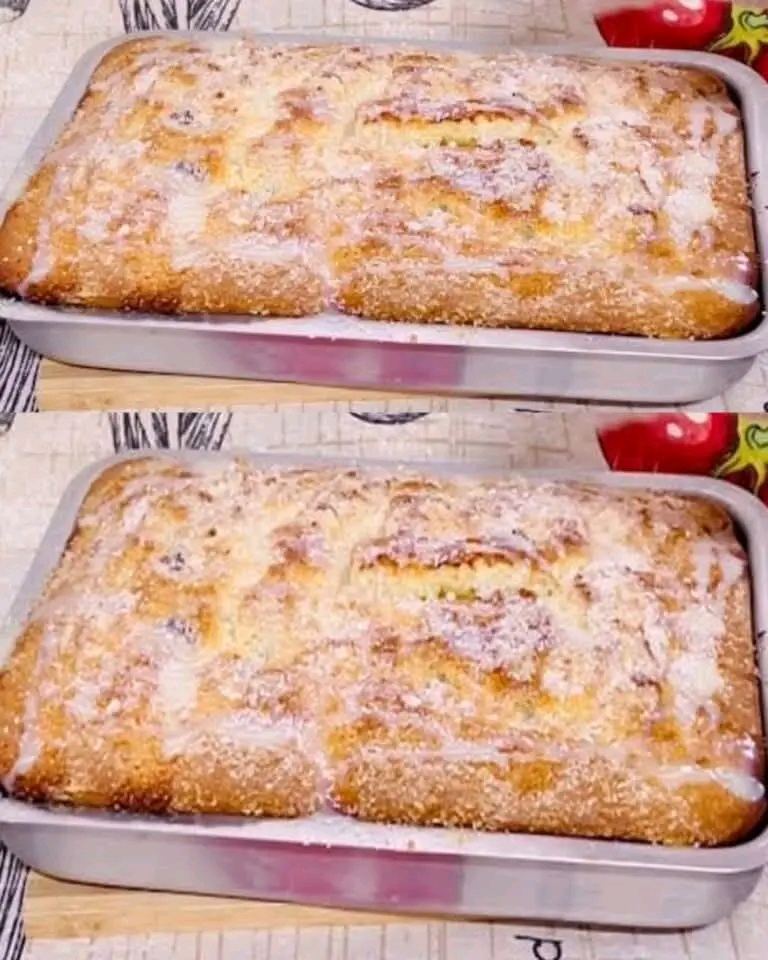
The Ultimate Glazed Cinnamon Sugar Sheet Cake: A Deep Dive into Classic Comfort Baking
There is a specific kind of nostalgia reserved for the “Sheet Cake.” It is the undisputed hero of church potlucks, family reunions, and lazy Sunday afternoons. Unlike the towering, intimidated layers of a wedding cake, the sheet cake is humble, approachable, and designed for sharing. Today, we are exploring the Glazed Cinnamon Sugar Sheet Cake—a dessert that bridges the gap between a morning coffee cake and a decadent evening treat.
This exhaustive guide will take you through the chemistry of a moist crumb, the art of the perfect crackle-top glaze, and why this specific format of baking remains a staple in kitchens around the world.
The Philosophy of the Sheet Cake
The sheet cake’s beauty lies in its ratio. In a standard 9×13 inch pan (like the one shown in the image), you achieve a high surface-area-to-volume ratio. This means more golden-brown edges and, most importantly, more room for the glaze to seep into the sponge.
This recipe focuses on a “Velvet Crumb” technique—using buttermilk and specific mixing methods to ensure that even though the cake is baked in a large, flat pan, it remains incredibly tender and light.
Ingredients: The Elements of Excellence
1. The Fat: Butter vs. Oil
For this cake, we use a combination.
- Butter provides that irreplaceable nostalgic flavor and helps create a sturdy structure.
- Oil (vegetable or canola) stays liquid at room temperature, ensuring the cake feels “moist” on the palate even two days after baking.
2. The Acid: Buttermilk
The secret to the white, tender crumb seen in the photo is buttermilk. Its acidity breaks down long gluten strands, preventing the cake from becoming tough. It also reacts with the baking soda to provide a beautiful, even lift.
3. The Aromatics: Vietnamese Cinnamon
Not all cinnamon is created equal. For a cake where cinnamon is the star, look for Vietnamese (Saigon) Cinnamon. It has a higher oil content and a more intense, spicy-sweet aroma than standard Ceylon cinnamon.
4. The Glaze: The “Crackle” Factor
The glaze in the image is a “soak-in” glaze. By applying it while the cake is still slightly warm, the liquid portion is absorbed into the top layer of the sponge, while the sugar crystallizes on the surface to create a delicate, thin “crackle.”
The Master Recipe
Hardware Requirements
- 9×13 inch Metal Baking Pan: Metal conducts heat more efficiently than glass, leading to those perfectly browned edges.
- Whisk and Large Spatula.
- Toothpick or Skewer: For testing doneness and poking “soak holes.”
Ingredients List
The Cake Base
- All-Purpose Flour: 3 cups (sifted).
- Granulated Sugar: 2 cups.
- Baking Powder: 1 tsp.
- Baking Soda: 1/2 tsp.
- Salt: 1/2 tsp.
- Unsalted Butter: 1/2 cup (melted and cooled).
- Vegetable Oil: 1/2 cup.
- Large Eggs: 2 (room temperature).
- Buttermilk: 1 cup (room temperature).
- Vanilla Extract: 1 tbsp (use high-quality bean paste if possible).
The Cinnamon Ripple
- Brown Sugar: 1/2 cup (packed).
- Ground Cinnamon: 1.5 tbsp.
The “Crackle” Glaze
- Powdered Sugar: 1.5 cups.
- Whole Milk: 3–4 tbsp.
- Vanilla Extract: 1/2 tsp.
Step-by-Step Instructions
Phase 1: The “Reverse Creaming” Method
Instead of creaming butter and sugar first, we use a modified method to ensure a tight, velvet crumb.
- Dry Mix: In a large bowl, whisk together the flour, granulated sugar, baking powder, baking soda, and salt.
- Incorporate Fats: Add the melted butter and oil. Mix on low speed until the mixture looks like damp sand. This coats the flour in fat, which inhibits gluten formation—this is the secret to a cake that melts in your mouth.
- Liquids: Whisk the eggs, buttermilk, and vanilla together, then slowly stream into the dry mix. Beat for 60 seconds until the batter is pale and smooth.
Phase 2: The Cinnamon Swirl
- Prep the Pan: Grease your 9×13 pan generously with butter and a dusting of flour.
- Layering: Pour half of the batter into the pan.
- The Spice: Mix your brown sugar and cinnamon. Sprinkle 2/3 of this mixture evenly over the batter.
- Cover: Pour the remaining batter over the top. Use a knife to gently swirl the layers together in a “figure-8” motion. Sprinkle the remaining cinnamon sugar on the very top.
Phase 3: The Bake
- Temperature: Bake at 350°F (175°C).
- Timing: 30–35 minutes. You are looking for the edges to just begin pulling away from the sides of the pan.
- The Test: A toothpick inserted into the center should come out with a few moist crumbs, but no wet batter.
Phase 4: Glazing the Masterpiece
- The Window: Let the cake cool for exactly 10 minutes.
- Poking: Use a skewer to poke small holes across the surface of the cake.
- Drizzle: Whisk your glaze ingredients until you reach a “heavy cream” consistency. Pour it over the warm cake. As it hits the warm surface, it will thin out and run into the holes and crevices, creating the variegated white-and-gold finish seen in the image.
Science Tip: Room Temp Ingredients
Why do we insist on room-temperature eggs and buttermilk? When cold liquids hit melted butter and oil, they cause the fats to re-solidify into tiny clumps. This results in an uneven bake and a “greasy” crumb. For the perfect sheet cake, patience with your ingredients is key.
Variations: Make It Your Own
1. The Nutty Crunch
Add 1 cup of finely chopped pecans to the cinnamon-sugar ripple. The fats from the nuts will toast inside the cake, adding a savory counterpoint to the sugar.
2. The Apple Pie Sheet Cake
Fold 1 cup of finely diced Granny Smith apples into the batter. The tartness of the apples cuts through the glaze beautifully.
3. The Espresso Boost
Add 1 tsp of instant espresso powder to the cake batter. It won’t make the cake taste like coffee; rather, it deepens the flavor of the cinnamon and vanilla, making them taste “rounder.”
Serving and Storage
The Art of the Slice
To get those clean, professional squares, wait for the glaze to set completely (about 45 minutes). Use a sharp, thin knife and wipe it clean with a damp cloth between every single cut.
Storage Secrets
- Room Temp: This cake stays fresh in an airtight container for 3 days.
- The “Fridge” Myth: Never store this cake in the fridge unless your house is incredibly hot. The refrigerator air dries out the sponge and can cause the glaze to become sticky and weep.
- Freezing: This cake freezes beautifully. Wrap individual squares in plastic wrap and then foil. Thaw at room temperature for 1 hour before eating.
Nutritional Breakdown
Per serving (1/15th of the cake):
- Calories: 310 kcal
- Total Fat: 14g
- Sugars: 28g
- Protein: 4g
Frequently Asked Questions (FAQ)
Why did my glaze disappear into the cake?
If the cake is too hot (straight out of the oven), the glaze will melt completely and soak in, leaving no white “crust” on top. Wait for that 10-minute cooling window!
Can I use a 9×9 pan instead?
Yes, but the cake will be much thicker. You will need to increase the bake time by 10–15 minutes and lower the oven temperature to 325°F to ensure the center cooks before the edges burn.
Can I make this dairy-free?
Absolutely. Substitute the butter with vegan butter sticks and use almond milk with 1 tbsp of lemon juice (to act as a buttermilk substitute).
Conclusion
The Glazed Cinnamon Sugar Sheet Cake is a masterclass in simplicity. It doesn’t rely on fancy decorations or complex techniques; it relies on the honest, timeless combination of sugar, spice, and a perfectly baked sponge. When you pull this out of the oven and the scent of warm cinnamon fills your kitchen, you’ll understand why the sheet cake remains the undisputed queen of the home kitchen.