Title: Homemade Lemon-Infused Night Cream for Tight Skin and Fewer Wrinkles: The Ultimate 10-Day DIY Anti-Aging Guide
Introduction
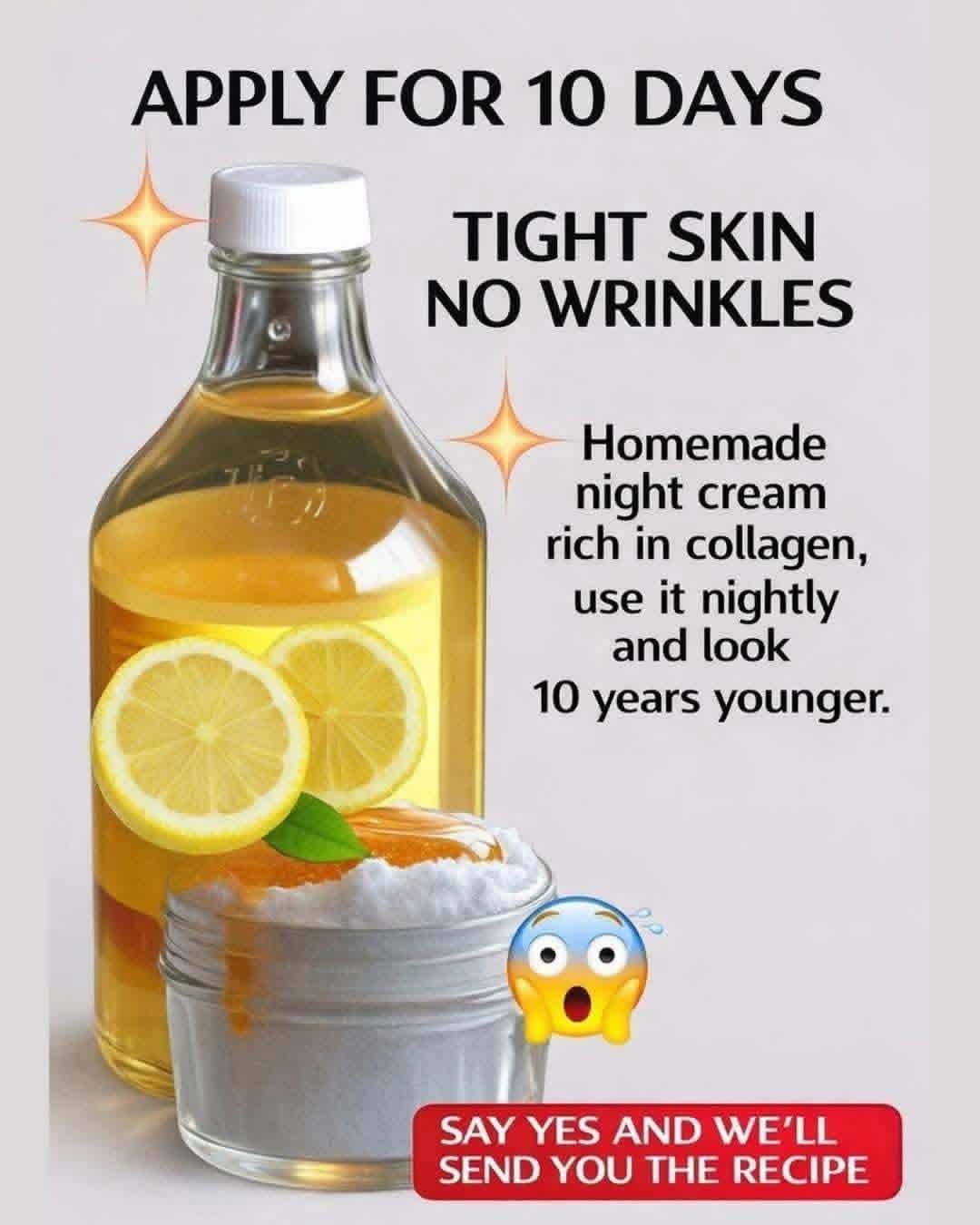
In the quest for youthful, glowing skin, many people turn to expensive creams promising miraculous results. But what if the secret to tighter skin and reduced wrinkles could be found right in your kitchen? The image of a golden liquid bottle paired with a creamy jar, sparkling with promises of “tight skin, no wrinkles” after just 10 days, has captured the attention of skincare enthusiasts everywhere.
This viral-style homemade night cream claims to be rich in collagen-boosting ingredients, particularly leveraging the power of lemon. Applied nightly, it supposedly helps users look up to 10 years younger by firming the skin and smoothing fine lines.
While dramatic before-and-after claims should always be taken with a pinch of caution, there is real science behind using natural ingredients like vitamin C (abundant in lemon), nourishing oils, and hydrating bases for anti-aging skincare. In this comprehensive 3000-word guide, we’ll explore how to create your own version of this collagen-supporting night cream, understand the role of key ingredients, learn proper application techniques, discover safety tips, and dive deep into the science of skin aging and natural remedies.
Whether you’re new to DIY skincare or a seasoned natural beauty lover, this article will equip you with everything you need to experiment safely and effectively. Let’s unlock the potential of a simple homemade night cream that could transform your nighttime routine.
Understanding Skin Aging and the Role of Collagen
Before diving into recipes, it’s essential to understand why wrinkles form and how collagen plays a starring role.
Collagen is the most abundant protein in our skin, providing structure, elasticity, and firmness. As we age — typically starting in our mid-20s — collagen production naturally declines by about 1% per year. Environmental factors like UV exposure, pollution, stress, and poor diet accelerate this loss, leading to sagging, fine lines, and deeper wrinkles.
Vitamin C is a powerful cofactor in collagen synthesis. It helps stabilize the collagen molecules your body produces and acts as a potent antioxidant, fighting free radicals that break down existing collagen. Lemon, famous for its high vitamin C content, is often featured in natural skincare for this reason.
However, applying pure lemon juice directly to the skin is not recommended due to its extreme acidity (pH around 2–3), which can disrupt the skin’s natural barrier (ideal pH 4.5–5.5). Instead, when used properly in diluted, balanced formulations, lemon-derived ingredients or small amounts of lemon juice can contribute brightening and antioxidant benefits without causing harm.
Other supporting ingredients in homemade creams — such as nourishing oils, butters, aloe vera, and honey — provide hydration, lock in moisture, and create an occlusive barrier that allows repair to happen overnight while you sleep.
Why a Night Cream? The Science of Overnight Skincare
Nighttime is prime time for skin repair. During sleep, your skin’s regeneration processes peak: cell turnover increases, blood flow improves, and absorption of active ingredients is often more effective because there’s no interference from sunscreen, makeup, or environmental pollutants.
A good night cream should:
- Deeply hydrate
- Support collagen production
- Repair the skin barrier
- Reduce inflammation
- Provide antioxidants
Homemade versions allow full control over ingredients, avoiding synthetic preservatives, fragrances, or fillers found in some commercial products. The viral image suggests a simple yet luxurious blend — a golden oil base (perhaps lemon-infused or olive/coconut) combined with a thick white cream, evoking a rich, nourishing texture perfect for overnight use.
Core Ingredients and Their Benefits
Let’s break down the star players often featured in such viral homemade night creams:
- Lemon (Juice or Essential Oil): Provides vitamin C for collagen support and brightening. Lemon also has mild astringent properties that may temporarily tighten pores. Use sparingly and always dilute.
- Carrier Oils (Coconut, Olive, Almond, or Rosehip): These deliver fatty acids and vitamins that moisturize and repair. Rosehip oil is particularly prized for its natural vitamin A and C content, which aids skin renewal.
- Aloe Vera Gel: Soothes, hydrates, and contains compounds that may support collagen. It creates a lightweight base.
- Shea Butter or Mango Butter: Rich in vitamins and fatty acids, these butters create a creamy texture and form a protective barrier.
- Honey: A natural humectant that draws moisture into the skin and has antibacterial properties.
- Vitamin E: Acts as an antioxidant and preservative, helping to stabilize the cream while protecting skin from oxidative stress.
- Beeswax (Optional): Helps emulsify and thicken the cream for a luxurious feel.
Many simple viral recipes combine just 2–4 ingredients, such as aloe vera gel with a few drops of lemon juice or oil, making them accessible for beginners.
Basic Homemade Lemon Night Cream Recipe (Beginner-Friendly)
Here’s a simple, safe starting recipe inspired by popular DIY versions. This makes about 100–150ml — enough for 2–4 weeks of nightly use.
Ingredients:
- 4 tablespoons pure aloe vera gel (fresh or store-bought, without additives)
- 2 tablespoons coconut oil or olive oil (melted if solid)
- 1 teaspoon raw honey
- 5–6 drops fresh lemon juice OR 2–3 drops lemon essential oil (highly diluted)
- 1 teaspoon vitamin E oil (or contents of 2 capsules)
- Optional: 1 teaspoon rosehip oil for extra anti-aging boost
Instructions:
- In a clean glass bowl, combine the aloe vera gel and honey. Stir until smooth.
- Slowly add the melted coconut/olive oil while whisking to create a loose emulsion.
- Add vitamin E and lemon (juice or essential oil) last. Mix thoroughly.
- If the mixture separates, you can gently warm it in a double boiler and whisk again, or use an immersion blender for better texture.
- Transfer to a clean, dark glass jar (to protect from light). Store in the refrigerator for up to 2 weeks (or 1 month if using essential oil and vitamin E as natural preservatives).
How to Use:
- Cleanse your face thoroughly in the evening.
- Apply a pea-sized amount to damp skin, massaging gently in upward circular motions.
- Focus on areas prone to wrinkles: forehead, around eyes (avoid direct contact with eyes), cheeks, and neck.
- Use consistently for at least 10–14 days to notice hydration and subtle brightening effects.
Advanced Collagen-Boosting Night Cream Variations
For those wanting a richer, more buttery texture similar to the jar in the image:
Rich Shea Butter Lemon Night Cream
- 2 tablespoons shea butter
- 1 tablespoon coconut oil
- 1 tablespoon almond oil
- 1 teaspoon beeswax pellets
- 2 tablespoons aloe vera gel
- 4–5 drops lemon essential oil (diluted properly)
- 1 teaspoon vitamin E
- Optional: pinch of turmeric powder for extra antioxidant power (use very little to avoid staining)
Method:
Melt shea butter, coconut oil, and beeswax together in a double boiler. Remove from heat, stir in almond oil, aloe, vitamin E, and lemon essential oil. Whip with a fork or small mixer as it cools to create a fluffy cream. Store in a cool place.
Oil-Infused Golden Version (Inspired by the Bottle in the Image)
Infuse olive or jojoba oil with lemon zest (not juice) for 1–2 weeks in a sunny window, then strain. Use this infused oil as the base mixed with cream ingredients for a golden hue.
Safety First: Important Precautions When Using Lemon on Skin
While the promise of “tight skin, no wrinkles” is tempting, lemon requires careful handling:
- Photosensitivity: Lemon (especially juice and essential oil) can make skin more sensitive to UV rays, increasing risk of sunburn or hyperpigmentation. Always use at night and apply broad-spectrum sunscreen the next day.
- Irritation Risk: High acidity can cause redness, burning, dryness, or even chemical burns on sensitive or damaged skin. Always do a patch test on your inner arm for 24 hours.
- Dilution Is Key: Never apply undiluted lemon juice. In recipes, keep lemon content very low (under 1–2%).
- Skin Type Considerations: Dry or mature skin may benefit more from richer butters, while oily or acne-prone skin might prefer lighter gels. Those with eczema, rosacea, or very sensitive skin should avoid lemon altogether.
- Pregnancy and Medical Conditions: Consult a doctor before using essential oils.
Dermatologists often recommend stabilized vitamin C serums over fresh lemon for consistent, safer results. Homemade creams lack the rigorous testing of commercial products, so results vary by individual.
The Science Behind Natural Anti-Aging Ingredients
Vitamin C from lemon or other sources supports collagen by acting as a cofactor for enzymes that build it. Studies show topical vitamin C can improve skin elasticity and reduce wrinkles when used consistently.
Antioxidants in oils like rosehip and vitamin E combat oxidative stress from free radicals. Hydration from aloe and honey plumps the skin, making fine lines less visible temporarily.
While no homemade cream can literally “add” collagen to your skin (collagen molecules are too large to penetrate), these ingredients support your body’s own production and protect existing collagen.
Realistic expectations: Most users notice improved hydration, softness, and subtle brightening within 10–14 days. Deeper wrinkle reduction takes months of consistent care combined with lifestyle factors (sun protection, diet, sleep, no smoking).
10-Day Challenge: How to Maximize Results
To mimic the viral “apply for 10 days” promise:
Days 1–3: Focus on gentle cleansing and patch testing your cream. Apply lightly.
Days 4–7: Increase to full nightly application. Pair with a simple facial massage (upward strokes for 2–3 minutes) to boost circulation.
Days 8–10: Continue use and take note of changes in skin texture, brightness, and firmness. Drink plenty of water and eat vitamin C-rich foods (oranges, berries, peppers) to support results from within.
Track progress with photos in consistent lighting. Combine with other habits: gentle exfoliation 1–2 times weekly, adequate sleep, and a balanced diet rich in protein (for collagen building blocks).
Complementary Natural Skincare Routines
Enhance your night cream with these supporting practices:
- Morning Routine: Gentle cleanser, vitamin C serum (store-bought stabilized), moisturizer, and SPF 30+.
- Weekly Treatments: A honey-lemon (highly diluted) or yogurt mask for brightening, but limit to once a week.
- Lifestyle Tips: Eat collagen-boosting foods (bone broth, citrus, leafy greens, eggs). Stay hydrated. Manage stress. Protect skin from sun year-round.
- Facial Exercises and Massage: Simple techniques can improve muscle tone and lymphatic drainage.
Common Mistakes to Avoid in DIY Skincare
- Using too much lemon → irritation.
- Skipping patch tests → unexpected reactions.
- Not storing cream properly → bacterial growth (always use clean utensils and refrigerated storage for water-based recipes).
- Expecting overnight miracles → skincare is cumulative.
- Ignoring overall health → topical care works best alongside good nutrition and habits.
Storing and Shelf Life of Homemade Creams
Because these lack synthetic preservatives:
- Water-heavy recipes (with aloe) last 1–2 weeks in the fridge.
- Oil/butter-based versions can last 3–4 weeks in a cool, dark place.
- Add vitamin E or rosemary extract as natural antioxidants to extend life.
- Always use clean hands or spatulas. Discard if it changes smell, color, or texture.
Alternative Ingredients for Sensitive Skin
If lemon feels too risky, try these gentler collagen-supporting swaps:
- Rosehip oil or sea buckthorn oil (natural vitamin C and A)
- Carrot seed oil
- Frankincense essential oil (diluted)
- Green tea extract
- Bakuchiol (a gentle retinol alternative from plants)
Many commercial “clean” brands now offer similar blends with better stability.
Nutritional and Holistic Approach to Youthful Skin
Topical creams work on the surface, but true skin health starts from within. Collagen supplements (hydrolyzed peptides), vitamin C, zinc, and antioxidants from food play major roles. Foods like berries, fatty fish, nuts, and leafy greens provide building blocks and protection.
Sleep is when growth hormone peaks — aim for 7–9 hours nightly. Stress management (meditation, yoga) reduces cortisol, which breaks down collagen.
Exploring Other Popular Homemade Night Cream Recipes
Beyond lemon, trending DIY options include:
- Rice water and baby oil blends for brightening
- Clove and aloe mixtures
- Beetroot or saffron-infused creams
- Chia seed gels for hydration
Each has its fans, but the principle remains: simple, natural, properly diluted ingredients.
When to See a Professional
If you experience persistent irritation, redness, or worsening skin issues after using any homemade product, stop immediately and consult a dermatologist. For significant anti-aging concerns, professional treatments like retinoids, peptides, or procedures may deliver more dramatic, evidence-based results.
Homemade creams are best as complementary care, not replacements for medical advice.
Conclusion: Embracing Natural Skincare with Realistic Expectations
The viral image of that glowing bottle and creamy jar captures the dream many of us share — simple, affordable, natural solutions for tighter, younger-looking skin. A homemade lemon-infused night cream can be a delightful addition to your routine, offering hydration, subtle brightening, and a moment of self-care each evening.
By understanding the science, respecting safety guidelines, and maintaining consistency, you may notice your skin feeling softer, looking brighter, and appearing firmer after 10 days and beyond. Remember, the most effective anti-aging strategy combines gentle skincare, sun protection, healthy nutrition, and good sleep.
Experiment thoughtfully, listen to your skin, and enjoy the process of creating something personal. Youthful skin isn’t just about erasing lines — it’s about feeling confident and nourished at every age.
Start small, stay consistent, and let your natural glow shine through.