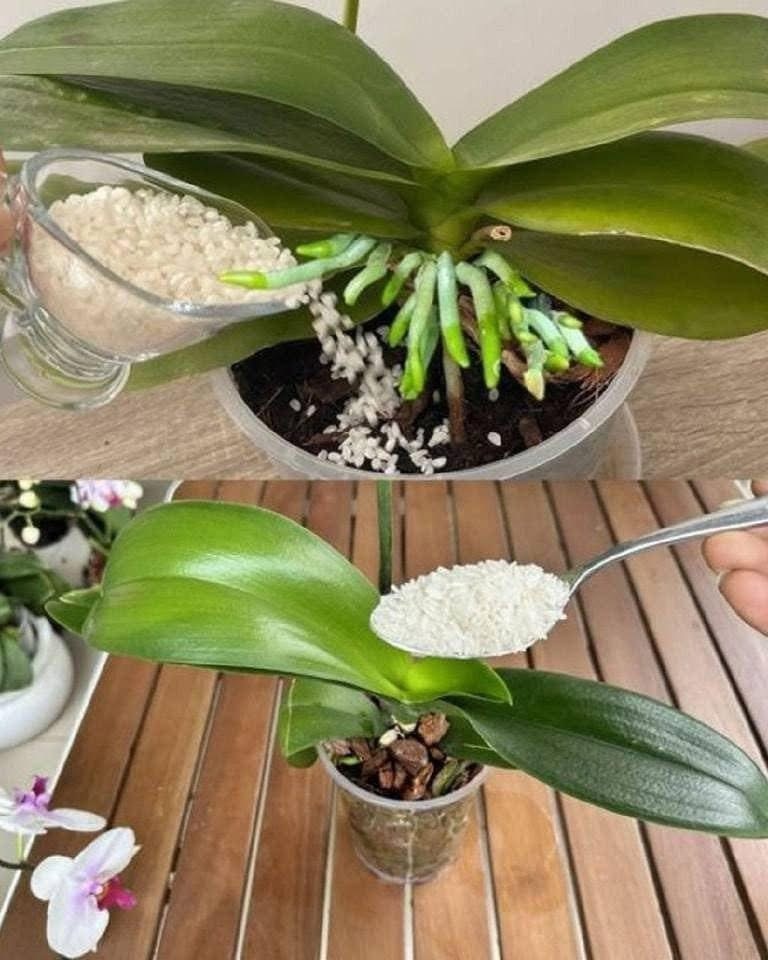
Fertilize the Orchid So That It Blooms Profusely and for a Long Time**
Orchids, especially Phalaenopsis varieties, are among the most admired flowering plants due to their exotic appearance and long-lasting blooms. However, their beauty does not come without effort—orchids require proper nourishment to maintain health, encourage flowering, and ensure vibrant, long-lasting blossoms. One surprising and effective way to boost orchid health is through natural, accessible fertilization methods, such as using rice or rice water.
1. Why Orchids Need Fertilization
In their natural habitat, orchids grow on trees and absorb nutrients from rainwater and decaying organic matter. In pots, they do not have access to the same nutrient sources, so they rely entirely on what you provide. Without proper feeding, they may grow leaves but fail to produce flowers.
Fertilization ensures:
- Strong root growth
- Healthy, glossy leaves
- More flower spikes
- Longer blooming periods
2. Rice as a Natural Orchid Fertilizer
Rice contains starch, carbohydrates, and small amounts of phosphorus and nitrogen—nutrients that promote root growth and stimulate flowering. While rice itself is not a complete fertilizer, it can serve as a mild, organic boost when used correctly.
How Rice Helps Orchids
- Starch and carbohydrates feed beneficial microorganisms in the soil or bark, improving root health.
- Minerals in rice help strengthen stems and buds.
- It encourages steady hydration around the root zone without overfeeding.
3. Methods to Fertilize Orchids With Rice
A. Using Uncooked Rice Directly
- Quantity: Use 1 teaspoon of uncooked rice per small orchid pot.
- Placement: Sprinkle rice grains around the base of the plant, avoiding direct contact with the leaves and crown to prevent rot.
- Watering: Water lightly after application to help the nutrients seep into the potting medium.
- Frequency: Once every 4–6 weeks.
B. Using Rice Water
Rice water—the liquid left after rinsing or boiling rice—is rich in nutrients and can be used as a gentle liquid fertilizer.
Preparation:
- Rinse method: Wash uncooked rice briefly and collect the milky water.
- Boiled method: Boil rice in extra water, then strain and cool the liquid.
Application:
- Use cooled rice water to water the orchid once every 2–3 weeks.
- Avoid overuse to prevent fungal growth.
4. Additional Fertilization Tips for Abundant Blooming
- Balanced orchid fertilizer: Use a commercial orchid fertilizer (20-20-20 or bloom-boosting 10-30-20) diluted to half strength.
- Seasonal feeding: Increase feeding during the active growth phase (spring/summer) and reduce during dormancy.
- Good light and humidity: Fertilizer alone won’t trigger blooms—orchids need bright, indirect light and 50–70% humidity.
- Proper watering: Water only when the potting medium is nearly dry to prevent root rot.
5. Common Mistakes to Avoid
- Overfertilizing, which can burn roots.
- Using rice that molds or ferments before being absorbed.
- Letting rice grains touch the orchid crown.
- Fertilizing a sick or stressed orchid—wait until it shows signs of recovery.
Conclusion
Fertilizing orchids, whether through traditional fertilizers or natural methods like rice, can significantly enhance blooming. Rice provides a gentle nutrient boost and encourages healthier roots, which in turn support more abundant and long-lasting flowers. Combined with proper watering, lighting, and care, this method can help your orchids dazzle with vibrant blooms season after season.