Moussaka The Ultimate Greek Comfort Food
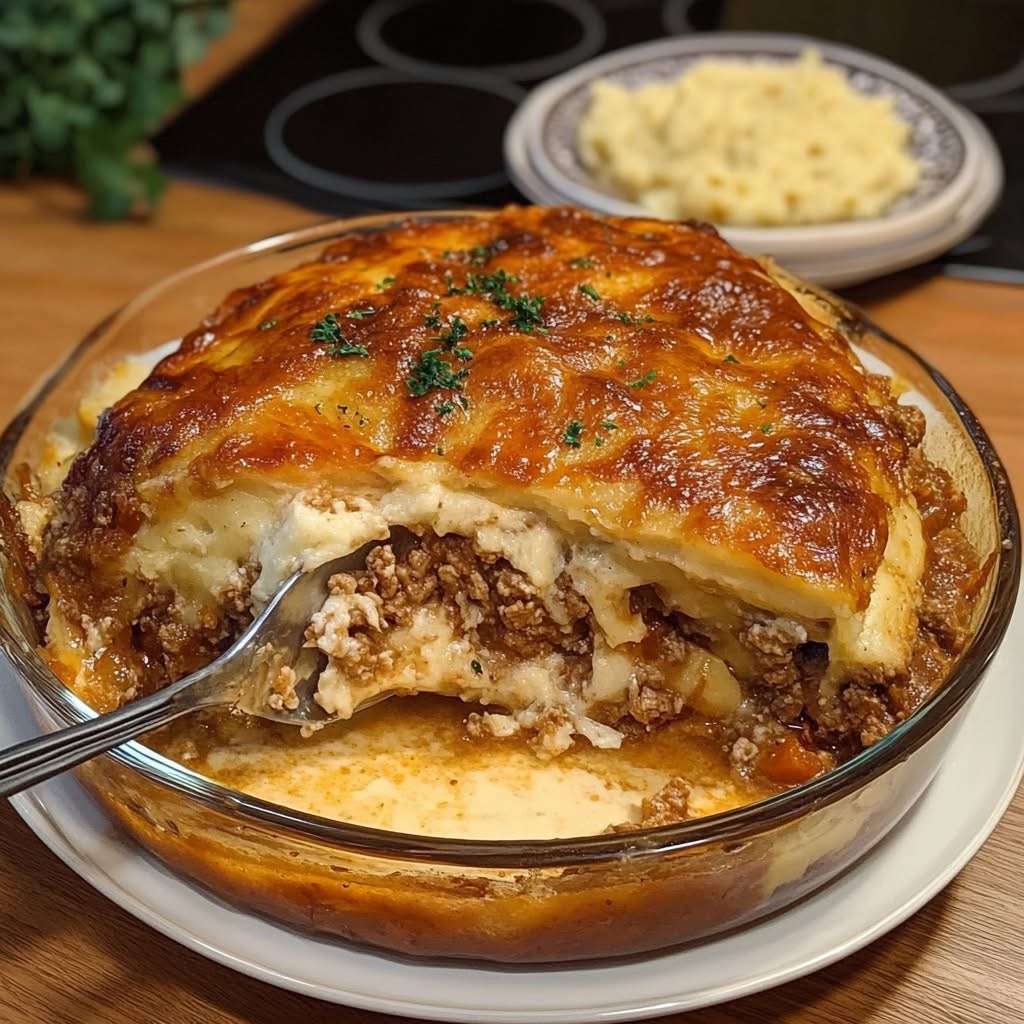
Moussaka is a beloved Mediterranean dish with layers of rich flavors. It’s often compared to lasagna but has a unique Greek twist—featuring a velvety béchamel sauce instead of cheese layers. Traditionally, it’s made with eggplant, ground lamb or beef, and a rich tomato sauce, topped with a creamy, golden-baked béchamel.
Ingredients
For the Meat Sauce: 2 tbsp olive oil, 1 large onion (finely chopped), 2 garlic cloves (minced), 500g (1 lb) ground beef or lamb, 1 can (400g/14oz) crushed tomatoes, 2 tbsp tomato paste, 1 tsp cinnamon, 1 tsp dried oregano, ½ tsp ground allspice, Salt & pepper to taste, ½ cup red wine (optional).
For the Layers: 2 large eggplants or 3 medium potatoes (sliced), 3 tbsp olive oil (for frying or roasting), Salt & pepper.
For the Béchamel Sauce: 4 tbsp butter, 4 tbsp all-purpose flour, 2 ½ cups whole milk, ½ tsp ground nutmeg, ½ cup grated Parmesan cheese, 1 egg yolk.
Instructions
Step 1: Prepare the Meat Sauce Heat olive oil in a pan over medium heat. Add onions and garlic, sauté until softened. Add ground meat, cook until browned. Stir in tomato paste, crushed tomatoes, wine, and spices. Simmer for 30 minutes until thickened.
Step 2: Prepare the Layers Slice eggplant or potatoes into ¼-inch rounds. Brush with olive oil and bake at 200°C (400°F) for 20 minutes or pan-fry until golden.
Step 3: Make the Béchamel Sauce Melt butter in a saucepan. Add flour, whisk until smooth. Gradually add milk, stirring constantly. Cook until thick, then add nutmeg, Parmesan, and egg yolk.
Step 4: Assemble the Moussaka Layer roasted eggplant/potatoes at the bottom of a baking dish. Spread the meat sauce evenly on top. Pour the béchamel sauce over everything.
Step 5: Bake Preheat oven to 180°C (350°F). Bake for 40-45 minutes until golden brown. Let it rest for 15 minutes before serving.
Methods for Making the Perfect Moussaka
1. Preparing the Meat Sauce
- Heat olive oil in a large pan over medium heat.
- Add chopped onions and minced garlic; sauté until softened.
- Add ground beef or lamb and cook until browned.
- Stir in tomato paste, crushed tomatoes, and red wine (if using).
- Season with cinnamon, oregano, allspice, salt, and pepper.
- Let it simmer for 30 minutes until thickened, stirring occasionally.
2. Preparing the Eggplant or Potatoes
- Slice eggplant or potatoes into ¼-inch rounds.
- If using eggplant, sprinkle salt on the slices and let them sit for 15 minutes to remove bitterness. Rinse and pat dry.
- Brush slices with olive oil and either:
- Oven Bake: Place on a baking sheet and bake at 200°C (400°F) for 20 minutes.
- Pan Fry: Heat oil in a pan and fry each slice until golden brown. Drain on paper towels.
3. Making the Béchamel Sauce
- Melt butter in a saucepan over medium heat.
- Add flour and whisk until smooth, cooking for about 1 minute.
- Gradually add warm milk, whisking constantly to prevent lumps.
- Stir in nutmeg and Parmesan cheese, cooking until thickened.
- Remove from heat and whisk in an egg yolk for extra creaminess.
4. Assembling the Moussaka
- In a greased baking dish, layer roasted eggplant or potatoes evenly at the bottom.
- Spread the meat sauce over the first layer.
- Add another layer of eggplant or potatoes (if desired).
- Pour the béchamel sauce over the top, spreading evenly.
5. Baking the Moussaka
- Preheat oven to 180°C (350°F).
- Bake uncovered for 40–45 minutes until the top is golden brown.
- Let the dish rest for 15 minutes before slicing to allow the layers to set.
6. Serving
- Garnish with fresh parsley or grated cheese.
- Serve warm with a side of Greek salad or crusty bread.
History of Moussaka
Moussaka’s origins trace back to the Ottoman Empire, but it became famous through Greek cuisine. The modern version, with béchamel sauce, was introduced by Greek chef Nikolaos Tselementes in the 1920s
Moussaka is a dish steeped in centuries of culinary evolution, with roots tracing back to the Middle East, particularly the Ottoman Empire, which spanned large parts of Southeastern Europe and the Middle East for over 600 years. The earliest forms of Moussaka likely consisted of layered eggplant and minced meat, seasoned with spices like cinnamon and allspice—signature flavors in Middle Eastern cuisine.
The word “moussaka” itself is believed to come from the Arabic word “musaqqâ”, which means “chilled.” Some of the earliest versions of the dish were served cold, often as stews or simple baked vegetables.
The version of Moussaka we recognize today—layered eggplant, meat sauce, and creamy béchamel—didn’t fully come into form until the early 20th century. In 1920s Greece, a famous French-trained Greek chef named Nikolaos Tselementes revolutionized Greek cuisine by introducing French culinary techniques. He added the béchamel sauce to Moussaka, giving it the rich, creamy top layer that turned it into the iconic baked casserole we know and love.
This French-Greek fusion version spread throughout Greece, Cyprus, and the Balkans, becoming a national staple in Greek households and tavernas. Over time, Moussaka adapted to regional tastes—with versions that include potatoes, zucchini, or vegan variations using lentils or chickpeas.
Today, Moussaka is one of Greece’s most beloved dishes, symbolizing hospitality, tradition, and comfort. It’s often served during holidays, Sunday family gatherings, and celebratory feasts—proof that good food truly transcends time and borders.
Benefits of Moussaka
High in Protein: The meat provides essential amino acids. Rich in Antioxidants: Eggplant contains powerful antioxidants like nasunin. Healthy Fats: Olive oil promotes heart health. Comforting & Satisfying: A hearty meal that keeps you full for hours.
- High in Protein – The ground beef or lamb provides essential amino acids, making it a great dish for muscle growth and repair.
- Rich in Antioxidants – Eggplants are packed with antioxidants like nasunin, which protect cells from damage and support brain health.
- Heart-Healthy Fats – Olive oil is a key ingredient, known for its heart-protective properties and ability to reduce inflammation.
- Supports Digestion – The fiber from eggplant and tomatoes helps improve gut health and supports digestion.
- Energy-Boosting Carbohydrates – The potatoes (if used) provide slow-releasing energy, keeping you full and energized longer.
- Strengthens Bones – Parmesan cheese and béchamel sauce contain calcium, essential for strong bones and teeth.
- Balanced Meal – Moussaka includes protein, healthy fats, and complex carbs, making it a well-rounded dish.
- Aids in Weight Management – When prepared with eggplant instead of potatoes and lean meat, Moussaka can be a low-carb, high-protein meal ideal for weight control.
- Supports Immune Health – The garlic, onion, and spices in the sauce contain antimicrobial and immune-boosting properties.
- Comfort Food with Nutritional Value – Unlike many comfort foods, Moussaka is nutrient-dense, making it a hearty but healthy choice.
Nutrition (Per Serving)
Calories: ~450, Protein: 30g, Carbohydrates: 35g, Fats: 22g, Fiber: 5g.
- Calories: ~450 kcal
- Protein: 30g
- Carbohydrates: 35g
- Fats: 22g
- Saturated Fat: 9g
- Fiber: 5g
- Sugar: 8g
- Cholesterol: 85mg
- Sodium: 600mg
- Calcium: 250mg
- Iron: 4mg
Nutritional Breakdown
- Protein-Packed – A great source of protein from ground meat, essential for muscle repair and growth.
- Balanced Fats – Healthy fats from olive oil and dairy contribute to heart health.
- Rich in Fiber – Eggplant and tomatoes provide fiber for improved digestion.
- Moderate Carbs – The dish includes slow-digesting carbohydrates from potatoes or eggplant, giving long-lasting energy.
- Good Source of Vitamins & Minerals – Contains calcium, iron, and antioxidants to support bone health and immune function.
Conclusion
Moussaka is the perfect dish for family gatherings or special occasions. It’s packed with flavor, rich in tradition, and absolutely irresistible. Would you try this recipe