Can Eating Grapes Relieve Leg Pain and Dissolve Blood Clots? What You Should Really Know
Introduction
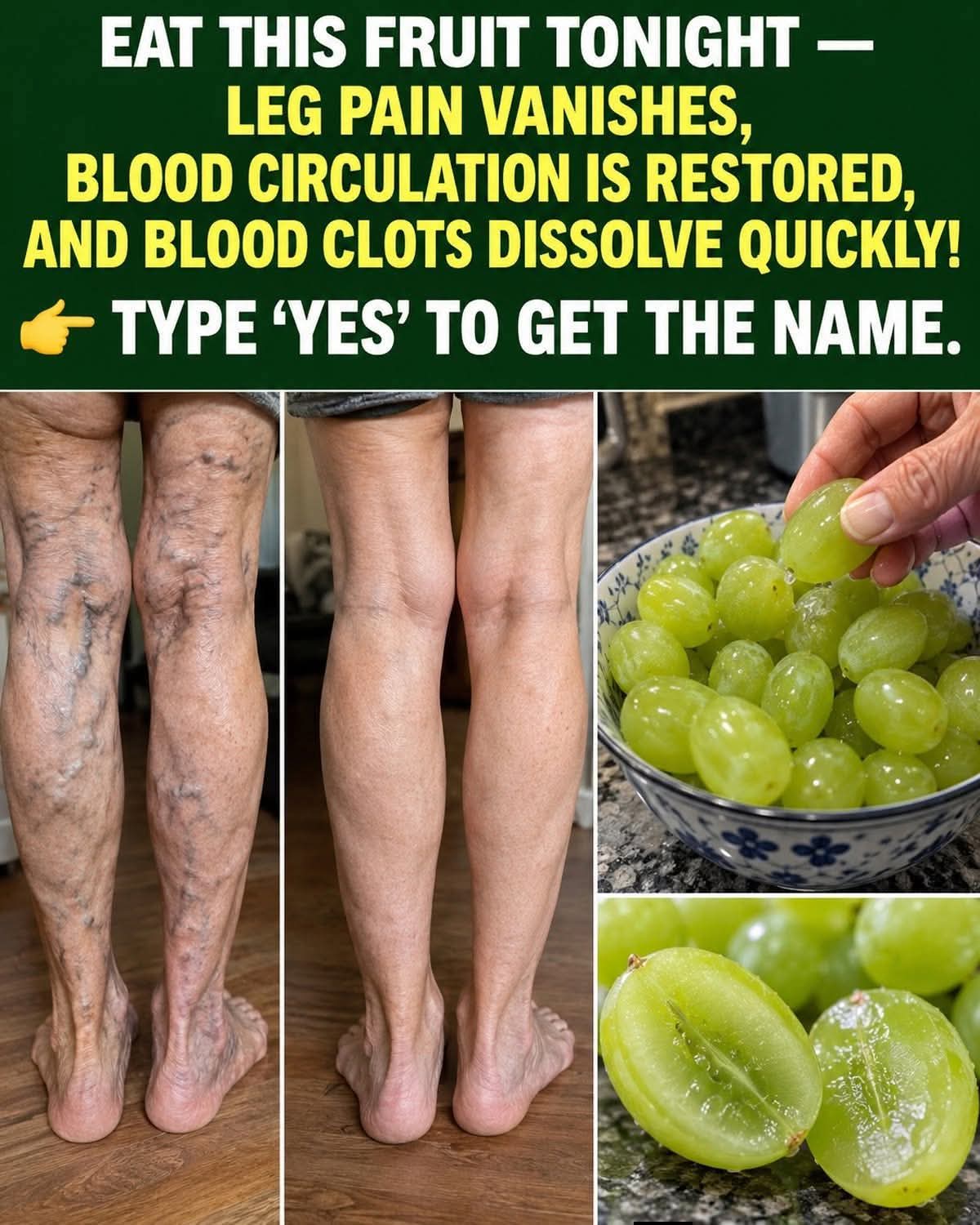
A popular health graphic claims that eating a particular fruit at night can make leg pain disappear, restore blood circulation, and quickly dissolve blood clots. The image shows green grapes alongside photographs of legs with visible veins and suggests that simply eating the fruit can produce dramatic changes in circulation.
The fruit shown is grapes. Grapes are nutritious and can certainly be part of a healthy eating pattern, but the claims in the image need to be treated carefully. Eating grapes does not provide a proven treatment for a deep vein thrombosis (DVT), and there is no reliable evidence that eating grapes at night can rapidly dissolve an existing blood clot.
This distinction is extremely important because blood clots can sometimes become medical emergencies. A clot that forms in a deep vein of the leg can potentially travel to the lungs and cause a pulmonary embolism. The Centers for Disease Control and Prevention explains that DVT requires prompt medical attention and that pulmonary embolism can be life-threatening.
At the same time, there is no reason to avoid grapes simply because social-media claims about them are exaggerated. Whole grapes provide water, carbohydrates, fiber, vitamins, minerals, and plant compounds. They can be enjoyed as part of a balanced diet.
The important message is this: food supports overall health, but it should not replace medical diagnosis or treatment when a blood clot is suspected.
The Fruit Shown in the Image: Grapes
The fruit pictured in the graphic is green grapes. Grapes are commonly eaten fresh, dried as raisins, or processed into juice and wine.
They contain naturally occurring plant compounds, including polyphenols. Some grape varieties, particularly darker varieties, contain compounds such as resveratrol. Research has investigated grape components for possible effects on cardiovascular health, but this is very different from proving that grapes dissolve blood clots.
The American Heart Association notes that grapes can contribute to a healthy diet and that compounds found in grapes have been investigated for cardiovascular effects. However, it also notes that more research is needed regarding some of these potential benefits.
So grapes can be a healthy food choice without being a medicine for DVT.
That distinction is worth emphasizing because online health graphics often take a real nutritional fact and turn it into a much stronger medical claim.
For example:
Reasonable statement: Grapes contain plant compounds and can be part of a heart-healthy eating pattern.
Unsupported statement: Eating grapes tonight will dissolve a blood clot quickly.
Those are completely different claims.
What Is a Blood Clot?
A blood clot is a mass of blood that has changed from a liquid to a more solid state. Blood clotting is normally a useful protective process because it helps stop bleeding after an injury.
Problems can occur when a clot forms inside a blood vessel when it should not.
One important type is deep vein thrombosis, commonly called DVT. A DVT is a blood clot that develops in a deep vein, often in the leg.
According to the CDC, common signs can include swelling, pain or tenderness, warmth, and redness or discoloration of the affected limb. However, some people with DVT have no symptoms at all.
This is one reason why simply looking at the legs is not enough to determine whether someone has a blood clot.
Visible veins, varicose veins, leg discoloration, or ordinary muscle pain do not automatically mean that a person has DVT.
A medical evaluation may be necessary.
Why Blood Clots Can Be Dangerous
A DVT can become particularly dangerous if part of the clot breaks away and travels through the bloodstream to the lungs.
This is called a pulmonary embolism, or PE.
The CDC lists symptoms of pulmonary embolism that can include:
Difficulty breathing
Chest pain or discomfort
A fast or irregular heartbeat
Coughing
Coughing up blood
Lightheadedness or fainting
These symptoms require immediate medical attention.
This is why an online recommendation involving fruit should never be used as a substitute for medical care when someone has possible symptoms of a blood clot.
If a person has sudden breathing difficulty, chest pain, coughing up blood, fainting, or other symptoms suggesting a pulmonary embolism, seeking emergency medical help is much more important than trying a food remedy.
Can Grapes Dissolve Blood Clots?
The simple answer is no proven evidence shows that eating grapes can quickly dissolve an existing blood clot in the leg.
This is one of the most important corrections to the claim in the image.
There are compounds in grapes that have been studied for effects related to inflammation, blood vessels, cholesterol, and cardiovascular health. But laboratory or observational findings about individual plant compounds should not be confused with evidence that eating a bowl of grapes can dissolve a DVT.
Blood clots that require treatment are managed medically.
The NHLBI explains that anticoagulant medicines are commonly used to prevent clots from becoming larger and to stop new clots from forming. In selected severe situations, clot-dissolving medicines called thrombolytics may be used. These treatments are medical therapies, not dietary treatments.
Therefore, someone who thinks they may have a blood clot should not delay evaluation while waiting for grapes, grape juice, herbs, supplements, or another food to work.
What About “Restoring Blood Circulation”?
The image also suggests that eating the fruit will restore circulation.
Again, this statement is too broad.
Poor circulation can have many different causes. Leg symptoms can result from conditions involving veins, arteries, nerves, muscles, joints, fluid accumulation, or other health problems.
For example, varicose veins involve enlarged, twisted veins and are different from DVT. Muscle strain can cause pain without a blood clot. Nerve problems can also cause burning, tingling, numbness, or discomfort in the legs.
Because different conditions require different treatments, it is not appropriate to assume that one food can “restore circulation” regardless of the underlying problem.
Healthy eating, regular physical activity, avoiding prolonged inactivity, and managing cardiovascular risk factors can support overall vascular health. But those measures should not be presented as an instant cure for an existing vascular problem.
Why the Legs in the Picture Can Be Misleading
The photograph in the graphic appears to show prominent veins and differences in the appearance of the legs.
Images like this can be persuasive because they visually imply that one condition has been reversed.
However, photographs alone cannot establish that a person had a blood clot, that grapes caused improvement, or that any particular treatment produced the change.
Visible veins can be associated with several conditions, including ordinary superficial veins and varicose veins.
DVT, on the other hand, occurs in deeper veins and generally requires appropriate medical assessment. The CDC states that special tests are required to diagnose DVT or pulmonary embolism because other conditions can produce similar symptoms.
A photograph therefore cannot prove the medical claim being made in the graphic.
Grapes and Cardiovascular Health
Although grapes cannot be considered a blood-clot treatment, they can still have a place in a healthy diet.
Grapes contain several nutrients and plant compounds. Their water content also makes them a refreshing fruit, while their natural carbohydrates provide energy.
The American Heart Association describes grapes as a food that can contribute to a healthy dietary pattern and discusses research involving grape components and cardiovascular health.
Eating whole fruit is generally a more useful approach than thinking of individual foods as miracle treatments.
A healthy dietary pattern can include:
Grapes
Apples
Oranges
Berries
Bananas
Vegetables
Beans
Whole grains
Nuts and seeds
Fish or other suitable protein sources
Other minimally processed foods
The overall pattern matters much more than one particular fruit eaten at a particular time.
What Nutrients Are Found in Grapes?
Grapes provide several nutritional components.
Water
Fresh grapes contain a substantial amount of water. Including water-rich fruits in the diet contributes to overall fluid intake.
However, eating grapes should not be considered a treatment for dehydration or a substitute for appropriate fluid intake.
Natural carbohydrates
Grapes contain naturally occurring sugars and carbohydrates.
For most people, these carbohydrates can fit comfortably into a balanced diet when consumed in appropriate portions.
Fiber
Whole grapes contain dietary fiber, particularly because the skin is eaten.
Fiber is important for normal digestive function and can contribute to overall dietary quality.
Vitamins and minerals
Grapes provide smaller amounts of several vitamins and minerals. Their nutritional contribution depends on the variety and quantity consumed.
The American Heart Association notes that grapes contain various vitamins and minerals, including potassium.
Plant compounds
Grapes contain polyphenols and other phytochemicals that have attracted considerable scientific interest.
These compounds are one reason grapes have been investigated in cardiovascular and other health research.
But again, the presence of potentially beneficial compounds does not mean that grapes act like prescription medication.
Can Grapes Help With Leg Pain?
Grapes are not a recognized treatment for unexplained leg pain.
Leg pain has many possible causes.
Some examples include:
Muscle fatigue
Exercise-related soreness
Muscle strain
Arthritis
Nerve irritation
Varicose veins
Peripheral arterial disease
Swelling
Injuries
Certain infections
DVT
Because the causes differ, treatment also differs.
A person with mild muscle soreness after exercise may benefit from rest, appropriate movement, hydration, and time.
Someone with a suspected blood clot requires medical evaluation.
Someone with persistent circulation problems may need a completely different assessment.
This is why the statement “eat this fruit and leg pain disappears” is too simplistic.
Understanding Varicose Veins
The image may also cause readers to confuse varicose veins with blood clots.
Varicose veins are enlarged veins that can become visible or twisted under the skin. They commonly occur in the legs.
They can cause symptoms such as:
Aching
Heaviness
Leg discomfort
Swelling
Itching
Skin changes
However, visible varicose veins do not automatically mean that someone has a dangerous blood clot.
Likewise, making varicose veins less visible is not the same as dissolving a DVT.
Anyone experiencing new or unusual swelling, pain, warmth, or redness in one leg should discuss the symptoms with a healthcare professional rather than attempting to diagnose the problem from an internet image.
Symptoms That Should Not Be Ignored
Knowing the warning signs of DVT is much more valuable than memorizing a supposed miracle food.
According to the CDC, common symptoms include:
Swelling
One leg or arm may become swollen.
Pain or tenderness
Pain may occur without an obvious injury.
Warmth
The affected area may feel warmer than the surrounding skin.
Redness or discoloration
The skin can become red or otherwise discolored.
Importantly, DVT can sometimes occur without obvious symptoms.
That means the absence of symptoms does not necessarily guarantee that no clot exists.
Emergency Warning Signs of Pulmonary Embolism
A pulmonary embolism can occur when a clot travels to the lungs.
Symptoms can include sudden:
Shortness of breath
Chest pain
Rapid or irregular heartbeat
Coughing
Coughing up blood
Dizziness
Fainting
These symptoms should be treated as an emergency.
If someone is experiencing these symptoms, they should seek emergency medical care rather than trying to treat the situation with food.
How Doctors Diagnose a Blood Clot
One of the biggest problems with viral health posts is that they encourage people to diagnose themselves.
DVT cannot reliably be diagnosed by looking at the leg.
The CDC explains that special medical testing is required because several other conditions can cause similar symptoms. Duplex ultrasonography is one of the tests used to evaluate suspected DVT.
Depending on the situation, clinicians may consider:
Symptoms
Medical history
Risk factors
Physical examination
Blood testing
Ultrasound
Other imaging
The appropriate testing depends on the individual situation.
How Blood Clots Are Actually Treated
Treatment depends on the type, location, severity, and circumstances surrounding the clot.
For DVT and many cases of pulmonary embolism, anticoagulants are commonly used.
These medications are often called “blood thinners,” although they do not literally make blood watery.
Their primary purpose is to prevent existing clots from growing and reduce the formation of new clots.
The NHLBI explains that anticoagulants may include traditional medications such as heparin and warfarin as well as newer direct oral anticoagulants. Treatment duration varies depending on the individual’s circumstances.
In selected serious cases, healthcare professionals may use thrombolytic medicines to dissolve clots. These medications can cause serious bleeding and therefore are generally reserved for situations where their benefits justify the risks.
Some patients may require procedures to remove or treat a clot.
This is very different from eating a piece of fruit.
Why You Should Never Stop a Blood Thinner for a Food Remedy
People who take anticoagulants should follow the treatment plan provided by their healthcare professional.
They should not decide to stop prescribed medication because a social-media post claims that a fruit, tea, herb, or supplement can perform the same function.
Blood-thinning medicines can have significant effects and potential complications, particularly bleeding.
The NHLBI notes that anticoagulant treatment requires medical consideration of the person’s history and circumstances.
If you are taking an anticoagulant and want to change your diet or start a supplement, discuss it with your healthcare professional or pharmacist.
Can Grapes Be Part of a Healthy Circulation-Friendly Diet?
Yes.
There is nothing inherently wrong with including grapes in a balanced diet.
A nutritious eating pattern can support cardiovascular health by emphasizing a wide variety of fruits, vegetables, whole grains, legumes, nuts, seeds, and appropriate sources of protein.
Grapes can be one of the fruits included in that pattern.
The important thing is to think about overall dietary quality rather than miracle foods.
For example, a simple snack could consist of:
A serving of grapes
Plain yogurt
A small portion of nuts
Another option could be grapes alongside a balanced meal containing vegetables, whole grains, and a protein source.
The goal is not to make grapes responsible for curing a medical condition.
What About Eating Grapes at Night?
The image specifically says to eat the fruit “tonight.”
There is no established medical rule that grapes become a blood-clot treatment simply because they are eaten at night.
The timing does not transform grapes into an anticoagulant.
For many people, fruit can be eaten at breakfast, lunch, as a snack, or with another meal depending on their dietary preferences and needs.
The claim that eating grapes at a particular time will rapidly dissolve a clot is therefore misleading.
Healthy Habits That Support Circulation
Instead of searching for one food that supposedly “restores circulation,” it is more useful to focus on sustainable health habits.
Stay physically active
Regular movement supports general cardiovascular fitness.
For people who sit for long periods, getting up and moving regularly can be helpful.
Avoid prolonged immobility
Long periods of immobility can increase the risk of blood clots.
The CDC recommends movement during prolonged travel, including getting up and walking around periodically when possible.
Maintain a balanced diet
A diet rich in vegetables, fruits, whole grains, legumes, and other minimally processed foods can support overall health.
Follow medical advice
People with previous clots or increased clotting risk may receive individualized prevention advice.
Take prescribed medication correctly
If a healthcare professional has prescribed anticoagulants, take them according to the instructions.
Blood Clot Risk Factors
Blood clots can happen to many different people, but certain circumstances increase risk.
The CDC identifies factors including:
Recent surgery or hospitalization
Limited movement
Certain chronic illnesses
Older age
Family history
Certain cancers
Pregnancy and the period after pregnancy
Estrogen-containing medicines
Injury or trauma
Being overweight or obese
Risk varies from person to person, and having a risk factor does not mean that someone will definitely develop a clot.
Long-distance travel can also increase risk, particularly when combined with other risk factors.
The Difference Between Prevention and Treatment
This distinction is essential.
A healthy diet may contribute to prevention and general health.
Treatment is what happens after a medical condition has been identified.
For example, eating fruit is part of healthy nutrition.
Taking an anticoagulant under medical supervision is a treatment for certain blood-clot conditions.
These should not be confused.
A person can eat an excellent diet and still develop a blood clot.
Likewise, a person with a clot should not assume that improving their diet alone will remove it.
A Simple Way to Enjoy Grapes
If you enjoy grapes, there is no need to eliminate them because of exaggerated online claims.
A simple snack can be prepared by washing fresh grapes thoroughly and serving them chilled.
They can also be combined with:
Plain yogurt
Oatmeal
Nuts
Seeds
Other fresh fruit
Frozen grapes can also make a refreshing snack.
The important point is that grapes should be viewed as food, not as an emergency treatment.
Who Should Be More Careful With Dietary Claims?
Everyone should be cautious about claims involving serious medical conditions, but this is particularly important for people who:
Have previously had DVT
Take anticoagulants
Have recently undergone surgery
Have recently been hospitalized
Are recovering from significant injury
Have limited mobility
Have a known clotting disorder
Have symptoms of possible DVT
Have symptoms of possible pulmonary embolism
People in these situations should prioritize professional medical advice.
Common Myths About Grapes and Blood Clots
Myth 1: Grapes dissolve DVT
There is no established evidence that eating grapes quickly dissolves a DVT.
Myth 2: Grapes can replace anticoagulants
They cannot.
Prescription anticoagulants are medications specifically used to prevent clots from growing and new clots from forming.
Myth 3: Eating grapes at night is necessary
There is no established requirement to eat grapes at night for circulation.
Myth 4: Visible veins mean a blood clot
Visible veins can have several causes. DVT requires appropriate medical assessment.
Myth 5: If leg pain improves after eating grapes, the clot is gone
Symptoms alone cannot confirm that a blood clot has disappeared.
A medical professional may need to perform appropriate testing.
Formation: How Blood Clots Develop
Blood clot formation is a complex biological process.
Normally, the body carefully balances clotting and anti-clotting mechanisms.
When a blood vessel is damaged, clotting helps prevent excessive blood loss.
But clotting inside a deep vein can create a blockage.
Reduced blood flow, damage to the vessel, and changes that make blood more likely to clot can all contribute to thrombosis.
That is why factors such as prolonged immobility, surgery, injury, certain diseases, and hormonal changes can influence clot risk.
The process cannot simply be reversed by eating one fruit.
Nutrition: A Better Way to Think About Grapes
Rather than asking whether grapes are a “blood-clot cure,” a more useful question is:
How can grapes fit into a healthy eating pattern?
The answer is relatively simple.
Fresh grapes can be used as:
A snack
A breakfast addition
A topping for yogurt
A fruit component of a balanced lunch
A naturally sweet addition to a fruit salad
A chilled dessert alternative
They provide natural sweetness without needing added sugar.
However, portion size still matters, especially for people who need to monitor carbohydrate intake.
People with diabetes or other conditions requiring individualized dietary management should follow their clinician’s dietary recommendations.
The Importance of Fact-Checking Health Images
The image that inspired this article is a good example of why online health information deserves careful examination.
The graphic uses several persuasive elements:
- A dramatic headline
- A promise of rapid results
- Before-and-after-looking photographs
- A common fruit
- A request for users to comment “yes”
These techniques can make a claim appear more authoritative than it actually is.
A useful health-literacy habit is to ask:
What evidence supports the claim?
Then ask:
Is the evidence about humans, or only laboratory research?
And finally:
Does a qualified medical organization recommend this as treatment?
When the claim involves something as serious as blood clots, these questions become especially important.
Conclusion
Grapes are a nutritious fruit that can be included in a balanced diet, and research has explored the potential cardiovascular effects of compounds found in grapes.
However, the claim shown in the image goes much further than the evidence supports.
Eating grapes does not have a proven ability to quickly dissolve blood clots, make a DVT disappear, or instantly restore circulation.
If someone has unexplained swelling, pain, tenderness, warmth, or discoloration in a leg, particularly without an obvious injury, they should seek medical advice because DVT can be serious.
If symptoms such as sudden difficulty breathing, chest pain, coughing up blood, rapid heartbeat, severe lightheadedness, or fainting occur, emergency medical attention is needed because these can be signs of pulmonary embolism.
The healthiest approach is not to fear grapes or treat them as a miracle cure. Enjoy them as one nutritious food among many, while relying on appropriate medical evaluation and treatment for suspected blood clots.
Final Takeaway for Readers
Yes, grapes can be a healthy addition to your diet.
No, grapes should not be considered a treatment for a blood clot.
No fruit should replace prescribed anticoagulant treatment or medical evaluation.
If you are experiencing possible symptoms of DVT or pulmonary embolism, do not wait for a food remedy to work. Blood clots can be diagnosed and treated medically, and early attention can be important.
A healthy diet is part of long-term wellness. Medical treatment is what should be used when a serious medical condition is suspected or diagnosed.