Garlic Milk: A Traditional Comforting Drink Recipe, Benefits, History, Preparation, Nutrition, and Everything You Need to Know
Garlic milk is a simple traditional preparation made by gently cooking garlic in milk until the cloves become soft and the milk takes on a mild garlic flavor. Although the combination may sound unusual at first, garlic and milk have been used together in traditional home cooking and folk practices in different parts of the world for generations. The result is a warm, creamy drink that can be enjoyed as a comforting evening beverage or used as a base for savory recipes.
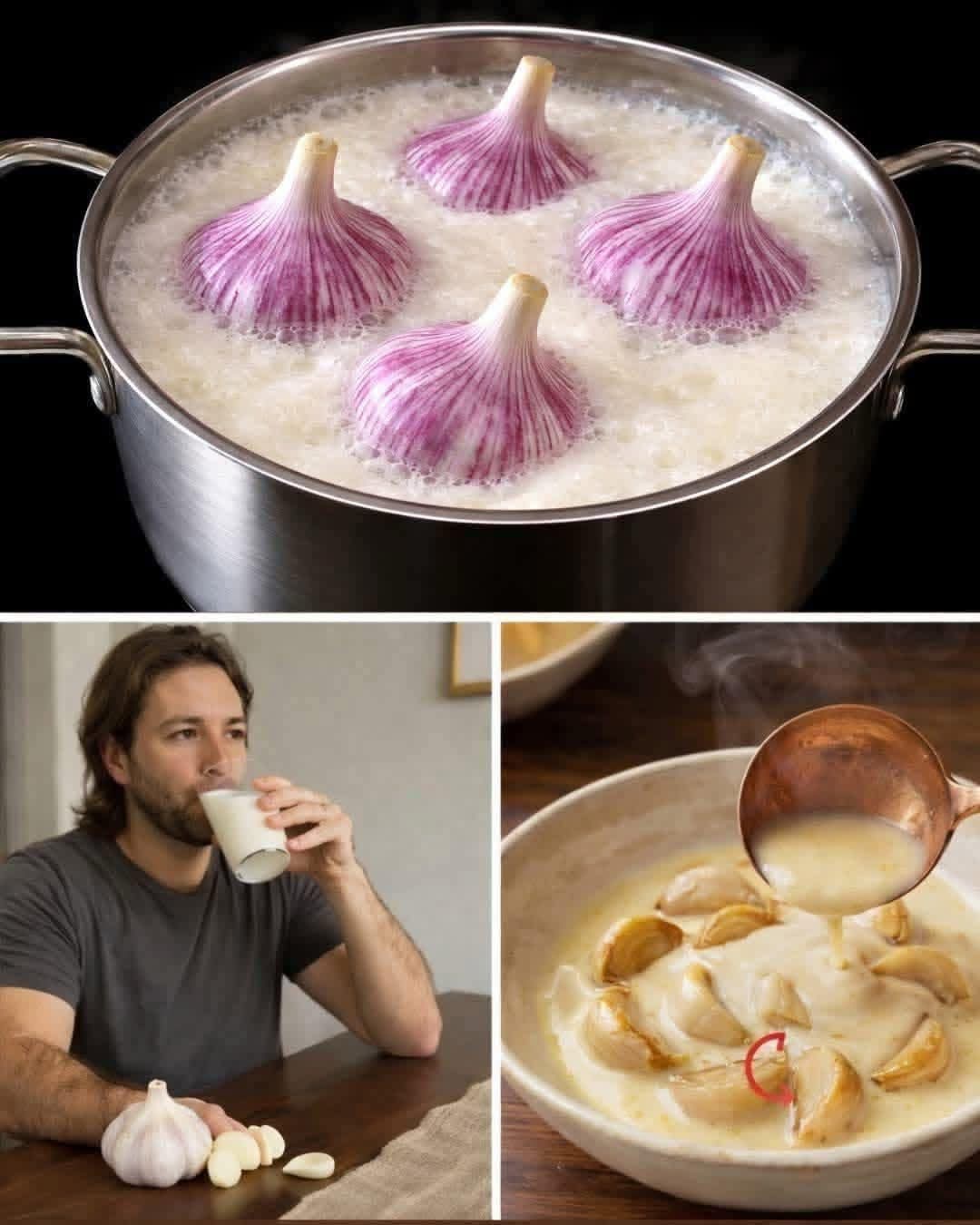
The image above shows garlic being gently cooked in milk, with softened garlic cloves served in the resulting creamy liquid. This preparation is especially interesting because cooking changes the sharp flavor of fresh garlic into something softer, sweeter, and more mellow. Instead of the intense bite associated with raw garlic, slowly cooked garlic becomes tender and much easier to eat.
Garlic milk is sometimes presented online as a powerful natural remedy for everything from colds and coughs to high blood pressure, digestion, immunity, sleep, and other health conditions. It is important to separate traditional use from scientifically established medical treatment. Garlic contains interesting sulfur compounds and other nutrients, but garlic milk should not be considered a cure for disease or a replacement for prescribed treatment.
Still, as a homemade beverage, garlic milk can be an interesting way to incorporate garlic into the diet. It is inexpensive, easy to prepare, warming, and adaptable. In this article, we will explore how to make it, its history, possible nutritional benefits, variations, storage, serving ideas, and practical tips for getting the best flavor.
What Is Garlic Milk?
Garlic milk is exactly what its name suggests: garlic gently cooked with milk. The basic preparation usually requires only two main ingredients—garlic and milk.
The garlic cloves are peeled and lightly crushed or left whole, depending on the recipe. They are then combined with milk and heated gently. As the garlic cooks, its texture becomes soft and its strong raw flavor decreases. The milk becomes infused with the aroma and flavor of the garlic.
Some versions include honey, cinnamon, turmeric, ginger, black pepper, or a small amount of butter. However, the simplest traditional-style preparation uses only garlic and milk.
The drink can be served warm, making it particularly appealing during cold weather. Some people enjoy it in the evening because of its soothing, comforting character.
A Short History of Garlic and Milk
Garlic has an extremely long history as both a food and a traditional medicinal ingredient. It has been cultivated and consumed for thousands of years across Asia, the Middle East, Europe, North Africa, and other regions.
Ancient civilizations valued garlic for its distinctive flavor as well as its traditional uses. Garlic was incorporated into everyday cooking, soups, sauces, stews, vegetable dishes, and meat preparations.
Milk has an equally important place in traditional food cultures. Combining milk with herbs, spices, roots, and other ingredients has been common in many culinary traditions.
Garlic milk does not have one universally accepted point of origin. Instead, variations of garlic cooked in milk appear in traditional household practices in different regions. In some cultures, garlic and milk were prepared as a warming household drink. In others, cooked garlic was incorporated into savory dishes using dairy.
The preparation shown in the image reflects one of the simplest approaches: garlic cloves are cooked gently in milk until tender.
Over time, recipes like this have become popular online because they are inexpensive and easy to prepare. Social media has also contributed to renewed interest in traditional food combinations.
Why Cook Garlic in Milk?
Raw garlic has a very strong flavor and aroma. When garlic is chopped or crushed, enzymes help produce sulfur-containing compounds responsible for much of its characteristic pungency.
Cooking changes garlic significantly.
As garlic is heated:
- Its sharpness decreases.
- Its texture becomes softer.
- Its flavor becomes sweeter and more mellow.
- Its aroma becomes less aggressive.
- The cloves become easier to mash or eat.
- The milk becomes infused with garlic flavor.
This makes garlic milk quite different from simply drinking milk and eating raw garlic separately.
The gentle cooking process is especially useful for people who find raw garlic too intense.
Ingredients for Homemade Garlic Milk
Basic Ingredients
4–6 garlic cloves
Use fresh garlic whenever possible. Choose firm cloves without visible mold, excessive softness, or unpleasant odors.
1 cup milk
Whole milk produces the richest result, but semi-skimmed or low-fat milk can also be used.
For a dairy-free version, you can experiment with unsweetened plant-based milk, although the flavor and texture will be different.
Optional ingredients
You can customize the drink with:
- 1 teaspoon honey
- A small piece of fresh ginger
- A pinch of cinnamon
- A small pinch of turmeric
- A tiny pinch of black pepper
- ½ teaspoon vanilla for a sweeter variation
- A small amount of butter for a richer savory preparation
Honey should preferably be added after the drink has cooled slightly rather than being boiled for a long period.
How to Make Garlic Milk
Step 1: Prepare the Garlic
Peel 4–6 garlic cloves.
You can leave the cloves whole, lightly crush them, or slice them. Lightly crushing the garlic releases more flavor into the milk.
If you want a very mild drink, keep the cloves whole.
If you want stronger garlic flavor, gently crush them with the side of a knife.
Step 2: Add the Milk
Pour approximately one cup of milk into a small saucepan.
Add the prepared garlic cloves.
Place the saucepan over low to medium-low heat.
The goal is gentle heating rather than aggressive boiling.
Step 3: Cook Slowly
Allow the milk and garlic to heat gently for approximately 10–15 minutes.
Stir occasionally.
Watch the saucepan carefully because milk can foam and boil over quickly.
The garlic should become noticeably softer.
Avoid prolonged high-temperature boiling because it can scorch the milk and produce an unpleasant flavor.
Step 4: Check the Garlic
After cooking, test one garlic clove with a spoon.
It should be soft enough to crush easily.
At this stage, the milk should smell noticeably of garlic, but the aroma should be softer than that of raw garlic.
Step 5: Add Optional Ingredients
If desired, add honey, cinnamon, ginger, turmeric, or another ingredient.
For a simple preparation, you can leave it exactly as it is.
Step 6: Serve Warm
Pour the garlic milk into a cup.
You can drink the milk and eat the softened garlic cloves, or strain the garlic out if you prefer a smoother beverage.
Allow it to cool to a comfortable drinking temperature before serving.
The Best Method for Mild Garlic Milk
If you are making garlic milk for the first time, begin with four cloves rather than six or eight.
Use whole cloves and cook them gently.
This produces a relatively mild flavor.
Once you become accustomed to the drink, you can increase the garlic or lightly crush the cloves for a stronger preparation.
The quality of the milk also makes a difference. Whole milk produces a creamy drink, while lower-fat milk produces a lighter result.
A Creamy Garlic Milk Variation
For a richer preparation, use:
- 1 cup whole milk
- 5 garlic cloves
- ½ teaspoon butter
- Small pinch of black pepper
Cook the garlic in the milk until soft.
Add the butter toward the end and stir until incorporated.
This version is more savory and can be served alongside bread or used as the beginning of a creamy sauce.
Garlic Milk With Honey
One popular variation combines cooked garlic milk with honey.
Ingredients
- 1 cup milk
- 4 garlic cloves
- 1 teaspoon honey
Method
Cook the garlic gently in the milk for 10–15 minutes.
Remove from the heat.
Allow it to cool slightly.
Stir in the honey.
The result is a mildly sweet, creamy drink with a distinctive garlic aroma.
Remember that honey is primarily being used here for flavor. Claims that this combination can cure infections or other medical conditions should not be treated as established medical facts.
Garlic Milk With Ginger
Ginger and garlic make an aromatic combination.
For this version, add a thin slice of fresh ginger to the saucepan while the garlic and milk are cooking.
The ginger contributes warmth and a slightly spicy flavor.
After cooking, remove the ginger before serving.
This version can be particularly pleasant during cold weather.
Garlic Milk With Turmeric
Another variation uses a small amount of turmeric.
You can add approximately ¼ teaspoon of turmeric to one cup of milk.
Stir well and cook gently.
Turmeric gives the drink a golden color and earthy flavor.
A tiny amount of black pepper can be added for flavor, although there is no need to use large quantities.
Possible Benefits of Garlic Milk
Garlic milk is best understood as a food rather than a medicine. Nevertheless, its individual ingredients contain nutrients and compounds that can contribute to a healthy diet.
1. Garlic Contains Sulfur Compounds
Garlic is particularly known for sulfur-containing compounds. One of the best-known is allicin, which can form when garlic is chopped or crushed.
These compounds are part of the reason garlic has such a distinctive smell and taste.
Research has investigated garlic compounds for various potential biological effects, but results from laboratory and clinical studies should not be interpreted as proof that garlic milk treats specific diseases.
2. Garlic Adds Flavor Without Requiring Large Amounts of Salt
Garlic is an excellent flavoring ingredient.
Adding garlic to food can create a strong savory character without depending entirely on salt.
This makes garlic useful in soups, vegetables, sauces, roasted meats, marinades, and many other dishes.
3. Milk Provides Protein and Minerals
Depending on the type of milk used, a cup can provide protein, calcium, phosphorus, vitamin B12, riboflavin, and other nutrients.
Whole milk also provides fat and calories.
The nutritional profile changes considerably when using plant-based milk, so check the nutrition label if you choose an alternative.
4. A Warm Beverage Can Be Comforting
There is something naturally comforting about a warm homemade drink.
Garlic milk can be enjoyed slowly, particularly during colder evenings.
The comfort comes from the warmth, creamy texture, familiar ingredients, and gentle flavor rather than from any proven medicinal effect.
Does Garlic Milk Cure a Cold?
This is one of the most common claims associated with garlic milk.
Garlic has been studied for immune-related effects, and it contains biologically active compounds. However, drinking garlic milk should not be considered a proven cure for the common cold.
A cold is caused by a viral infection, and no garlic-milk recipe can guarantee that the infection will disappear.
That does not mean garlic cannot be part of a healthy diet. It simply means we should avoid turning a traditional food into a medical promise.
For cold symptoms, adequate fluids, rest, and appropriate medical advice are more important.
Garlic Milk and Digestion
Garlic contains compounds that can affect the digestive system.
Some people tolerate cooked garlic well, while others may experience gas, bloating, heartburn, or stomach discomfort.
Cooking garlic generally makes it milder than raw garlic, but it can still cause symptoms in sensitive individuals.
Milk can also be problematic for people who have lactose intolerance.
Therefore, garlic milk is not automatically suitable for everyone.
If dairy causes discomfort, a lactose-free milk may be an alternative.
Garlic Milk and Heart Health
Garlic has been studied in relation to cardiovascular health, including blood pressure and cholesterol.
Some evidence suggests that certain garlic preparations may produce modest effects in particular circumstances. However, the evidence varies depending on the form and amount of garlic used.
A homemade cup of garlic milk should not be viewed as a treatment for hypertension or high cholesterol.
People taking medication for cardiovascular conditions should continue following their healthcare professional’s recommendations.
Garlic Milk and Immunity
Garlic is often described as an immune-boosting food.
A more accurate way to describe it is that garlic contains nutrients and bioactive compounds that are being studied for their relationship with immune function.
Eating garlic as part of a varied diet is reasonable, but there is no evidence that garlic milk alone can dramatically strengthen the immune system or prevent illness.
Healthy immune function depends on many factors, including adequate nutrition, sleep, physical activity, stress management, and appropriate medical care.
Nutrition of Garlic Milk
The nutrition of garlic milk depends heavily on the ingredients and quantities used.
For a basic preparation containing one cup of whole milk and approximately five garlic cloves, the milk contributes most of the calories, protein, fat, carbohydrates, calcium, and other nutrients.
Garlic contributes a relatively small number of calories at this serving size while providing various micronutrients and plant compounds.
Adding honey increases the carbohydrate and sugar content.
Adding butter increases calories and fat.
Using skimmed milk decreases fat and calories.
Using unsweetened plant-based milk may substantially change the protein and mineral content.
Therefore, if you are tracking calories or nutrients, consider the exact milk and additional ingredients you use.
Who Might Enjoy Garlic Milk?
Garlic milk is especially appealing to people who enjoy:
- Traditional homemade recipes
- Warm beverages
- Garlic-based dishes
- Savory drinks
- Simple ingredients
- Comfort food
- Homemade wellness-style recipes
- Experimenting with unusual flavor combinations
People who love garlic often appreciate the transformation that takes place during cooking.
The garlic becomes soft and mellow rather than sharp and pungent.
How Garlic Milk Changes During Cooking
One of the most fascinating parts of this recipe is the transformation of the garlic.
Fresh garlic is firm, sharp, and intensely aromatic.
After gentle cooking, the cloves become soft.
Their flavor becomes rounder and less aggressive.
The milk absorbs some of the garlic’s aroma and flavor.
If cooked carefully, the final result is creamy and aromatic rather than harsh.
This transformation is one reason cooked garlic is so widely used in cuisines around the world.
Common Mistakes When Making Garlic Milk
Boiling Too Aggressively
High heat can cause milk to scorch or boil over.
Use low or medium-low heat.
Using Too Much Garlic
Eight or ten cloves may produce an extremely strong drink.
Start with four to six.
Burning the Milk
Never leave the saucepan unattended.
Milk can stick to the bottom quickly.
Adding Too Much Honey
Honey can overwhelm the garlic flavor.
Start with a teaspoon and adjust.
Expecting a Medical Cure
Garlic milk is a food preparation, not a replacement for medical treatment.
How to Store Garlic Milk
Garlic milk is best consumed fresh.
If you need to store leftovers, transfer them promptly to a clean, covered container and refrigerate them.
Use appropriate food-safety practices and avoid leaving milk at room temperature for extended periods.
When reheating, warm it gently rather than bringing it to a vigorous boil.
For the best flavor and texture, however, preparing a fresh small batch is preferable.
Can You Eat the Cooked Garlic?
Yes.
The softened garlic cloves can be eaten after cooking.
They will be much softer and milder than raw garlic.
You can mash them into the milk, spread them on toast, or incorporate them into savory foods.
If you prefer a smooth drink, simply strain the cloves out before serving.
Garlic Milk as a Culinary Ingredient
Garlic milk does not have to be consumed only as a beverage.
The cooked garlic and infused milk can be incorporated into cooking.
For example, you can use it as a base for:
- Creamy sauces
- Mashed potatoes
- Savory soups
- Vegetable purées
- Pasta sauces
- Garlic cream sauces
- Baked vegetables
- Savory casseroles
The mild garlic flavor can add depth to dishes without the harshness of raw garlic.
Garlic Milk for Mashed Potatoes
One especially useful idea is using garlic-infused milk when making mashed potatoes.
Cook the garlic in milk until tender.
Mash the potatoes separately.
Add the warm garlic-infused milk gradually while mashing.
Add butter, salt, and black pepper to taste.
The result can be incredibly creamy and aromatic.
This is an excellent example of how the preparation can be transformed from a drink into a cooking ingredient.
Garlic Milk for a Creamy Sauce
You can also use garlic-infused milk as the foundation of a simple white sauce.
Prepare the garlic milk first.
Remove the garlic cloves if you want a smooth sauce.
Make a small roux using butter and flour.
Gradually whisk in the warm garlic-infused milk.
Cook until thickened.
Season with salt, pepper, and a little grated cheese if desired.
This creates a versatile sauce for vegetables, pasta, chicken, or potatoes.
The Role of Garlic in Traditional Home Cooking
Garlic is one of the most versatile ingredients in the kitchen.
It can be:
- Raw
- Roasted
- Fried
- Sautéed
- Baked
- Boiled
- Fermented
- Pickled
- Mashed
- Blended
Every cooking method produces a different flavor.
Raw garlic is sharp and powerful.
Sautéed garlic is aromatic and savory.
Roasted garlic is sweet and creamy.
Boiled garlic is mild and soft.
Garlic milk represents another interesting preparation method where the garlic is slowly softened while infusing another ingredient.
Safety Considerations
Although garlic milk is generally a simple food preparation, it is not suitable for everyone.
People with a milk allergy should avoid dairy milk.
People with lactose intolerance may need lactose-free milk or another suitable alternative.
Garlic can cause digestive discomfort in some people, particularly in larger quantities.
Individuals taking medications or managing a medical condition should not use garlic milk as a substitute for prescribed treatment.
If you are considering large amounts of garlic or concentrated garlic supplements, it is sensible to discuss this with a healthcare professional, particularly if you take medications that affect blood clotting or blood pressure.
Frequently Asked Questions
Can I drink garlic milk every day?
There is no general requirement to drink garlic milk daily. It can simply be enjoyed occasionally as a food or beverage.
A varied diet is more important than relying on one particular drink.
Is garlic milk better than raw garlic?
Not necessarily.
Cooking changes garlic’s flavor and texture and may make it easier to eat, but heat can also affect some of garlic’s compounds.
The choice depends on your culinary preferences and tolerance.
Can I use powdered garlic?
Fresh garlic is preferable for this particular preparation because it provides the characteristic texture and flavor.
Garlic powder can be used for a different style of drink, but the result will not be the same.
Can I add honey?
Yes. Honey works well as a sweetener.
Add it after removing the milk from the heat and allowing it to cool slightly.
Can children drink garlic milk?
Garlic used as a normal food is generally different from concentrated garlic supplements. However, children may dislike the strong flavor, and individual dietary needs vary.
For young children or children with allergies or medical conditions, ask a pediatric healthcare professional if you are unsure.
Tips for Making the Best Garlic Milk
For the best results, remember these simple principles:
Use fresh garlic
Fresh, firm cloves generally provide the best flavor.
Cook gently
Low heat creates a smoother result.
Start with less garlic
You can always make the next batch stronger.
Don’t burn the milk
Stir occasionally and watch the saucepan carefully.
Add sweeteners at the end
This allows you to control the sweetness.
Serve fresh
Freshly prepared garlic milk generally tastes best.
Garlic Milk Recipe at a Glance
Ingredients
- 1 cup milk
- 4–6 garlic cloves
- 1 teaspoon honey, optional
- Small pinch cinnamon, optional
- Small piece ginger, optional
- Pinch turmeric, optional
Instructions
- Peel the garlic cloves.
- Leave them whole or lightly crush them.
- Add milk and garlic to a small saucepan.
- Heat over low to medium-low heat.
- Cook gently for approximately 10–15 minutes.
- Stir occasionally.
- Continue until the garlic is soft.
- Remove from the heat.
- Add honey or other optional ingredients.
- Serve warm.
- Eat the softened garlic or strain it out.
Why This Recipe Continues to Attract Attention
Garlic milk is a perfect example of how traditional food ideas can become popular again through modern food culture.
The recipe uses ingredients that are inexpensive and widely available.
It requires no complicated equipment.
It can be prepared in a few minutes.
And most importantly, it transforms an extremely strong ingredient into something much gentler.
The visual appeal of the preparation also contributes to its popularity. Whole garlic cloves slowly cooking in creamy milk create an unusual but memorable image.
However, the popularity of a recipe online should not automatically be confused with scientific evidence for health claims.
The best way to appreciate garlic milk is to enjoy it as a traditional-style food while maintaining realistic expectations about what it can and cannot do.
Final Thoughts
Garlic milk is a fascinating homemade preparation that combines two familiar ingredients in an unusual way. By gently cooking garlic in milk, the sharpness of fresh garlic is softened, the cloves become tender, and the milk develops a distinctive savory aroma.
The recipe can be kept extremely simple with just garlic and milk, or customized with honey, ginger, turmeric, cinnamon, or other ingredients. It can be served as a warm drink or used creatively in sauces, mashed potatoes, soups, and other savory dishes.
Garlic itself contains sulfur-containing compounds and has been extensively studied as part of nutrition and traditional food practices. Milk contributes protein and minerals, depending on the variety used. Together, they make an interesting culinary combination.
At the same time, it is important to approach claims about garlic milk responsibly. It should not be presented as a guaranteed treatment for colds, infections, hypertension, diabetes, or other diseases. Traditional recipes can be enjoyable and nutritious without needing exaggerated health promises.
For garlic lovers, however, there is plenty to appreciate. The cloves become soft, creamy, and mellow, while the milk takes on a gentle garlic character. It is a simple recipe that demonstrates how dramatically cooking can transform an ingredient.
Whether you make a small cup on a cold evening, experiment with honey and ginger, or use the garlic-infused milk in a savory recipe, garlic milk offers an interesting way to explore traditional cooking with everyday ingredients.
In the end, the appeal of garlic milk is its simplicity: fresh garlic, warm milk, gentle cooking, and a comforting homemade result.