Rosemary Water for Better Eyesight? The Truth About the Viral Eye-Drop Remedy
Meta Description: A viral image shows rosemary being boiled and poured into a dropper bottle for eye health. But can rosemary water really improve eyesight, remove cataracts, or restore vision? Learn what science says, the potential risks of homemade eye drops, and safer ways to protect your eyes.
Suggested WordPress Tags: Rosemary, Eye Health, Natural Remedies, Vision, Eye Drops, Cataracts, Dry Eyes, Herbal Remedies, Healthy Aging, Rosemary Water
Introduction
Natural remedies have always attracted attention, especially when they promise a simple solution to a problem as important as eyesight. Recently, images showing fresh rosemary simmering in water alongside a dropper bottle have circulated widely online. Such posts often suggest that homemade rosemary water can be placed in the eyes to improve vision, clear cloudy eyes, remove cataracts, or restore eyesight naturally.
The picture is appealing because rosemary is a familiar herb. It grows easily, has a strong fragrance, is widely used in cooking, and contains a variety of plant compounds that have been studied for antioxidant and anti-inflammatory properties. Research has indeed shown that rosemary contains biologically active substances such as rosmarinic acid, carnosic acid, and carnosol.
But there is an extremely important difference between a plant having potentially useful biological compounds and a homemade preparation being safe or effective when placed directly into the eye.
The eye is one of the most delicate organs in the human body. Something that is harmless when eaten or used as a culinary herb is not automatically safe to put on the surface of the eye. Homemade liquids can contain bacteria, plant particles, concentrated compounds, or other contaminants. They are also not manufactured under the sterile conditions required for ophthalmic products.
Therefore, the image should not be interpreted as a recommendation to make homemade rosemary eye drops.
This article examines the idea carefully: what rosemary is, why people associate it with eye health, what scientific research actually tells us, why homemade eye drops can be dangerous, what to do if a homemade preparation gets into the eye, and what evidence-based habits can genuinely help protect vision.
What Does the Viral Image Show?
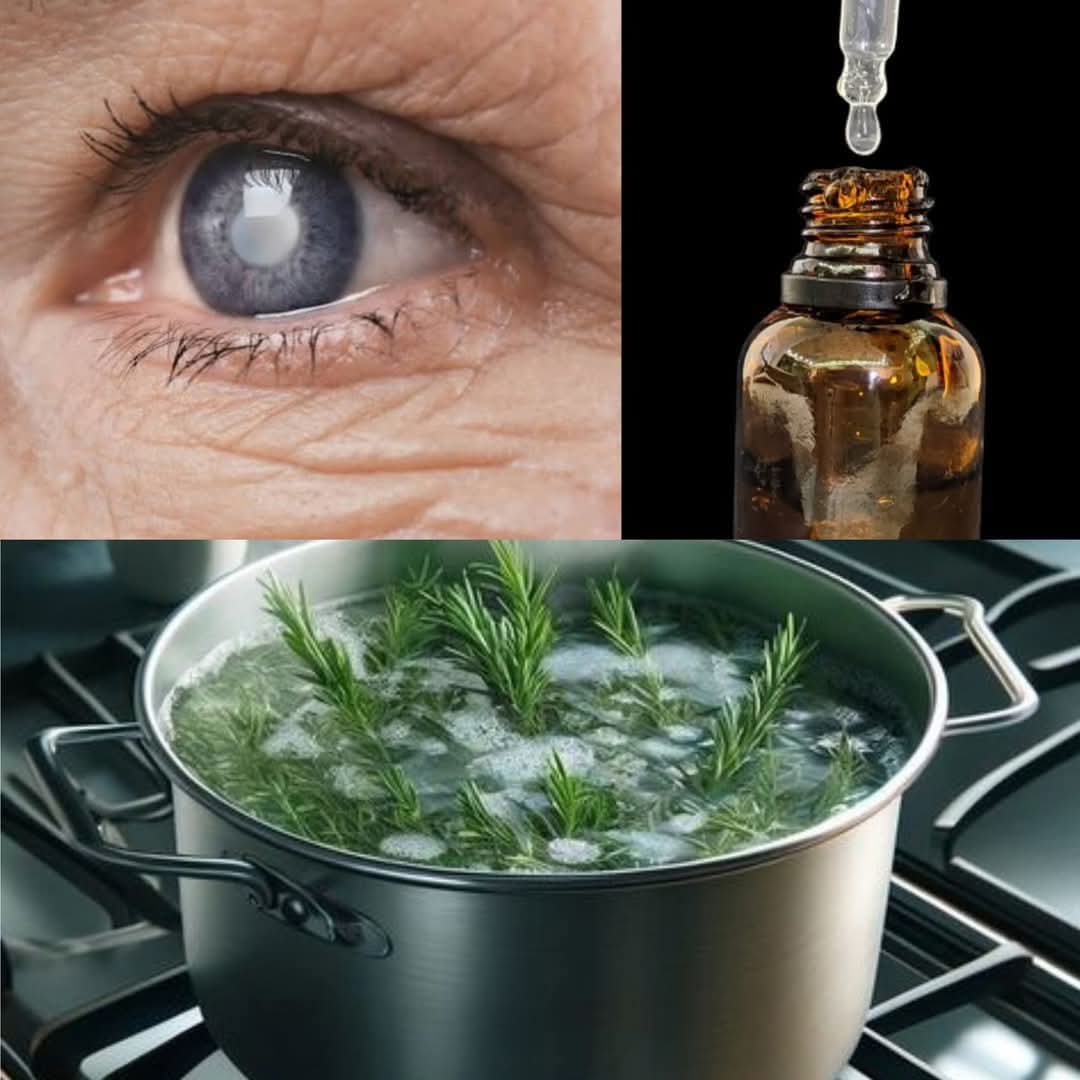
The image accompanying this article contains several elements: a close-up of an eye, fresh rosemary branches being boiled in water, and a small dropper bottle.
The combination strongly suggests a homemade rosemary eye-drop preparation.
This type of presentation can make a remedy appear medically established even when the image itself provides no evidence that the preparation has been tested in clinical trials.
A photograph can demonstrate that someone boiled rosemary and placed liquid in a bottle. It cannot demonstrate that the liquid:
- improves eyesight,
- treats cataracts,
- reverses glaucoma,
- repairs the retina,
- eliminates eye infections,
- treats macular degeneration,
- or is safe to place directly into the eye.
Those questions require scientific evidence, appropriate testing, and clinical evaluation.
This distinction is particularly important with eye remedies because vision loss can have many different causes. Blurry vision might result from an outdated glasses prescription, dry eye, cataracts, glaucoma, diabetes-related eye disease, retinal disease, infection, inflammation, medication effects, or an emergency condition.
Treating all of these problems with the same homemade liquid would not be medically appropriate.
Rosemary: A Traditional Herb With Interesting Compounds
Rosemary, scientifically known as Salvia rosmarinus and historically known as Rosmarinus officinalis, is a fragrant Mediterranean herb belonging to the mint family.
It has been used for centuries as a culinary seasoning and in traditional herbal practices.
Modern scientific research has identified numerous compounds in rosemary, including:
- Rosmarinic acid
- Carnosic acid
- Carnosol
- Flavonoids
- Phenolic compounds
- Volatile oils
Research reviews have investigated rosemary for antioxidant, anti-inflammatory, antimicrobial, neuroprotective, and other biological activities. Much of this research, however, involves laboratory experiments, animal studies, extracts, or specific formulations rather than homemade rosemary water placed into human eyes.
This is an important point.
A laboratory finding can be scientifically interesting without being a proven medical treatment.
For example, a compound might show antioxidant activity in a test tube. That does not automatically mean that drinking rosemary tea will prevent an eye disease, and it certainly does not mean that putting rosemary water into the eye will deliver the compound safely or effectively to the retina.
Does Rosemary Improve Eyesight?
There is currently no good clinical evidence establishing homemade rosemary water as an eye drop that improves eyesight.
This does not mean that rosemary has no interesting biological properties. It means that claims about directly restoring human vision with homemade rosemary eye drops are not supported by adequate evidence.
Research into medicinal plants and eye disease is still developing. A systematic review examining medicinal plants used for common ophthalmic disorders found that the available evidence was limited, with relatively few eligible studies and generally low-to-moderate quality evidence.
That distinction matters.
There is a big difference between:
“Rosemary contains antioxidants.”
and:
“Rosemary water restores eyesight.”
The first statement is supported by research into the plant’s chemical composition and biological activity. The second is a medical treatment claim that requires specific human evidence.
At present, there is not sufficient evidence to tell people that homemade rosemary water can restore normal eyesight.
Why You Should Not Put Homemade Rosemary Water Into Your Eyes
This is the most important safety message associated with the image.
Do not put homemade rosemary water, rosemary tea, rosemary essential oil, or other homemade herbal preparations directly into your eyes unless the product has specifically been manufactured and approved for ophthalmic use and your eye-care professional recommends it.
There are several reasons.
- Homemade liquids are not sterile
Ophthalmic products need to meet strict requirements concerning sterility and contamination.
A saucepan, kitchen counter, spoon, glass bottle, or dropper cannot be assumed to be sterile simply because they look clean.
Boiling an herb may reduce some microorganisms, but it does not guarantee that the final liquid remains sterile after handling, cooling, pouring, storing, and repeated use.
A homemade preparation can become contaminated after it is made.
The eye’s surface is particularly vulnerable to contamination because the cornea and conjunctiva are exposed tissues.
- Plant particles can irritate the eye
Even when rosemary has been boiled and strained, microscopic particles or chemical components may remain in the liquid.
The surface of the eye is not designed to receive kitchen preparations.
A substance that feels comfortable on the skin may sting badly when placed on the cornea.
Poison Control emphasizes a basic principle of eye safety: substances that are not intended for use in the eye can cause irritation or injury, and prompt rinsing is important after an accidental exposure.
- Rosemary contains potent aromatic compounds
Rosemary contains volatile compounds and essential oils.
Essential oils are highly concentrated compared with the whole plant.
They should not be confused with ordinary rosemary leaves used in cooking.
Poison Control notes that essential oils can cause harmful reactions when misused and that many have not been adequately studied for every proposed medical use. Product composition and concentration can also vary.
This is especially important around the eyes.
Even essential oils that are used safely in certain topical or aromatic applications should not be assumed safe for direct ocular use.
What About Rosemary Essential Oil?
This is an even more important warning.
Never put undiluted rosemary essential oil directly into the eye.
Essential oils are concentrated substances. The fact that they come from a plant does not make them suitable for every part of the body.
Eye exposure to inappropriate oils can cause burning, redness, watering, inflammation, and potentially more serious injury.
Poison Control provides similar warnings for several essential oils, noting that eye exposure can produce significant irritation and, depending on the substance, injury to the cornea.
If someone believes that a few drops of rosemary essential oil are “stronger” and therefore more effective than rosemary water, that is exactly the wrong approach.
More concentrated does not mean more beneficial.
Can Rosemary Remove Cataracts?
One of the most common problems with viral natural-remedy claims is the promise that a particular herb can “clear” cataracts.
A cataract is a clouding of the natural lens inside the eye.
It is not simply dirt sitting on the surface of the eye.
The National Eye Institute states clearly that surgery is the only way to get rid of a cataract.
This means that rosemary water should not be promoted as a way to dissolve or remove cataracts.
Early cataracts may not require immediate surgery. Doctors may recommend brighter lighting, anti-glare sunglasses, magnification, or an updated glasses prescription while monitoring the condition. But when cataracts significantly interfere with daily activities, cataract surgery is the established treatment.
A homemade herbal drop cannot substitute for an ophthalmic examination.
What About Glaucoma?
Glaucoma is another condition that should never be treated casually with homemade remedies.
Glaucoma can damage the optic nerve and may cause permanent vision loss.
One of the problems is that significant damage can occur before a person notices obvious symptoms.
That is why people at risk need appropriate eye examinations and treatment.
If someone with glaucoma replaces prescribed medication with a homemade herbal preparation, they could potentially allow the disease to progress without realizing it.
Natural products can sometimes be investigated scientifically, but “natural” does not mean “a replacement for prescribed treatment.”
What About Dry Eyes?
Dry eye is extremely common and can cause:
- Burning
- Gritty sensations
- Redness
- Watery eyes
- Light sensitivity
- Blurred or fluctuating vision
- Eye fatigue
Because dry eyes can feel uncomfortable, people may search for homemade solutions.
However, the eye surface has a carefully balanced tear film. Adding a homemade herbal liquid can disrupt that environment.
For dry-eye symptoms, an eye-care professional can help determine the underlying cause and recommend appropriate treatment. Depending on the situation, commercially manufactured artificial tears or other medical treatments may be appropriate.
The important principle is to use products designed specifically for ocular use rather than transferring homemade herbal preparations into dropper bottles.
Why Does a Dropper Bottle Make a Remedy Look More Scientific?
The presentation of a remedy can influence how people perceive it.
A dropper bottle resembles commercial eye medication.
A boiling pot resembles traditional herbal preparation.
A close-up photograph of an eye suggests a direct connection between the herb and improved vision.
Together, these images can create an impression of scientific authority.
But packaging does not establish effectiveness.
A homemade liquid inside a dropper bottle is still homemade.
A dropper does not sterilize its contents.
A brown glass bottle does not make a liquid ophthalmically safe.
And an attractive social-media graphic is not a clinical trial.
This is why health claims should always be evaluated by asking: What evidence supports the claim?
Can Rosemary Still Be Part of a Healthy Lifestyle?
Absolutely.
The warning about homemade eye drops does not mean that rosemary is a useless plant.
Rosemary can be enjoyed as a culinary herb and incorporated into a varied diet.
It can add flavor to:
- Roasted vegetables
- Beans
- Soups
- Chicken
- Fish
- Potatoes
- Whole grains
- Sauces
- Salads
- Mediterranean-style dishes
Rosemary contains plant compounds that researchers continue to study, including antioxidant and anti-inflammatory constituents.
The safer approach is to enjoy herbs as foods rather than turning them into untested eye medications.
A healthy diet can support general health, including the nutritional needs of the eyes, but no single herb should be presented as a cure for complex eye diseases.
How Nutrition Supports Eye Health
Healthy vision depends on the health of many structures, including the cornea, lens, retina, macula, optic nerve, blood vessels, and surrounding tissues.
Nutrition is one part of overall eye health.
A balanced eating pattern can include:
Leafy green vegetables
Spinach, kale, collard greens, and other leafy vegetables provide carotenoids and other nutrients.
Colorful vegetables
Orange, yellow, red, and green vegetables supply a variety of vitamins, carotenoids, and plant compounds.
Fruits
Berries, citrus fruits, kiwi, and other fruits provide vitamins and polyphenols as part of a balanced diet.
Fish and other sources of healthy fats
Certain fish provide omega-3 fatty acids.
Nuts and seeds
These can provide vitamin E, minerals, healthy fats, and protein.
Whole grains and legumes
These provide fiber and a broad range of nutrients.
The goal is not to find one “magic” food.
The goal is to create a dietary pattern that supports the whole body over many years.
Protecting Your Eyes From Everyday Damage
There are several simple habits that are more sensible than experimenting with homemade eye drops.
Wear appropriate sunglasses
Strong ultraviolet exposure can contribute to long-term eye and skin damage. Sunglasses that provide appropriate UV protection can be useful when spending time outdoors.
Use protective eyewear
When cutting, drilling, gardening, handling chemicals, or performing other activities that could send particles toward the eyes, use appropriate protective eyewear.
Avoid smoking
Smoking is associated with several serious health problems, including conditions that can affect vision.
Manage chronic health conditions
Diabetes and high blood pressure can affect the eyes. Proper medical management and appropriate eye examinations are important.
Take visual symptoms seriously
Persistent blurry vision, flashes, new floaters, eye pain, sudden vision loss, or significant changes in vision should not be treated with home remedies.
What Should You Do If Rosemary Water Gets Into Your Eye?
Accidental exposure can happen.
If a homemade rosemary preparation or another substance gets into your eye, the priority is to remove it.
Poison Control recommends immediate irrigation when something that does not belong in the eye gets into it. Running water at a comfortable temperature can be used, and irrigation should generally continue for about 15–20 minutes.
Do not deliberately add another substance to “neutralize” the first one.
Do not rub the eye aggressively.
Do not continue using the preparation simply because the first exposure did not cause immediate discomfort.
If pain, redness, light sensitivity, persistent watering, swelling, or blurred vision continues, seek medical evaluation promptly.
For significant or uncertain chemical exposures, professional medical or poison-control guidance is appropriate.
Why “Natural” Does Not Automatically Mean “Safe”
The word “natural” is powerful in health marketing.
People often assume that natural substances are gentle, while manufactured medicines are dangerous.
The reality is more complicated.
Plants contain chemicals. Some are beneficial, some are irritating, and some can be toxic at particular concentrations.
Even rosemary has been the subject of toxicology research, and a recent comprehensive review discussed both its potentially beneficial biological effects and possible adverse effects associated with excessive or inappropriate exposure.
The correct question is not:
“Is it natural?”
The better questions are:
“What is it made of?”
“What dose is being used?”
“How is it prepared?”
“Has it been tested in humans?”
“Is it sterile?”
“Is it specifically intended for use in the eye?”
“What are the possible risks?”
Those questions help separate genuine health information from viral claims.
Why Clinical Evidence Matters for Eye Treatments
Eye diseases can be complicated.
A treatment that helps one condition may do nothing for another.
For example, a substance that reduces surface irritation would not necessarily treat a cloudy lens. A product that temporarily lubricates the eye would not repair an injured retina. An antioxidant would not automatically lower dangerous eye pressure.
Scientific research helps determine:
- Whether a treatment works
- How much should be used
- How it should be administered
- Who should avoid it
- What side effects may occur
- Whether it interacts with other treatments
- Whether benefits outweigh risks
Research on herbal medicines for eye conditions exists, but reviews have emphasized that evidence for many plant-based ophthalmic treatments remains limited and variable in quality.
That is why promising laboratory findings should be treated as research leads, not automatic home treatments.
The Difference Between Eating Rosemary and Putting Rosemary in the Eye
This distinction deserves special attention.
When rosemary is used in food, it enters the digestive system.
The body processes its components through digestion, metabolism, and excretion.
When a substance is placed directly onto the eye, it interacts with the delicate tissues of the ocular surface.
The two routes are completely different.
A food can therefore be perfectly reasonable to eat while being inappropriate for direct application to the eye.
The same principle applies to many kitchen ingredients.
Just because something is safe to consume does not mean it is safe to put into the eye.
What About “Rosemary Eye Massage”?
Some online posts may recommend rosemary oil around the eyes rather than directly into the eye.
Extreme caution is still warranted.
The skin around the eyes is thin and sensitive, and essential oils can cause irritation or allergic reactions.
If someone wants to use a cosmetic product around the eye area, it should be a product specifically formulated and labeled for that purpose.
Avoid getting oils into the eyes.
Never massage essential oil onto the eyelids in a way that could allow it to enter the eye.
When Should You See an Eye Doctor?
A professional eye examination is especially important when vision changes are new, persistent, or unexplained.
Seek prompt medical attention for symptoms such as:
- Sudden loss of vision
- Sudden severe eye pain
- A curtain-like shadow over vision
- A sudden increase in floaters
- Flashes of light
- Significant eye injury
- Chemical exposure
- Persistent blurred vision
- Severe redness with pain
- New double vision
- Marked sensitivity to light
These symptoms can sometimes indicate conditions that require urgent treatment.
A homemade herbal preparation should never delay professional care.
Common Myths About Rosemary and Vision
Myth 1: “Rosemary water can restore eyesight naturally.”
There is not enough clinical evidence to support this claim.
Myth 2: “If rosemary is an antioxidant, it must repair the eye.”
Antioxidant activity does not automatically translate into treatment of an eye disease.
Myth 3: “Boiling rosemary makes homemade eye drops sterile.”
Boiling does not guarantee that the final preparation remains sterile throughout handling and storage.
Myth 4: “Natural eye drops are safer than medical eye drops.”
Not necessarily. Homemade preparations can contain contaminants and may have unpredictable concentrations.
Myth 5: “Rosemary can dissolve cataracts.”
There is no established evidence that rosemary water dissolves cataracts. The National Eye Institute states that surgery is the only way to get rid of cataracts.
Myth 6: “If it doesn’t burn, it must be safe.”
Not true.
An inappropriate substance can potentially cause harm even when symptoms are initially mild.
A Better Way to Think About Herbal Remedies
Herbal medicine deserves neither blind rejection nor blind acceptance.
Some plants contain compounds that may eventually contribute to useful medicines. Many established drugs originated from natural substances.
But traditional use and scientific proof are not the same thing.
The best approach is balanced:
Respect traditional knowledge.
Study promising plants scientifically.
Use herbs appropriately.
Avoid unsupported medical claims.
Never experiment with unsterile substances in the eye.
This approach allows people to appreciate natural products without putting themselves at unnecessary risk.
Frequently Asked Questions
Can I drink rosemary tea for general health?
Rosemary can be used as a culinary herb and in traditional preparations, but concentrated herbal products may have different safety considerations. If you take medications or have a medical condition, discuss regular medicinal use of herbs with a healthcare professional. Research on herbal products varies considerably in quality and safety.
Can rosemary cure blurry vision?
Blurry vision has many possible causes. Rosemary has not been established as a treatment that cures blurry vision.
Can rosemary remove cataracts?
No established evidence shows that homemade rosemary water removes cataracts. Cataract surgery is the only way to remove a cataract.
Can I put rosemary essential oil in my eyes?
No. Essential oils should not be placed directly in the eyes.
Can homemade rosemary water be used as artificial tears?
No. Homemade rosemary water is not a substitute for commercially manufactured ophthalmic lubricants.
What if my eyes feel dry?
An eye-care professional can help determine the cause and recommend appropriate treatment, which may include products specifically manufactured for ocular use.
Is rosemary itself dangerous?
Rosemary is commonly used as a culinary herb, but concentrated preparations and excessive exposure can have risks. Allergic reactions and other adverse effects have been reported, and safety depends on the form and amount used.
Final Thoughts
The viral image of rosemary boiling in water beside an eye and a dropper bottle is visually convincing, but it should not be mistaken for proof that homemade rosemary eye drops can restore vision.
Rosemary is an interesting herb containing a variety of biologically active compounds. Scientific research continues to investigate its antioxidant, anti-inflammatory, antimicrobial, and other properties.
However, those findings do not establish homemade rosemary water as a safe or effective eye treatment.
The most important lesson is simple:
Do not put homemade rosemary water or rosemary essential oil into your eyes.
The eye requires products that are appropriately formulated, manufactured, and intended for ophthalmic use. Homemade liquids can be contaminated and may cause irritation or injury.
If you are experiencing blurry vision, cataracts, eye pain, redness, flashes, floaters, or other changes in your eyesight, the safest approach is to determine the underlying cause with an eye-care professional rather than relying on an internet remedy.
Rosemary can still have a place in a healthy lifestyle—as a flavorful culinary herb and as a subject of ongoing scientific research. But when it comes to your eyesight, natural does not automatically mean safe, and a viral recipe is not a substitute for evidence-based eye care.
Your vision is too valuable to experiment with.
When in doubt, protect your eyes, avoid untested homemade drops, and get professional advice.