Men Drink This for Prostate Health? The Truth About Onion Milk, Potential Benefits, Risks, and What Really Supports a Healthy Prostate
Introduction
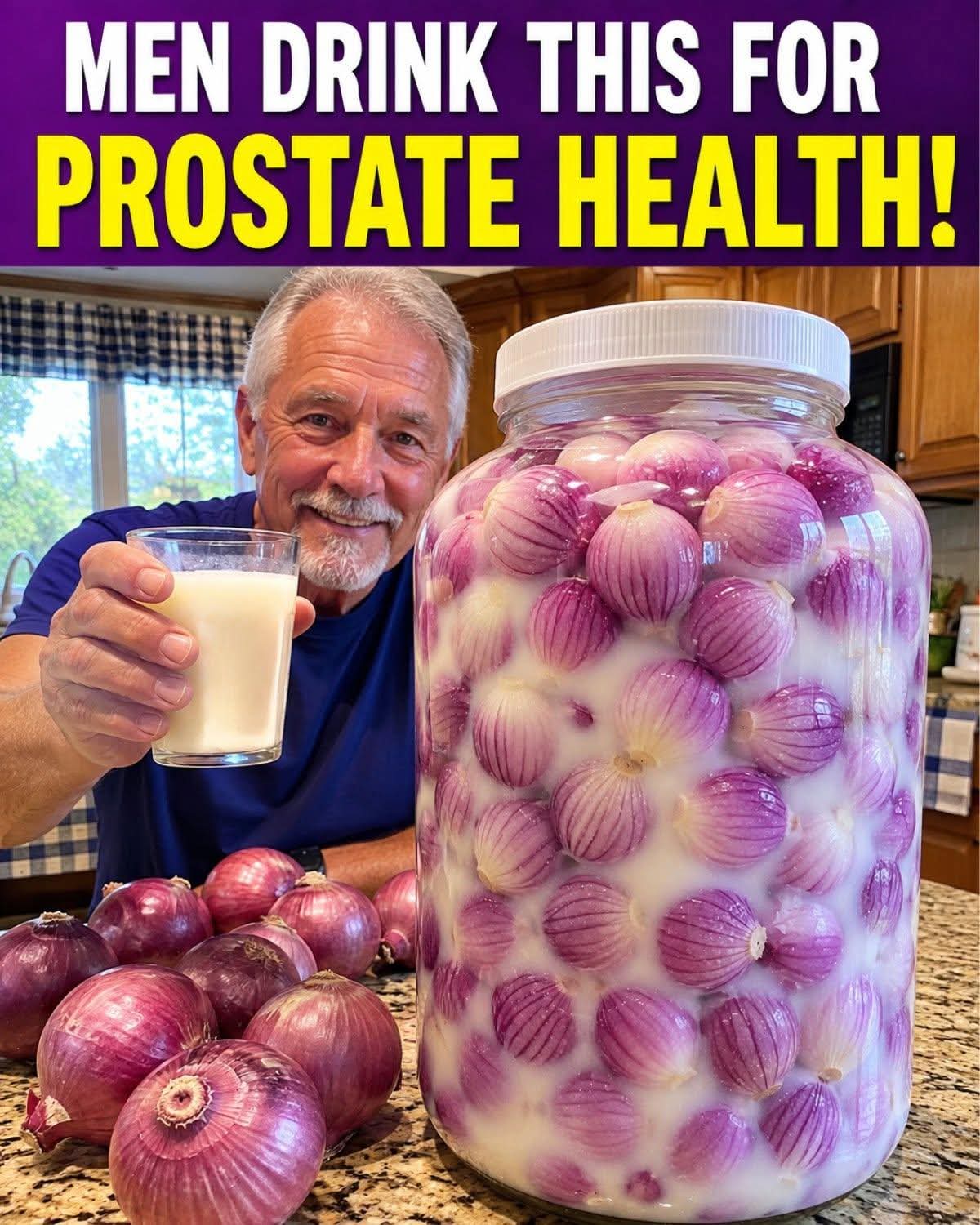
A striking health image circulating online shows a man drinking a pale, milky-looking beverage beside a large jar filled with small red onions. The message is simple and powerful: “Men drink this for prostate health!”
Claims like this can attract attention because prostate problems become increasingly common as men get older. Many men experience changes in urination, including waking several times at night, having a weaker urine stream, needing to urinate more frequently, or feeling that the bladder has not completely emptied.
The prostate is a small gland located below the bladder that surrounds part of the urethra. As men age, the prostate commonly becomes larger. This condition is called benign prostatic hyperplasia (BPH). BPH is not prostate cancer, but it can cause troublesome urinary symptoms and, in some cases, complications.
So, could a homemade onion-and-milk drink actually improve prostate health?
The honest answer is more complicated than the viral headline suggests.
Onions are nutritious vegetables and contain a variety of plant compounds. Milk can provide protein, calcium, and other nutrients. However, there is not enough clinical evidence to say that an onion-and-milk drink treats an enlarged prostate, shrinks the prostate, prevents prostate cancer, or replaces medical treatment.
That does not mean onions have no place in a healthy diet. Quite the opposite: vegetables, fruits, whole grains, regular physical activity, and maintaining a healthy weight can all be part of a sensible approach to men’s long-term health. The important distinction is between eating nutritious foods and claiming that one particular homemade drink is a treatment for a medical condition.
This article explores the viral onion drink, what onions and milk actually offer nutritionally, what science says about prostate health, how men can support urinary health, and when urinary symptoms require professional attention.
What Is the Prostate?
The prostate is part of the male reproductive system. It sits underneath the bladder and surrounds the urethra, the tube through which urine leaves the body.
The gland contributes fluid to semen and changes as a man ages. One of the most common age-related prostate conditions is benign prostatic hyperplasia, commonly abbreviated as BPH.
BPH is a noncancerous enlargement of the prostate. According to the National Institute of Diabetes and Digestive and Kidney Diseases, BPH affects approximately 5% to 6% of men aged 40 to 64 and around 29% to 33% of men aged 65 and older.
As the prostate enlarges, it can squeeze the urethra. This may make it more difficult for urine to pass from the bladder.
Common symptoms include:
- Difficulty starting urination
- A weak or interrupted urine stream
- Dribbling at the end of urination
- Urinary urgency
- Frequent urination
- Waking during the night to urinate
- Difficulty completely emptying the bladder
- Pain during urination in some cases
Importantly, urinary symptoms do not automatically mean a man has BPH. Similar symptoms can occur with other urinary conditions, prostatitis, infections, medications, or prostate cancer.
That is why treating persistent symptoms with a homemade drink alone can be risky.
What Is the Onion-and-Milk Drink Shown in the Image?
The image appears to depict small onions, particularly red or purple onions, immersed in a pale liquid. The liquid may be milk or another dairy-based preparation.
There are many variations of onion drinks and onion-based traditional remedies. Some recipes involve:
- Chopping or peeling onions.
- Heating them in milk or water.
- Allowing the mixture to simmer.
- Straining the liquid.
- Drinking the resulting preparation.
Other versions involve soaking onions rather than cooking them.
Because recipes shared online can vary considerably, there is no single standardized “onion milk prostate drink.” More importantly, there is no established medical recipe that has been proven to shrink an enlarged prostate.
The image should therefore be treated as a food or traditional-remedy suggestion rather than a medically established prostate treatment.
Why Are Onions Considered Healthy?
Onions belong to the Allium family of vegetables, alongside garlic, leeks, shallots, and related plants.
They contain several nutrients and naturally occurring plant compounds. Depending on the variety, onions can provide vitamin C, small amounts of other vitamins and minerals, fiber, and various phytochemicals.
Red and purple onions are particularly interesting because their color comes partly from anthocyanins and other plant compounds.
Onions also contain compounds such as quercetin, a flavonoid that has been extensively studied in nutritional and laboratory research.
However, there is an important difference between saying:
“Onions are nutritious.”
and saying:
“Drinking onions in milk treats prostate disease.”
The first statement is reasonable. The second requires clinical evidence.
Laboratory research on plant compounds can be interesting, but results observed in cells or animals do not automatically mean that consuming a particular homemade recipe produces the same effect in humans.
Can Onions Shrink an Enlarged Prostate?
There is currently no good evidence establishing onion milk as a treatment that shrinks an enlarged prostate.
BPH involves changes in prostate tissue associated with aging and hormonal factors. Medical treatment depends on the severity of symptoms and how much they affect quality of life.
According to NIDDK, established approaches for BPH can include watchful waiting, lifestyle changes, prescription medicines, minimally invasive procedures, and surgery when appropriate.
Some medications work by relaxing muscles around the prostate and bladder, while others can reduce prostate growth or shrink the gland over time.
A homemade onion drink does not work through these established treatment mechanisms.
Therefore, men should be careful with social-media claims suggesting that drinking onion milk for a particular number of days will “clean the prostate,” “remove prostate swelling,” or “restore normal urine flow.”
There is no reliable evidence to support those promises.
Could Onions Still Be Part of a Prostate-Friendly Diet?
Absolutely.
There is nothing wrong with including onions in a balanced eating pattern simply because they have not been proven to cure BPH.
Onions can add flavor without requiring large amounts of salt, and they can be included in meals containing other vegetables, beans, whole grains, fish, poultry, and other nutritious foods.
A healthy dietary pattern is generally more important than one special ingredient.
The American Cancer Society notes that there is no guaranteed way to prevent prostate cancer. However, maintaining a healthy weight, being physically active, and eating a diet rich in vegetables, fruits, whole grains, and other nutritious foods are reasonable strategies for overall health and may help reduce the risk of some cancers.
The organization also notes that research on diet and prostate cancer is complex, and individual foods should not be treated as guaranteed preventive medicines.
What About the Milk?
Milk provides several useful nutrients, including protein and calcium. For people who tolerate dairy, it can be part of a balanced diet.
However, milk is not a proven treatment for prostate enlargement either.
Some men may experience digestive symptoms after drinking milk because of lactose intolerance. Others may need to limit dairy because of dietary preferences, allergies, or other medical considerations.
The type and amount of milk also matter.
A sweetened milk drink can add a substantial amount of sugar, depending on the recipe. Adding large quantities of sugar does not make a beverage more beneficial for prostate health.
If someone enjoys onion cooked in milk as a traditional food, it can be viewed primarily as a food preparation rather than a medical therapy.
Is Onion Milk Safe for Everyone?
For most healthy adults, onions and milk are ordinary foods. But that does not mean every homemade onion preparation is appropriate for everyone.
Potential problems can include:
- Digestive discomfort
Onions contain fermentable carbohydrates that can cause gas, bloating, or abdominal discomfort in some people, particularly those with sensitive digestive systems.
- Lactose intolerance
People who do not digest lactose well may experience bloating, gas, abdominal pain, or diarrhea after drinking ordinary milk.
- Food allergies
Milk allergy is different from lactose intolerance. People with a true milk allergy should avoid milk products as advised by a healthcare professional.
- Excessive consumption
More is not necessarily better. Drinking very large quantities of any homemade preparation can cause unnecessary digestive problems and does not guarantee additional health benefits.
- Poor food safety
A homemade mixture containing milk should be prepared and stored safely. Leaving dairy-based mixtures at room temperature for extended periods can allow harmful microorganisms to multiply.
This is especially important with viral recipes showing large jars of onions sitting in liquid for days. A photograph does not tell you whether the preparation was refrigerated, sterilized, fermented safely, or stored under appropriate conditions.
Does Onion Milk “Clean” the Prostate?
One of the most common phrases used in natural-remedy posts is that a drink will “clean” or “flush” the prostate.
The prostate is not an organ that needs to be “washed out” with a special drink.
The urinary system has its own physiological processes involving the kidneys, bladder, ureters, and urethra. Drinking a beverage does not mechanically scrub the prostate.
Similarly, urinary symptoms should not automatically be interpreted as evidence that the body contains “toxins” that need to be removed.
If the prostate has enlarged and is compressing the urethra, drinking a particular beverage cannot be assumed to reverse that physical change.
This is one reason it is important to distinguish wellness language from medical treatment.
What Really Helps Men With BPH Symptoms?
If a man has mild urinary symptoms, lifestyle changes may sometimes help.
NIDDK recommends several practical measures for men managing BPH symptoms, including being physically active, limiting alcohol and caffeine, adjusting fluid intake before bedtime or outings, and avoiding holding urine for long periods.
These strategies do not mean that diet can cure BPH. Instead, they may help manage symptoms in appropriate cases.
For example, a man who wakes several times each night to urinate may benefit from reducing large amounts of fluid immediately before bedtime.
Similarly, caffeine and alcohol can influence urinary frequency in some people, so reducing them may help certain symptoms.
A healthcare professional can help determine which changes make sense for an individual.
Exercise and Prostate Health
Physical activity is an important part of healthy aging.
Regular movement supports cardiovascular health, muscle strength, metabolic health, mobility, and weight management.
NIDDK notes that physical activity may help reduce the risk of BPH, although researchers have not identified a guaranteed method of preventing the condition.
Men do not necessarily need an extreme exercise program.
Walking, cycling when comfortable, swimming, strength training, gardening, and other forms of regular movement can contribute to an active lifestyle.
The key is consistency.
A healthy lifestyle is usually more meaningful than relying on a single drink promoted online as a “secret remedy.”
The Importance of Maintaining a Healthy Weight
Body weight is another important component of overall men’s health.
Excess body weight is associated with numerous chronic health conditions. The American Cancer Society notes that some studies have linked obesity with a higher risk of advanced or potentially fatal prostate cancer, although the relationship between weight and prostate cancer is complicated.
Maintaining a healthy weight should therefore be considered part of a broader health strategy.
This does not mean men need to follow extreme diets.
Instead, a sustainable pattern can emphasize:
- Vegetables
- Fruits
- Whole grains
- Beans and legumes
- Fish
- Lean protein sources
- Nuts and seeds
- Healthy fats
- Appropriate portions
At the same time, highly processed foods, sugar-sweetened beverages, excessive alcohol, and large amounts of processed meat can be limited.
What About Prostate Cancer?
BPH and prostate cancer are different conditions.
An enlarged prostate does not automatically mean cancer.
At the same time, urinary symptoms should not simply be assumed to be BPH without appropriate evaluation.
The American Cancer Society explains that there is no guaranteed way to prevent prostate cancer, and many risk factors cannot be controlled. Age, family history, and other factors can influence risk.
Dietary research is also complicated. Some foods and nutrients have been investigated for possible relationships with prostate cancer, but individual foods have not been established as magical cancer-prevention remedies.
This is why a viral recipe should never be promoted as a substitute for medical evaluation or recommended screening discussions.
Warning Signs Men Should Never Ignore
Natural foods can be part of a healthy lifestyle, but certain symptoms deserve prompt medical attention.
According to NIDDK, a man should seek medical care immediately if he cannot urinate at all. Urinary symptoms accompanied by fever and chills, blood in the urine, or significant lower abdominal or urinary-tract pain also require medical attention.
Other persistent symptoms should also be discussed with a healthcare professional, particularly if they are getting worse.
Important symptoms include:
- Increasing difficulty starting urination
- A progressively weaker urine stream
- Frequent nighttime urination
- Blood in the urine
- Painful urination
- Repeated urinary infections
- Difficulty emptying the bladder
- Sudden inability to urinate
- Fever or chills with urinary symptoms
- Persistent pelvic discomfort
These symptoms should not be managed exclusively with homemade drinks.
Can a Homemade Drink Replace BPH Medication?
No.
If a doctor has prescribed medication for BPH, a man should not stop taking it simply because he sees a social-media post about onion milk.
BPH medications can have specific effects that have been studied in clinical settings. Depending on the patient, doctors may use alpha blockers, 5-alpha reductase inhibitors, phosphodiesterase-5 inhibitors, or combinations of treatments.
Some men may eventually need procedures or surgery if symptoms become severe or complications develop.
A food can be nutritious without being a medication.
That distinction is extremely important.
A More Responsible Way to Enjoy Onion Milk
If someone wants to experiment with onion and milk as a traditional food preparation and has no medical reason to avoid either ingredient, it is better to approach the drink as a culinary beverage, not a prostate treatment.
A simple preparation might involve gently cooking a small amount of peeled onion in milk until the onion softens. The mixture can then be cooled to a comfortable temperature before consumption.
However, there is no medically established amount, schedule, or duration that can be recommended as a treatment for prostate enlargement.
Avoid claims such as:
- “Drink this and your prostate will shrink.”
- “This cures BPH.”
- “This prevents prostate cancer.”
- “This cleans your prostate.”
- “You will never wake up at night again.”
- “Doctors don’t want you to know this remedy.”
These statements go beyond the available evidence.
Better Ingredients to Add to Your Everyday Diet
Instead of searching for one magical prostate drink, men can focus on building meals around a variety of nutritious foods.
Tomatoes
Tomatoes provide lycopene, a carotenoid that has been widely studied in relation to health. Eating tomatoes as part of a balanced diet is reasonable, although tomatoes should not be presented as a guaranteed prostate-cancer prevention food.
Leafy greens
Spinach, kale, Swiss chard, and other vegetables provide vitamins, minerals, fiber, and plant compounds.
Cruciferous vegetables
Broccoli, cauliflower, cabbage, and Brussels sprouts provide a range of phytochemicals and nutrients.
Beans and lentils
These foods provide plant protein and fiber and can replace some higher-fat foods in meals.
Whole grains
Oats, brown rice, barley, and whole-grain breads can provide fiber and other nutrients.
Fish
Fish can provide protein and, depending on the variety, omega-3 fatty acids.
Fruits
A colorful selection of berries, oranges, apples, pears, melons, and other fruits can provide vitamins, minerals, fiber, and plant compounds.
Onions and garlic
These flavorful vegetables can be used regularly in cooking. They are useful additions to a varied diet even though they should not be treated as cures for prostate conditions.
What About Supplements?
Men sometimes turn to supplements when they are worried about prostate health.
This is an area where caution is especially important.
“Natural” does not automatically mean “effective” or “risk-free.”
Supplements can interact with medications, and the evidence for many products marketed for prostate health is mixed or limited.
The National Center for Complementary and Integrative Health emphasizes that evidence for many natural products varies substantially, and products promoted for disease prevention should not automatically be assumed to work.
Food should generally come first unless a healthcare professional recommends a specific supplement for a specific reason.
The Bigger Lesson Behind the Viral Image
The onion-and-milk image is appealing because it gives the impression of a simple solution to a complicated problem.
That is exactly why men should pause before believing the headline.
Prostate health is influenced by age, genetics, overall health, physical activity, weight, medications, urinary habits, and other factors.
There is no single drink that can guarantee protection.
Onions can be nutritious.
Milk can be nutritious for people who tolerate it.
A combination of the two can be a traditional food preparation.
But nutrition and medical treatment are not the same thing.
The strongest approach is to use healthy foods as part of an overall lifestyle while getting appropriate medical care when symptoms appear.
Frequently Asked Questions
Can men drink onion milk every day?
There is no established medical recommendation that men should drink onion milk every day for prostate health. If consumed as a food, individual tolerance and overall diet should be considered.
Does onion milk shrink the prostate?
There is insufficient clinical evidence to claim that onion milk shrinks an enlarged prostate.
Can onion milk cure BPH?
No reliable evidence establishes onion milk as a cure for benign prostatic hyperplasia. BPH has medically recognized treatment options that depend on symptom severity and individual circumstances.
Can onions be part of a healthy diet?
Yes. Onions are nutritious vegetables and can be included in many balanced meals.
Does prostate enlargement mean cancer?
No. BPH is a noncancerous enlargement of the prostate. However, urinary symptoms can have multiple causes, so persistent or concerning symptoms should be evaluated.
Should I stop my prostate medicine and try onion milk?
No. Never replace prescribed treatment with a viral remedy without discussing it with your healthcare professional.
What should I do if I cannot urinate?
Inability to urinate is a medical problem requiring prompt attention. NIDDK specifically advises seeking medical help immediately if you cannot urinate at all.
Final Thoughts
The viral message “Men drink this for prostate health” makes a strong promise, but the science does not justify presenting onion milk as a proven prostate treatment.
Onions are healthy vegetables. They contain nutrients and plant compounds and can easily be part of a balanced diet. Milk can also provide valuable nutrients for people who tolerate dairy. Combining the two may produce a traditional beverage that some people enjoy.
But there is a major difference between saying a food is nutritious and saying it treats disease.
For men concerned about prostate health, the most useful long-term strategy is not to search for one secret drink. Instead, focus on regular physical activity, a nutritious eating pattern, healthy weight management, sensible fluid habits, and appropriate medical evaluation.
Men experiencing persistent urinary symptoms should speak with a healthcare professional rather than assuming the symptoms are simply a normal part of aging. BPH can often be managed effectively, and other prostate or urinary conditions need to be identified correctly.
The best “prostate health drink” is therefore not a magical recipe. It is part of a broader commitment to good hydration, nutritious food, regular movement, healthy habits, and proper medical care.
Enjoy onions as food—but don’t let a viral recipe replace a real prostate evaluation.
Medical disclaimer: This article is for general educational purposes and is not a diagnosis or substitute for professional medical advice. Anyone with persistent, worsening, painful, or unusual urinary symptoms should consult a qualified healthcare professional.