Kidney Cleanse: What Your Kidneys Really Need and the Truth Behind the 7-Day “Flush” Claim
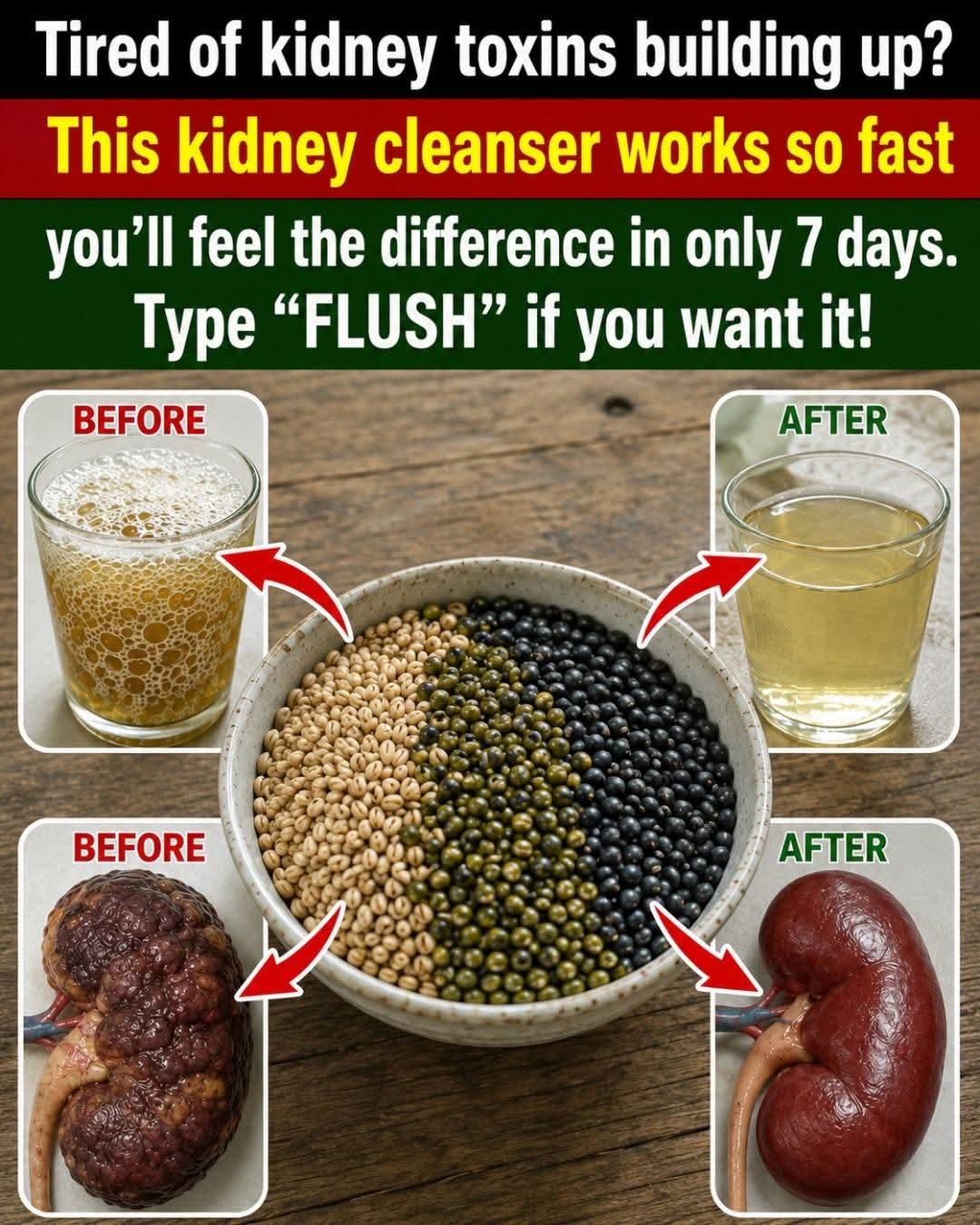
“Tired of kidney toxins building up?”
“This kidney cleanser works so fast you’ll feel the difference in only 7 days.”
“Type FLUSH if you want it!”
These are the powerful claims shown in the image accompanying this article. The image presents a bowl of grains and legumes alongside dramatic “before” and “after” kidney pictures, suggesting that a homemade or natural kidney cleanser can remove accumulated toxins and transform kidney health in just seven days.
The message is appealing because the kidneys are incredibly important organs. They constantly filter the blood, remove waste, regulate fluids and minerals, and help keep the body’s internal environment stable. But there is an important distinction between supporting healthy kidney function and “flushing toxins” from the kidneys with a cleanse.
The kidneys already have a sophisticated natural filtration system. Healthy kidneys continuously remove wastes and extra water from the bloodstream and turn them into urine. According to the National Institute of Diabetes and Digestive and Kidney Diseases (NIDDK), each kidney contains approximately one million filtering units called nephrons.
That means a seven-day drink, tea, seed mixture, or “cleanse” should not be presented as a guaranteed way to repair damaged kidneys, remove mysterious “kidney toxins,” or produce a visible transformation.
However, the basic idea behind the viral image can lead to a useful conversation: What can you actually do every day to protect your kidneys?
The answer is much less dramatic than a miracle cleanse—but much more meaningful.
Understanding What Your Kidneys Actually Do
Your kidneys are two bean-shaped organs located toward the back of your abdomen, below the rib cage. Although they are relatively small, they perform several essential jobs.
Their best-known function is filtering the blood.
As blood passes through the kidneys, specialized structures called glomeruli filter fluid and small molecules. The tubules then reabsorb substances your body needs while helping remove wastes and excess substances. The remaining fluid becomes urine.
The kidneys also help regulate:
- Water balance
- Sodium levels
- Potassium levels
- Calcium and phosphorus balance
- Acid-base balance
- Blood pressure
- Red blood cell production
- Bone health
So when people talk about “kidney health,” they are talking about much more than urine production.
The kidneys are part of a highly coordinated system that works continuously, day and night.
Do “Kidney Toxins” Build Up?
This is where viral kidney-cleanse advertisements can become misleading.
Your body does produce metabolic waste. The kidneys normally remove many of these substances through urine. When kidney function becomes severely impaired, waste products and extra fluid can accumulate in the body.
But this is different from imagining that healthy kidneys gradually become coated with “toxins” that can be washed away by a special seven-day drink.
Kidney disease is a medical condition involving impaired kidney structure or function. It requires appropriate evaluation rather than a general detox program.
NIDDK explains that kidney disease occurs when the kidneys are damaged and cannot filter blood as they should.
A person who genuinely has reduced kidney function should not rely on an internet cleanse to correct it.
Can a Kidney Cleanse Really Work in Seven Days?
There is currently no good evidence that a generic “kidney cleanse” can rapidly remove accumulated toxins from healthy kidneys or restore damaged kidney tissue within seven days.
The National Center for Complementary and Integrative Health (NCCIH) notes that research on detoxification and cleansing programs is limited, and existing studies have important weaknesses. It also warns that some cleansing programs can be unsafe.
The National Kidney Foundation specifically advises avoiding products marketed as “kidney detox” or “kidney cleanse” because evidence supporting their effectiveness is limited, while some ingredients may interact with medications or potentially harm the kidneys.
Therefore, claims such as:
«“Flush your kidneys in seven days.”»
or:
«“Remove years of toxins naturally.”»
should be treated cautiously.
A dramatic claim is not the same thing as clinical evidence.
Why Does the “After” Picture Look So Convincing?
The image uses a classic before-and-after presentation.
On one side is a dark, abnormal-looking kidney. On the other is a bright, smooth, healthy-looking kidney.
The visual message is simple:
Bad kidney → cleanse → healthy kidney.
But real kidney disease does not normally work this way.
Kidney health cannot be accurately determined by looking at a photograph of a kidney—or by observing a change in urine color after drinking a particular beverage.
Medical professionals evaluate kidney function using appropriate tests. NIDDK identifies blood testing for estimated glomerular filtration rate (GFR) and urine testing for albumin as important ways to evaluate kidney health.
A person may have kidney disease without obvious symptoms.
That is one reason relying on how you “feel” after seven days can be misleading.
The Bowl of Beans and Grains: Are These Foods Healthy?
The image appears to show a mixture of grains and legumes, including items resembling barley and different types of beans or peas.
Foods such as legumes and whole grains can certainly be nutritious parts of an overall healthy diet.
They can provide:
- Fiber
- Plant protein
- Vitamins
- Minerals
- Complex carbohydrates
- Various beneficial plant compounds
But a nutritious food is not automatically a “kidney detox.”
This distinction is important.
Eating a balanced diet may contribute to overall health and may help address some of the factors associated with kidney disease. But that does not mean one particular bowl of ingredients can “scrub” toxins out of the kidneys.
For people who already have chronic kidney disease, dietary needs can also be individualized. Depending on kidney function and other health factors, a person may need guidance regarding sodium, potassium, phosphorus, protein, fluids, or other nutrients.
Therefore, people with kidney disease should not automatically assume that a viral “kidney cleanse recipe” is appropriate for them.
Water and Kidney Health
One of the simplest things associated with normal urinary function is adequate fluid intake.
The kidneys need water to perform their normal functions and produce urine.
NIDDK notes that drinking enough liquids, particularly water, can support urinary tract health. However, it also points out that people with certain conditions—including kidney failure or heart disease—may need to limit fluid intake and should ask a health professional how much is appropriate.
This is an important point because internet advice often says:
“The more water you drink, the better.”
That is not universally true.
Drinking excessive quantities of water in a short period can be dangerous. NCCIH warns that detox programs involving very large quantities of water or herbal tea can contribute to dangerous electrolyte imbalances.
The goal is not to force huge amounts of water into your body.
The goal is appropriate hydration for your individual circumstances.
What About Herbal Kidney-Cleanse Teas?
Herbal teas are frequently marketed as natural kidney cleansers.
Some contain ingredients traditionally used as diuretics, meaning they may increase urine production.
But producing more urine does not automatically mean the kidneys are being “detoxified.”
There is also a common misconception that anything labeled “natural” is automatically safe.
That is not necessarily true.
Plants contain biologically active compounds. Some herbs can interact with prescription medications, affect blood pressure or blood sugar, or cause other adverse effects.
The National Kidney Foundation specifically cautions that ingredients in kidney-detox products can interact with medicines or potentially damage the kidneys.
If you take medication regularly, have kidney disease, have a history of kidney stones, are pregnant, or have another significant health condition, discuss herbal supplements with a qualified healthcare professional before using them.
Can Drinking More Make You Urinate More?
Yes.
If you drink more fluid, you may produce more urine, depending on your body’s needs and kidney function.
But this does not mean you have removed a special collection of “toxins.”
Urine contains water and waste products that your kidneys have filtered from the blood.
The amount and appearance of urine can change for many reasons, including:
- Fluid intake
- Sweating
- Diet
- Medications
- Exercise
- Illness
- Certain supplements
- Kidney and urinary tract conditions
So seeing a larger volume of urine after drinking a cleanse beverage should not be interpreted as proof that toxins have been removed.
What Actually Protects Kidney Health?
If you want to replace the viral “seven-day cleanse” idea with something genuinely useful, focus on the major factors that influence kidney health.
- Control Blood Pressure
High blood pressure can damage the blood vessels in the kidneys.
NIDDK explains that hypertension can narrow and damage blood vessels, including those supplying the kidneys. Kidney damage can then make it harder for the kidneys to remove excess waste and fluid, potentially worsening blood pressure.
This creates a harmful cycle.
Keeping blood pressure within the range recommended by your healthcare professional is therefore much more meaningful than periodically taking a detox drink.
- Manage Blood Sugar
Diabetes is an important risk factor for kidney disease.
Persistently elevated blood glucose can damage small blood vessels and filtering structures in the kidneys.
People with diabetes should follow their healthcare team’s recommendations for blood sugar management, nutrition, medications, and kidney screening.
A “cleanse” cannot replace diabetes treatment.
- Be Careful With Salt
A diet consistently high in sodium can contribute to high blood pressure in many people.
Because blood pressure is closely connected with kidney health, moderating sodium intake can be an important part of a kidney-friendly lifestyle.
Rather than focusing on a magical ingredient, consider the overall pattern of your diet.
Choose more:
- Vegetables
- Fruits when appropriate for your health needs
- Whole grains
- Legumes
- Appropriate protein sources
- Minimally processed foods
And limit excessive intake of highly processed foods that are often rich in sodium.
If you have kidney disease, however, your ideal diet may differ from general dietary advice.
- Avoid Smoking and Tobacco
Smoking harms blood vessels throughout the body.
Because the kidneys depend on a healthy blood supply, avoiding tobacco is another practical way to support overall kidney and cardiovascular health.
The National Kidney Foundation lists stopping smoking or tobacco use among lifestyle steps that are more useful for kidney health than relying on detox or cleanse products.
- Exercise Regularly
Physical activity supports cardiovascular health, weight management, blood pressure control, and metabolic health.
You do not need an extreme exercise program.
Walking, cycling, swimming, strength training, dancing, and other activities can contribute to a healthy lifestyle when performed safely.
The goal is consistency.
- Maintain a Healthy Weight
Excess body weight can contribute to conditions such as hypertension and diabetes, which can increase kidney disease risk.
A gradual approach is usually more sustainable than a severe seven-day detox diet.
Crash diets can also create nutritional problems.
NCCIH warns that highly restrictive cleansing diets may not provide adequate nutrients and often do not produce lasting weight-management benefits.
- Use Pain Medicines Carefully
Some medications can affect kidney function, especially in certain people or when used excessively.
Common over-the-counter pain medicines should be used according to label directions and professional advice.
If you have kidney disease, dehydration, heart problems, or other risk factors, ask your healthcare professional which pain medicines are appropriate for you.
Do not assume that an herbal product is safer simply because it is natural.
- Get Kidney Function Checked When Appropriate
Kidney disease can develop quietly.
You may not experience obvious symptoms during the early stages.
For people at increased risk—such as those with diabetes, high blood pressure, cardiovascular disease, or a family history of kidney problems—medical evaluation can be particularly important.
Kidney testing may include blood and urine tests.
A blood test can evaluate GFR, which estimates how effectively the kidneys filter waste.
A urine test can detect albumin, a protein that may indicate kidney damage.
This information is much more meaningful than a “before and after” social-media picture.
Kidney Stones Are Different From Kidney Disease
Another reason kidney-cleanse claims can be confusing is that kidney stones are often discussed alongside detox products.
Kidney stones are solid deposits that can form in the urinary tract.
Their prevention and treatment depend on the type of stone and individual risk factors.
Simply drinking a particular “detox tea” should not be considered a universal treatment for stones.
Some detox diets can actually create problems for susceptible people. NCCIH notes that certain juices may contain high levels of oxalate, which can be relevant to people prone to calcium oxalate kidney stones.
If you have had kidney stones, your healthcare professional can help determine the most appropriate dietary and fluid strategy.
Warning Signs You Should Not Ignore
A social-media cleanse should never delay medical care.
Seek professional evaluation if you experience symptoms that could indicate a kidney or urinary problem, such as:
- Blood in the urine
- Persistent pain in the side or back
- Painful urination
- Major changes in urination
- Significant swelling
- Unexplained persistent fatigue
- Repeated urinary infections
- Severe nausea or vomiting
- Very little or no urine
- Unexplained high blood pressure
Kidney failure can cause waste and fluid to build up in the body. NIDDK lists symptoms such as swelling, fatigue, nausea, changes in urine production, muscle problems, and difficulty concentrating among possible manifestations of advanced kidney failure.
Symptoms can have many causes, so they should not automatically be blamed on “toxins.”
Why a Seven-Day Challenge Can Be Misleading
The seven-day timeframe in the image is particularly persuasive.
A short timeframe gives people a simple promise:
Drink this for seven days and feel different.
But health rarely works on such a predictable schedule.
You might feel different after changing your diet or fluid intake because:
- You are consuming fewer calories.
- You are drinking more fluids.
- You are eating less salty food.
- You are sleeping differently.
- Your digestion has changed.
- You expect to feel better.
None of these possibilities proves that your kidneys have been “flushed.”
A temporary change in how you feel should not be confused with measurable improvement in kidney function.
The Difference Between “Supporting” and “Treating”
This is one of the most important concepts in health information.
A food can be nutritious.
A lifestyle can support cardiovascular health.
Adequate hydration can support normal urinary function.
Exercise can support general health.
But none of these statements means that a particular food, tea, or recipe treats kidney disease.
Treatment depends on the underlying condition.
For example, kidney disease caused by diabetes requires management of diabetes and kidney risk factors. High blood pressure-related kidney damage requires appropriate blood-pressure management. Kidney infections may require medical treatment. Advanced kidney failure may require dialysis or transplantation.
That is why a one-size-fits-all “cleanse” is not a substitute for diagnosis.
A More Sensible 7-Day Kidney-Friendly Reset
If you like the idea of a seven-day challenge, you can turn it into something safer and more realistic.
Instead of trying to “flush toxins,” make the goal healthy habits.
Day 1: Focus on Hydration
Drink fluids appropriately for your body and health situation.
Do not force excessive quantities.
If you have kidney failure, heart disease, or another condition requiring fluid restriction, follow your clinician’s instructions.
Day 2: Reduce Excess Sodium
Look at packaged foods, sauces, instant meals, processed meats, and salty snacks.
Try to reduce unnecessary sodium.
Day 3: Eat More Whole Foods
Build meals around vegetables, appropriate fruits, whole grains, legumes, and healthy protein sources.
If you have kidney disease, ask your dietitian or healthcare professional which foods and portions are appropriate.
Day 4: Move Your Body
Take a walk or perform another activity you can safely tolerate.
Even modest activity can help establish a healthier routine.
Day 5: Review Your Medications
Do not stop prescribed medication.
Instead, make a list of everything you take—including supplements and herbal products—and discuss it with a healthcare professional if necessary.
Day 6: Check Your Blood Pressure
If you have access to a validated home blood-pressure monitor, monitor your blood pressure according to professional guidance.
Persistent abnormal readings deserve appropriate medical attention.
Day 7: Think Long Term
The biggest benefit of a seven-day challenge should be discovering habits you can continue for months and years.
Kidney health is not a seven-day project.
It is a long-term process.
What Should You Put in a Kidney-Friendly Meal?
There is no single universal kidney diet.
However, for many generally healthy people, a balanced eating pattern can include a variety of:
- Vegetables
- Fruits
- Whole grains
- Beans and legumes
- Nuts and seeds when appropriate
- Fish
- Lean proteins
- Healthy fats
- Water and other suitable fluids
The exact combination depends on your health.
Someone with advanced chronic kidney disease may have dietary restrictions that do not apply to someone with normal kidney function.
This is why personalized medical nutrition advice matters.
Don’t Confuse Urine Color With Kidney “Detox”
Urine color is sometimes used online as evidence that a cleanse is working.
But urine color is influenced by hydration, food, supplements, medications, and other factors.
Very concentrated urine can appear darker, while increased fluid intake can make urine lighter.
A change in urine color does not prove that kidney toxins are being removed.
Likewise, clear urine does not automatically prove that your kidneys are perfectly healthy.
Kidney function requires appropriate assessment when there is a medical concern.
The Biggest Problem With Viral Kidney-Cleanse Claims
The biggest concern is not necessarily that someone eats a bowl of healthy grains or drinks a cup of herbal tea.
The bigger problem occurs when people believe that the cleanse can replace medical care.
Someone with kidney disease might delay testing because they believe a seven-day detox will fix the problem.
Someone with high blood pressure might ignore it because they think a “flush” will protect the kidneys.
Someone with diabetes might focus on detox drinks instead of controlling blood sugar.
Someone with a kidney infection might try herbal remedies instead of seeking treatment.
These situations can be dangerous.
The National Kidney Foundation recommends focusing on evidence-based lifestyle measures rather than products marketed specifically as kidney cleanses.
Frequently Asked Questions
Can I detox my kidneys naturally?
Your kidneys naturally remove wastes and extra fluid from the bloodstream when they are functioning normally. There is no established need for a special seven-day detox to “flush” healthy kidneys.
Is drinking water good for the kidneys?
Adequate hydration supports normal urinary function, but more is not always better. People with certain medical conditions may need fluid restrictions.
Can beans clean your kidneys?
Beans can be nutritious foods, but they should not be described as a kidney-cleaning treatment. People with kidney disease may have individualized dietary requirements.
Can herbal tea detox the kidneys?
There is limited evidence supporting commercial kidney-detox products, and some herbal ingredients may interact with medications or cause kidney problems.
Can kidney disease be reversed in seven days?
There is no general seven-day cleanse that can be relied upon to reverse kidney disease. Treatment depends on the cause and severity of the condition.
How can I know if my kidneys are working properly?
Healthcare professionals can evaluate kidney function using blood and urine testing, including GFR and urine albumin measurements.
Final Thoughts: Skip the Miracle Flush and Protect Your Kidneys Instead
The viral image is designed to grab attention—and it certainly does that.
Its message is simple: kidney toxins supposedly accumulate, a natural mixture flushes them away, and dramatic improvement happens within seven days.
But the real science is more nuanced.
Healthy kidneys already perform an extraordinary filtration job every day. They remove wastes and extra water, regulate minerals and fluids, and perform several other essential functions.
There is limited evidence supporting commercial detox and cleanse programs, and some can be unsafe.
Rather than searching for a miracle kidney flush, concentrate on the habits that genuinely matter:
Stay appropriately hydrated.
Eat a balanced diet.
Limit excessive sodium.
Exercise regularly.
Maintain a healthy weight.
Manage blood pressure.
Manage blood sugar.
Avoid tobacco.
Use medications responsibly.
Be cautious with supplements.
And get your kidney function checked when appropriate.
Most importantly, remember that kidney health cannot be judged from a social-media picture or from how you feel after drinking a particular beverage for seven days.
If you have symptoms, risk factors, known kidney disease, kidney stones, or concerns about your kidney function, speak with a qualified healthcare professional.
Your kidneys do not need a miracle cleanse. They need informed, consistent care.
This article is for educational purposes and does not diagnose, treat, or cure kidney disease. Anyone with kidney disease, heart disease, diabetes, kidney stones, pregnancy, or prescribed medications should seek individualized medical advice before making major dietary or supplement changes.