Worked for 17s
The Spice in This Viral Image Is Not a “Missing Vitamin”: What Cloves Can and Cannot Do for Leg and Bone Pain
Meta description: A viral image claims that a spice can provide the “vitamin your body lacks” when you have pain in your legs and bones. Here is what the image actually shows, what vitamin D deficiency has to do with bone and muscle pain, the nutritional value of cloves, and when leg pain needs medical attention.
Suggested WordPress title:
Cloves, Vitamin D, and Leg Pain: What This Viral Health Claim Really Means
Introduction
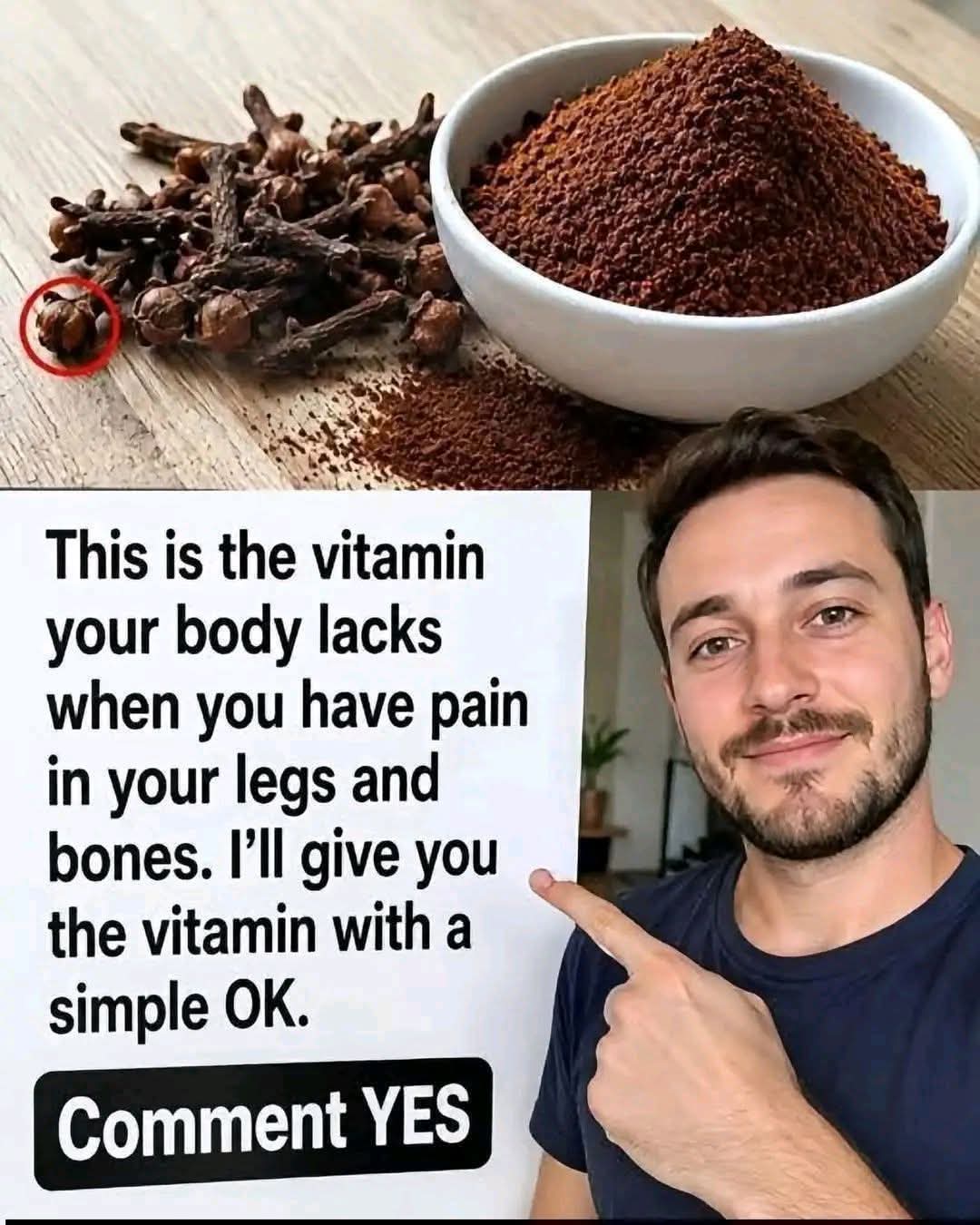
A striking health claim has been circulating online: “This is the vitamin your body lacks when you have pain in your legs and bones.” The accompanying photograph shows a bowl of reddish-brown powder alongside whole dried spice buds.
The spice pictured appears to be ground cloves, with whole cloves beside it.
Cloves are a wonderfully aromatic culinary spice and have a long history in traditional food and herbal practices. However, there is an important distinction that should not be overlooked: cloves are not a substitute for a vitamin or a proven treatment for unexplained leg or bone pain.
The part of the viral message that deserves attention is the relationship between nutrient deficiencies and musculoskeletal symptoms. In particular, vitamin D deficiency can cause bone pain and muscle weakness in adults, because vitamin D plays an important role in calcium absorption and bone health.
But leg pain is not automatically a sign of vitamin D deficiency.
Pain can come from many different causes, including muscle strain, cramps, injuries, nerve problems, arthritis, circulation problems, medication effects, and blood clots.
So what should you actually take from the viral image?
The answer is not simply “eat cloves.”
Instead, it is worth understanding what cloves are, what vitamin D does, which nutrients matter for bones and muscles, how deficiencies are diagnosed, and why persistent or unusual leg pain should not be self-treated with a spice alone.
This article explores the subject in detail.
What Is the Spice Shown in the Image?
The whole dried buds shown next to the powder are characteristic of cloves.
Cloves are the dried flower buds of Syzygium aromaticum, an evergreen tree in the myrtle family. The unopened flower buds are harvested, dried, and used whole or ground into a strongly flavored spice.
Cloves are recognizable by their unusual shape. Each dried bud has a narrow stem and a rounded head, which is why they are sometimes described as looking like tiny nails.
Ground cloves are commonly used in:
Cakes
Cookies
Gingerbread
Spice blends
Curries
Rice dishes
Marinades
Warm beverages
Sauces
Holiday desserts
Cloves have an intense flavor, so only a small quantity is normally needed.
The powder in the photograph is therefore best understood as a culinary spice, not as a mysterious vitamin powder.
Does Clove Powder Contain Vitamins and Minerals?
Yes, cloves contain various nutrients and plant compounds.
However, saying that cloves are “the vitamin your body lacks when your legs hurt” is an oversimplification.
A food can contain vitamins and minerals without being an appropriate treatment for a deficiency.
This distinction is extremely important.
For example, vitamin D is particularly relevant to bone health because the body uses it to help absorb calcium. Vitamin D deficiency in adults can lead to osteomalacia, which may involve bone pain and muscle weakness.
Eating a spice containing small amounts of certain nutrients does not automatically correct a vitamin D deficiency.
In other words:
Containing a nutrient is not the same as being a reliable treatment for a deficiency of that nutrient.
The Vitamin Most Closely Associated With Bone Pain: Vitamin D
If someone experiences unexplained bone pain and muscle weakness, vitamin D is one nutrient that may deserve consideration.
Vitamin D has several important functions in the body.
One of its major roles is helping the digestive system absorb calcium. Calcium is essential for maintaining bones and teeth, but it also participates in normal muscle contraction and nerve signaling.
When vitamin D levels are severely inadequate, adults can develop osteomalacia, a condition involving softened bones. Bone pain and muscle weakness are recognized features.
This is one reason the viral image may have confused people: there really is a connection between certain nutrient deficiencies and bone or muscle symptoms.
But that does not mean every person with leg pain has a vitamin D deficiency.
What Does Vitamin D Actually Do?
Vitamin D is often described as the “sunshine vitamin” because the body can produce it when skin is exposed to ultraviolet B radiation.
It is also obtained from certain foods and supplements.
Vitamin D helps:
Support calcium absorption
Maintain normal bones
Support normal muscle function
Participate in nerve function
Support several other biological processes
The body needs an appropriate balance.
Too little vitamin D can contribute to bone problems, while excessive supplementation can also be harmful.
For adults, the U.S. National Institutes of Health Office of Dietary Supplements lists a recommended intake of 15 micrograms (600 IU) per day for adults aged 19–70 and 20 micrograms (800 IU) per day for adults over 70.
These are general dietary recommendations, not individualized treatment doses.
Can Vitamin D Deficiency Cause Leg Pain?
It can contribute to musculoskeletal symptoms, but leg pain has many possible causes.
Vitamin D deficiency is particularly associated with bone pain and muscle weakness when deficiency becomes significant.
Someone with low vitamin D might describe discomfort as:
A deep aching sensation
Generalized bone discomfort
Muscle weakness
Difficulty climbing stairs
Difficulty getting up from a chair
General fatigue
Widespread aches
However, these symptoms are not specific enough to diagnose vitamin D deficiency by themselves.
A person with leg pain might instead have a muscle injury, arthritis, nerve compression, circulation problems, electrolyte abnormalities, medication-related symptoms, or another condition.
MedlinePlus lists numerous potential causes of leg pain, including muscle cramps, dehydration, injury, peripheral artery disease, nerve damage, arthritis, gout, varicose veins, and blood clots.
That is why persistent symptoms deserve proper evaluation.
What About Calcium?
When discussing bones, it is impossible to ignore calcium.
Calcium is the most abundant mineral in the body, and almost all of it is stored in bones and teeth. It contributes to the structure and strength of bones and also plays important roles in muscle and nerve function.
Vitamin D and calcium work together.
Vitamin D helps the body absorb calcium from the digestive tract, while calcium provides an essential mineral component of bone.
Long-term inadequate calcium intake can contribute to problems such as osteoporosis and osteomalacia.
But once again, the answer is not necessarily to begin taking large doses of supplements.
Nutrition should generally come first, and supplements should be used appropriately when dietary intake is inadequate or a healthcare professional recommends them.
Foods That Provide Calcium
A varied diet can provide calcium from many sources.
Examples include:
Dairy foods
Milk
Yogurt
Cheese
Fish
Certain fish eaten with their edible bones, such as canned sardines, can provide substantial calcium.
Plant foods
Depending on the food and preparation, calcium can also come from:
Calcium-fortified plant milks
Tofu made with calcium
Some leafy green vegetables
Certain beans
The amount available varies considerably from one food to another.
A balanced diet is therefore more useful than relying on a single “miracle” ingredient.
What About Vitamin B12?
Vitamin B12 is another nutrient worth knowing about when people experience unusual symptoms involving the legs.
Unlike vitamin D, vitamin B12 deficiency is particularly associated with neurological symptoms, which can include numbness, pins and needles, muscle weakness, balance problems, and coordination difficulties.
The nervous system can be affected by prolonged B12 deficiency, and neurological damage can sometimes become permanent if deficiency is left untreated.
This is another reason not to assume that every type of leg discomfort is caused by the same vitamin.
A person experiencing:
Tingling
Numbness
Burning sensations
Weakness
Balance problems
Unusual fatigue
may need a medical assessment rather than simply trying a spice or supplement.
Why the Viral Claim Is Misleading
The statement in the image implies a simple relationship:
Leg or bone pain = missing vitamin = eat this ingredient.
Human health is rarely that simple.
There are many different causes of pain.
For example, leg pain may result from:
Exercise
Muscle strain
Injury
Cramps
Dehydration
Arthritis
Nerve problems
Circulation problems
Medication side effects
Electrolyte disturbances
Stress injuries
Infections
Blood clots
Nutritional deficiencies
MedlinePlus specifically notes that leg cramps can be associated with dehydration or low levels of electrolytes such as potassium, sodium, calcium, or magnesium, while other types of leg pain have completely different causes.
Therefore, treating every type of leg pain with the same food or supplement can delay proper diagnosis.
Cloves Can Still Be Part of a Healthy Diet
Debunking an exaggerated health claim does not mean cloves are useless.
They are an excellent culinary spice.
Cloves can add powerful flavor to food without requiring large quantities of salt, sugar, or fat.
They can be used in:
Oatmeal
Apple desserts
Baked goods
Tea
Rice dishes
Curries
Roasted vegetables
Meat marinades
Homemade spice blends
Their distinctive aroma comes from naturally occurring plant compounds, including eugenol.
But culinary usefulness and medical treatment are two different things.
A spice can be nutritious and interesting without being a cure for a medical condition.
How to Use Ground Cloves in Everyday Food
If you enjoy cloves, you can incorporate small culinary amounts into your normal diet.
Simple Clove-Spiced Oatmeal
Add a small pinch of ground cloves to:
Cooked oats
Cinnamon
Chopped apple
Walnuts
Milk or fortified plant milk
The result is warm, aromatic, and naturally sweet-tasting.
Clove-Spiced Tea
You can also make a simple spiced beverage using:
Hot water
One or two whole cloves
A small piece of cinnamon
Fresh ginger if desired
Allow the spices to infuse and strain before drinking.
Remember that this is a spiced beverage, not a treatment for vitamin D deficiency.
Can Cloves Replace Vitamin D Supplements?
No.
Cloves should not be considered a replacement for vitamin D supplements when supplementation has been medically recommended.
If laboratory testing shows that someone has a clinically significant vitamin D deficiency, treatment should be based on the person’s circumstances and healthcare professional’s advice.
Vitamin D supplements are available in forms such as vitamin D2 and D3. The appropriate amount depends on individual factors and whether the goal is routine nutritional intake or treatment of a confirmed deficiency.
Taking very high doses without medical guidance is not a good idea.
Vitamin D is fat-soluble, meaning the body can store it, and excessive supplementation can result in toxicity.
Why “More Vitamin D” Is Not Always Better
This is an important point that viral social-media posts often leave out.
People sometimes assume that if a nutrient is beneficial, taking very large quantities must be even better.
That is not true.
The NIH notes that excessive vitamin D intake can cause abnormally high calcium levels and other complications. Severe toxicity can result in problems involving the kidneys, heart rhythm, and soft-tissue calcification.
For adults, the established tolerable upper intake level is 4,000 IU (100 micrograms) per day unless a healthcare professional is directing treatment.
A medically supervised treatment regimen can be different from the general upper limit.
The key lesson is:
Do not self-prescribe high-dose vitamin D simply because you have aches or leg pain.
How Is Vitamin D Deficiency Checked?
Symptoms alone cannot reliably establish whether someone is vitamin D deficient.
A healthcare professional can determine whether testing is appropriate.
The commonly used blood measurement is 25-hydroxyvitamin D, often written as 25(OH)D.
The result can help determine whether vitamin D levels are adequate or low.
If someone has persistent bone pain, unexplained muscle weakness, or risk factors for deficiency, discussing symptoms with a doctor can be more useful than guessing from social-media posts.
Who May Be More Likely to Have Low Vitamin D?
Vitamin D status can be affected by many factors.
The NIH identifies groups that can have increased risk, including some older adults, people who have little sun exposure, people with conditions affecting fat absorption, and people with obesity or a history of gastric bypass surgery.
Skin pigmentation, lifestyle, geographic location, clothing, sunscreen use, diet, age, and medical conditions can all influence vitamin D status.
This is why there is no universal “one spoon a day” solution.
Sunlight and Vitamin D
Sunlight can contribute to vitamin D production in the skin.
However, deliberately exposing yourself to excessive ultraviolet radiation is not a safe substitute for medical advice or balanced nutrition.
The amount of vitamin D produced through sunlight varies substantially between individuals and circumstances.
Factors include:
Season
Time of day
Latitude
Skin pigmentation
Age
Clothing
Sunscreen
Amount of skin exposed
Air pollution
Outdoor habits
Therefore, simply saying “go into the sun and your pain will disappear” is another oversimplification.
Signs That Your Leg Pain May Need Medical Attention
Leg pain should not always be treated as a nutrition problem.
Seek medical evaluation when pain is:
Severe
Persistent
Getting worse
Associated with swelling
Associated with redness or warmth
Associated with fever
Associated with weakness or numbness
Repeatedly interfering with walking
Occurring after a significant injury
Appearing without an obvious explanation
MedlinePlus recommends contacting a healthcare provider for symptoms such as a swollen or red painful leg, fever, pain that worsens with walking, or pain that does not improve with self-care.
One-Sided Leg Pain and Swelling Can Be Different
There is one particularly important warning sign.
If one leg suddenly becomes painful and swollen, especially around the calf or thigh, do not assume it is a vitamin deficiency.
A deep vein thrombosis (DVT) is a blood clot in a deep vein, usually in the leg. Symptoms can include throbbing pain in one leg, swelling, and changes in skin color.
This requires urgent medical assessment.
If leg symptoms occur together with sudden difficulty breathing, chest pain, or coughing up blood, emergency medical care is required because a clot can travel to the lungs and cause a pulmonary embolism.
This is one reason health claims suggesting that all leg pain can be solved by a spice are potentially dangerous.
Cloves and Traditional Wellness
Cloves have been used in traditional food and herbal practices for centuries.
Historically, their strong fragrance and warming flavor made them valuable as a spice, particularly in cooking and beverages.
Today, cloves remain popular worldwide.
They are especially associated with:
Baking
Warm drinks
Spice mixtures
Holiday cooking
Traditional cuisine
Aromatic preparations
The historical use of a plant does not automatically establish that it can treat a modern medical diagnosis.
Traditional use can be culturally and nutritionally interesting while still requiring scientific evaluation before making therapeutic claims.
A Better Way to Think About “Natural Remedies”
The word natural is often used online as though it means “safe,” “effective,” and “free of side effects.”
That is not necessarily true.
Natural substances can have powerful biological effects.
The safer approach is to ask three questions:
- What exactly is the problem?
Is it muscle pain, bone pain, nerve pain, joint pain, or a circulation problem?
- What evidence supports the proposed remedy?
Has it actually been shown to treat the condition?
- Could using it delay appropriate treatment?
This third question is especially important.
If a person has a nutritional deficiency, correcting the deficiency matters.
If someone has a blood clot, fracture, nerve disorder, infection, or another medical problem, simply adding a spice to food will not address the underlying cause.
Nutrients Important for Bones and Muscles
A healthy musculoskeletal system requires more than one nutrient.
Important nutrients include:
Vitamin D
Supports calcium absorption and bone health.
Calcium
Provides an essential structural component of bones and also participates in muscle and nerve function.
Protein
Provides amino acids needed for maintaining muscle and other tissues.
Vitamin B12
Important for blood formation and nervous-system function; deficiency can cause neurological symptoms.
Magnesium
Participates in numerous biochemical reactions and contributes to normal muscle and nerve function.
Vitamin K
Involved in normal blood clotting and bone-related processes.
The important message is that no single spice can replace a varied diet.
A Simple Bone-Friendly Eating Pattern
Instead of looking for one miracle ingredient, build meals around a variety of nutritious foods.
For example:
Breakfast:
Oats with yogurt or fortified milk, fruit, nuts, and a little cinnamon.
Lunch:
Beans or lentils with vegetables, whole grains, and a protein source.
Snack:
Fruit with yogurt or nuts.
Dinner:
Fish, eggs, poultry, tofu, or legumes with vegetables and a calcium-containing food.
Flavoring:
Use herbs and spices such as cloves, cinnamon, ginger, garlic, cumin, turmeric, or black pepper to make meals enjoyable.
This approach gives the body a broad range of nutrients rather than depending on one ingredient.
A Practical Clove Recipe
If you want to enjoy the spice shown in the image, try this simple recipe.
Warm Cinnamon-Clove Drink
Ingredients
2 cups water
2 whole cloves
1 small cinnamon stick
2–3 thin slices fresh ginger
Lemon slice, optional
Small amount of honey, optional
Instructions
- Pour the water into a small saucepan.
- Add the cloves, cinnamon, and ginger.
- Bring the mixture to a gentle simmer.
- Simmer for approximately 5–10 minutes.
- Remove from the heat.
- Strain into a cup.
- Add lemon or a small amount of honey if desired.
- Drink while comfortably warm.
This makes a flavorful spiced drink.
It should not, however, be advertised as a cure for vitamin D deficiency or unexplained bone pain.
Can You Eat Cloves Every Day?
Small culinary amounts of cloves can be incorporated into a normal diet for many people.
But concentrated clove products, clove oil, and large medicinal doses are a different matter.
More is not necessarily better.
Clove oil, in particular, is highly concentrated compared with the amount of spice used in ordinary cooking.
People should also be cautious about using concentrated herbal products, especially children, pregnant or breastfeeding individuals, and people taking medications or managing medical conditions.
When in doubt, discuss concentrated supplements or herbal products with a qualified healthcare professional.
The Biggest Mistake: Treating a Symptom Instead of the Cause
Imagine two people both complain about pain in their legs.
Person A has vitamin D deficiency.
Person B has a blood clot.
Both people see the same viral post telling them to consume a particular spice.
Person A might still need appropriate vitamin D treatment after evaluation.
Person B needs urgent medical attention.
This illustrates why diagnosis matters.
A symptom is a message from the body, not a diagnosis.
Frequently Asked Questions
Is the powder in the image clove?
The whole dried buds strongly resemble cloves, and the accompanying powder appears consistent with ground cloves.
Is clove a vitamin?
No. Clove is a spice made from dried flower buds. It contains various nutrients and plant compounds but should not be described as a vitamin.
What vitamin deficiency can cause bone pain?
Vitamin D deficiency can cause osteomalacia in adults, a condition associated with bone pain and muscle weakness.
Can clove cure vitamin D deficiency?
No. Cloves should not be used as a replacement for appropriate evaluation and treatment of vitamin D deficiency.
Can B12 deficiency affect the legs?
Yes. Vitamin B12 deficiency can cause neurological symptoms such as numbness, pins and needles, muscle weakness, balance problems, and peripheral neuropathy, particularly affecting the legs.
Should I take vitamin D if my legs hurt?
Not automatically. Leg pain has many possible causes. If you suspect a deficiency, speak with a healthcare professional about whether testing or supplementation is appropriate.
Is calcium important for bones?
Yes. Calcium is essential for maintaining bone structure and also contributes to normal muscle and nerve function.
Can too much vitamin D be harmful?
Yes. Excessive vitamin D can cause high calcium levels and potentially serious complications.
Final Thoughts
The viral image contains a small piece of truth wrapped inside an exaggerated health claim.
The spice shown appears to be clove, a fragrant and useful culinary ingredient. Cloves can certainly be part of a varied, nutritious diet, but there is no good reason to describe ground cloves as “the vitamin your body lacks” whenever you experience pain in your legs or bones.
The more scientifically grounded message is this:
Vitamin D deficiency can cause bone pain and muscle weakness, but leg pain has many possible causes.
Calcium is also important for healthy bones, while vitamin B12 deficiency can cause neurological symptoms that affect the legs.
If your pain is persistent, severe, unexplained, or accompanied by swelling, redness, weakness, numbness, or other concerning symptoms, the safest approach is to find the cause rather than relying on a viral remedy.
And if you love cloves, keep enjoying them as what they are best at being: a delicious, aromatic spice that can make healthy food more flavorful.
The goal should not be to find one magical ingredient.
The goal should be to build a nutritious diet, recognize genuine deficiency symptoms, avoid unnecessary high-dose supplements, and seek appropriate medical care when symptoms suggest something more serious.
Health information from social media can be a useful starting point—but it should never replace a proper diagnosis.