The Herbal Plant Viral Images Claim Can Remove Tooth Decay and Intestinal Worms: What You Should Really Know
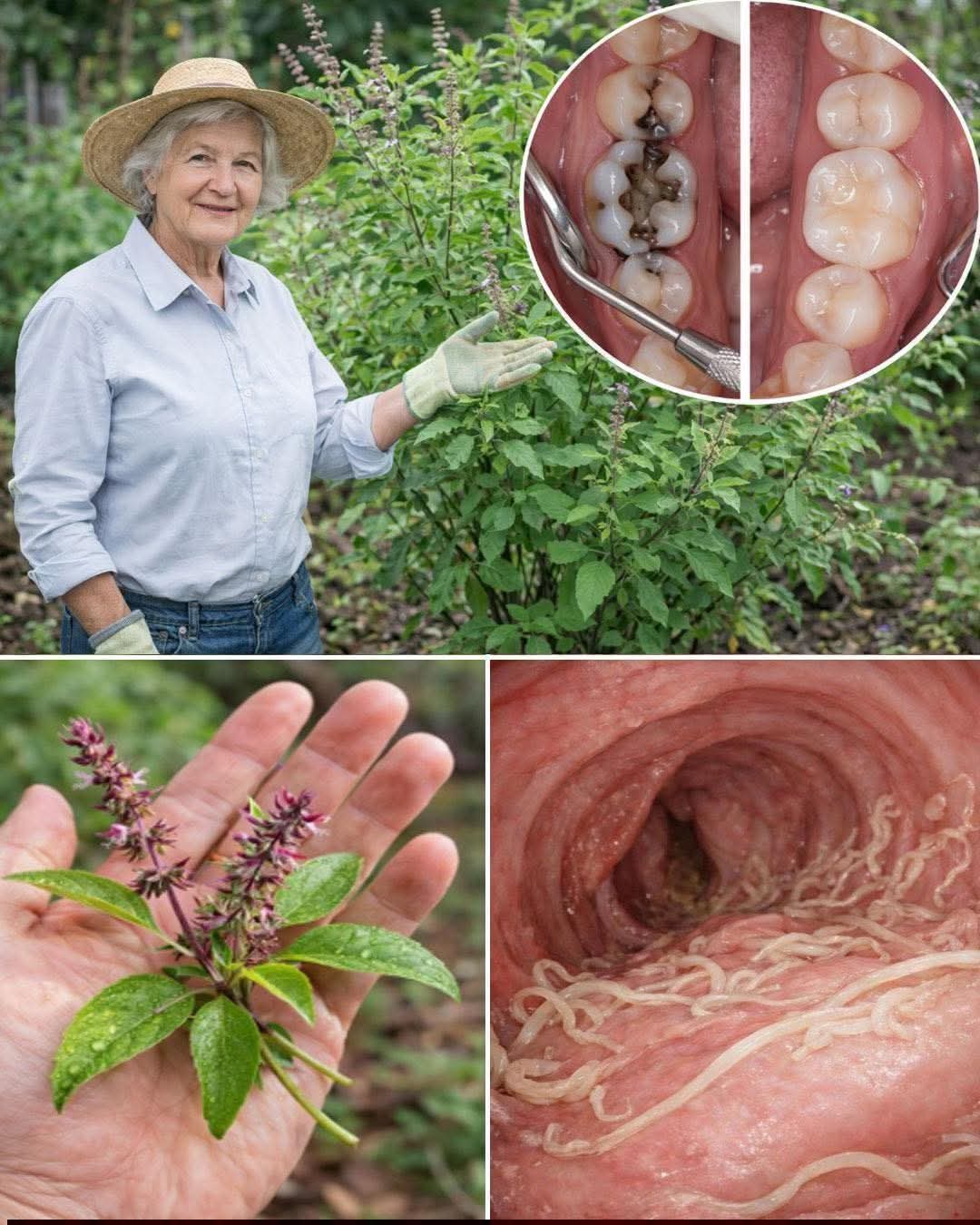
The internet is full of eye-catching claims about traditional herbs that supposedly solve several health problems at once. One popular type of post shows a leafy medicinal plant alongside dramatic “before and after” dental photographs and images that appear to show worms inside the body. The message often suggests that simply chewing or preparing the plant can eliminate tooth decay, restore damaged teeth, and remove intestinal parasites.
These claims can be fascinating, especially for people interested in traditional remedies and natural living. However, an attractive photograph is not the same thing as scientific evidence.
The plant shown in the image may resemble a basil-family herb, but a photograph alone is not enough to reliably identify a plant. Several unrelated plants have similar leaves and flowers, and confusing one species with another can be dangerous. More importantly, there is no reliable evidence that chewing an unidentified garden herb can repair established cavities or safely eliminate intestinal worms.
This article explores the traditional appeal behind such remedies, explains what actually causes cavities, discusses intestinal parasites, examines what herbal preparations may and may not do, and provides safer ways to care for your teeth and digestive health.
The Viral Claim Behind the Image
The image combines several different ideas:
- A person presenting a leafy herb
- A photograph of severely damaged teeth
- A photograph of apparently healthy teeth
- A close-up of a flowering plant
- A disturbing image resembling intestinal worms
This type of collage is designed to create a simple message: one natural plant can solve multiple health problems.
The problem is that the photographs do not establish a connection between the plant and the conditions shown.
A before-and-after dental image, for example, does not prove that an herb caused the improvement. Dental cavities may require professional cleaning, fillings, crowns, root-canal treatment, extraction, fluoride therapy, or other interventions depending on their severity.
Likewise, an image of worm-like material inside the digestive tract does not establish what the material is, where it came from, or whether a particular plant can remove it.
Why viral health images can be misleading
Social media posts frequently remove important context. A photograph may be:
- From a completely different medical case
- Digitally altered
- A stock photograph
- Taken before and after professional treatment
- Showing two unrelated people
- Showing a different condition altogether
- Accompanied by a plant that was never involved in the treatment
This is why health claims should be evaluated based on evidence rather than photographs.
What Plant Is Shown in the Photograph?
The plant appears to have opposite green leaves and elongated clusters of small flowers. It resembles plants in the basil or mint family, but identification from a single photograph is uncertain.
That distinction matters.
Many plants look remarkably similar while containing completely different chemical compounds. Some can be consumed as foods or culinary herbs, while others may cause irritation, allergic reactions, toxicity, or interactions with medications.
Therefore, you should never collect an unidentified wild plant and consume it because a social-media post says it is medicinal.
If you want to use an herb traditionally, first determine its exact botanical identity and learn how it is normally prepared and used.
Can an Herb Really Remove Cavities?
This is one of the most important questions raised by the image.
The short answer is:
An herb cannot be relied upon to reverse an established dental cavity.
Dental cavities, also called dental caries, develop when acids produced by bacteria gradually damage tooth enamel and underlying tooth structures.
The process can begin with mineral loss from enamel. At an early stage, the process may sometimes be arrested or partially reversed through appropriate oral hygiene, fluoride exposure, and control of dietary sugar and plaque.
But once a true cavity has formed a physical hole in the tooth, simply chewing a leaf cannot rebuild the missing tooth structure.
How Tooth Decay Actually Develops
Understanding tooth decay makes it easier to recognize why miraculous “cavity cures” are questionable.
Every day, bacteria live in the mouth and form a sticky biofilm known as dental plaque.
When we consume carbohydrates and sugars, certain bacteria metabolize them and produce acids.
These acids can lower the pH around the teeth.
Repeated acid attacks can gradually remove minerals from enamel.
Over time, the process can progress through several stages.
Stage 1: Plaque accumulation
Plaque develops when bacteria, saliva components, and food debris accumulate on tooth surfaces.
If plaque is not removed regularly, it becomes increasingly organized and difficult to clean.
Stage 2: Mineral loss
Acidic conditions can cause minerals to leave the enamel.
At this stage, early lesions may sometimes be managed or remineralized with appropriate preventive dental care.
Stage 3: Enamel breakdown
Continued mineral loss can produce visible damage.
The surface eventually becomes weaker.
Stage 4: Dentin involvement
Once decay progresses through enamel and reaches dentin, sensitivity may become more noticeable.
Stage 5: Pulp involvement
Advanced decay can reach the inner pulp containing nerves and blood vessels.
This can cause:
- Severe toothache
- Sensitivity
- Swelling
- Infection
- Dental abscess
At this point, an herbal rinse should not be considered a substitute for dental treatment.
Can Plants Help Prevent Dental Problems?
This question requires a more nuanced answer.
Some plants contain compounds that have demonstrated antibacterial or antioxidant activity in laboratory research. Certain traditional herbs have also been studied for their potential effects on oral bacteria, plaque, inflammation, or bad breath.
But laboratory activity does not automatically mean that eating the plant prevents cavities in humans.
A substance can inhibit bacteria in a test tube while having little meaningful effect when consumed.
Researchers must consider:
- Dose
- Concentration
- Absorption
- Contact time
- Safety
- Human clinical evidence
- Long-term effects
So while some herbal ingredients may eventually prove useful as complementary oral-care ingredients, that is very different from saying that a plant can dissolve cavities or regenerate missing teeth.
The Difference Between Early Enamel Damage and a Cavity
This distinction is frequently ignored in viral posts.
Early enamel demineralization is not necessarily the same thing as a fully formed cavity.
If the enamel has lost minerals but has not developed a significant structural hole, preventive measures can sometimes stop or reverse the process.
These measures may include:
- Regular brushing with fluoride toothpaste
- Cleaning between teeth
- Reducing frequent sugar exposure
- Drinking water
- Professional dental care
- Fluoride treatments when appropriate
Once tooth structure has been physically destroyed, however, the treatment approach changes.
A dentist may need to remove damaged tissue and restore the tooth with a filling or another procedure.
What About “Tooth Worms”?
The image also contains a particularly old health misconception: the idea that worms live inside rotten teeth and cause cavities.
Historically, people in different cultures developed explanations for tooth pain before modern dentistry understood bacteria, enamel, nerves, and infection.
One old belief was that toothache was caused by tiny worms living inside teeth.
Modern dentistry does not support this explanation.
Dental cavities are not caused by visible worms crawling inside the tooth.
They result from a complex interaction involving oral bacteria, fermentable carbohydrates, acids, tooth structure, saliva, and time.
A severe cavity can contain dark, soft, damaged tissue and bacterial material, but this should not be confused with intestinal worms.
What About Intestinal Worms?
Intestinal worms are a completely different issue.
Several types of parasites can infect humans, including different species of:
- Roundworms
- Hookworms
- Pinworms
- Tapeworms
- Whipworms
The symptoms depend on the organism and the severity of infection.
Some people may have no symptoms at all.
Others may experience:
- Abdominal discomfort
- Diarrhea
- Nausea
- Appetite changes
- Fatigue
- Weight loss
- Itching around the anus, particularly with pinworms
- Nutritional deficiencies in some infections
Some parasitic infections can become serious, especially in children or people with weakened immune systems.
Can a Traditional Herb Kill Intestinal Worms?
Some plants have traditionally been used as antiparasitic remedies, and researchers have investigated numerous botanical extracts for activity against parasites.
However, there is a major difference between traditional use, laboratory research, animal experiments, and proven human treatment.
A plant extract may kill a parasite in laboratory conditions but fail to produce the same effect in a human body.
Why?
Because the human digestive system is complicated.
The active compound may:
- Be poorly absorbed
- Be broken down by digestion
- Never reach the parasite at an effective concentration
- Cause side effects before reaching a therapeutic dose
- Interact with medicines
- Affect beneficial microorganisms
Therefore, an herb should not automatically be considered a replacement for an established antiparasitic medication.
Why “Natural” Does Not Always Mean Safe
One of the most persistent myths surrounding herbal medicine is that natural substances are automatically harmless.
They are not.
Nature contains powerful chemicals.
Plants have evolved compounds to defend themselves against insects, animals, fungi, and competing plants. Some of these compounds can affect the human body significantly.
Possible problems with poorly identified or improperly prepared herbs include:
- Allergic reactions
- Stomach irritation
- Liver injury
- Kidney injury
- Drug interactions
- Excessive sedation
- Changes in blood pressure
- Changes in blood sugar
- Pregnancy-related risks
- Toxicity from concentrated extracts
The risk becomes greater when people use homemade concentrated preparations.
Why Plant Identification Matters
A common social-media mistake is identifying a plant by appearance alone.
A plant can have:
- Similar leaves
- Similar flowers
- Similar scent
- Similar growth pattern
and still belong to a different species.
Even within the same botanical family, chemical composition can vary considerably.
If you are interested in growing medicinal herbs, use a reputable botanical source or verified nursery and learn the scientific name.
Never rely solely on a viral photograph.
How to Protect Your Teeth Naturally and Effectively
There are many genuinely useful habits that do not require miracle remedies.
1. Brush regularly
Brush your teeth thoroughly twice a day using fluoride toothpaste unless your dentist has recommended a different product.
The goal is not aggressive scrubbing.
Gentle, consistent brushing is more useful than harsh brushing.
2. Clean between your teeth
A toothbrush cannot effectively clean every surface between teeth.
Depending on your individual needs, dental floss, interdental brushes, or other cleaning tools may be appropriate.
Cleaning between teeth helps reduce plaque accumulation in areas where cavities and gum disease can develop.
3. Limit frequent sugar exposure
The frequency of sugar consumption matters.
Constantly sipping sweet drinks or eating sugary snacks throughout the day gives oral bacteria repeated opportunities to produce acids.
Instead of grazing on sugary foods continuously, keep them occasional and preferably consume them with meals.
4. Drink water
Water helps wash away food particles and supports normal saliva function.
Plain water is generally an excellent choice between meals.
5. Do not ignore tooth sensitivity
Sensitivity can have many causes.
It may be associated with:
- Tooth decay
- Gum recession
- Enamel wear
- Cracked teeth
- Exposed dentin
- Other dental problems
If sensitivity persists, a dental examination is more useful than experimenting with increasingly strong home remedies.
Can Herbal Mouth Rinses Replace Toothpaste?
No.
Some herbal mouth rinses may have a refreshing effect or may contain ingredients with antimicrobial properties, but they should not automatically be considered replacements for evidence-based preventive dental care.
A mouth rinse also does not physically remove plaque as effectively as brushing and interdental cleaning.
The most important foundation remains:
mechanical plaque removal + fluoride exposure + sensible dietary habits + professional dental care.
What Happens If You Ignore a Cavity?
A cavity does not necessarily remain the same size forever.
Without appropriate treatment, decay can continue deeper into the tooth.
Possible complications include:
Tooth sensitivity
Cold, hot, sweet, or acidic foods may cause discomfort.
Persistent pain
As decay progresses toward the pulp, pain may become more intense.
Infection
Bacteria can reach the pulp and surrounding tissues.
Abscess
A dental abscess can produce swelling, severe pain, fever, or other symptoms.
Tooth loss
A severely damaged tooth may eventually become impossible to restore.
This is why delaying professional treatment while trying one viral remedy after another can make the eventual treatment more complicated.
When You Should See a Dentist Quickly
Do not rely on an herb if you have:
- Severe toothache
- Facial swelling
- Gum swelling
- Pus around a tooth
- Fever associated with dental symptoms
- Difficulty swallowing
- Difficulty breathing
- A broken or badly damaged tooth
- Persistent bleeding
- Severe sensitivity that does not improve
Facial swelling accompanied by difficulty breathing or swallowing can be an emergency.
What About the “Before and After” Teeth in Viral Posts?
Before-and-after photographs are powerful because they appear to provide visual proof.
But photographs alone cannot tell us:
- Who the patient was
- What treatment was performed
- How long passed between photographs
- Whether a dentist performed the treatment
- Whether the photographs show the same person
- Whether the images were edited
- Whether the photographs were originally connected to the herb
A tooth that appears dramatically different may have been professionally restored.
For example, dentists can use restorative materials to rebuild damaged areas and improve the appearance of teeth.
The resulting photograph might look like a “natural cure,” even though the treatment was dental restoration.
Why Scientific Evidence Matters
A reliable health claim should ideally be supported by evidence that progresses through several stages.
Traditional observation
People have used a plant for generations.
This can be interesting, but it does not prove effectiveness.
Laboratory research
Scientists test an extract against bacteria or parasites.
This provides useful information but does not establish human effectiveness.
Animal research
Researchers study the substance in animals.
This can provide additional information but still does not prove that it works safely in humans.
Human clinical research
The treatment is tested in people under controlled conditions.
This provides much stronger evidence.
Systematic reviews and clinical guidelines
Researchers evaluate multiple studies to determine whether the evidence is consistent.
This is among the most useful evidence for making healthcare decisions.
A viral Facebook or TikTok post does not replace this process.
Traditional Herbal Medicine Still Has a Place
Rejecting exaggerated claims does not mean rejecting traditional medicine.
Traditional plant knowledge is valuable and has contributed to the discovery of numerous biologically active substances.
Many modern medicines originated from compounds found in plants or other natural sources.
The important point is to distinguish between:
“This plant has traditionally been used for this purpose.”
and
“Clinical evidence proves that this plant safely treats this disease.”
Those statements are not equivalent.
Traditional knowledge can inspire research, but medical recommendations should ultimately consider evidence and safety.
How to Evaluate a Viral Herbal Remedy
Before trying a remedy promoted online, ask these questions.
Question 1: What exactly is the plant?
Do you know the scientific name?
Question 2: What condition is it supposed to treat?
Is the diagnosis actually established?
Question 3: Is there human research?
Laboratory studies are not enough.
Question 4: What dose is recommended?
“Chew a few leaves” is not a standardized medical dose.
Question 5: Are there side effects?
Natural substances can have significant adverse effects.
Question 6: Can it interact with medication?
This is particularly important for people taking regular medicines.
Question 7: Could delaying proper treatment cause harm?
For dental infections and some parasitic infections, delaying treatment can create complications.
A Safer Way to Think About “Natural Remedies”
Instead of asking:
“Can this herb cure everything?”
ask:
“What evidence exists for this particular plant, preparation, dose, and condition?”
That small change in thinking can prevent many health mistakes.
A plant might be:
- A useful culinary ingredient
- A source of antioxidants
- Traditionally used as a tea
- Pleasant as a mouth rinse
- An interesting subject for scientific research
without being a cure for cavities or intestinal parasites.
Frequently Asked Questions
Can chewing leaves remove a cavity?
No reliable evidence shows that chewing an unidentified herb can remove an established cavity. Once a physical hole has formed in a tooth, professional dental assessment is appropriate.
Can herbs kill worms?
Some plant compounds have demonstrated antiparasitic activity in laboratory or experimental studies, but this does not mean that a particular household herb is a proven treatment for human intestinal worms.
Are tooth worms real?
The historical belief in worms causing toothache is not consistent with modern dental science. Dental decay is associated with bacterial biofilms, acids, dietary factors, tooth susceptibility, and time.
Can damaged enamel grow back?
Enamel cannot regenerate like living tissue because mature enamel-producing cells are not present after the tooth erupts. However, early mineral loss can sometimes be controlled or remineralized with appropriate preventive care.
Is every medicinal plant safe?
No. Some plants can cause poisoning, allergic reactions, organ injury, or medication interactions.
Should I stop dental treatment and use herbs instead?
No. Herbal products should not replace professional treatment for established cavities, dental infections, or other serious conditions.
The Best “Natural Remedy” for Healthy Teeth
The most effective approach is surprisingly simple.
Brush consistently.
Clean between your teeth.
Use fluoride toothpaste.
Limit frequent sugary snacks and drinks.
Drink water.
Avoid smoking and tobacco.
Have dental examinations when appropriate.
Treat problems before they become severe.
These habits may not be as exciting as a viral photograph claiming that one mysterious plant can transform damaged teeth overnight, but they are far more reliable.
Final Thoughts
The photograph that inspired this article is visually powerful, but photographs do not prove medical claims.
The plant pictured may have a history of traditional use, and some botanical compounds may be worthy of scientific investigation. Nevertheless, there is currently no reason to assume that an unidentified herb can repair established tooth cavities, regrow missing enamel, or eliminate intestinal worms simply because a social-media image claims that it can.
Dental cavities are biological and structural problems that require appropriate prevention and, when necessary, professional treatment. Intestinal parasites are infections that should be identified and treated according to the specific organism involved.
Natural remedies can be part of traditional wellness practices, but they should be approached with the same care given to any other biologically active substance.
The safest lesson from viral herbal posts is not “never use plants.” It is “know exactly what you are using, understand what evidence supports it, and never allow an unproven remedy to replace necessary medical or dental care.”
If you enjoy traditional herbs, grow them, cook with them, learn their botanical names, and explore their history—but treat dramatic claims such as “one plant removes cavities and worms” with healthy skepticism.
Your teeth and your overall health deserve evidence, not just impressive before-and-after pictures.